Kirjojen hintavertailu. Mukana 11 717 486 kirjaa ja 12 kauppaa.

Kirjahaku

Etsi kirjoja tekijän nimen, kirjan nimen tai ISBN:n perusteella.

1000 tulosta hakusanalla Paul Allen Miller

Truth and Enjoyment in Cicero

Truth and Enjoyment in Cicero

Paul Allen Miller

Oxford University Press
2026
sidottu
Truth and Enjoyment in Cicero offers a fundamental re-examination of the relation between truth and enjoyment as understood in the traditional confrontation between rhetoric and philosophy in Cicero. His simultaneous advocacy of classical rationality and continued emphasis on the importance of performativity and enjoyment in language-on ratio as a desire (cupiditas) and force (vis) in the real-situates him at the crossroads of reason and the unconscious. Where the modern concept of truth abstracts truth from the subjective experience of speaker and hearer, for Cicero truth is inseparable from our experience of it, and it is precisely the possibility of their separation that he criticizes in works like De Oratore and De Re Publica where he seeks an ideal reconciliation between rhetoric and philosophy, truth and enjoyment. This book looks at the problem of enjoyment (jouissance) as central to understanding the differend between rhetoric and philosophy. Paul Allen Miller distinguishes "pleasure" from "enjoyment," with pleasure always being balanced by the constraints of the reality principle and hence always open to substitution and deferral. Jouissance, however, is a drive that leads beyond any utilitarian calculus, seeking a form of radical experience that can be both sublime and destructive. There has never been a psychoanalytic treatment of Cicero's philosophical works, and while we must beware of crude attempts to psychoanalyze a long-dead author, Freud's hermeneutic model can provide new insights into Cicero's investment in concepts of desire, the sublime, and the abject, as well as how these concepts undergird his understanding of rational appeals to his audience. The conflict between rhetoric and philosophy dates to at least the fifth century. It has often understood itself as a conflict between a discourse that speaks to desire and one that speaks to truth. In the Gorgias, the rhetor is compared to the pastry chef, while the philosopher is the doctor whose bitter gall leads to health. Cicero is situated at this nexus between these figures, and, as he has Crassus argue in De Oratore Book 3, we live a more destitute and impoverished existence since these functions of discourse, truth and desire, have been split apart. Miller offers the first psychoanalytic account of Cicero as a philosopher and rhetorician, bringing a fresh reading of five Cicero's major works during a crucial period of the Roman republic.
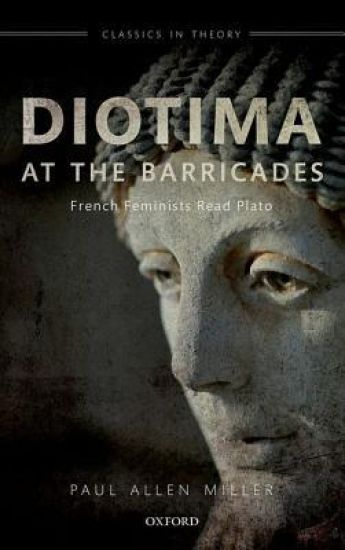
Diotima at the Barricades

Diotima at the Barricades

Paul Allen Miller

Oxford University Press
2015
sidottu
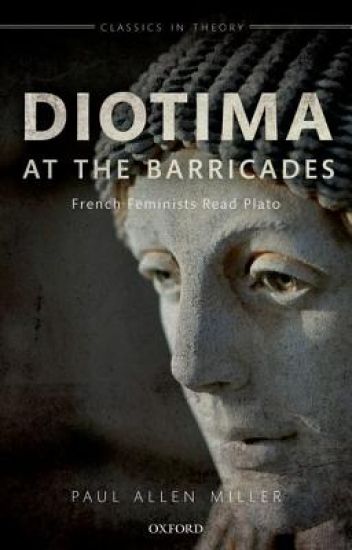
Diotima at the Barricades argues that the debates that emerged from the burgeoning of feminist intellectual life in post-modern France involved complex, structured, and reciprocal exchanges on the interpretation and position of Plato and other ancient texts in the western philosophical and literary tradition. Paul Allen Miller shows how individual works of Anglo-American figures such as Toril Moi, Judith Butler, and Kaja Silverman, as well as movements such as queer theory, are rooted in feminist theoretical debates that began in the sixties in France and have continued right up to the present day. Miller demonstrates that French philosophy as represented by writers as diverse as Julia Kristeva, Hélène Cixous, Sarah Kofman, Jacques Lacan, Jacques Derrida, and Luce Irigaray have had a profound influence on literary, theoretical, and cultural studies in the Anglo-American world. He reveals that in order to understand the intellectual substructure of much of later Anglo-American critical theory, it is crucial to examine the development of post-modern French feminist thought in relation to its dialogue with antiquity. In modern feminism and post-structuralism, the ancient world, and Plato in particular, truly function as our theoretical unconscious.
Diotima at the Barricades

Diotima at the Barricades

Paul Allen Miller

Oxford University Press
2019
nidottu
Diotima at the Barricades argues that the debates that emerged from the burgeoning of feminist intellectual life in post-modern France involved complex, structured, and reciprocal exchanges on the interpretation and position of Plato and other ancient texts in the western philosophical and literary tradition. Paul Allen Miller shows how individual works of Anglo-American figures such as Toril Moi, Judith Butler, and Kaja Silverman, as well as movements such as queer theory, are rooted in feminist theoretical debates that began in the sixties in France and have continued right up to the present day. Miller demonstrates that French philosophy as represented by writers as diverse as Julia Kristeva, Hélène Cixous, Sarah Kofman, Jacques Lacan, Jacques Derrida, and Luce Irigaray have had a profound influence on literary, theoretical, and cultural studies in the Anglo-American world. He reveals that in order to understand the intellectual substructure of much of later Anglo-American critical theory, it is crucial to examine the development of post-modern French feminist thought in relation to its dialogue with antiquity. In modern feminism and post-structuralism, the ancient world, and Plato in particular, truly function as our theoretical unconscious.
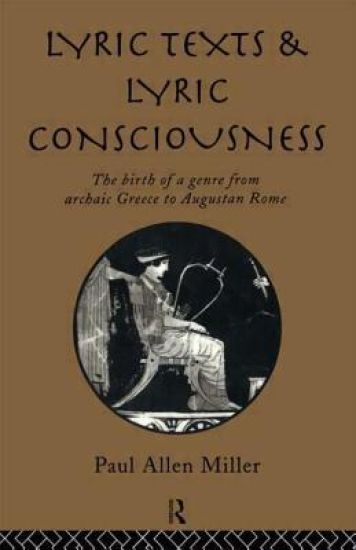
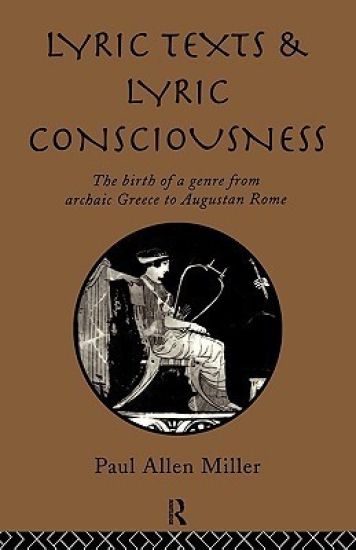
Lyric Texts and Lyric Consciousness

Lyric Texts and Lyric Consciousness

Paul Allen Miller

Routledge
1994
sidottu
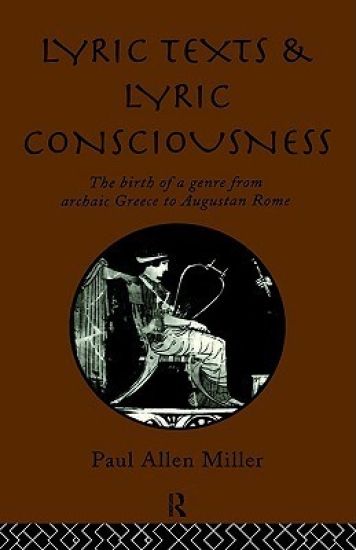
Lyric Texts and Lyric Consciousness presents a model for studying the history of lyric as a genre. Prof Miller draws a distinction between the work of the Greek lyrists and the more condensed, personal poetry that we associate with lyric. He then confronts the theoretical issues and presents a sophisticated, Bakhtinian reading of the development of the lyric form from its origins in archaic Greece to the more individualist style of Augustan Rome. This book will appeal to classicists and, since English translations of passages from the ancient authors are provided, to those who specialise in comparative literature.
Latin Erotic Elegy

Latin Erotic Elegy

Paul Allen Miller

Routledge
2002
sidottu
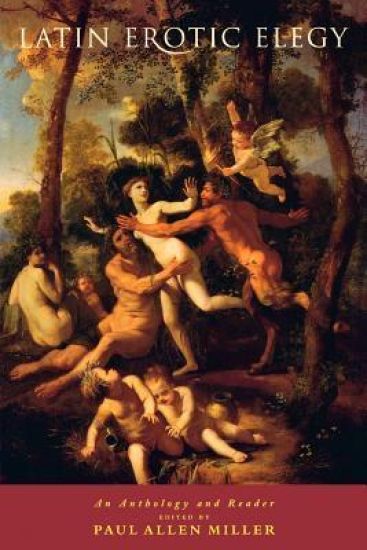
This indispensable volume provides a complete course on Latin erotic elegy, allowing students to trace a coherent narrative of the genre's rise and fall, and to understand its relationship to the changes that marked the collapse of the Roman republic, and the founding of the empire. The book begins with a detailed and wide-ranging introduction, looking at major figures, the evolution of the form, and the Roman context, with particular focus on the changing relations between the sexes. The texts that follow range from the earliest manifestations of erotic elegy, in Catullus, through Tibullus, Sulpicia (Rome's only female elegist), Propertius and Ovid. An accessible commentary explores the historical background, issues of language and style, and the relation of each piece to its author's larger body of work. The volume closes with an anthology of critical essays representative of the main trends in scholarship; these both illuminate the genre's most salient features and help the student understand its modern reception.
Latin Erotic Elegy

Latin Erotic Elegy

Paul Allen Miller

Routledge
2002
nidottu
This indispensable volume provides a complete course on Latin erotic elegy, allowing students to trace a coherent narrative of the genre's rise and fall, and to understand its relationship to the changes that marked the collapse of the Roman republic, and the founding of the empire. The book begins with a detailed and wide-ranging introduction, looking at major figures, the evolution of the form, and the Roman context, with particular focus on the changing relations between the sexes. The texts that follow range from the earliest manifestations of erotic elegy, in Catullus, through Tibullus, Sulpicia (Rome's only female elegist), Propertius and Ovid. An accessible commentary explores the historical background, issues of language and style, and the relation of each piece to its author's larger body of work. The volume closes with an anthology of critical essays representative of the main trends in scholarship; these both illuminate the genre's most salient features and help the student understand its modern reception.
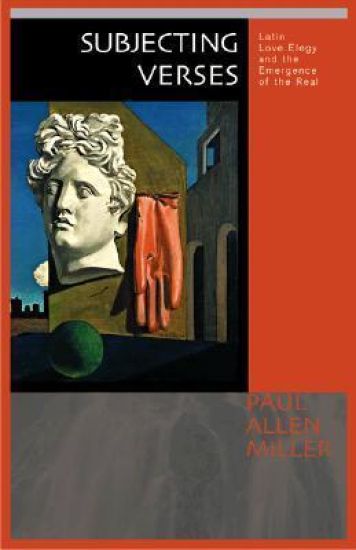
Subjecting Verses

Subjecting Verses

Paul Allen Miller

Princeton University Press
2003
sidottu
The elegy flared into existence, commanded the cultural stage for several decades, then went extinct. This book accounts for the swift rise and sudden decline of a genre whose life span was incredibly brief relative to its impact. Examining every major poet from Catullus to Ovid, Subjecting Verses presents the first comprehensive history of Latin erotic elegy since Georg Luck's. Paul Allen Miller harmoniously weds close readings of the poetry with insights from theoreticians as diverse as Jameson, Foucault, Lacan, and Zizek. In welcome contrast to previous, thematic studies of elegy--efforts that have become bogged down in determining whether particular themes and poets were pro- or anti-Augustan--Miller offers a new, "symptomatic" history. He asks two obvious but rarely posed questions: what historical conditions were necessary to produce elegy, and what provoked its decline? Ultimately, he argues that elegiac poetry arose from a fundamental split in the nature of subjectivity that occurred in the late first century--a split symptomatic of the historical changes taking place at the time. Subjecting Verses is a major interpretive feat whose influence will reach across classics and literary studies. Linking the rise of elegy with changes in how Romans imagined themselves within a rapidly changing society, it offers a new model of literary theory that neither reduces the poems to a reflection of their context nor examines them in a vacuum.
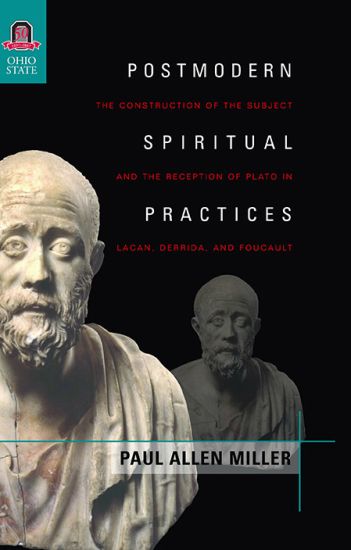
Postmodern Spiritual Practices

Postmodern Spiritual Practices

Paul Allen Miller

Ohio State University Press
2018
pokkari
Postmodern Spiritual Practices: The Construction of the Subject and the Reception of Plato in Lacan, Derrida, and Foucault, by Paul Allen Miller, argues that a key element of postmodern French intellectual life has been the reception of Plato. This fact has gone underappreciated in the Anglophone world due to a fundamental division in culture. Until very recently, the concerns of academic philosophy and philology have had little in common. On the one hand, this is due to analytic philosophy's self-confinement to questions of epistemology, speech act theory, and philosophy of science. As such, it has had little to say about the relation between antique and contemporary modes of thought. On the other hand, blindness to the merits of postmodern thought is also due to Anglo-American philology's own parochial instincts. Ensconced within a nineteenth-century model of Alterumswissenschaft, only a minority of classicists have made forays into philosophical, psychoanalytic, and other speculative modes of inquiry. The result has been that postmodern French thought has largely been the province of scholars of modern languages. A situation thus emerges in which most classicists do not know theory, and so cannot appreciate the scope of these thinkers' contribution to our understanding of the genealogy of Western thought, while most theorists do not know the Platonic texts and their contexts that ground them. This book bridges this gap, offering detailed and theoretically informed readings of French postmodernism's chief thinkers' debts to Plato and the ancient world.
Lyric Texts and Lyric Consciousness

Lyric Texts and Lyric Consciousness

Paul Allen Miller

Routledge
2014
nidottu
Lyric Texts and Lyric Consciousness presents a model for studying the history of lyric as a genre. Prof Miller draws a distinction between the work of the Greek lyrists and the more condensed, personal poetry that we associate with lyric. He then confronts the theoretical issues and presents a sophisticated, Bakhtinian reading of the development of the lyric form from its origins in archaic Greece to the more individualist style of Augustan Rome. This book will appeal to classicists and, since English translations of passages from the ancient authors are provided, to those who specialise in comparative literature.
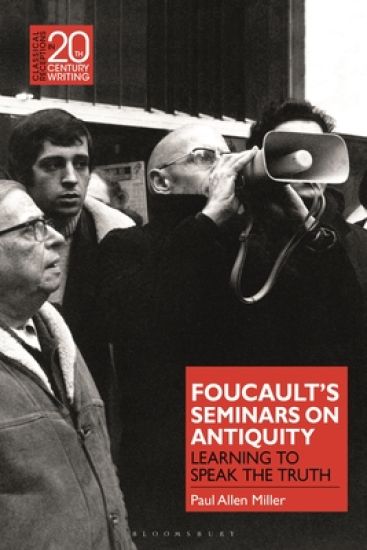
Foucault’s Seminars on Antiquity

Foucault’s Seminars on Antiquity

Paul Allen Miller

BLOOMSBURY PUBLISHING PLC
2023
nidottu
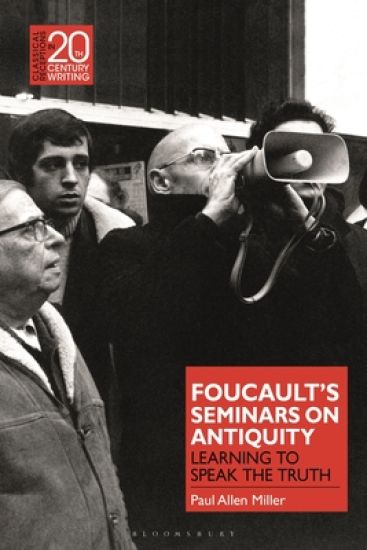
In 1980, Michel Foucault’s work makes two decisive turns. On the one hand, as announced at the start of his course at the Collège de France for that year, Le Gouvernement des vivants, his topic will be the modalities through which power constitutes itself in relation to truth. On the other, the texts on which he will concentrate will no longer be those of the early modern period. Rather, he begins with one by Dio Cassius on the emperor Septimius Severus and then proceeds to spend the next two sessions offering a reading of Oedipus Tyrannus. He will concentrate on works from antiquity for the rest of his life. This book will offer the first detailed account of these lectures, examining both the development of their philosophical argument and the ancient texts on which that argument is based. This is the period during which Foucault also began work on Volumes 2 and 3 of the History of Sexuality. Yet, while there are clear overlaps between the work he was presenting in his course and the last books he published before his death, nonetheless the seminars are anything but rough drafts for the published work. Instead they offer a sustained encounter with the texts of the classical and early Christian era while seeking to trace a genealogy of the western subject as a speaker of truth.
Foucault’s Seminars on Antiquity

Foucault’s Seminars on Antiquity

Paul Allen Miller

Bloomsbury Academic
2021
sidottu
In 1980, Michel Foucault’s work makes two decisive turns. On the one hand, as announced at the start of his course at the Collège de France for that year, Le Gouvernement des vivants, his topic will be the modalities through which power constitutes itself in relation to truth. On the other, the texts on which he will concentrate will no longer be those of the early modern period. Rather, he begins with one by Dio Cassius on the emperor Septimius Severus and then proceeds to spend the next two sessions offering a reading of Oedipus Tyrannus. He will concentrate on works from antiquity for the rest of his life. This book will offer the first detailed account of these lectures, examining both the development of their philosophical argument and the ancient texts on which that argument is based. This is the period during which Foucault also began work on Volumes 2 and 3 of the History of Sexuality. Yet, while there are clear overlaps between the work he was presenting in his course and the last books he published before his death, nonetheless the seminars are anything but rough drafts for the published work. Instead they offer a sustained encounter with the texts of the classical and early Christian era while seeking to trace a genealogy of the western subject as a speaker of truth.
Horace

Horace

Paul Allen Miller

I.B. Tauris
2018
sidottu
Perhaps no classical writer has been so consistently in vogue as Horace. Famous in his own lifetime as a close associate of the Emperor Octavian, to whom he dedicated several odes, Quintus Horatius Flaccus (65–8 BC) has never really been out of fashion. Petrarch, for example, modelled his letters on Horace’s innovative Epistles, while also borrowing from his Roman forebear in composing his own Italian sonnets. The echo of Horace’s voice can be found in almost every genre of medieval literature. And in later periods, this influence and popularity if anything increased. Yet, as Paul Allen Miller shows, while Horace may justifiably be called the poet for all seasons he is also in the end an enigma. His elusive, ironic contrariness is perhaps the true secret of his success. A cultured man of letters, he fought on the losing side of the Battle of Philippi (42 BC). A staunch Republican, he ended up eagerly (some said too eagerly) promoting the cause of Julio-Claudian imperialism. Viewed as the acme of Roman literary civilization, he was shaped by his Athens education at Plato’s famous Academy. This new introduction reveals Horace in all his paradoxical genius and complexity.
Horace

Horace

Paul Allen Miller

I.B. Tauris
2018
nidottu
Perhaps no classical writer has been so consistently in vogue as Horace. Famous in his own lifetime as a close associate of the Emperor Octavian, to whom he dedicated several odes, Quintus Horatius Flaccus (65–8 BC) has never really been out of fashion. Petrarch, for example, modelled his letters on Horace’s innovative Epistles, while also borrowing from his Roman forebear in composing his own Italian sonnets. The echo of Horace’s voice can be found in almost every genre of medieval literature. And in later periods, this influence and popularity if anything increased. Yet, as Paul Allen Miller shows, while Horace may justifiably be called the poet for all seasons he is also in the end an enigma. His elusive, ironic contrariness is perhaps the true secret of his success. A cultured man of letters, he fought on the losing side of the Battle of Philippi (42 BC). A staunch Republican, he ended up eagerly (some said too eagerly) promoting the cause of Julio-Claudian imperialism. Viewed as the acme of Roman literary civilization, he was shaped by his Athens education at Plato’s famous Academy. This new introduction reveals Horace in all his paradoxical genius and complexity.
Theory Does Not Exist

Theory Does Not Exist

Paul Allen Miller

ANTHEM PRESS
2024
sidottu
Theory Does Not Exist: Comparative Ancient and Modern Explorations in Psychoanalysis, Deconstruction, and Rhetoric is a collection of essays that makes a strong case for a comparative approach to what we term “theory” today. It argues that our disciplinary boundaries create artificial divisions between philosophy, rhetoric, and literature, which historically would not have been recognized and which have come to function as conceptual straitjackets. These essays contend that a concerted engagement with the crucial texts in these debates over the last 2500 years not only offers a better understanding of the issues involved but also provides the necessary political, ethical, and existential tools for fashioning a better and more inclusive life. Theory Does Not Exist offers a full-throated defense of the humanities and crucial counterarguments against the reduction of education to the vocational and the operational.
Plato's Apology of Socrates

Plato's Apology of Socrates

Paul Allen Miller; Charles Platter

University of Oklahoma Press
2010
nidottu
The significance of Plato's Apology of Socrates is impossible to overestimate. An account of the famous trial of Socrates in 399 b.c., it appeals to historians, philosophers, political scientists, classicists, and literary critics. It is also essential reading for students of ancient Greek.This new commentary on Plato's canonical work is designed to accommodate the needs of students in intermediate-level Greek classes, where they typically encounter the Apology for the first time. Paul Allen Miller and Charles Platter, two highly respected classicists and veteran instructors, present the Apology in its traditional thirty-three-chapter structure. They amplify the text with running commentary and glosses of unfamiliar words at the bottom of each page; brief chapter introductions to relevant philosophical, historical, and rhetorical issues; and a separate series of thought-provoking essays, one on each chapter. The essays can serve as bases for class discussions or as starting points for paper topics or general reflection.By integrating background material into the text at regular intervals rather than front-loading it in a lengthy initial overview or burying it in back-of-the-book endnotes, the authors offer students a rich encounter with the text. Their commentary incorporates the latest research on both the trial of Socrates and Plato's version of it, and it engages major philosophical issues from a contemporary perspective. This book is not only a much-needed aid for students of Greek. It is also the basis of a complete course on the Apology.
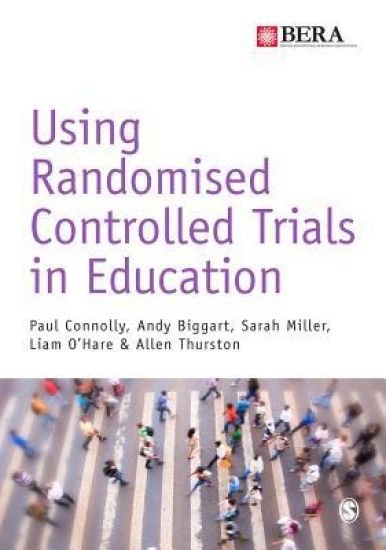
Using Randomised Controlled Trials in Education

Using Randomised Controlled Trials in Education

Paul Connolly; Andy Biggart; Sarah Miller; Liam O'Hare; Allen Thurston

SAGE Publications Ltd
2017
sidottu
The use of randomised controlled trials (RCTs), most commonly a medical sciences research tool, is a hotly debated topic in Education. This book examines the controversial aspects of RCTs in Education and sets out the potential and pitfalls of the method. Drawing on their own extensive experience of running RCTs, and their work at the Centre for Evidence and Social Innovation (CESI) at Queen’s University, Belfast, the authors provide a thorough practical introduction to the use of randomised controlled trials in education. Using real data sets, chapters equip the reader with all of the key knowledge and skills required to design, run, analyse and report an RCT. Coverage includes: · Step-by-step guidance on analysing data · How to assess the reliability and validity of results · Advice on balancing the demands of various stakeholders Essential reading for postgraduate and more experienced researchers, as well as teachers and educationalists seeking to increase their knowledge and understanding of the use of such methods in education.
Using Randomised Controlled Trials in Education

Using Randomised Controlled Trials in Education

Paul Connolly; Andy Biggart; Sarah Miller; Liam O'Hare; Allen Thurston

SAGE Publications Ltd
2017
nidottu
The use of randomised controlled trials (RCTs), most commonly a medical sciences research tool, is a hotly debated topic in Education. This book examines the controversial aspects of RCTs in Education and sets out the potential and pitfalls of the method. Drawing on their own extensive experience of running RCTs, and their work at the Centre for Evidence and Social Innovation (CESI) at Queen’s University, Belfast, the authors provide a thorough practical introduction to the use of randomised controlled trials in education. Using real data sets, chapters equip the reader with all of the key knowledge and skills required to design, run, analyse and report an RCT. Coverage includes: · Step-by-step guidance on analysing data · How to assess the reliability and validity of results · Advice on balancing the demands of various stakeholders Essential reading for postgraduate and more experienced researchers, as well as teachers and educationalists seeking to increase their knowledge and understanding of the use of such methods in education.
Lyric Texts & Consciousness

Lyric Texts & Consciousness

Paul Allen Miler

Routledge
1994
nidottu
First published in 1994. Lyric Texts and Lyric Consciousness presents a model for studying the history of lyric as a genre. Professor Miller drawls a distinction between the work of the Greek lyrists and the more condensed, personal poetry that we associate with lyric. He then confronts the theoretical issues and presents sophisticated, Bakhtinian reading of the development of lyric form from its origins in archaic Greece to the more individualist style of Augustan Rome. This book will appeal to classicists and since English translation of passes from ancient authors are provided, to those who specialise in comparative literature.
Paul Allen

Paul Allen

Tunde Pereira

Total Bellbottom Books
2024
pokkari
Paul Allen: A Tech Visionarys Journey is a captivating biography that chronicles the early years, the birth of Microsoft, billionaire battles, and the enduring legacy of one of the tech industrys most influential figures.
Paul Allen

Paul Allen

VDM Publishing House
2010
nidottu
Observera att förlaget som ger ut denna produkt baserar innehållet i sina produkter på fria källor som Wikipedia. Boken är med stor sannolikhet endast ett utdrag ur dessa informationskällor, alltså inte en vanlig bok i den bemärkelsen.