Kirjojen hintavertailu. Mukana 11 244 527 kirjaa ja 12 kauppaa.

Kirjahaku

Etsi kirjoja tekijän nimen, kirjan nimen tai ISBN:n perusteella.

1000 tulosta hakusanalla Paul Cullen

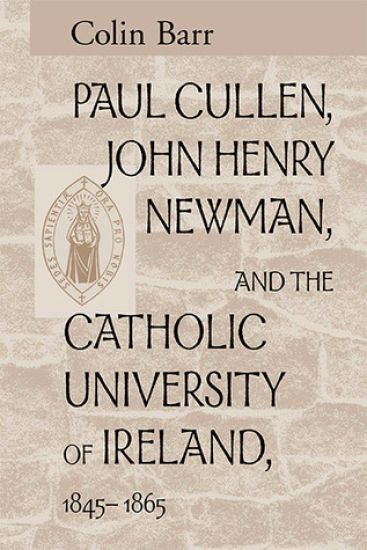
Paul Cullen, John Henry Newman, and the Catholic University of Ireland, 1845–1865
The history of the Catholic University of Ireland has long been overshadowed by the personality and writings of its first rector, John Henry Newman. Newman—an official candidate for sainthood and author of the renowned The Idea of a University—played a vital role in the foundation of the university. But Colin Barr's new study paints a richer portrait of CUI's history by focusing on the university itself and on the influence of Paul Cullen, archbishop of Armagh and then Dublin. Most historians have based their treatments of the Catholic University of Ireland on Newman's own voluminous correspondence and later writings, and have tended to uncritically accept Newman's own understanding of his role in Dublin and his relationship with Cullen. Newman has been cast in the role of a liberal, creative visionary who was frustrated at every turn by the obscurantist, ultramontane Cullen. Barr seeks to reassess Cullen's role in the founding and history of the University by utilizing previously unavailable sources and by relocating the history of the Catholic University in its Irish context. Paul Cullen, John Henry Newman, and the Catholic University of Ireland, 1845-1865 presents a more balanced treatment of both the University and of Newman and Cullen's role in its history. The resulting text is a fascinating story of determination, conflict, and failure.

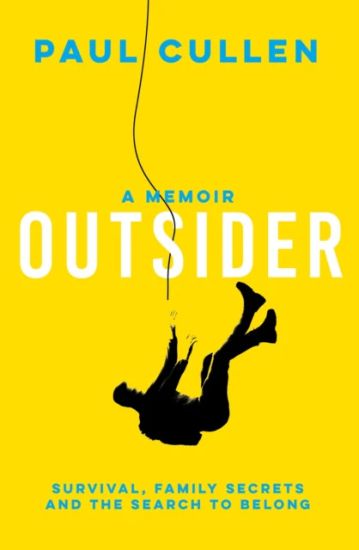
Outsider

Outsider

Paul Cullen

HACHETTE BOOKS IRELAND
2026
pokkari
Adopted at age two and a half, Paul Cullen always felt like an outsider. After a near-fatal fall from Germany's highest peak in 2017 left him broken - physically and emotionally - he faced a personal reckoning. As he lay injured on the mountain, he knew that if he survived, he could no longer avoid the questions that had haunted him since childhood. What happened in those missing early years? Who cared for him before his adoption? And why was it so hard to find the truth? Outsider follows Paul's search for answers, from a mother and baby home in 1960s London to a suburban estate in 1970s Dublin, in a house lit with love but shadowed by a darker truth. As his body heals, he pieces together the fragments of his identity, confronting the silence of a closed adoption system and the emotional legacy of a hidden past. Courageous and deeply personal, Outsider is a powerful story of survival, belonging and the enduring human need to know where we come from.
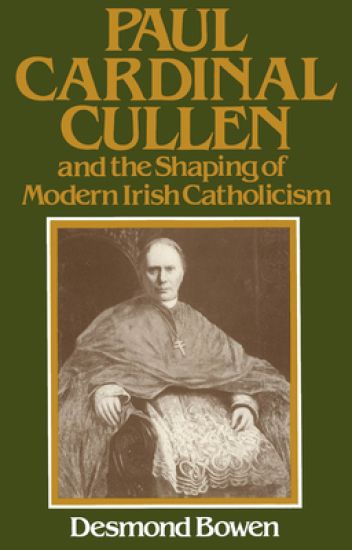
Paul Cardinal Cullen and the Shaping of Modern Irish Catholicism

Paul Cardinal Cullen and the Shaping of Modern Irish Catholicism

Desmond Bowen

Wilfrid Laurier University Press
1983
sidottu
Paul Cullen (1803â78) was the outstanding figure in Irish history between the death of Daniel O'Connell and the rise of Charles Stewart Parnell. Yet this powerful prelate remains an enigmatic figure. This new study of his career sets out to reveal the real nature of his achievements in putting his stamp so indelibly on the Irish Catholic Church. After several years spent in Rome, at a time when the papal states were under constant attack, Cullen was sent back to Ireland as Archbishop of Armagh and subsequently of Dublin. He had been charged with reorganizing the Catholic Church in his native countryâa task which brought him into conflict with the authorities, many of his fellow-bishops and frequently nationalist opinion. The first Irishman to be made a cardinal, he played a leading part in securing the declaration of papal infallibility from the First Vatican Council (1870). Cardinal Cullen has not generally been well treated by historians. A brilliant scholar, whose intelligence was never underestimated by contemporaries, he has been dismissed as an âindustrious mediocrity.' A tough-minded, indefatigable political tactician, he has nevertheless been described as a world-denying spiritual leader. Cullen was the most devoted of papal servants, yet he was accused of âpreferring the ... principles of Irish nationalism to the opinions of his friend Pius IX.' Generations of Irish nationalist historians, however, have taken a different view, seeing the leading Irish churchman of the nineteenth century as a tool of the British government. In Paul Cardinal Cullen and the Shaping of Modern Irish Catholicism , Desmond Bowen shows the true purpose of Cullen's mission. An Ultramontanist of the most uncompromising typeââa Roman of the Romans'âneither the aspirations of the Irish nationalists nor the concerns of British governments were of primary importance to him. The mind and accomplishments of this most reserved and complex of men can be understood only in his total dedication to the mission of the papacy as he interpreted it during a time of crisis for the Catholic Church throughout Europe.
The Writings of HANCOCK

The Writings of HANCOCK

Nancy Hancock Cullen; Paul E. Hancock

Createspace Independent Publishing Platform
2015
nidottu
In November 1999 during one of Dad's good days and when hope was still alive that he would be with us a while longer, Dad talked about the book he wanted to write. He had more events, things, and people he wanted to write about and compile. At some point later, when Dad knew he was on his way to the other side, He began to tie up as many loose ends as best he could. One was turning over a navy blue vinyl portfolio that contained his writings. I knew Dad did some writing, but was not aware of how much he had written over the years until He had passed and final preparations were being made for his "going home" service. No one can finish the book Dad wanted to write, but contained in this volume is a compilation of those things he did write. Originally, it was in loose-leaf form and only given to immediate family. This was for two reasons: First, because, at the time we thought other pieces of his written wisdom might still surface. Second had to do with my response to his words as I compiled them: As I read through his thoughts, I felt a need to write those responses down, a sort of journal as I processed Dad's departure from us into God's presence. Since the first distribution was only a few weeks after Dad's passing, I wanted to leave room for other immediate family to do the same; to respond to what Dad wrote, personally. In any case, at that time, it was too soon for me to say, "it is finished". It is now fifteen years later and it is time to share this on a wider scale. Dad's grandchildren have grown, great grandchildren are emerging so this work is first for them. That they may know from Dad's own hand, his thoughts, words, struggles and feelings. But perhaps there will be others that will relate, be encouraged, challenged, even provoked. So we are allowing you access
Assessing Correctional Rehabilitation: Policy, Practice, and Prospects

Assessing Correctional Rehabilitation: Policy, Practice, and Prospects

Paul Gendreau; Francis T. Cullen

Createspace Independent Publishing Platform
2012
nidottu
A theme that has persisted throughout the history of American corrections is that efforts should be made to reform offenders. In particular, at the beginning of the 1900s, the rehabilitative ideal was enthusiastically trumpeted and helped to direct the renovation of the correctional system (e.g., implementation of indeterminate sentencing, parole, probation, a separate juvenile justice system). For the next seven decades, offender treatment reigned as the dominant correctional philosophy. Then, in the early 1970s, rehabilitation suffered a precipitous reversal of fortune. The larger disruptions in American society in this era prompted a general critique of the "state run" criminal justice system. Rehabilitation was blamed by liberals for allowing the state to act coercively against offenders, and was blamed by conservatives for allowing the state to act leniently toward offenders. In this context, the death knell of rehabilitation was seemingly sounded by Robert Martinson's (1974b) influential "nothing works" essay, which reported that few treatment programs reduced recidivism. This review of evaluation studies gave legitimacy to the antitreatment sentiments of the day; it ostensibly "proved" what everyone "already knew": Rehabilitation did not work. In the subsequent quarter century, a growing revisionist movement has questioned Martinson's portrayal of the empirical status of the effectiveness of treatment interventions. Through painstaking literature reviews, these revisionist scholars have shown that many correctional treatment programs are effective in decreasing recidivism. More recently, they have undertaken more sophisticated quantitative syntheses of an increasing body of evaluation studies through a technique called "meta-analysis." These meta-analyses reveal that across evaluation studies, the recidivism rate is, on average, 10 percentage points lower for the treatment group than for the control group. However, this research has also suggested that some correctional interventions have no effect on offender criminality (e.g., punishment-oriented programs), while others achieve substantial reductions in recidivism (i.e., approximately 25 percent). This variation in program success has led to a search for those "principles" that distinguish effective treatment interventions from ineffective ones. There is theoretical and empirical support for the conclusion that the rehabilitation programs that achieve the greatest reductions in recidivism use cognitive-behavioral treatments, target known predictors of crime for change, and intervene mainly with high-risk offenders. "Multisystemic treatment" is a concrete example of an effective program that largely conforms to these principles. In the time ahead, it would appear prudent that correctional policy and practice be "evidence based." Knowledgeable about the extant research, policymakers would embrace the view that rehabilitation programs, informed by the principles of effective intervention, can "work" to reduce recidivism and thus can help foster public safety. By reaffirming rehabilitation, they would also be pursuing a policy that is consistent with public opinion research showing that Americans continue to believe that offender treatment should be an integral goal of the correctional system.
Handbook of Clinical Anesthesia

Handbook of Clinical Anesthesia

Paul G. Barash; Bruce F. Cullen; Robert K. Stoelting; Michael K. Cahalan; M. Christine Stock; Rafael Ortega

Lippincott Williams and Wilkins
2013
pokkari
The Handbook of Clinical Anesthesia, Seventh Edition , closely parallels Clinical Anesthesia, Seventh Edition , and presents the essential information found in the larger text in a concise, portable format. Extensive changes made to the parent textbook are reflected in the Handbook ; chapters have been completely updated and a new chapter covering anesthesia for laparoscopic and robotic surgeries has been added.The Handbook makes liberal use of tables and graphics to enhance rapid access to information. This comprehensive, pocket-sized reference guides you through virtually every aspect of perioperative, intraoperative, and postoperative patient care.Inside You’ll Find…"Step-by-step procedures to administer anesthesia for cardiac surgery, obstetric surgery, minimally invasive procedures, chronic pain management, and moreASA guidelines for patient care and safety includedRobust appendices include formulas, Atlas of Electrocardiography, Pacemaker and ICD Protocols, American Heart Association resuscitation protocols, ASA Standards and Guidelines, difficult airway algorithms, malignant hyperthermia protocol, and herbal medicationsA clear, consistent writing style that makes critical material easy to locate and comprehendNEW to the Seventh Edition …"A new chapter covering Anesthesia for Laparoscopic and Robotic Surgeries has been addedTwo new appendices – Atlas of Electrocardiography and Pacemaker and Implantable Cardiac Defibrillator Protocols
Clinical Anesthesia Fundamentals: Print + Ebook with Multimedia

Clinical Anesthesia Fundamentals: Print + Ebook with Multimedia

Paul G. Barash; Bruce F. Cullen; Robert K. Stoelting; Michael K. Cahalan; M. Christine Stock; Rafael Ortega; Sam R. Sharar

Lippincott Williams and Wilkins
2015
pokkari
Selected as a Doody's Core Title for 2021!From the popular and highly respected Clinical Anesthesia family of titles comes a new resource that clearly and simply explains the core concepts of anesthesiology that you need to know. From physiology and pharmacology to anatomy and system-based anesthesia, it uses full-color graphics, easy-to-read tables, and clear, concise text to convey the essential principles of the field.Key FeaturesFind the information you need on key aspects of anesthesia for every specialty area and every body system.Watch helpful video tutorials for each chapter, and assess your knowledge with questions and answers throughout the text.Concise, interactive video lectures allow for learner-centered instruction and simplify the delivery of dense didactic contentGrasp important information quickly with “Did You Know?” boxes that highlight essential elements of each chapter.Ideal for medical students, residents, SRNAs, CRNAs, or anyone who needs a quick overview of the essential elements of clinical anesthesia in an easily accessible format.Now with the print edition, enjoy the bundled interactive eBook edition, which can be downloaded to your tablet & smartphone or accessed online and includes features like: Complete content with enhanced navigationPowerful search tools and smart navigation cross-links that pull results from content in the book, your notes, and even the webCross-linked pages, references, and more for easy navigationHighlighting tool for easier reference of key content throughout the textAbility to take and share notes with friends and colleaguesQuick reference tabbing to save your favorite content for future use
Shock Volume 1

Shock Volume 1

Neil Gaiman; Marc Guggenheim; Paul Jenkins; Mike Carey; Jim Starlin; Bill Willingham; Brian Azzarello; Cullen Bunn; Marguerite Bennett; Frank Tieri

Aftershock Comics
2018
sidottu
AfterShock Comics continues to push boundaries by presenting it’s very first anthology collection featuring a slew of today’s top writers and artists. Presented in the European Album format (same as the recent Animosity: the Rise hardcover for LCSD), this handsome hardcover features the creative talents of Neil Gaiman, Michael Zulli, Charles Vess, Michael Gaydos, Andy Clarke, Andrew Robinson, Mike Carey, Jim Starlin, Phil Hester, Paul Jenkins, Dalibor Talajic, Bill Willingham, Travis Moore, Brian Azzarello, Francesco Francavilla, Cullen Bunn, Marc Guggenheim, Marguerite Bennett, Frank Tieri, Brian Stelfreeze, Szymon Kudranski and more! Cover art by John Cassaday! From the multiple Eisner and Harvey Award nominated editor of the classic Negative Burn anthology series.
The National Curriculum and its Effects

The National Curriculum and its Effects

Cedric Cullingford; Paul Oliver

Routledge
2019
nidottu
This title was first published in 2001. What impact has the National Curriculum for England and Wales had on pupils, teachers, academic and social standards in the ten years since its introduction? The distinguished contributors to this volume examine the history and development of the National Curriculum to date and assess its effects.
The National Curriculum and its Effects

The National Curriculum and its Effects

Cedric Cullingford; Paul Oliver

Routledge
2017
sidottu
This title was first published in 2001. What impact has the National Curriculum for England and Wales had on pupils, teachers, academic and social standards in the ten years since its introduction? The distinguished contributors to this volume examine the history and development of the National Curriculum to date and assess its effects.
Harvesting Hay and Straw; no.43-27

Harvesting Hay and Straw; no.43-27

Paul Eugene 1908- Strickler; Harold C. (Harold Callen) Phillips

Hassell Street Press
2021
nidottu
This work has been selected by scholars as being culturally important and is part of the knowledge base of civilization as we know it.This work is in the public domain in the United States of America, and possibly other nations. Within the United States, you may freely copy and distribute this work, as no entity (individual or corporate) has a copyright on the body of the work.Scholars believe, and we concur, that this work is important enough to be preserved, reproduced, and made generally available to the public. To ensure a quality reading experience, this work has been proofread and republished using a format that seamlessly blends the original graphical elements with text in an easy-to-read typeface.We appreciate your support of the preservation process, and thank you for being an important part of keeping this knowledge alive and relevant.
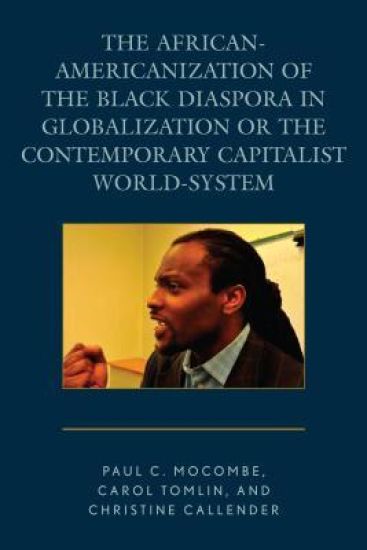
The African-Americanization of the Black Diaspora in Globalization or the Contemporary Capitalist World-System

The African-Americanization of the Black Diaspora in Globalization or the Contemporary Capitalist World-System

Paul C. Mocombe; Carol Tomlin; Christine Callender

University Press of America
2016
nidottu
This work sets forth the argument that in the age of (neoliberal) globalization, black people around the world are ever-so slowly becoming “African-Americanized”. They are integrated and embourgeoised in the racial-class dialectic of black America by the material and ideological influences of the Protestant ethic and the spirit of capitalism as promulgated throughout the diaspora by two social class language games of the black American community: the black underclass (Hip-Hop culture), speaking for and representing black youth practical consciousness; and black American charismatic liberal/conservative bourgeois Protestant preachers like TD Jakes, Creflo Dollar, etc., speaking for and representing the black bourgeois (educated) professional and working classes. Although on the surface the practical consciousness and language of the two social class language games appear to diametrically oppose one another, the authors argue, given the two groups’ material wealth within the Protestant ethic and the spirit of capitalism of corporate (neoliberal) America, they do not. Both groups have the same underlying practical consciousness, subjects/agents of the Protestant Ethic and the spirit of capitalism. The divergences, where they exist, are due to their interpellation, embourgeoisement, and differentiation via different ideological apparatuses of the society: church and education, i.e., schools, for the latter; and prisons, the streets, and athletic and entertainment industries for the former. Contemporarily, in the age of globalization and neoliberalism, both groups have become the bearers of ideological and linguistic domination in black neoliberal America, and are antagonistically, converging the practical consciousness of the black or African diaspora towards their respective social class language games. We are suggesting that the socialization of other black people in the diaspora ought to be examined against and within the dialectical backdrop of this class power dynamic and the cultural and religious heritages of the black American people responsible for this phenomenon or process of convergence we are referring to as the “African-Americanization” of the black diaspora.
Paul

Paul

E. P. Sanders

Oxford University Press
2001
nidottu
Paul is the most powerful human personality in the history of the Church. A missionary, theologian, and religious genius, in his epistles he laid the foundations on which later Christian theology was built. In his highly original introduction to Paul's life and thought, E. P. Sanders, whose research on Paul has substantially influenced recent scholarship, pays equal attention to Paul's fundamental convictions and the sometimes convoluted ways in which they were worked out. ABOUT THE SERIES: The Very Short Introductions series from Oxford University Press contains hundreds of titles in almost every subject area. These pocket-sized books are the perfect way to get ahead in a new subject quickly. Our expert authors combine facts, analysis, perspective, new ideas, and enthusiasm to make interesting and challenging topics highly readable.
Paul

Paul

Jerome Murphy-O'Connor

Oxford University Press
2004
sidottu
For someone who has exercised such a profound influence on Christian theology, Paul remains a shadowy figure behind the barrier of his complicated and difficult biblical letters. Debates about his meaning have deflected attention from his personality, yet his personality is an important key to understanding his theological ideas. This book redresses the balance. Jerome Murphy-O'Connor's disciplined imagination, nourished by a lifetime of research, shapes numerous textual, historical, and archaeological details into a colourful and enjoyable story of which Paul is the flawed but undefeated hero. This chronological narrative offers new insights into Paul's intellectual, emotional, and religious development and puts his travels, mission, and theological ideas into a plausible biographical context. As he changes from an assimilated Jewish teenager in Tarsus to a competitive Pharisee in Jerusalem and then to a driven missionary of Christ, the sometimes contradictory components of Paul's complex personality emerge from the way he interacts with people and problems. His theology was forged in dialogue and becomes more intelligible as our appreciation of his person deepens. In Jerome Murphy-O'Connor's engaging biography, the Apostle comes to life as a complex, intensely human individual.
Paul

Paul

Jerome Murphy-O'Connor

Oxford University Press
2005
nidottu
For someone who has exercised such a profound influence on Christian theology, Paul remains a shadowy figure behind the barrier of his complicated and difficult biblical letters. Debates about his meaning have deflected attention from his personality, yet his personality is an important key to understanding his theological ideas. This book redresses the balance. Jerome Murphy-O'Connor's disciplined imagination, nourished by a lifetime of research, shapes numerous textual, historical, and archaeological details into a colourful and enjoyable story of which Paul is the flawed but undefeated hero. This chronological narrative offers new insights into Paul's intellectual, emotional, and religious development and puts his travels, mission, and theological ideas into a plausible biographical context. As he changes from an assimilated Jewish teenager in Tarsus to a competitive Pharisee in Jerusalem and then to a driven missionary of Christ, the sometimes contradictory components of Paul's complex personality emerge from the way he interacts with people and problems. His theology was forged in dialogue and becomes more intelligible as our appreciation of his person deepens. In Jerome Murphy-O'Connor's engaging biography, the Apostle comes to life as a complex, intensely human individual.
Paul

Paul

H.J. Schoeps

James Clarke Co Ltd
2003
nidottu
This study of the Apostle to the Gentiles combines scholarship with an unusual approach. Schoeps interprets Paul's theology in the light of his Jewish background, which coloured and conditioned his Christological teaching.
Paul

Paul

H.J. Schoeps

James Clarke Co Ltd
2002
sidottu
Since its first publication in German in 1959, Paul has been hailed as a major study of the apostle to the Gentiles, combining exceptional scholarship with an unusual approach. Schoeps interprets Paul's theology in the light of his Jewish background, which coloured and conditioned his Christological teaching. Paul's conception of Jesus differs from that of the Synoptics: what and how extensive the difference is and whence it is derived are among the questions Schoeps examines. After surveying major problems in Pauline research, the Author relates the apostle to primitive Christianity, discussing his eschatology and his teachings on salvation, the law, and saving history. The final chapter shows that Paul's distinctive doctrines result from two converging factors: that Paul never saw Jesus in the flesh, and the influence of Jewish teaching. The consequence was his concern with the resurrected Saviour of the world, the pre-existent and eternal Son of God. Schoeps shows that Paul betrayed a fundamental misconception of the law and the covenantal agreement between God and his chosen people. The result is a thought-provoking, and somewhat startling, study of the first, the greatest, and the most difficult of all Christian theologians.