Kirjojen hintavertailu. Mukana 11 244 527 kirjaa ja 12 kauppaa.

Kirjahaku

Etsi kirjoja tekijän nimen, kirjan nimen tai ISBN:n perusteella.

1000 tulosta hakusanalla Paul D. Miller

Rhythm Science

Rhythm Science

Paul D. Miller

MIT Press
2004
pokkari
The art of the mix creates a new language of creativity."Once you get into the flow of things, you're always haunted by the way that things could have turned out. This outcome, that conclusion. You get my drift. The uncertainty is what holds the story together, and that's what I'm going to talk about."-Rhythm ScienceThe conceptual artist Paul Miller, also known as Dj Spooky that Subliminal Kid, delivers a manifesto for rhythm science-the creation of art from the flow of patterns in sound and culture, "the changing same." Taking the Dj's mix as template, he describes how the artist, navigating the innumerable ways to arrange the mix of cultural ideas and objects that bombard us, uses technology and art to create something new and expressive and endlessly variable. Technology provides the method and model; information on the web, like the elements of a mix, doesn't stay in one place. And technology is the medium, bridging the artist's consciousness and the outside world.Miller constructed his Dj Spooky persona ("spooky" from the eerie sounds of hip-hop, techno, ambient, and the other music that he plays) as a conceptual art project, but then came to see it as the opportunity for "coding a generative syntax for new languages of creativity." For example: "Start with the inspiration of George Herriman's Krazy Kat comic strip. Make a track invoking his absurd landscapes...What do tons and tons of air pressure moving in the atmosphere sound like? Make music that acts a metaphor for that kind of immersion or density." Or, for an online "remix" of two works by Marcel Duchamp: "I took a lot of his material written on music and flipped it into a DJ mix of his visual material-with him rhyming!" Tracing the genealogy of rhythm science, Miller cites sources and influences as varied as Ralph Waldo Emerson ("all minds quote"), Grandmaster Flash, W. E. B Dubois, James Joyce, and Eminem. "The story unfolds while the fragments coalesce," he writes. Miller's textual provocations are designed for maximum visual and tactile seduction by the international studio COMA (Cornelia Blatter and Marcel Hermans). They sustain the book's motifs of recontextualizing and relayering, texts and images bleed through from page to page, creating what amount to 2.5 dimensional vectors. From its remarkable velvet flesh cover, to the die cut hole through the center of the book, which reveals the colored nub holding in place the included audio CD, Rhythm Science: Excerpts and Allegories from the Sub Rosa Archives, this pamphlet truly lives up to Editorial Director Peter Lunenfeld's claim that the Mediawork Pamphlets are "theoretical fetish objects...'zines for grown-ups."
Armed State Building

Armed State Building

Paul D. Miller

Cornell University Press
2013
sidottu
Since 1898, the United States and the United Nations have deployed military force more than three dozen times in attempts to rebuild failed states. Currently there are more state-building campaigns in progress than at any time in the past century—including Afghanistan, Bosnia, Kosovo, the Democratic Republic of Congo, Haiti, Sudan, Liberia, Cote d'Ivoire, and Lebanon—and the number of candidate nations for such campaigns in the future is substantial. Even with a broad definition of success, earlier campaigns failed more than half the time. In this book, Paul D. Miller brings his decade in the U.S. military, intelligence community, and policy worlds to bear on the question of what causes armed, international state-building campaigns by liberal powers to succeed or fail. The United States successfully rebuilt the West German and Japanese states after World War II but failed to build a functioning state in South Vietnam. After the Cold War the United Nations oversaw relatively successful campaigns to restore order, hold elections, and organize post-conflict reconstruction in Mozambique, Namibia, Nicaragua, and elsewhere, but those successes were overshadowed by catastrophes in Angola, Liberia, and Somalia. The recent effort in Iraq and the ongoing one in Afghanistan—where Miller had firsthand military, intelligence, and policymaking experience—are yielding mixed results, despite the high levels of resources dedicated and the long duration of the missions there. Miller outlines different types of state failure, analyzes various levels of intervention that liberal states have tried in the state-building process, and distinguishes among the various failures and successes those efforts have provoked.
Choosing Defeat

Choosing Defeat

Paul D. Miller

Cambridge University Press
2025
sidottu
A truly unique all-embracing narrative of the American war in Afghanistan from the own words of its architects. Choosing Defeat takes an unparalleled inside look at America's longest war, pulling back the curtain on the inner deliberations behind the scenes. The author combines his own extensive experience in the Army, the CIA, and the White House, with interviews from policymakers within the Bush, Obama, and Trump administrations, to produce a groundbreaking study of how American leaders make wartime decisions. Transporting you inside the White House Situation Room, every key strategic debate over twenty years – from the immediate aftermath of 9/11, to Obama's surge and withdrawal, to Trump's negotiations with the Taliban, and Biden's final pullout is carefully reconstructed. Paul D. Miller identifies issues in US leadership, governance, military strategy, and policymaking that extend beyond the war in Afghanistan and highlight the existence of deeper problems in American foreign policy.
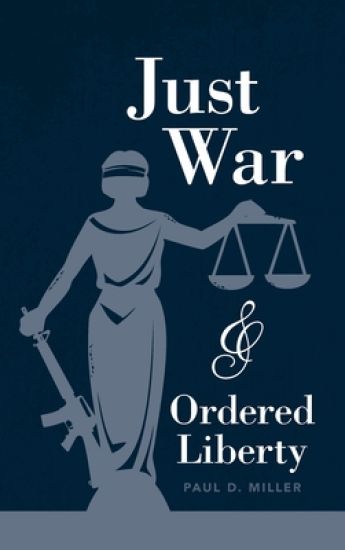
Just War and Ordered Liberty

Just War and Ordered Liberty

Paul D. Miller

Cambridge University Press
2021
pokkari
When is war just? What does justice require? If we lack a commonly-accepted understanding of justice – and thus of just war – what answers can we find in the intellectual history of just war? Miller argues that just war thinking should be understood as unfolding in three traditions: the Augustinian, the Westphalian, and the Liberal, each resting on distinct understandings of natural law, justice, and sovereignty. The central ideas of the Augustinian tradition (sovereignty as responsibility for the common good) can and should be recovered and worked into the Liberal tradition, for which human rights serves the same function. In this reconstructed Augustinian Liberal vision, the violent disruption of ordered liberty is the injury in response to which force may be used and war may be justly waged. Justice requires the vindication and restoration of ordered liberty in, through, and after warfare.
Just War and Ordered Liberty

Just War and Ordered Liberty

Paul D. Miller

Cambridge University Press
2021
sidottu
When is war just? What does justice require? If we lack a commonly-accepted understanding of justice – and thus of just war – what answers can we find in the intellectual history of just war? Miller argues that just war thinking should be understood as unfolding in three traditions: the Augustinian, the Westphalian, and the Liberal, each resting on distinct understandings of natural law, justice, and sovereignty. The central ideas of the Augustinian tradition (sovereignty as responsibility for the common good) can and should be recovered and worked into the Liberal tradition, for which human rights serves the same function. In this reconstructed Augustinian Liberal vision, the violent disruption of ordered liberty is the injury in response to which force may be used and war may be justly waged. Justice requires the vindication and restoration of ordered liberty in, through, and after warfare.
American Power and Liberal Order

American Power and Liberal Order

Paul D. Miller

Georgetown University Press
2019
pokkari
Paul D. Miller offers a tough minded critique of recent trends in American grand strategy. He rejects retrenchment but also the excesses of liberal internationalism. He prescribes a conservative internationalist grand strategy to preserve the American security and leadership in the world while avoiding overstretch. Originally written before the 2016 US presidential election, this first paperback edition contains a new preface that repositions the book’s argument for the Trump era. Miller explains why President Trump’s nationalist vision for American grand strategy damages US interests and world order. Miller blends academic rigor with his experiences as former member of the National Security Council and intelligence community to offer prescriptions for US grand strategy. He advocates for narrowing regional priorities and focusing on five strategic objectives: balancing against the nuclear autocracies, championing liberalism to maintain a favorable balance of power, thwarting the transnational jihadist movement, investing in governance in weak and failed states, and strengthening homeland security. This book is a must read for scholars and students of international affairs and for anyone who is concerned about America’s role in the world.
The Religion of American Greatness – What's Wrong with Christian Nationalism
ECPA Top Shelf Award Winner Long before it featured dramatically in the 2016 presidential election, Christian nationalism had sunk deep roots in the United States. From America's beginning, Christians have often merged their religious faith with national identity. But what is Christian nationalism? How is it different from patriotism? Is it an honest quirk, or something more threatening? Paul D. Miller, a Christian scholar, political theorist, veteran, and former White House staffer, provides a detailed portrait of—and case against—Christian nationalism. Building on his practical expertise not only in the archives and classroom but also in public service, Miller unravels this ideology's historical importance, its key tenets, and its political, cultural, and spiritual implications. Miller shows what's at stake if we misunderstand the relationship between Christianity and the American nation. Christian nationalism—the religion of American greatness—is an illiberal political theory, at odds with the genius of the American experiment, and could prove devastating to both church and state. Christians must relearn how to love our country without idolizing it and seek a healthier Christian political witness that respects our constitutional ideals and a biblical vision of justice.
Improving Strategic Competence

Improving Strategic Competence

Linda Robinson; Paul D. Miller; John Gordon; Jeffrey Decker; Michael Schwille; Raphael S. Cohen

RAND
2015
pokkari
Drawing lessons from the past 13 years of war, this study analyzes the future operating environment and identifies critical requirements for land forces and special operations forces to operate successfully in conjunction with joint, interagency, and multinational partners in irregular and hybrid conflicts.
The Religion of American Greatness

The Religion of American Greatness

David French; Paul D. Miller

IVP Academic
2024
nidottu
Long before it featured dramatically in the 2016 presidential election, Christian nationalism had sunk deep roots in the United States. From America's beginning, Christians have often merged their religious faith with national identity. But what is Christian nationalism? How is it different from patriotism? Is it an honest quirk, or something more threatening?Paul D. Miller, a Christian scholar, political theorist, veteran, and former White House staffer, provides a detailed portrait of--and case against--Christian nationalism. Building on his practical expertise not only in the archives and classroom but also in public service, Miller unravels this ideology's historical importance, its key tenets, and its political, cultural, and spiritual implications.Miller shows what's at stake if we misunderstand the relationship between Christianity and the American nation. Christian nationalism--the religion of American greatness--is an illiberal political theory, at odds with the genius of the American experiment, and could prove devastating to both church and state. Christians must relearn how to love our country without idolizing it and seek a healthier Christian political witness that respects our constitutional ideals and a biblical vision of justice.
The Apostle of the Unsearchable Riches: Studies in the Life of St. Paul

The Apostle of the Unsearchable Riches: Studies in the Life of St. Paul

R. J. Miller; E. D. Miller

Literary Licensing, LLC
2013
sidottu
""The Apostle of the Unsearchable Riches: Studies in the Life of St. Paul"" is a book written by R. J. Miller that focuses on the life and teachings of the Apostle Paul. The author provides a comprehensive analysis of the life of St. Paul, examining his conversion, his missionary journeys, and his letters to various churches. The book delves into the historical context of the time in which Paul lived and preached, including the religious and cultural landscape of the Roman Empire. The author also explores the themes and messages of Paul's writings, including his emphasis on salvation through faith in Jesus Christ and the importance of living a life of love and service. Overall, ""The Apostle of the Unsearchable Riches"" is a valuable resource for anyone interested in understanding the life and teachings of one of the most important figures in the early Christian church.This is a new release of the original 1933 edition.This scarce antiquarian book is a facsimile reprint of the old original and may contain some imperfections such as library marks and notations. Because we believe this work is culturally important, we have made it available as part of our commitment for protecting, preserving, and promoting the world's literature in affordable, high quality, modern editions, that are true to their original work.
The Origins of Agriculture

The Origins of Agriculture

Gary William Crawford; R.W. Dennell; Jack R. Harlan; Emily McClung de Tapia; Naomi Miller; Paul E. Minnis; Deborah M. Pearsall; Bruce D. Smith

The University of Alabama Press
2006
nidottu
The eight case studies in this book -- each a synthesis of available knowledge about the origins of agriculture in a specific region of the globe -- enable scholars in diverse disciplines to examine humanity's transition to agricultural societies. Contributors include: Gary W. Crawford, Robin W. Dennell, and JackR. Harlan.
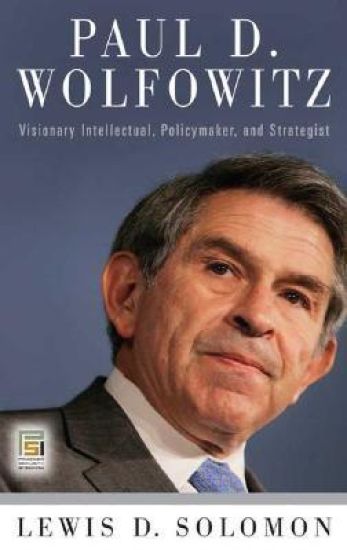
Paul D. Wolfowitz

Paul D. Wolfowitz

Lewis D. Solomon

Praeger Publishers Inc
2007
sidottu
With the announcement of his resignation from the World Bank, the ongoing saga of Paul Wolfowitz, played out in the front pages of the world's newspapers, came to a dramatic conclusion. Paul D. Wolfowitz, as columnist George F. Will wrote in the Washington Post (May 12, 2005), has never been elected to office or served in a president's cabinet, but he has mattered much more than most who have. A longtime State Department hand (Assistant Secretary of State for East Asian and Pacific Affairs, Ambassador to Indonesia), a leading scholar/intellectual (Dean of the Johns Hopkins School of Advanced International Studies), Deputy Secretary of Defense for four years, and one of the architects of the Bush Doctrine, Wolfowitz is a crucial figure in post-Cold War foreign and security policy. He most recently served as President of the World Bank. In each of these roles, he has stood out for his neoconservative and often uncompromising positions. It is no wonder that he is often vilified by the Left and lionized by the Right. In this first full-length biography of Wolfowitz, Solomon attempts to capture him not by delineating the quotidian details of his career, but by tracing his intellectual development and bureaucratic influence at key points along the road to Baghdad and beyond.