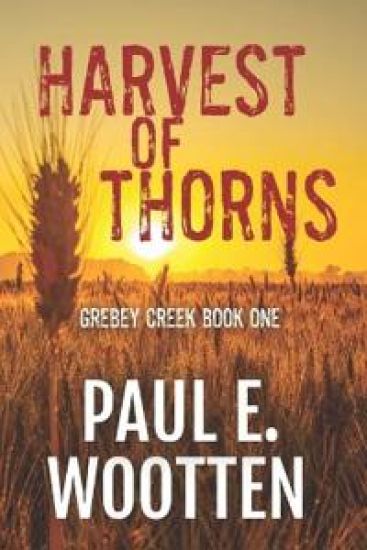
Lincoln Stanley is the first black farmer in Saxon County. Will he be the last?Missouri, 1934. In the late-night shadows of a remote barn the Saxon County Knights are born. Levi Manning is their leader. The Knights are his ticket away from the family farm he has run into the ground. Levi convinces the Knights to move - immediately and forcefully.Harvester Stanley, Lincoln's son, is privy to the Knights' plans. Though just fourteen, he uses wits and intelligence to stop the Knights in their tracks.If only it could stay that way.The Knights strike again, and within weeks innocent people are dead. Families, black and white, are left to pick up the pieces. Over the next sixty years no family is impacted more than Levi Manning's. His son, Earl, longs for the idyllic Grebey Island of his childhood, while grandson Chan never wants to see the place again. Both are good men, successful in their own rights, but forced time and again to face the consequences of a bloody past.Find out what Amazon reviewers already know: Paul E. Wootten's debut book has been praised for its richly developed characters and locations. Start here and proceed through all of Paul's books. You'll encounter life lived through the eyes of characters from all walks of life. Their struggles are real, and you get to go along for the ride.
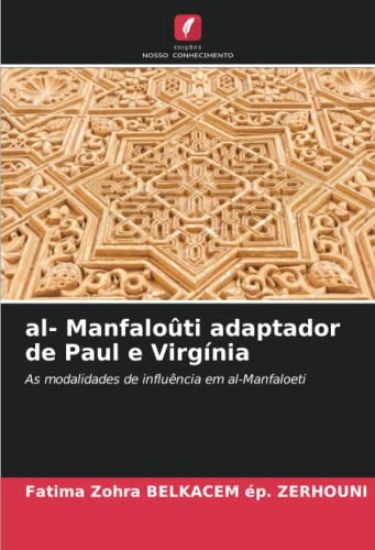
A tradu o liter ria para o rabe permaneceu uma tradu o interminavelmente "etnoc ntrica", tanto na sua economia como no seu entusiasmo. Em al-Fad la d'al-Manfalo ti, uma vers o "arabizada" de Bernardin de Saint-Pierre's Paul et Virginie. Podemos notar que, desde a primeira leitura desta tradu o, falta algo; uma forma suficientemente tensa, devido a uma diferen a de sistema e l ngua.
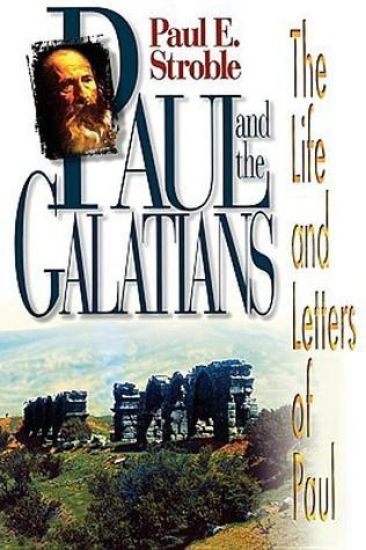
This is the second book in the series, The Life and Letters of Paul. It explores the difficult relationship between the Law of the Jews and the Christian faith of the Galatians. Drawing on historical data about the Galatian congregations and their origins, the author explains how Paul understood his audience and tailored his argument to address the particular threats to their faith and their misunderstandings of the relationship between law and freedom. The six sessions are: 1 - Who Were the Galatians? 2 - A "Second String" Apostle? 3 - Faith or Works? 4 - Faith Came First 5 - What Is Liberty? 6 - Life in the Spirit Each session is self-contained and includes study questions for reflection that are all you need to lead a group or to pursue the study on your own. The volumes in The Life and Letters of Paul series are especially appropriate for those who want an in-depth study of the Pauline epistles. Key Features: - Use of historical, archaeological, and geographical data for the region - Direct engagement of learners with the Scriptures - Learning helps interspersed with the study text - Based on the New Revised Standard Version Key Benefits: - Helps readers grasp the culture and context from which Paul s writings emerged Paul and the Galatians explores crucial theological, ethical, and ecclesiastical questions in Paul s famous epistle. Each session is self-contained and includes questions for reflection. The volumes in The Life and Letters of Paul series are especially appropriate for those who want an in-depth study of the Pauline epistles. The six session topics are: Who Were the Galatians? (1:1 10); A Second String Apostle? (1:11 2:10); Faith or Works? (2:11 2:21); Faith Came First (3:1 4:7); What Is Liberty? (4:8 5:24); and Life in the Spirit (5:25 6:18). To see another group study offered by Cokesbury, go to the Adult Bible Studies website. "
Acclaimed international chef Jean-Paul Weber understands the magic of the kitchen and the joys of preparing a delicious meal. Now he has compiled an easy-to-follow cookbook to help amateur cooks create dishes with a continental flair. In A Promenade through Jean-Paul's Kitchen, Weber offers a selection of his favorite recipes from his decades of work in some of the best restaurants in Europe and America. There are show-stopping recipes such as vichyssoise and b che de No l, as well as simpler recipes such as West Coast fish stew and sweet and savory tarts. Weber also shares beloved recipes from his native village of Ingwiller in Alsace, France, including recipes for his father's quiche and his mother's handmade ravioli. In addition, readers will learn how to make some classic sauces associated with French cuisine, tasty side dishes, and sinfully delicious desserts. Intermingled with Weber's recipes are a variety of useful cooking tips: how to craft the perfect hors d'oeuvre, how to make a stunning centerpiece entr e, and how to cook beef, poultry, pork, seafood, lamb, and veal. The cookbook's pages are enlivened with drawings and charming anecdotes and memories of Weber's youth in Alsace as well as folklore connected with many of the recipes.
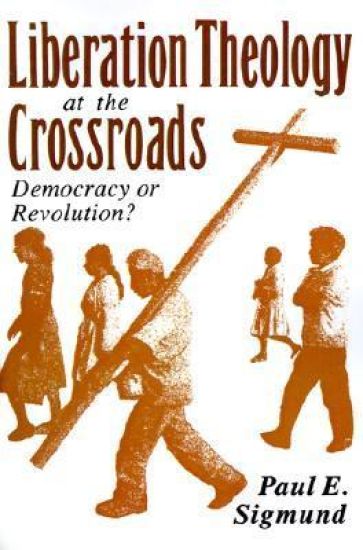
Liberation theology originated in Catholic Latin America at the end of the 1960s in response to prevalent conditions of poverty and oppression. Its basic tenet was that it is the primary duty of the church to seek to promote social and economic justice. Since that time it has grown in influence, spreading to other areas of the Third World, along with bitter controversy about its ties to Marxist ideology and violent revolution. Drawing on both English and Spanish sources, this critical study examines the history, method, and doctrines of liberation theology. Sigmund considers the movement's origins in political circumstances in Latin America and provides case studies of its role in such events as the revolution and counter-revolution in Chile, and in the revolutionary movements in El Salvador and Nicaragua. Examining the thought of major liberation theologians, as well as the critical responses of the Vatican, Sigmund shows that liberation theology is a complex phenomenon, comprising a variety of kinds and degrees of radicalism. He discerns a general trend away from the Marxist rhetoric that has often characterized the movement in the past and towards the kind of grassroots populist reform typified by the Basic Christian Communities Movement.
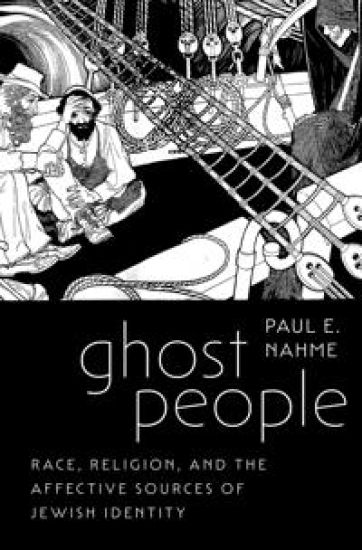
What does race feel like? What does race make people feel? Ghost People traces the haunting feelings that constitute race as a structural, social, and psychic experience in modern European history by focusing on the case of Jewish racialization. Taking a theoretical cue from W.E.B. Du Bois' question in the Souls of Black Folk, "How does it feel to be a problem?" Paul E. Nahme queries the affective experience of racial formation and reframes how we should think and talk about the Jewish Question. He explores the ways feeling and emotion have colored the lives of different people in social, political, and psycho-social dimensions. From Enlightenment constructions of rational humanism, to nineteenth-century colonialism, antisemitism and the racialization of Jews in Europe, to the construction of Judaism as a religion and the disavowal of racial categories in liberal secularism, Nahme asks after the enduring problem of race for Jewish identity, and for how Jews have remained haunted by the specter of race in the modern world.
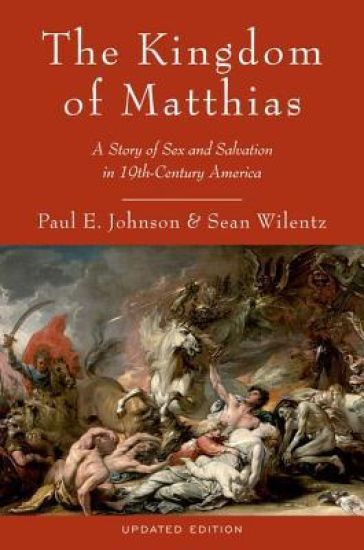
Paul Johnson and Sean Wilentz brilliantly recapture the forgotten story of Matthias the Prophet, imbuing their richly researched account with the dramatic force of a novel. In the hands of Johnson and Wilentz, the strange tale of Matthias opens a fascinating window into the turbulent movements of the religious revival known as the Second Great Awakening--movements that swept up great numbers of evangelical Americans and gave rise to new sects like the Mormons. Into this teeming environment walked a down-and-out carpenter named Robert Matthews, who announced himself as Matthias, prophet of the God of the Jews. His hypnotic personality drew in a cast of unforgettable characters--the meekly devout businessman Elijah Pierson, who once tried to raise his late wife from the dead; the young attractive Christian couple, Benjamin Folger and his wife Ann (who seduced the woman-hating Prophet); and the shrewd ex-slave Isabella Van Wagenen, regarded by some as "the most wicked of the wicked." None was more colorful than the Prophet himself, a bearded, thundering tyrant who gathered his followers into an absolutist household, using their money to buy an elaborate, eccentric wardrobe, and reordering their marital relations. By the time the tensions within the kingdom exploded into a clash with the law, Matthias had become a national scandal. "Written with the sweep and narrative drive of a best seller.... It has sex and sexual depravity, violence, murder, a courtroom drama, a media feeding frenzy, prostitution, lunacy, theft, religion (plenty of that), politics, social commentary, subtle humor, a fascinating if weird cast of characters, and a surprise ending." --Atlantic Monthly "The Kingdom of Matthias is about marginality, fantasy, commerce, sex, and the soul's hunger, and the classically American combustion of all of the above.... A delicious and disturbing book." --Leon Wieseltier "As exciting as a novel...a wonderful book that will keep you up all night." --Katha Pollitt
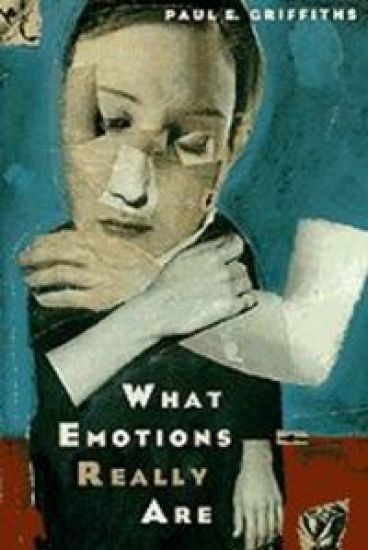
This study argues that much research of the emotions has been misguided. It attempts to show that "emotion" encompasses psychological states of very different, and thus not comparable, kinds. Some emotions, such a brief flaring up of anger in response to some experience, are evolutionary ancient, reflex-like responses which appear insensitive to culture. Others, like moral guilt, differ importantly across cultures, despite their long history in humans, and affinity to behaviour seen in other species. Yet other emotions appear to be the acting-out of today's psychological myths, as ghost possession acted out the metaphysical myths of past centuries. These three kinds of responses have different evolutionary origins, different adaptive functions, different biological bases, and different roles in human psychology. The concept that binds them together, emotion, plays no useful role, since there is no object of scientific knowledge that corresponds to it. A detailed overview of the relevant theoretical approaches is provided in this text, assessing the relative merits of three main theoretical approaches: affect programme theory, evolutionary psychology, and social constructionism.
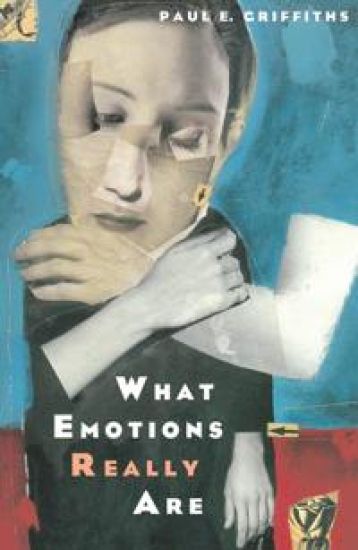
This study argues that much research of the emotions has been misguided. It attempts to show that "emotion" encompasses psychological states of very different, and thus not comparable, kinds. Some emotions, such as a brief flaring up of anger in response to some experience, are evolutionary ancient, reflex-like responses which appear insensitive to culture. Others, like moral guilt, differ importantly across cultures, despite their long history in humans, and affinity to behaviour seen in other species. Yet other emotions appear to be the acting-out of today's psychological myths, as ghost possession acted out the metaphysical myths of past centuries. These three kinds of responses have different evolutionary origins, different adaptive functions, different biological bases, and different roles in human psychology. The concept that binds them together, emotion, plays no useful role, since there is no object of scientific knowledge that corresponds to it. A detailed overview of the relevant theoretical approaches is provided in this text, assessing the relative merits of three main theoretical approaches: affect programme theory, evolutionary psychology, and social constructionism.