Kirjojen hintavertailu. Mukana 11 244 527 kirjaa ja 12 kauppaa.

Kirjahaku

Etsi kirjoja tekijän nimen, kirjan nimen tai ISBN:n perusteella.

1000 tulosta hakusanalla Paul Freedman

Out of the East

Out of the East

Paul Freedman

Yale University Press
2009
pokkari
How medieval Europe’s infatuation with expensive, fragrant, and exotic spices led to an era of colonial expansion and the discovery of new worlds The demand for spices in medieval Europe was extravagant and was reflected in the pursuit of fashion, the formation of taste, and the growth of luxury trade. It inspired geographical and commercial exploration ,as traders pursued such common spices as pepper and cinnamon and rarer aromatic products, including ambergris and musk. Ultimately, the spice quest led to imperial missions that were to change world history.This engaging book explores the demand for spices: why were they so popular, and why so expensive? Paul Freedman surveys the history, geography, economics, and culinary tastes of the Middle Ages to uncover the surprisingly varied ways that spices were put to use--in elaborate medieval cuisine, in the treatment of disease, for the promotion of well-being, and to perfume important ceremonies of the Church. Spices became symbols of beauty, affluence, taste, and grace, Freedman shows, and their expense and fragrance drove the engines of commerce and conquest at the dawn of the modern era.
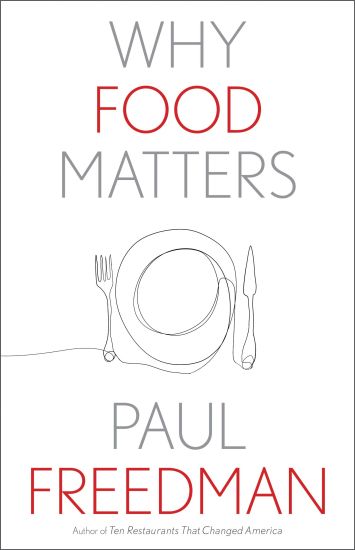
Why Food Matters

Why Food Matters

Paul Freedman

Yale University Press
2021
sidottu
From the author of Ten Restaurants That Changed America, an exploration of food’s cultural importance and its crucial role throughout human history“A rich and fascinating narrative that reaches deep into the historical and cultural larder of societal experience, powerfully illustrating the myriad ways that food matters as an essential condiment for humanity.”—Danny Meyer, founder of Union Square Hospitality Group and Shake Shack Why does food matter? Historically, food has not always been considered a serious subject on par with, for instance, a performance art like opera or a humanities discipline like philosophy. Necessity, ubiquity, and repetition contribute to the apparent banality of food, but these attributes don’t capture food’s emotional and cultural range, from the quotidian to the exquisite. In this short, passionate book, Paul Freedman makes the case for food’s vital importance, stressing its crucial role in the evolution of human identity and human civilizations. Freedman presents a highly readable and illuminating account of food’s unique role in our lives. It is a way to express community and celebration, but it can also be divisive. This wide-ranging book is a must-read for food lovers and all those interested in how cultures and identities are formed and maintained.
Why Food Matters

Why Food Matters

Paul Freedman

YALE UNIVERSITY PRESS
2022
pokkari
From the author of Ten Restaurants That Changed America, an exploration of food’s cultural importance and its crucial role throughout human history“A rich and fascinating narrative that reaches deep into the historical and cultural larder of societal experience, powerfully illustrating the myriad ways that food matters as an essential condiment for humanity.”—Danny Meyer, founder of Union Square Hospitality Group and Shake Shack Why does food matter? Historically, food has not always been considered a serious subject on par with, for instance, a performance art like opera or a humanities discipline like philosophy. Necessity, ubiquity, and repetition contribute to the apparent banality of food, but these attributes don’t capture food’s emotional and cultural range, from the quotidian to the exquisite. In this short, passionate book, Paul Freedman makes the case for food’s vital importance, stressing its crucial role in the evolution of human identity and human civilizations. Freedman presents a highly readable and illuminating account of food’s unique role in our lives. It is a way to express community and celebration, but it can also be divisive. This wide-ranging book is a must-read for food lovers and all those interested in how cultures and identities are formed and maintained.
The Origins of Peasant Servitude in Medieval Catalonia

The Origins of Peasant Servitude in Medieval Catalonia

Paul Freedman

Cambridge University Press
1991
sidottu
This 1991 book describes the history of peasants in Catalonia, the wealthiest and politically dominant part of the medieval Kingdom of Aragon, between the ninth and fifteenth centuries. It focuses on the period from 1000 to 1300, when free peasants who had held property under favourable frontier conditions were progressively subjugated by their lords. Between 1462 and 1486 Catalan peasants mounted the most successful peasants' war of the Middle Ages, and achieved the formal abolition of servitude. Professor Freedman seeks to explain both the process by which servitude was strengthened over the centuries, and its eventual weakening before a direct moral and military challenge. He addresses both the causes of enserfment and the limitations on its effectiveness. The book integrates archival evidence with the theories of society elaborated by medieval jurists. Comparisons are drawn between Catalonia and other regions, and its experience is situated within a spectrum of different social and economic conditions.
The Origins of Peasant Servitude in Medieval Catalonia

The Origins of Peasant Servitude in Medieval Catalonia

Paul Freedman

Cambridge University Press
2004
pokkari
This book describes the history of peasants in Catalonia, the wealthiest and politically dominant part of the medieval Kingdom of Aragon, between the ninth and fifteenth centuries. It focuses on the period from 1000 to 1300, when free peasants who had held property under favourable frontier conditions were progressively subjugated by their lords. Between 1462 and 1486 Catalan peasants mounted the most successful peasants’ war of the Middle Ages, and achieved the formal abolition of servitude. Professor Freedman seeks to explain both the process by which servitude was strengthened over the centuries, and its eventual weakening before a direct moral and military challenge. He addresses both the causes of enserfment and the limitations on its effectiveness. The book integrates archival evidence with the theories of society elaborated by medieval jurists. Comparisons are drawn between Catalonia and other regions, and its experience is situated within a spectrum of different social and economic conditions.
Images of the Medieval Peasant

Images of the Medieval Peasant

Paul Freedman

Stanford University Press
1999
sidottu
The medieval clergy, aristocracy, and commercial classes tended to regard peasants as objects of contempt and derision. In religious writings, satires, sermons, chronicles, and artistic representations peasants often appeared as dirty, foolish, dishonest, even as subhuman or bestial. Their lowliness was commonly regarded as a natural corollary of the drudgery of their agricultural toil. Yet, at the same time, the peasantry was not viewed as "other" in the manner of other condemned groups, such as Jews, lepers, Muslims, or the imagined "monstrous races" of the East. Several crucial characteristics of the peasantry rendered it less clearly alien from the elite perspective: peasants were not a minority, their work in the fields nourished all other social orders, and, most important, they were Christians. In other respects, peasants could be regarded as meritorious by virtue of their simple life, productive work, and unjust suffering at the hands of their exploitive social superiors. Their unrewarded sacrifice and piety were also sometimes thought to place them closest to God and more likely to win salvation. This book examines these conflicting images of peasants from the post-Carolingian period to the German Peasants' War. It relates the representation of peasants to debates about how society should be organized (specifically, to how human equality at Creation led to subordination), how slavery and serfdom could be assailed or defended, and how peasants themselves structured and justified their demands. Though it was argued that peasants were legitimately subjugated by reason of nature or some primordial curse (such as that of Noah against his son Ham), there was also considerable unease about how the exploitation of those who were not completely alien—who were, after all, Christians—could be explained. Laments over peasant suffering as expressed in the literature might have a stylized quality, but this book shows how they were appropriated and shaped by peasants themselves, especially in the large-scale rebellions that characterized the late Middle Ages.
Images of the Medieval Peasant

Images of the Medieval Peasant

Paul Freedman

Stanford University Press
1999
pokkari
The medieval clergy, aristocracy, and commercial classes tended to regard peasants as objects of contempt and derision. In religious writings, satires, sermons, chronicles, and artistic representations peasants often appeared as dirty, foolish, dishonest, even as subhuman or bestial. Their lowliness was commonly regarded as a natural corollary of the drudgery of their agricultural toil. Yet, at the same time, the peasantry was not viewed as "other" in the manner of other condemned groups, such as Jews, lepers, Muslims, or the imagined "monstrous races" of the East. Several crucial characteristics of the peasantry rendered it less clearly alien from the elite perspective: peasants were not a minority, their work in the fields nourished all other social orders, and, most important, they were Christians. In other respects, peasants could be regarded as meritorious by virtue of their simple life, productive work, and unjust suffering at the hands of their exploitive social superiors. Their unrewarded sacrifice and piety were also sometimes thought to place them closest to God and more likely to win salvation. This book examines these conflicting images of peasants from the post-Carolingian period to the German Peasants' War. It relates the representation of peasants to debates about how society should be organized (specifically, to how human equality at Creation led to subordination), how slavery and serfdom could be assailed or defended, and how peasants themselves structured and justified their demands. Though it was argued that peasants were legitimately subjugated by reason of nature or some primordial curse (such as that of Noah against his son Ham), there was also considerable unease about how the exploitation of those who were not completely alien—who were, after all, Christians—could be explained. Laments over peasant suffering as expressed in the literature might have a stylized quality, but this book shows how they were appropriated and shaped by peasants themselves, especially in the large-scale rebellions that characterized the late Middle Ages.
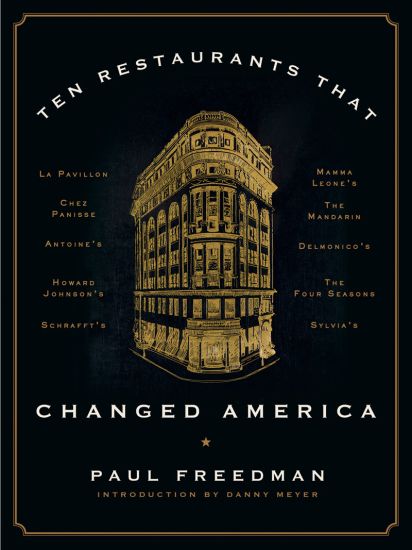
Ten Restaurants That Changed America

Ten Restaurants That Changed America

Paul Freedman

Liveright Publishing Corporation
2016
sidottu
Far more than simply a discussion of food, chefs and recipes, in Ten Restaurants That Changed America Paul Freedman creates a social history, examining how restaurants came to reflect class, gender, assimilation, mass consumption and culture in America. Ranging from the 1830s and the New York Steak House Delmonico’s—which Freedman identifies as the first real American restaurant—to the current flowering of avant-garde cuisine, each chapter looks at fashions for different types of food from turtle soup to Caesar Salad. Ten Restaurants That Changed America is a must read for serious foodies.
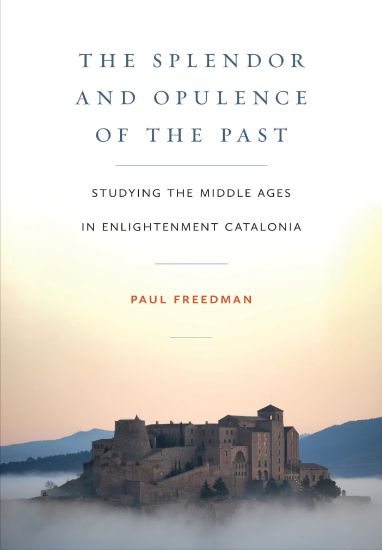
The Splendor and Opulence of the Past

The Splendor and Opulence of the Past

Paul Freedman

CORNELL UNIVERSITY PRESS
2023
sidottu
The Splendor and Opulence of the Past traces the career of Jaume Caresmar (1717–1791), a church historian and a key figure of the Catalan Enlightenment who transcribed tens of thousands of parchments to preserve and glorify Catalonia's medieval past in the face of its diminishing autonomy. As Paul Freedman shows, Caresmar's books, essays, and transcriptions—some only recently discovered—provide fresh insights into the Middle Ages as remembered in modern Catalonia and illustrate how a nation's past glories and humiliations can inform contemporary politics and culture. From the ninth to the sixteenth centuries, Catalonia was a thriving, independent set of principalities within what would become modern Spain. In the wake of the dismantling of its autonomy by the eighteenth-century Spanish state, Catalan scholars looked to the region's medieval independence and wealth as a means of maintaining a distinct Catalan identity and resisting Castilian hegemony. Through their writings and archival investigations, Caresmar and the canons at Santa Maria de Bellpuig de les Avellanes, where Caresmar was abbot, laid the foundations for not only the scholarly exploration of the Middle Ages but also the development of Catalan national sentiment. Although the eighteenth century is often regarded as a low point for the Catalan language and culture, The Splendor and Opulence of the Past emphasizes the importance of this period's antiquarians to Catalan projects of modernization and economic progress and links their historiography of the Middle Ages to struggles over Catalonia's relationship to the Spanish state over two centuries.
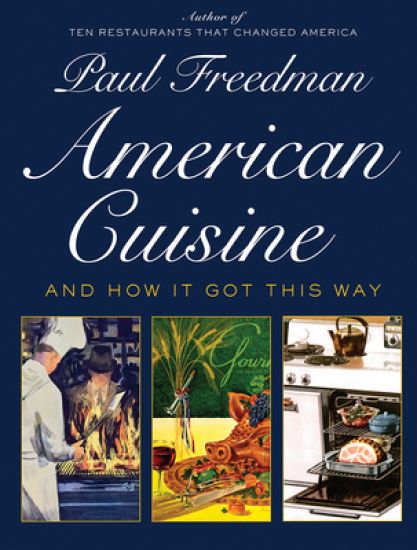
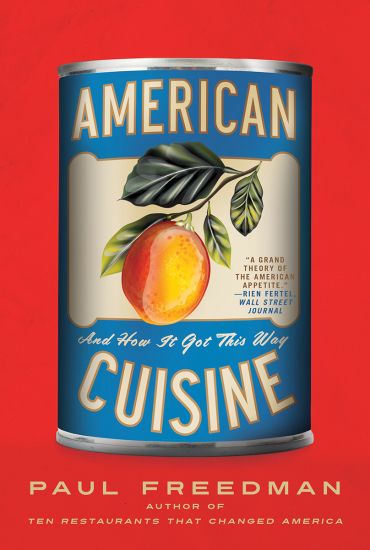
American Cuisine

American Cuisine

Paul Freedman

Liveright Publishing Corporation
2019
sidottu
For decades, many have doubted the existence of American cuisine, believing that hamburgers, hot dogs and pizza define the nation’s palate. Not so, says leading food historian Paul Freedman. Freedman traces the twentieth-century rise of processed food, standardisation and fast-food restaurants. With the farm-to-table movement, a culinary revolution has transformed the way Americans eat. Whether analysing how businesses and advertisers used seduction and guilt to dictate women’s food-shopping habits, exploring how class determines what Americans eat or documenting the contributions provided by immigrants, Freedman reveals an astonishing history.
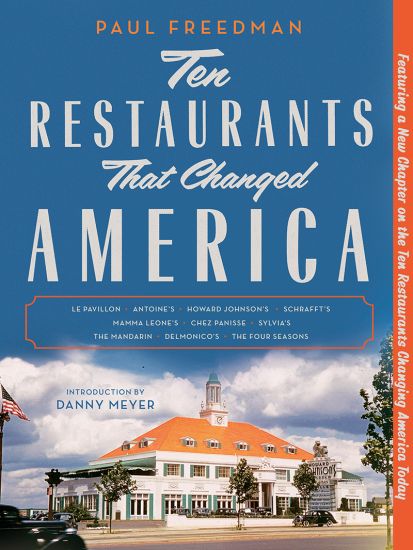
Ten Restaurants That Changed America

Ten Restaurants That Changed America

Paul Freedman

Liveright Publishing Corporation
2018
nidottu
Combining an historian’s rigor with a food enthusiast’s palate, Paul Freedman’s seminal and highly entertaining Ten Restaurants That Changed America reveals how the history of our restaurants reflects nothing less than the history of America itself. Whether charting the rise of our love affair with Chinese food through San Francisco’s fabled Mandarin; evoking the poignant nostalgia of Howard Johnson’s, the beloved roadside chain that foreshadowed the pandemic of McDonald’s; or chronicling the convivial lunchtime crowd at Schrafft’s, the first dining establishment to cater to women’s tastes, Freedman uses each restaurant to reveal a wider story of race and class, immigration and assimilation. “As much about the contradictions and contrasts in this country as it is about its places to eat” (The New Yorker), Ten Restaurants That Changed America is a “must-read” (Eater) that proves “essential for anyone who cares about where they go to dinner” (Wall Street Journal Magazine).
American Cuisine

American Cuisine

Paul Freedman

Liveright Publishing Corporation
2020
nidottu
Hailed as a “grand theory of the American appetite” (Rien Fertel, Wall Street Journal), food historian Paul Freedman’s American Cuisine demonstrates that there is an exuberant, diverse, if not always coherent, American cuisine that reflects the history of the nation itself. Combining historical rigor and culinary passion, Freedman underscores three recurrent themes—regionality, standardization, and variety—that shape a “captivating history” (Drew Tewksbury, Los Angeles Times) of American culinary habits from post-colonial days to the present. The book is also filled with anecdotes that will delight food lovers: · how dry cereal was created by William Kellogg for people with digestive problems; · that Chicken Parmesan is actually an American invention; · and that Florida Key-Lime Pie, based on a recipe developed by Borden’s condensed milk, goes back only to the 1940s. A new standard in culinary history, American Cuisine is an “an essential book” (Jacques Pepin) that sheds fascinating light on a past most of us thought we never had.
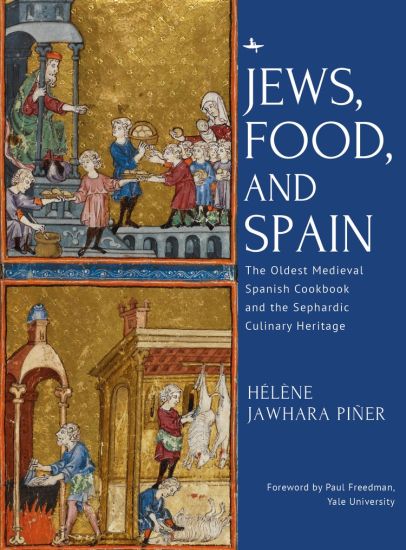
Jews, Food, and Spain

Jews, Food, and Spain

Helene Jawhara Pier; Paul Freedman

Academic Studies Press
2022
sidottu
2023 Gourmand World Cookbook Awards Best Jewish Food Culture Book; 2022 National Jewish Book Award FinalistA fascinating study that will appeal to both culinarians and readers interested in the intersecting histories of food, Sephardic Jewish culture, and the Mediterranean world of Iberia and northern Africa.In the absence of any Jewish cookbook from the pre-1492 era, it requires arduous research and a creative but disciplined imagination to reconstruct Sephardic tastes from the past and their survival and transmission in communities around the Mediterranean in the early modern period, followed by the even more extensive diaspora in the New World. In this intricate and absorbing study, Hélène Jawhara Piñer presents readers with the dishes, ingredients, techniques, and aesthetic principles that make up a sophisticated and attractive cuisine, one that has had a mostly unremarked influence on modern Spanish and Portuguese recipes.
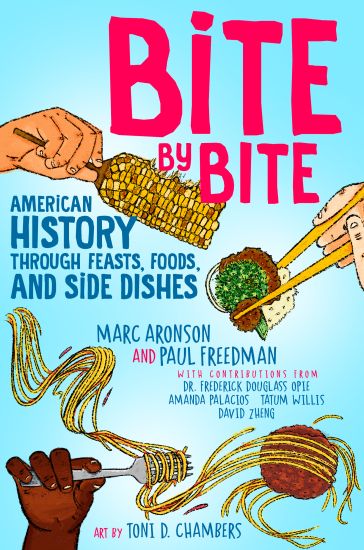
Bite by Bite: American History Through Feasts, Foods, and Side Dishes

Bite by Bite: American History Through Feasts, Foods, and Side Dishes

Marc Aronson; Paul Freedman; Frederick Douglass Opie

Atheneum Books for Young Readers
2024
sidottu
Explore the fascinating history of America as told through the lens of food in this illustrated nonfiction middle grade book "sure to please history buffs and foodies alike" (BCCB, starred review) that lays out the diverse cultures that have combined to create the rich and delicious tapestry of the American country and cuisine. As American as apple pie. It's a familiar saying, yet gumbo and chop suey are also American What we eat tells us who we are: where we're from, how we move from place to place, and how we express our cultures and living traditions. In twelve dishes that take readers from thousands of years ago through today, this book explores the diverse peoples and foodways that make up the United States. From First Salmon Feasts of the Umatilla and Cayuse tribes in the Pacific Northwest to fish fries celebrated by formerly enslaved African Americans, from "red sauce" Italian restaurants popular with young bohemians in the East to Cantonese restaurants enjoyed by rebellious young eaters in the West, this is the true story of the many Americas--laid out bite by bite.
Bite by Bite

Bite by Bite

Marc Aronson; Paul Freedman; Frederick Douglass Opie; Amanda Palacios; Tatum Willis; David Zheng

SIMON SCHUSTER
2025
pokkari
Explore the fascinating history of America as told through the lens of food in this illustrated nonfiction middle grade book “sure to please history buffs and foodies alike” (BCCB, starred review) that lays out the diverse cultures that have combined to create the rich and delicious tapestry of the American country and cuisine.As American as apple pie. It’s a familiar saying, yet gumbo and chop suey are also American! What we eat tells us who we are: where we’re from, how we move from place to place, and how we express our cultures and living traditions. In twelve dishes that take readers from thousands of years ago through today, this book explores the diverse peoples and foodways that make up the United States. From First Salmon Feasts of the Umatilla and Cayuse tribes in the Pacific Northwest to fish fries celebrated by formerly enslaved African Americans, from “red sauce” Italian restaurants popular with young bohemians in the East to Cantonese restaurants enjoyed by rebellious young eaters in the West, this is the true story of the many Americas—laid out bite by bite.
Thrive

Thrive

Andrew Freedman; Paul Elliott

Lioncrest Publishing
2021
pokkari
Thrive provides leaders with a clear blueprint for building a high-performance culture. Drawing on extensive experience in change management, organizational development, and performance consulting, Andrew Freedman and Paul Elliott share their systematic approach, known as the Exemplary Performance System (EPS), in a way that enables leaders to take immediate action to shift workforce engagement and performance.Thrive teaches leaders how to create clarity and alignment around what high performance looks like and how to replicate it at scale, identify and eliminate barriers to performance excellence, effectively align individual and team priorities with those of the company, and build organizational systems and processes that accelerate business and financial results.
Thrive

Thrive

Andrew Freedman; Paul Elliott

Lioncrest Publishing
2021
sidottu
Thrive provides leaders with a clear blueprint for building a high-performance culture. Drawing on extensive experience in change management, organizational development, and performance consulting, Andrew Freedman and Paul Elliott share their systematic approach, known as the Exemplary Performance System (EPS), in a way that enables leaders to take immediate action to shift workforce engagement and performance.Thrive teaches leaders how to create clarity and alignment around what high performance looks like and how to replicate it at scale, identify and eliminate barriers to performance excellence, effectively align individual and team priorities with those of the company, and build organizational systems and processes that accelerate business and financial results.
Plants for Desperate Times

Plants for Desperate Times

Paul E. Minnis; Robert Freedman

University of Arizona Press
2024
nidottu
Famines and other serious food shortages have been one of the scourges faced by humanity for millennia.Plants for Desperate Times is an introduction to the diversity of plant foods that have saved millions of lives during lethal food shortages. While not a field guide, it addresses questions about what famine foods are and why they are important. The work highlights one hundred plants. Each entry includes the common and scientific names, botanical family, distribution, use as a famine food and other uses, and nutritional information. The species come from across the botanical kingdom, demonstrating the diversity of life-saving plants and the human ingenuity of making what might seem to be inedible plants edible. Unexpectedly, important famine foods include alternative uses of important crops as well as native plants. Beyond a study of famine foods, the authors share why keeping an inventory of plant foods of last resort is so important. They help to build an understanding of little-known and underappreciated foods that may have a greater role in provisioning humanity in the future. As much as we may hope that severe food scarcity will never occur again, history suggests otherwise, and Plants for Desperate Times provides invaluable documentation of these vital foods.
Plants for Desperate Times

Plants for Desperate Times

Paul E. Minnis; Robert Freedman

University of Arizona Press
2024
sidottu
Famines and other serious food shortages have been one of the scourges faced by humanity for millennia.Plants for Desperate Times is an introduction to the diversity of plant foods that have saved millions of lives during lethal food shortages. While not a field guide, it addresses questions about what famine foods are and why they are important. The work highlights one hundred plants. Each entry includes the common and scientific names, botanical family, distribution, use as a famine food and other uses, and nutritional information. The species come from across the botanical kingdom, demonstrating the diversity of life-saving plants and the human ingenuity of making what might seem to be inedible plants edible. Unexpectedly, important famine foods include alternative uses of important crops as well as native plants. Beyond a study of famine foods, the authors share why keeping an inventory of plant foods of last resort is so important. They help to build an understanding of little-known and underappreciated foods that may have a greater role in provisioning humanity in the future. As much as we may hope that severe food scarcity will never occur again, history suggests otherwise, and Plants for Desperate Times provides invaluable documentation of these vital foods.
Rural Economy and Country Life in the Medieval West

Rural Economy and Country Life in the Medieval West

Georges Duby; Paul H. Freedman

University of Pennsylvania Press
1998
nidottu
In 1961 Georges Duby wrote what is still the best overview of European medieval rural history to date. Originally published in French and first translated into English in 1968, Rural Economy and Country Life in the Medieval West brings together local research on the countryside and its economic life and distills from it lessons that apply much more widely. With this edition, the University of Pennsylvania Press brings this modern classic back into print.