Kirjojen hintavertailu. Mukana 11 244 527 kirjaa ja 12 kauppaa.

Kirjahaku

Etsi kirjoja tekijän nimen, kirjan nimen tai ISBN:n perusteella.

1000 tulosta hakusanalla Paul Israel

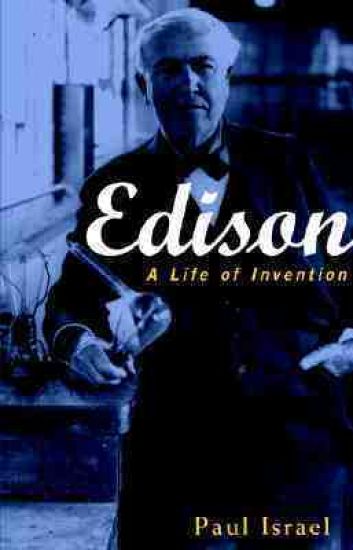
Edison

Edison

Paul Israel

John Wiley Sons Inc
2000
nidottu
From the preeminent Edison scholar . . . The definitive life of the inventor of the modern age The conventional story is so familiar and reassuring that it has come to read more like American myth than history: With only three months of formal education, a curious and hardworking young man beats the odds and becomes one of the greatest inventors in history. Not only does he invent the phonograph and the first successful electric light bulb, but he also establishes the first electrical power distribution company and lays the technological groundwork for today's movies, telephones, and sound recording industry. Through relentless tinkering, by trial and error, the story goes, Thomas Alva Edison perseveres-and changes the world. In the revelatory Edison: A Life of Invention, author Paul Israel exposes and enriches this one-dimensional view of the solitary "Wizard of Menlo Park," expertly situating his subject within a thoroughly realized portrait of a burgeoning country on the brink of massive change. The second half of the nineteenth century witnessed the birth of corporate America, and with it the newly overlapping interests of scientific, technological, and industrial cultures. Working against the common perception of Edison as a symbol of a mythic American past where persistence and individuality yielded hard-earned success, Israel demonstrates how Edison's remarkable career was actually very much a product of the inventor's fast-changing era. Edison drew widely from contemporary scientific knowledge and research, and was a crucial figure in the transformation of invention into modern corporate research and collaborative development. Informed by more than five million pages of archival documents, Paul Israel's ambitious life of Edison brightens the unexamined corners of a singularly influential and triumphant career in science. In these pages, history's most prolific inventor-he received an astounding 1,093 U.S. patents-comes to life as never before. Edison is the only biography to cover the whole of Edison's career in invention, including his early, foundational work in telegraphy. Armed with unprecedented access to Edison's workshop diaries, notebooks, and letters, Israel brings fresh insights into how the inventor's creative mind worked. And for the first time, much attention is devoted to his early family life in Ohio and Michigan-where the young Edison honed his entrepreneurial sense and eye for innovation as a newsstand owner and editor of a weekly newspaper-underscoring the inventor's later successes with new resonance and pathos. In recognizing the inventor's legacy as a pivotal figure in the second Industrial Revolution, Israel highlights Edison's creation of the industrial research laboratory, driven by intricately structured teams of researchers. The efficient lab forever changed the previously serendipitous art of workshop invention into something regular, predictable, and very attractive to corporate business leaders. Indeed, Edison's collaborative research model became the prototype upon which today's research firms and think tanks are based. The portrait of Thomas Alva Edison that emerges from this peerless biography is of a man of genius and astounding foresight. It is also a portrait rendered with incredible care, depth, and dimension, rescuing our century's godfather of invention from myth and simplification. Advance Praise for Edison: A Life of Invention "Familiar Edison stories come alive with fresh insight . . . Israel's scholarship is impeccable while his deceptively easy grace transforms a challenging story into a page turner. One hundred years of history texts have been right all along. Thomas Edison, a protean actor on the American landscape, requires our attention. Paul Israel has given us a book to satisfy that requirement for a long time to come."- John M. Staudenmaier, S.J., Editor, Technology and Culture
Edison

Edison

Paul Israel

John Wiley Sons Inc
1998
sidottu
From the preeminent Edison scholar . . . The definitive life of the inventor of the modern age The conventional story is so familiar and reassuring that it has come to read more like American myth than history: With only three months of formal education, a curious and hardworking young man beats the odds and becomes one of the greatest inventors in history. Not only does he invent the phonograph and the first successful electric light bulb, but he also establishes the first electrical power distribution company and lays the technological groundwork for today's movies, telephones, and sound recording industry. Through relentless tinkering, by trial and error, the story goes, Thomas Alva Edison perseveres-and changes the world. In the revelatory Edison: A Life of Invention, author Paul Israel exposes and enriches this one-dimensional view of the solitary "Wizard of Menlo Park," expertly situating his subject within a thoroughly realized portrait of a burgeoning country on the brink of massive change. The second half of the nineteenth century witnessed the birth of corporate America, and with it the newly overlapping interests of scientific, technological, and industrial cultures. Working against the common perception of Edison as a symbol of a mythic American past where persistence and individuality yielded hard-earned success, Israel demonstrates how Edison's remarkable career was actually very much a product of the inventor's fast-changing era. Edison drew widely from contemporary scientific knowledge and research, and was a crucial figure in the transformation of invention into modern corporate research and collaborative development. Informed by more than five million pages of archival documents, Paul Israel's ambitious life of Edison brightens the unexamined corners of a singularly influential and triumphant career in science. In these pages, history's most prolific inventor-he received an astounding 1,093 U.S. patents-comes to life as never before. Edison is the only biography to cover the whole of Edison's career in invention, including his early, foundational work in telegraphy. Armed with unprecedented access to Edison's workshop diaries, notebooks, and letters, Israel brings fresh insights into how the inventor's creative mind worked. And for the first time, much attention is devoted to his early family life in Ohio and Michigan-where the young Edison honed his entrepreneurial sense and eye for innovation as a newsstand owner and editor of a weekly newspaper-underscoring the inventor's later successes with new resonance and pathos. In recognizing the inventor's legacy as a pivotal figure in the second Industrial Revolution, Israel highlights Edison's creation of the industrial research laboratory, driven by intricately structured teams of researchers. The efficient lab forever changed the previously serendipitous art of workshop invention into something regular, predictable, and very attractive to corporate business leaders. Indeed, Edison's collaborative research model became the prototype upon which today's research firms and think tanks are based. The portrait of Thomas Alva Edison that emerges from this peerless biography is of a man of genius and astounding foresight. It is also a portrait rendered with incredible care, depth, and dimension, rescuing our century's godfather of invention from myth and simplification. Advance Praise for Edison: A Life of Invention "Familiar Edison stories come alive with fresh insight . . . Israel's scholarship is impeccable while his deceptively easy grace transforms a challenging story into a page turner. One hundred years of history texts have been right all along. Thomas Edison, a protean actor on the American landscape, requires our attention. Paul Israel has given us a book to satisfy that requirement for a long time to come."- John M. Staudenmaier, S.J., Editor, Technology and Culture
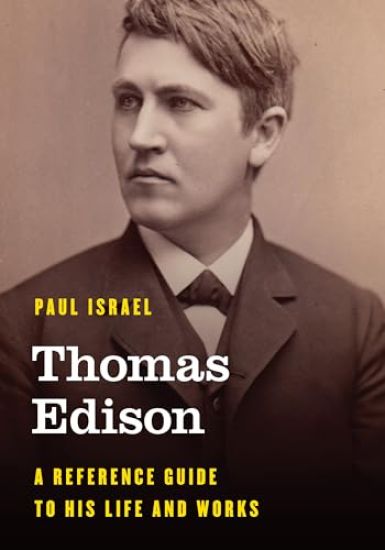
Thomas Edison

Thomas Edison

Paul Israel

BLOOMSBURY PUBLISHING PLC
2024
sidottu
The most prolific inventor in American history, Thomas Edison played a major role in creating industries that have altered life around the globe: electric light and power, recorded sound and motion pictures. He also made significant innovations in telecommunications, battery technology, office machinery, the manufacture of Portland Cement, and processes for working low-grade ores. He was able to contribute to such a wide array of industries because he was not a lone inventor. At his workshops and laboratories in Newark, Menlo Park, and West Orange in New Jersey, Edison brought together teams of skilled research assistants and machinists. These teams allowed him to do more than any one person could do. In the process he transformed invention by making it part of a larger process of research, development, and commercialization that we now call innovation. That transformation—as much as any single invention—has become a crucial feature of the modern world.Includes a detailed chronology of Edison’s life and work.An introduction that provides an overview of Edison’s life and work.The A-to-Z section includes three hundred encyclopedic entries on Edison’s inventions, laboratories, business enterprises, public image and numerous individuals with whom he was associated.An extensive bibliography of Edison’s publications and select interviews; modern, contemporaneous, and juvenile biographies; and thirteen subject areas related to Edison’s work and influence.The index thoroughly cross-references the chronological and encyclopedic entries.
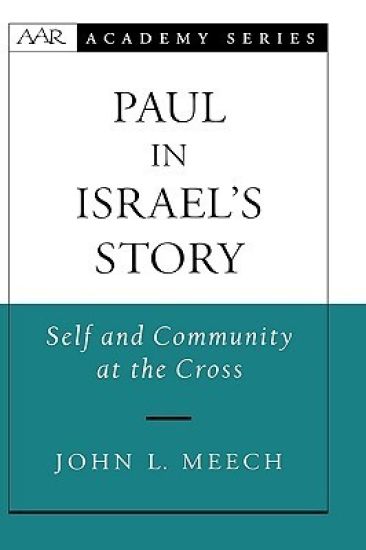
Paul in Israel's Story

Paul in Israel's Story

John L. Meech

Oxford University Press Inc
2006
sidottu
In this book, John Meech reflects on St. Paul's construal of Christian identity in light of what has become known as the 'new paradigm' in Pauline studies, which stresses the communal aspects of Paul's thought and his narrative understanding of the self. Then he offers a pivotal analysis of Rudolph Bultmann's phenomenology of the self and its impact on his demythologizing interpretation of Paul's writings. Meech also engages Paul Ricoeur's late work Oneself as Another, as a guide to the postmodern problem of selfhood.
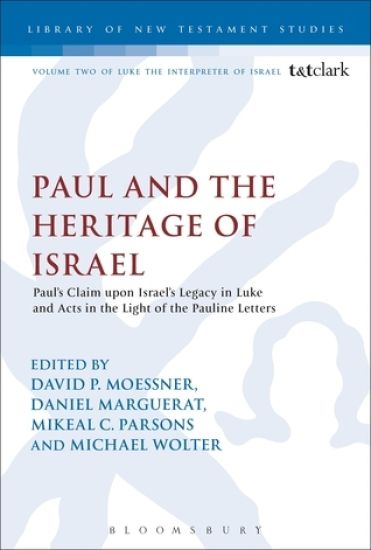
Paul and the Heritage of Israel
As a sequel to the hugely successful Jesus and the Heritage of Israel, this book brings together fourteen internationally acclaimed scholars in antiquities studies and experts on Paul and Luke. The contributors provoke new approaches to the troubled relation of the Lukan Paul by re-configuring the figure and impact of Paul upon nascent Christianity, with the two leading questions as a driving force. First, ‘Who is "Israel" and the "church" for Luke and Luke's Paul' and secondly ‘Who is Jesus of Nazareth and who is Paul in relation to both?' The contributors provide challenging new perspectives on approaches to the figure of Paul in recent scholarship as well as in the scholarship of previous generations, ‘re-figuring' Paul by examining both how he is portrayed in Acts, and how the Pauline figure of Acts may be envisioned within Paul's own writings. Paul and the Heritage of Israel thus accomplishes what no other single volume has done: combining both the ‘Paul of Paul' and the ‘Paul of Luke' in one seminal volume.
Paul and the Heritage of Israel
As a sequel to the hugely successful Jesus and the Heritage of Israel this book brings together fourteen internationally acclaimed scholars in antiquities studies and experts on Paul and Luke. The contributors provoke new approaches to the troubled relation of the Lukan Paul by re-configuring the figure and impact of Paul upon nascent Christianity, with the two leading questions as a driving force. First, 'Who is "Israel" and the "church" for Luke and Luke's Paul' and secondly 'Who is Jesus of Nazareth and who is Paul in relation to both?' The contributors provide challenging new perspectives on approaches to the figure of Paul in recent scholarship as well as in the scholarship of previous generations, 're-figuring' Paul by examining both how he is portrayed in Acts, and how the Pauline figure of Acts may be envisioned within Paul's own writings. Paul and the Heritage of Israel thus accomplishes what no other single volume has done: combining both the 'Paul of Paul' and the 'Paul of Luke' in one seminal volume.
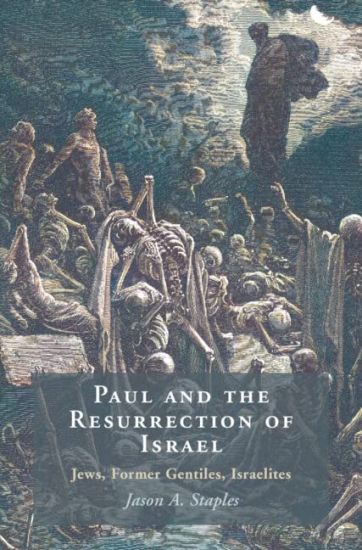
Paul and the Resurrection of Israel

Paul and the Resurrection of Israel

Jason A. Staples

Cambridge University Press
2023
sidottu
The gospel promoted by Paul has for many generations stirred passionate debate. That gospel proclaimed equal salvific access to Jews and gentiles alike. But on what basis? In making sense of such a remarkable step forward in religious history, Jason Staples reexamines texts that have proven thoroughly resistant to easy comprehension. He traces Paul's inclusive theology to a hidden strand of thinking in the earlier story of Israel. Postexilic southern Judah, he argues, did not simply appropriate the identity of the fallen northern kingdom of Israel. Instead, Judah maintained a notion of 'Israel' as referring both to the north and the ongoing reality of a broad, pan-Israelite sensibility to which the descendants of both ancient kingdoms belonged. Paul's concomitant belief was that northern Israel's exile meant assimilation among the nations – effectively a people's death – and that its restoration paradoxically required gentile inclusion to resurrect a greater 'Israel' from the dead.
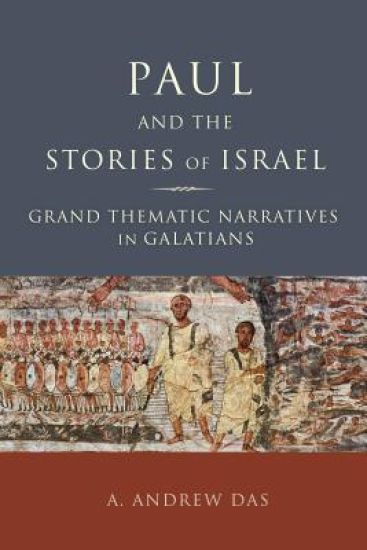
Paul and the Stories of Israel

Paul and the Stories of Israel

A. Andrew Das

Fortress Press,U.S.
2016
sidottu
Much recent scholarship on Paul has searched for implicit narratives behind Paul's scriptural allusions, especially in the wake of Richard B. Hays's ground breaking work on the apostle's appropriation of Scripture. A. Andrew Das reviews six proposals for "grand thematic narratives" behind the logic of Galatians-potentially, six explanations for the fabric of Paul's theology: the covenant (N. T. Wright); the influx of nations to Zion (Terence Donaldson); Isaac's near sacrifice (Scott Hahn, Alan Segal); the Spirit as cloud in the wilderness (William Wilder); the Exodus (James Scott, Sylvia Keesmaat); and the imperial cult (Bruce Winter at al.). Das weighs each of these proposals exegetically and finds them wanting-more examples of what Samuel Sandmel famously labelled "parallelomania" than of sound exegetical method. He turns at last to reflect on the risks of (admittedly alluring) totalizing methods and lifts up a seventh proposal with greater claim to evidence in the text of Galatians: Paul's allusions to Isaiah's servant passages.
Paul and the Scriptures of Israel
What is an 'echo' of Scripture? How can we detect echoes of the Old Testament in Paul, and how does their detection facilitate interpretation of the Pauline text? These are questions addressed by this collection of essays from the SBL programme unit Scripture in Early Judaism and Christianity. The first part of the book reports its vigorous 1990 discussion of Richard Hays's 'Echoes of Scripture in the Letters of Paul', including contributions by Craig Evans, James Sanders, William Scott Green and Christiaan Beker, as well as a response by R.B. Hays. The second part of the book studies specific passages where reference is made to the Old Testament explicitly or allusively. The contributors here are James Sanders, Linda Belleville, Carol Stockhausen, James Scott, Nancy Calvert and Stephen Brown.
Paul and the Vocation of Israel

Paul and the Vocation of Israel

Lionel J. Windsor

De Gruyter
2014
sidottu
The Apostle Paul was the greatest early missionary of the Christian gospel. He was also, by his own admission, an Israelite. How can both these realities coexist in one individual? This book argues that Paul viewed his mission to the Gentiles, in and of itself, as the primary expression of his Jewish identity. The concept of Israel’s divine vocation is used to shed fresh light on a number of much-debated passages in Paul’s letter to the Romans.
Paul, Moses and the History of Israel

Paul, Moses and the History of Israel

Scott J Hafemann

Paternoster Press
2005
nidottu
Many have asked thequestion "Can I findmeaning in life" This isbecause we as humanbeings need to feel thatour lives count forsomething that they aresignificant. It is linked toour selfesteem. To feel unimportant is to feelinadequate and this is a difficult burden to bear.Enjoying a meaningful life is therefore a preciousthing and something that is worthwhilesearching for. However if our existence isultimately meaningless if there's no God to obeyand no immortality to enjoy then our individualactions become utterly futile. This book is apersonal apologetic that is thoughtprovoking forboth Christians and nonChristians.
The Israeli Economy

The Israeli Economy

Paul Rivlin

Routledge
2019
sidottu
This comprehensive study examines the sources of growth and stagnation in the Israeli economy, focusing on the development of the industrial and agricultural sectors, changes in the supply of labour, the nature of capital markets and the expansion of the defence budget.
The Israeli Economy

The Israeli Economy

Paul Rivlin

Routledge
2021
nidottu
This comprehensive study examines the sources of growth and stagnation in the Israeli economy, focusing on the development of the industrial and agricultural sectors, changes in the supply of labour, the nature of capital markets and the expansion of the defence budget. The author analyzes policies that have been successful in lowering inflation an
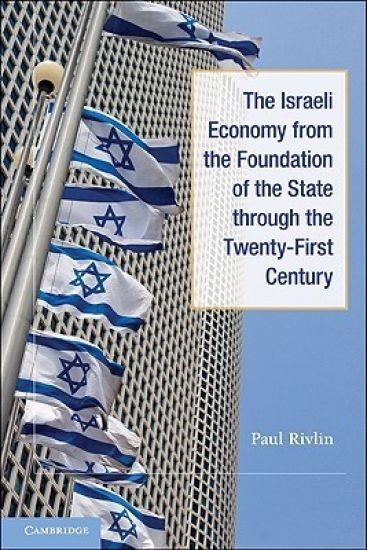
The Israeli Economy from the Foundation of the State through the 21st Century
This book analyzes the development of the Israeli economy in its historical context. It shows how the ideology of the dominant group in the Zionist movement led to the development of agriculture, thus meeting the preconditions for successful industrialization. Remarkable, if uneven, growth has taken place, with increasing allocations for defense. Regional isolation led to the emphasis on high-quality exports for developed markets that has stimulated the technological base. Israel has benefited from mass immigration and increased access to foreign capital, factors that have transformed the economy. The book includes chapters on the development of the Jewish community in Palestine during the British Mandate; macroeconomic developments and economic policy; globalization and high technology; defense; the economics of the Arab minority; Israeli settlements and relations with the Palestinians; and the role of religion. It concludes with an examination of the socioeconomic divisions that have widened as the economy has grown.
The Israeli Economy from the Foundation of the State through the 21st Century
This book analyzes the development of the Israeli economy in its historical context. It shows how the ideology of the dominant group in the Zionist movement led to the development of agriculture, thus meeting the preconditions for successful industrialization. Remarkable, if uneven, growth has taken place, with increasing allocations for defense. Regional isolation led to the emphasis on high-quality exports for developed markets that has stimulated the technological base. Israel has benefited from mass immigration and increased access to foreign capital, factors that have transformed the economy. The book includes chapters on the development of the Jewish community in Palestine during the British Mandate; macroeconomic developments and economic policy; globalization and high technology; defense; the economics of the Arab minority; Israeli settlements and relations with the Palestinians; and the role of religion. It concludes with an examination of the socioeconomic divisions that have widened as the economy has grown.
Israel’s Forever War

Israel’s Forever War

Paul Moorcraft

Biteback Publishing
2024
sidottu
No war in living memory has stirred up such anger, fear and loathing as the long-running Israel–Palestine conflict, and peace in the region has never seemed further away. The 7 October 2023 attack by Hamas on Israel had far-reaching and potentially devastating consequences for the Middle East and for the world. As the war has expanded to take in other players in the area, the future of Israel as a regional superpower is now in doubt and the chances of all-out war between Israel and its neighbours have become much greater. This essential work looks at the background to the Hamas–Israel war and asks whether the international system can contain two simultaneous wars in Europe and the Levant. It examines the wars that preceded this one, the rise of Hamas and the roles Hezbollah, Iran and Syria play in the conflict. Paul Moorcraft considers the war’s impact on Israeli society, the economy and the Israel Defense Forces, while also looking at how media and propaganda shape our view of the war and how the conflict affects the whole region’s relationships with the west. Here, Moorcraft brings all perspectives together in an expert and balanced analysis, examining the potential outcomes of the war and arguing that the two-state solution should be revived. Peace has never looked more impossible – but the alternative, a forever war, is even more impossible.