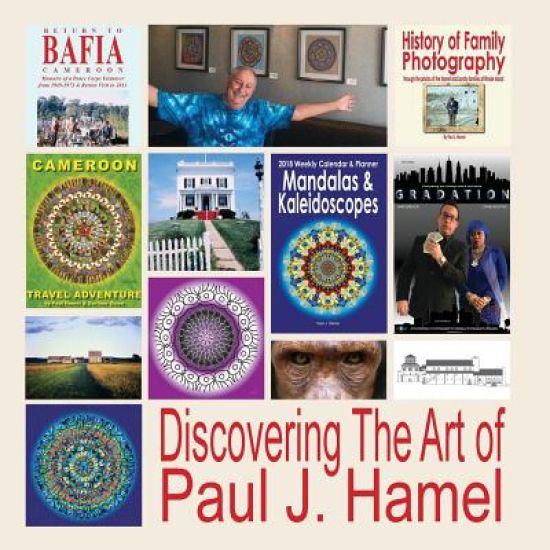
The History of Family Photographyfeatures a collection of hundreds of photos taken over a century. The photos spotlight two French Canadian immigrant families, the Hamels and the Landrys, of Rhode Island. Topics include a short history of family photography, the origins of the photos and the people in them what they wore, where they lived, where they worked, what transportation they used, the kind of pets they had, family resemblances, and some candid moments.
Imagine being in your early twenties and very, very far away from home in a small town in the middle of Africa with no internet, no television, no phone, no electricity, no running water, no car, and no paved roads. That was my life in Bafia from 1969 to 1971. Sometimes people ask me what it was like serving in the Peace Corps in Africa. I usually reply that it was a life-changing experience that has influenced me greatly throughout my life. My Peace Corps experiences taught me many valuable lessons that helped guide me through life: self-reliance, appreciation for what I have, the art of giving without expecting anything in return, and feeling that I have made a difference in the lives of others.
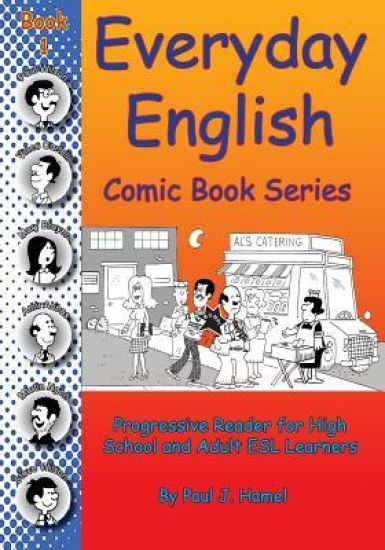
Everyday English comic books are designed as progressive readers for learners of English as a second or foreign language. The books starts out with simple grammatical structures and vocabulary, then gradually build to more complex forms. For example, in Chapter 1 of Book 1, the verb to be, the indefinite article, the words this/that, these/those, and singular and plural nouns are introduced. The situations cover common everyday language skills and competencies such as meeting and introducing people, telling time, asking for directions, describing items, and filling out simple forms. The stories are about a group of people who meet at school and become friends. They are instructors, students, and the caterer. They meet at break time and talk about their families, jobs, shopping, parties, travel and much more.
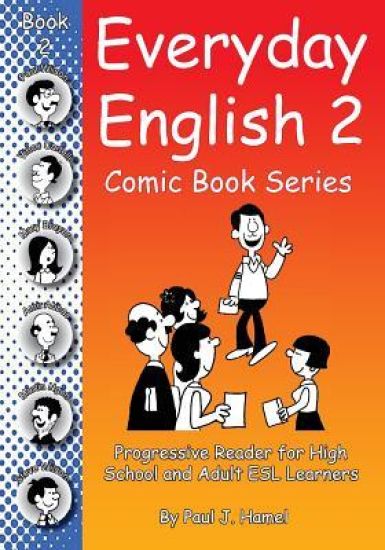
Everyday English comic books are designed as progressive readers for learners of English as a second or foreign language. The series starts out with simple grammatical structures and vocabulary, then gradually build to more complex forms.The situations in Book 2 cover common everyday language skills and competencies such as meeting and introducing people, talking about the weather, identifying career goals, reporting a crime, reading schedules, and describing past actions. The skills/competencies, grammar structures, and vocabulary that are presented in this book are detailed on the next page. Lists for Book 1 and 3 can be found at the end of this book. This comic book is accompanied by a workbook: English for Better Jobs 2. The content of the workbook follows the same story line and characters, and it provides detailed grammar explanations, oral practice drills, and writing exercises that are presented in the first half of workbook 2. It is available on Amazon.com.
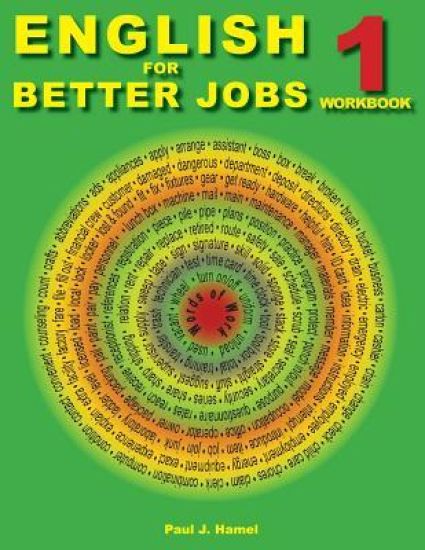
English for Better Jobs is the first book in a three-volume textbook/workbook series designed for adult English-as-Second-Language (ESL) learners who plan to enter the workforce. It presents the grammar, vocabulary, and language skills necessary for entry-level employment as well as getting along in an English-speaking environment. While students are learning basic English language skills in a mostly work-related context, they practice all four language skills: listening, speaking, reading, and writing. This series does not focus on academic goals and interests. This is an excellent supplement to an already existing ESL textbook/curriculum or for individual tutoring.Workbook 1 has been designed for "launched beginners" who have been exposed to some English and have basic literacy skills. The workbooks are divided into chapters and units with common themes: a classroom, a work shop, a store, a party, and the like. Within each chapter, each unit carefully integrates grammatical structures with practical vocabulary and every-day expressions in useful situations. The series aims at simplicity. The simple, clear page design is in black and white with large type and simple cartoon illustrations that allow students to concentrate on the lesson rather than be overwhelmed with crowded and complicated page layouts that may distract. The illustrations are timeless and help minimize the use of outdated photos, fashions, and current events. Each page measures 8 1/2 by 11 inches and is ideal for making photo copies or when using an overhead projector.Detailed teaching notes provide step-by-step explanations on how to present the lessons. The workbook is designed to be used in tutoring situations or in small group instruction. However, it can be used with larger groups, too. Although most exercises are self-explanatory, teaching notes at the back of the workbook give suggestions for class presentations and additional activities.
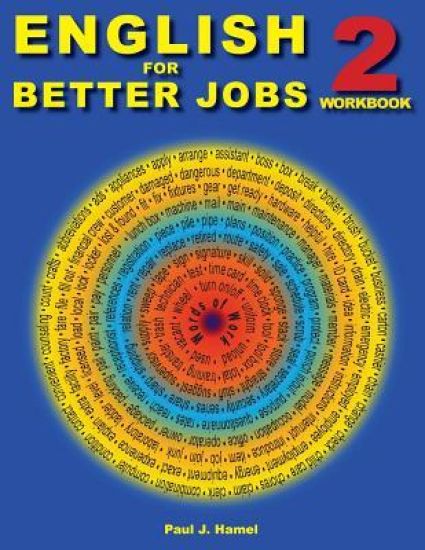
English for Better Jobs is the second book in a three-volume textbook/workbook series designed for adult English-as-Second-Language (ESL) learners who plan to enter the workforce. It presents the grammar, vocabulary, and language skills necessary for entry-level employment as well as getting along in an English-speaking environment. While students are learning basic English language skills in a mostly work-related context, they practice all four language skills: listening, speaking, reading, and writing. This series does not focus on academic goals and interests. This is an excellent supplement to an already existing ESL textbook/curriculum or for individual tutoring.Workbook 2 has been designed for "launched beginners" who have mastered basic literacy skills in reading and writing. The workbooks are divided into chapters and units with common themes: a classroom, a work shop, a store, a party, and the like. Within each chapter, each unit carefully integrates grammatical structures with practical vocabulary and every-day expressions in useful situations. The series aims at simplicity. The simple, clear page design is in black and white with large type and simple cartoon illustrations that allow students to concentrate on the lesson rather than be overwhelmed with crowded and complicated page layouts that may distract. The illustrations are timeless and help minimize the use of outdated photos, fashions, and current events. Each page measures 8 1/2 by 11 inches and is ideal for making photo copies or when using an overhead projector.Detailed teaching notes provide step-by-step explanations on how to present the lessons. The workbook is designed to be used in tutoring situations or in small group instruction. However, it can be used with larger groups, too. Although most exercises are self-explanatory, teaching notes at the back of the workbook give suggestions for class presentations and additional activities. After opening with a class discussion and conversation that presents the topic and useful vocabulary, a reading passage or dialog is read aloud by the instructor so students can practice listening skills. Then, the students read the text and answer questions in the "Understand" section. Next, students practice student-centered oral activities such as pair or group practice. This is followed by a grammar component is presented with additional oral practice. "Challenge" activities are sprinkled throughout the series to provide students with the opportunity to go beyond the material presented. Finally, varied written exercises, dictations, and short quizzes are presented in as natural a context as possible. The lessons recycle grammatical structures again and again, with review and new vocabulary in changing contexts. Survival and work-related vocational skills are carefully balanced. Most of the vocabulary presented in work-related situations is also applicable in other real life contexts.
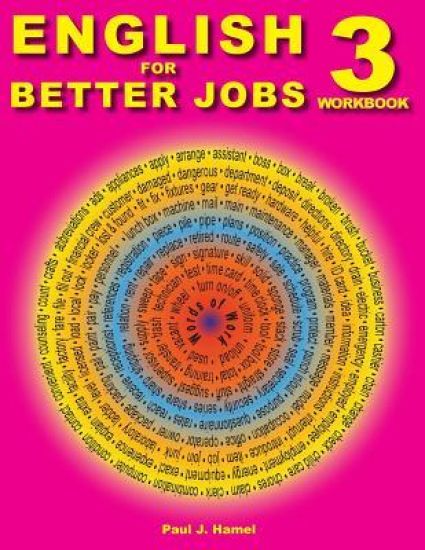
English for Better Jobs is the third book in a three-volume textbook/workbook series designed for adult English-as-Second-Language (ESL) learners who plan to enter the workforce. It presents the grammar, vocabulary, and language skills necessary for entry-level employment as well as getting along in an English-speaking environment. While students are learning basic English language skills in a mostly work-related context, they practice all four language skills: listening, speaking, reading, and writing. This series does not focus on academic goals and interests. This is an excellent supplement to an already existing ESL textbook/curriculum or for individual tutoring.For a quick look at the content of all three workbooks, go to At a Glance at the end of the General Teaching Notes.Workbook 3 has been designed for ESL high beginning and low intermediate students who have mastered basic literacy skills in reading and writing. The workbooks are divided into chapters and units with common themes: a classroom, a work shop, a store, a party, and the like. Within each chapter, each unit carefully integrates grammatical structures with practical vocabulary and every-day expressions in useful situations. The series aims at simplicity. The simple, clear page design is in black and white with large type and simple cartoon illustrations that allow students to concentrate on the lesson rather than be overwhelmed with crowded and complicated page layouts that may distract. The illustrations are timeless and help minimize the use of outdated photos, fashions, and current events. Each page measures 8 1/2 by 11 inches and is ideal for making photo copies or when using an overhead projector.Detailed teaching notes provide step-by-step explanations on how to present the lessons. The workbook is designed to be used in tutoring situations or in small group instruction. However, it can be used with larger groups, too. Although most exercises are self-explanatory, teaching notes at the back of the workbook give suggestions for class presentations and additional activities. After opening with a class discussion and conversation that presents the topic and useful vocabulary, a reading passage or dialog is read aloud by the instructor so students can practice listening skills. Then, the students read the text and answer questions in the "Understand" section. Next, students practice student-centered oral activities such as pair or group practice. This is followed by a grammar component is presented with additional oral practice. "Challenge" activities are sprinkled throughout the series to provide students with the opportunity to go beyond the material presented. Finally, varied written exercises, dictations, and short quizzes are presented in as natural a context as possible. The lessons recycle grammatical structures again and again, with review and new vocabulary in changing contexts. Survival and work-related vocational skills are carefully balanced. Most of the vocabulary presented in work-related situations is also applicable in other real life contexts.
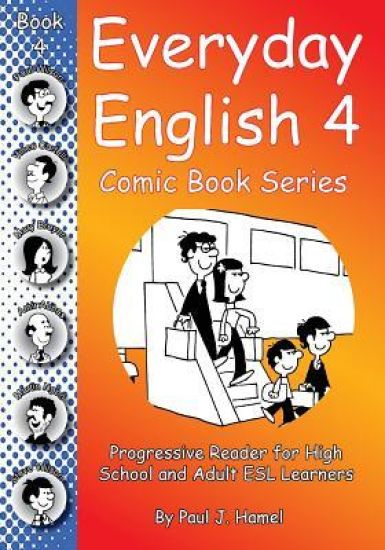
Everyday English comic books are designed as progressive readers for learners of English as a second or foreign language. The series starts out with simple grammatical structures and vocabulary, then gradually build to more complex forms. The situations in Book 4 cover common everyday language skills and competencies such as using the postal service, ordering food in a restaurant, understanding simple job ads and skills, making appointments for a job interview, answering simple interview questions, leaving a phone message, evaluating different cars, describing past events, using bank services, and understanding a paycheck and deductions The grammar recycles the structures presented in Books 1 and 2. Structures presented in this book include the use of definite and indefinite object pronouns, some/any, relative pronouns, position of relative pronouns and question words, regular and irregular verbs in the past tense, the comparative and superlative, and common prepositions and conjunctions, The vocabulary includes frequency words, common adjectives, common food items, restaurant terms, adverbs of frequency, job application terminology, common abbreviations used in employment ads, common adjectives and adverbs, common prepositions, expressions of time, and bank related vocabulary. See pages 143 for contents of other the comic books in this series. 3This comic book is accompanied by a workbook: English for Better Jobs 3. The content of the workbook follows the same story line and characters, and it provides detailed grammar explanations, oral practice drills, and writing exercises that are presented in the first half of English for Better Jobs 3. It is available on Amazon.com.
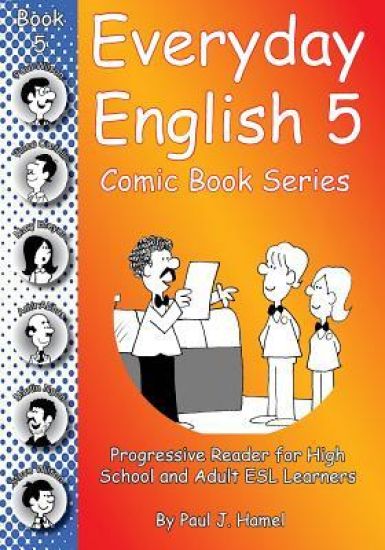
Everyday English comic books are designed as progressive readers for learners of English as a second or foreign language. The series starts out with simple grammatical structures and vocabulary, then gradually build to more complex forms.The situations in Book 5 cover common everyday language skills and competencies such as understanding safety signs and procedures, finding job resources, reading job ads and abbreviations used in want ads, using library resources, going on an interview, answering job-related questions, filling out an application, reporting to work, understanding a W-4 form, understanding Metric and American standard measurements, converting Metric to American standard measurements, doing basic math, planning and opening a business, reading news headlines, describing work responsibilities, understanding work rules and duties, and organizing an event (party).The grammar recycles the structures presented in Books 1-4. Structures presented in this book include the use of the past continuous tense, reflexive pronouns, when / while, the present unreal (with would, could, if, and were), the present perfect tense, contrasting simple past and present perfect, regular and irregular forms of the past participle, for and since, the present perfect continuous, already / yet, still / not anymore, past participles used as adjectives, the expression "it takes ... (time), the preposition by, the passive voice, modals and auxiliary verbs in the passive voice, the agent in the passive voice, gerunds, expressions ending in prepositions, verbs followed by gerunds, and gerunds used in compound nouns.The vocabulary includes safety terms, kinds of injuries, job titles, expressions of time used with the present perfect tense, job interview and application form terms, common work-related words, adjectives used in measurements, lines and shapes, and business terms. This comic book is accompanied by a workbook: English for Better Jobs 3. The content of the second half of the workbook follows the same story line and characters, and it provides detailed grammar explanations, oral practice drills, and writing exercises that are presented in the last half of English for Better Jobs 3. It is available on Amazon.com and eBay.
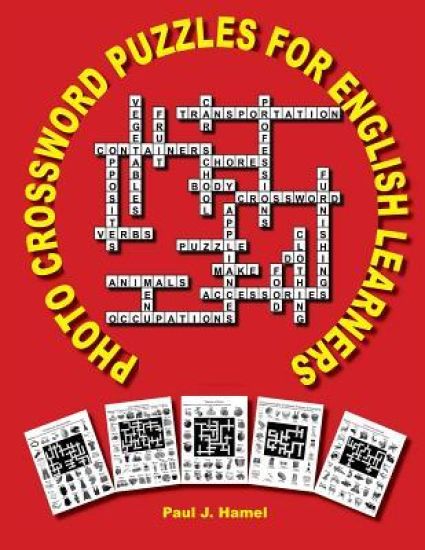
Photo Crosswords Puzzles for English Learners is a collection of puzzles and detailed lesson plans that can be reproduces as supplementary materials. The teacher's notes provide a variety of suggested vocabulary building techniques. The worksheets are appropriate for any level and appeals to students of all ages. This collection includes survival and life skills vocabulary relating to everyday subjects such as the names of animals, fruits, vegetables, body parts, car parts, clothing, common used verbs, food containers, food menu items, home furnishings, household chores, means of transportation, occupations, opposites concepts, professions, school items, and tools.
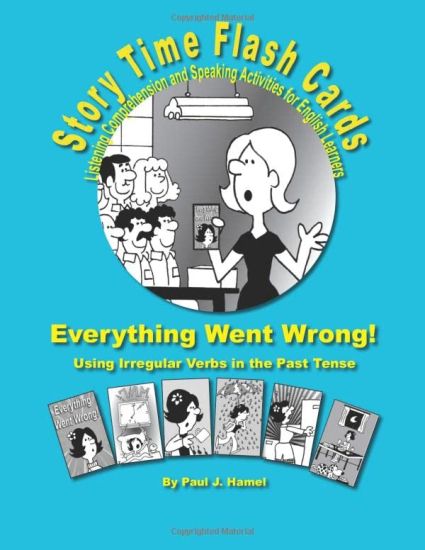
This set of hand-held visuals has been designed for the following types of language activities:1. Introducing essential vocabulary and structures by progressive development of a meaningful story line.2. Practicing and reinforcing tenses, irregular verbs, idiomatic expressions and question formation.3. Building listening-comprehension skills critical to everyday situations.4. Stimulating conversation by progressing from controlled oral practice to original self-expression.STORY DEVELOPMENTOn the back of each visual, the basic story is given at two different proficiency levels. The first version presents essential verbal expressions and stresses the present tense. The second version includes additional sentence structures and focuses on irregular verbs in the past tense. A corresponding set of comprehension questions accompanies each version of the story.DESIGN AND FORMATThis comprehensive set of instructional materials includes the following components:1. Forty attractively illustrated, hand-held visuals.2. Two complete story lines with corresponding comprehensive questions.3. Two reproducible reading passages for follow-up and reinforcement.4. Two reproducible contextual quizzes (i.e., cloze passages) to evaluate student comprehension.
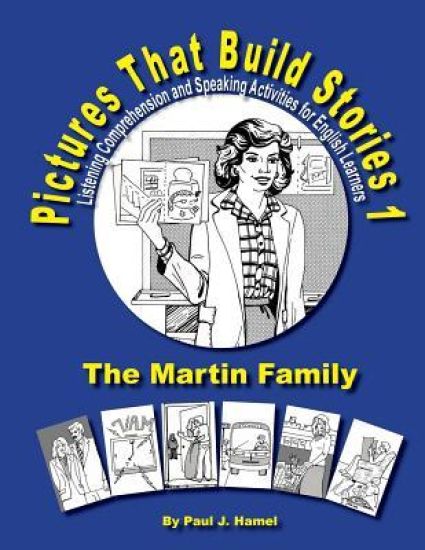
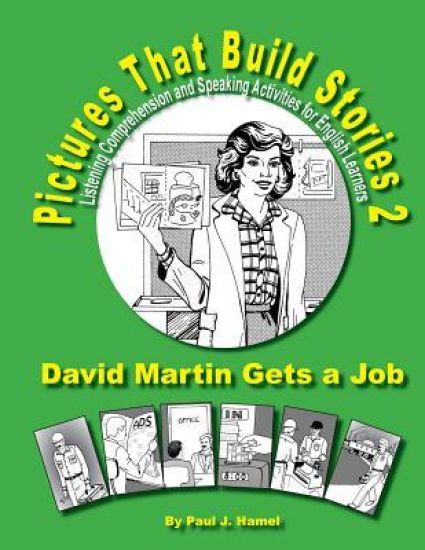
Pictures That Build StoriesThis set of hand-held visuals has been designed for the following types of language activities:1. Introducing essential employment vocabulary and expressions by progressive development of a meaningful story line.2. Practicing and reinforcing tenses, irregular verbs, idiomatic expressions and question formation.3. Building listening-comprehension skills critical to a successful job interview.4. Stimulating conversation by progressing from controlled oral practice to original self-expression.STORY DEVELOPMENTOn the back of each visual, the basic story is given at two different proficiency levels. The first version presents essential job vocabulary and expressions in simple sentences. The second version includes additional job vocabulary within more advanced sentence structures.DESIGN AND FORMATThis comprehensive set of instructional materials includes the following components: - Thirty-six attractively illustrated hand-held visuals.- Two complete story lines with corresponding comprehension questions.- Two reproducible reading passages for follow-up and reinforcement.- Ten reproducible activities to reinforce and to expand basic job-search skills.
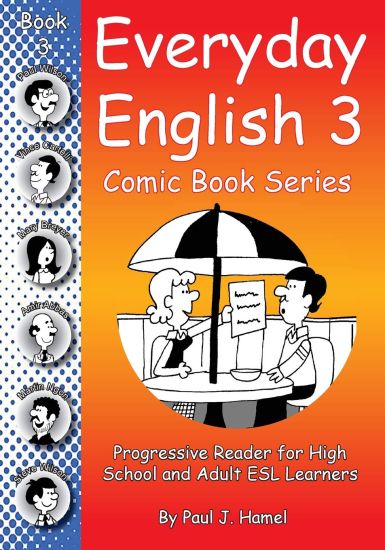
Everyday English comic books are designed as progressive readers for learners of English as a second or foreign language. The series starts out with simple grammatical structures and vocabulary, then gradually build to more complex forms.The situations in Book 3 cover common everyday language skills and competencies such understanding written directions, describing a series of events, reading a directory, understanding U.S. measurements, reading a simple recipe, reading food and car ads, making a medical appointment, describing common symptoms, reading road signs, requesting information about the price and condition of a car, and describing how people work.The grammar recycles the structures presented in Books 1 and 2. Structures presented in this book include the use of common regular and irregular verbs in the past tense, expressions used with do, make and get, two-word verbs, intransitive verbs with prepositions of direction, would like, that with clauses, say and tell, time expressions with take, and regular and irregular forms of adjectives and adverbs.The vocabulary includes commonly used technical terms, household chores, daily activities, common two-work verbs, common shopping terms, food containers, measurements, general medical terms, parts of the body, symptoms and illnesses, common adjectives and adverbs, and wording found on safety signs. See pages 117 for contents of other the comic books in this series. This comic book is accompanied by a workbook: English for Better Jobs 2. The content of the workbook follows the same story line and characters, and it provides detailed grammar explanations, oral practice drills, and writing exercises that are presented in the last half of English for Better Jobs 2.
This book outlines the development and perspectives of the Anthropocene concept by Paul J. Crutzen and his colleagues from its inception to its implications for the sciences, humanities, society and politics.The main text consists primarily of articles from peer-reviewed scientific journals and other scholarly sources. It comprises selected articles on the Anthropocene published by Paul J. Crutzen and a selection of related articles, mostly but not exclusively by colleagues with whom he collaborated closely.• In the year 2000 Nobel Laureate Paul J. Crutzen proposed the Anthropocene concept as a new epoch in Earth’s history • Comprehensive collection of articles on the Anthropocene by Paul J. Crutzen and his colleagues• Unique primary research literature and Crutzen’s comprehensive bibliography• Paul Crutzen’s scientific investigations into human influences on atmospheric chemistry and physics, the climate and the Earth system, leading to the conception of the Anthropocene• Reflections on the Anthropocene and its implications• Bibliometric review of the spread of the use of the Anthropocene concept in the Natural and Social Sciences, Humanities and Law
This open access book contains texts by the Nobel laureate Paul J. Crutzen who is best known for his research on ozone depletion. It comprises Crutzen’s autobiography, several pictures documenting important stages of his life, and his most important scientific publications. The Dutch atmospheric chemist is one of the world’s most cited scientists in geosciences. His political engagement makes him a tireless ambassador for environmental issues such as climate change. He popularized the term ‘Anthropocene’ for the current geological era acknowledging the enduring influence of humankind on planet Earth. This concept conceives humans to be a geologic factor, influencing the evolution of our globe and the living beings populating it. The selection of texts is representing Paul Crutzen´s scientific oeuvre as his research interests span from ozone depletion to the climatic impacts of biomass burning, the consequences of a worldwide atomic war – the Nuclear Winter - to geoengineering and the Anthropocene. This book is available open access under a Creative Commons Attribution 4.0 International License via link.springer.com.
Gorgeous photos of glass master Paul Stankard's work, paired with insights on his process and artistic philosophy. This striking gift book features luminous photos of world-renowned glass artist Paul Stankard’s astonishing art paired with insightful writing for all who seek out and appreciate creative energy. Stunning, full-page photos of Stankard’s paperweights show fascinating worlds: bees captured in flight, botanically exact bouquets, and miniature humanlike creatures are captured in bursting color. Stankard's unmatched technical skill is one-half of what has made him a master in glass art; the other half is his artistry, which he explores his insights on, sharing his thoughts about the energy behind the pieces. Stankard discusses key topics for all artists, such as building a routine, learning from failure, and fusing spirituality and art making. Stories of his own challenges and successes through the decades offer examples of how to navigate both with an open mind and readiness to learn. Collectors and aficionados of fine craft will enjoy this immersive experience in fine art, and especially in what leads up to it.