Kirjojen hintavertailu. Mukana 12 390 323 kirjaa ja 12 kauppaa.

Kirjahaku

Etsi kirjoja tekijän nimen, kirjan nimen tai ISBN:n perusteella.

1000 tulosta hakusanalla Paul K. Hooker

First and Second Chronicles

First and Second Chronicles

Paul K. Hooker

Westminster/John Knox Press,U.S.
2001
nidottu
Presents the first and second Chronicles as a theological reflection on the story of Israel's faith, using the narrative of Samuel and Kings, reaffirming Israel's position as the chosen people of God, and tracing the role of worship in Israel's history as a nation. Original.
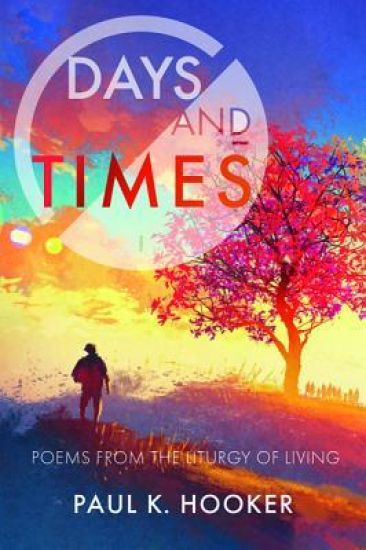
Days and Times

Days and Times

Paul K Hooker

Resource Publications (CA)
2018
pokkari
These poems seek to be playful with faith. Their aim is to expose the underlying sacredness of events that form the liturgy of living and to do so with sensitivity toward mystery, wonder, and occasionally suspicion. Some of them seek to tell stories left untold by the narratives of faith; others prod the narratives of ordinary life to see where faith may be hiding. These poems do not understand faith as an intellectual choice but rather as an involuntary trust in something beyond us, something always unclear, ill-lit, and inadequately characterized by the language religious people use to describe ultimate realities. They seek not so much to dismantle that language as to subvert its self-assuredness, to find words that surprise and compel different ways of seeing. ""Paul Hooker--a Renaissance man equally at home in the annals of music or political science or the Hebrew Bible or the corpus of Reformed theology or the noble principles of ecclesial polity--has become possessed in recent years by the charm and profundity of poetry. He has accessed a new sanctuary in his heart from which he mines such beautiful insight. I have been honored to hear him read to me much of his material while the ink is still wet. I am glad that now you get to encounter it, too."" --Theodore J. Wardlaw, President, Austin Presbyterian Theological Seminary ""Paul Hooker stands between the sturdiness of words and order on one hand and on the other the astounding wonders that still haunt this world, despite rumors to the contrary. In Days and Times, Paul receives God's gifts and returns his fitting worship, words wrapped in wonder. Paul teaches us that this economy gifting is not only for professional poets, but for any with eyes to see and ears to hear that God is afoot."" --David F. White, Austin Presbyterian Theological Seminary ""Paul Hooker writes poetry like a surgeon wields a blade, probing clefts between tenet and myth, perception and proof, human and holy concourse. With stunning precision, he lays bare the viscera of the soul and invites the reader to witness the wonders within. Though he states, 'These skittish truths we harness to our stars come uneasily to words, ' for Paul Hooker, the words flow with urgent grace and must be read."" --Dana Hughes, Professional Interim Pastor in the Presbyterian Church Paul K. Hooker is Associate Dean for Ministerial Formation and Advanced Studies at Austin Presbyterian Theological Seminary. He is the author of several books and articles in the field of biblical studies, including 1 and 2 Chronicles (Westminster Bible Companion) and A New Chronology for the Kings of Israel and Judah (with John Hayes).
Days and Times

Days and Times

Paul K Hooker

Resource Publications (CA)
2018
sidottu
These poems seek to be playful with faith. Their aim is to expose the underlying sacredness of events that form the liturgy of living and to do so with sensitivity toward mystery, wonder, and occasionally suspicion. Some of them seek to tell stories left untold by the narratives of faith; others prod the narratives of ordinary life to see where faith may be hiding. These poems do not understand faith as an intellectual choice but rather as an involuntary trust in something beyond us, something always unclear, ill-lit, and inadequately characterized by the language religious people use to describe ultimate realities. They seek not so much to dismantle that language as to subvert its self-assuredness, to find words that surprise and compel different ways of seeing. ""Paul Hooker--a Renaissance man equally at home in the annals of music or political science or the Hebrew Bible or the corpus of Reformed theology or the noble principles of ecclesial polity--has become possessed in recent years by the charm and profundity of poetry. He has accessed a new sanctuary in his heart from which he mines such beautiful insight. I have been honored to hear him read to me much of his material while the ink is still wet. I am glad that now you get to encounter it, too."" --Theodore J. Wardlaw, President, Austin Presbyterian Theological Seminary ""Paul Hooker stands between the sturdiness of words and order on one hand and on the other the astounding wonders that still haunt this world, despite rumors to the contrary. In Days and Times, Paul receives God's gifts and returns his fitting worship, words wrapped in wonder. Paul teaches us that this economy gifting is not only for professional poets, but for any with eyes to see and ears to hear that God is afoot."" --David F. White, Austin Presbyterian Theological Seminary ""Paul Hooker writes poetry like a surgeon wields a blade, probing clefts between tenet and myth, perception and proof, human and holy concourse. With stunning precision, he lays bare the viscera of the soul and invites the reader to witness the wonders within. Though he states, 'These skittish truths we harness to our stars come uneasily to words, ' for Paul Hooker, the words flow with urgent grace and must be read."" --Dana Hughes, Professional Interim Pastor in the Presbyterian Church Paul K. Hooker is Associate Dean for Ministerial Formation and Advanced Studies at Austin Presbyterian Theological Seminary. He is the author of several books and articles in the field of biblical studies, including 1 and 2 Chronicles (Westminster Bible Companion) and A New Chronology for the Kings of Israel and Judah (with John Hayes).
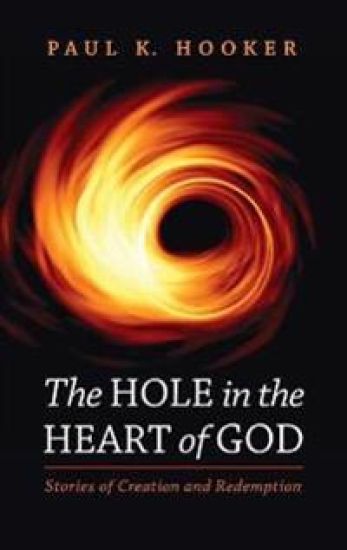
The Hole in the Heart of God

The Hole in the Heart of God

Paul K Hooker

Wipf Stock Publishers
2021
sidottu
This book is a rendering in poetry of the ancient Christian practice of the Easter Vigil, held over the night between Holy Saturday and Easter Sunday. Readings from the vigil become the point of departure for poems that reflect on the reading, and then short prose ""ruminations"" that reflect on themes in the poems. The poems and ruminations are deeply informed by both the Christian story of the passion, death, and resurrection of Jesus and the great tradition of Jewish and Christian mysticism about the creation and redemption of the world.
A New Chronology for the Kings of Israel and Judah and Its Implications for Biblical History and Literature
For generations, scholars have attempted to solve the chronological problems associated with ""the mysterious numbers of the Hebrew kings."" In this volume, the authors provide a coherent, sensible, and believable chronology for the Israelite and Judean kings. In their reconstruction, Hayes and Hooker take into consideration not only all of the biblical data but also all relevant ancient Near Eastern sources. Utilizing all available and reliable evidence, they establish not only regnal years for all the rulers but also specific dates for numerous events in Israelite and Judean history. In their opening chapters, the authors explain the scheme of chronological reckoning found in the books of 1-2 Kings. Their calculations are then computed without recourse to shifting understandings of the methods of reckoning or to a theory of co-regencies. The value of this work is not limited to purely chronological matters. Its implications extend to the dating of biblical sources such as the Book of the Covenant, D, P, and the Deuteronomistic History. The volume also provides insights into the socio-cultic life of biblical times. ."" . . a lucid, carefully constructed new chronology . . . packed with fresh ideas and daring proposals . . . offering dates for many of the major events in the life of Israel and Judah, setting these events in their international context . . . making much more precise than is customary the dates of the biblical events."" - - Walter Harrelson, Vanderbilt University John H. Hayes is Professor of Old Testament at Emory University's Candler School of Theology. He is also the author of Understanding the Psalms and coauthor of A History of Ancient Israel and Judah (2006). Paul K. Hooker is an ordained Presbyterian minister and currently Executive Presbyter, Presbytery of St. Augustine, Jacksonville, Florida.
Paul K. Carlton

Paul K. Carlton

VDM Publishing House
2010
nidottu
Observera att förlaget som ger ut denna produkt baserar innehållet i sina produkter på fria källor som Wikipedia. Boken är med stor sannolikhet endast ett utdrag ur dessa informationskällor, alltså inte en vanlig bok i den bemärkelsen.
Paradigmenwechsel und "Anything goes". Die Wissenschaftsauffassung Thomas S. Kuhns in der Kritik Paul K. Feyerabends
Studienarbeit aus dem Jahr 1999 im Fachbereich Philosophie - Theoretische (Erkenntnis, Wissenschaft, Logik, Sprache), Note: keine, Universitat Rostock (Institut fur Philosophie), Veranstaltung: Proseminar: Zur Wissenschafts- und Erkenntnistheorie im 20. Jahrhundert, Sprache: Deutsch, Abstract: Die Proseminararbeit kontrastiert die Wissenschaftsaufassung von Thomas S. Kuhn mit Paul K. Feyerabends Generalkritik an wissenschaftstheoretischen Konzeptionen. Nach Kuhns Auffassung erfolgt der Erkenntnisgewinn eines Faches nicht ausschliesslich linear und kumulativ, sondern durch so genannte Paradigmenwechsel und wissenschaftliche Revolutionen. In Abgrenzung zu Poppers Kritischem Rationalismus pladiert Feyerabend fur Wissenschaftspluralismus und Methodenfreiheit. Erkenntnisgewinn resultiert nach Feyerabend aus dem Widerstreit verschiedener Ansatze und Hypothesen und folgt nicht allein der Logik einer abstrakten ubergeordneten Wissenschaftstheorie oder einer Falisifikationsregel
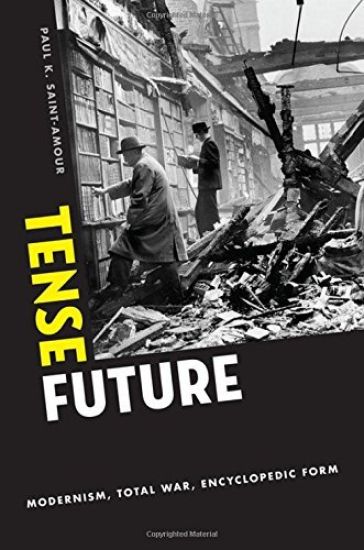
Tense Future

Tense Future

Paul K. Saint-Amour

Oxford University Press Inc
2015
sidottu
Tense Future falls into two parts. The first develops a critical account of total war discourse and addresses the resistant potential of acts, including acts of writing, before a future that looks barred or predetermined by war. Part two shifts the focus to long interwar narratives that pit both their scale and their formal turbulence against total war's portrait of the social totality, producing both ripostes and alternatives to that portrait in the practice of literary encyclopedism. The book's introduction grounds both parts in the claim that industrialized warfare, particularly the aerial bombing of cities, intensifies an under-examined form of collective traumatization: a pretraumatic syndrome in which the anticipation of future-conditional violence induces psychic wounds. Situating this claim in relation to other scholarship on "critical futurities," Saint-Amour discusses its ramifications for trauma studies, historical narratives generally, and the historiography of the interwar period in particular. The introduction ends with an account of the weak theory of modernism now structuring the field of modernist studies, and of weak theory's special suitability for opposing total war, that strongest of strong theories.
Tense Future

Tense Future

Paul K. Saint-Amour

Oxford University Press Inc
2015
nidottu
Tense Future falls into two parts. The first develops a critical account of total war discourse and addresses the resistant potential of acts, including acts of writing, before a future that looks barred or predetermined by war. Part two shifts the focus to long interwar narratives that pit both their scale and their formal turbulence against total war's portrait of the social totality, producing both ripostes and alternatives to that portrait in the practice of literary encyclopedism. The book's introduction grounds both parts in the claim that industrialized warfare, particularly the aerial bombing of cities, intensifies an under-examined form of collective traumatization: a pretraumatic syndrome in which the anticipation of future-conditional violence induces psychic wounds. Situating this claim in relation to other scholarship on "critical futurities," Saint-Amour discusses its ramifications for trauma studies, historical narratives generally, and the historiography of the interwar period in particular. The introduction ends with an account of the weak theory of modernism now structuring the field of modernist studies, and of weak theory's special suitability for opposing total war, that strongest of strong theories.
Telethons

Telethons

Paul K. Longmore

Oxford University Press Inc
2016
sidottu
Looking back at postwar US history, it seems that a telethon accompanied every social ill, disability, disease, and natural disaster. A unique combination of entertainment and charity, this form of fundraising became a fixture in American life not long after NBC broadcast the first one, hosted by Milton Berle, in 1949. Conceived specifically for the new medium of television, the telethon--a portmanteau of "television" and "marathon"--became the fundraising vehicle of choice for the nation's leading charitable organizations. Marshaling two decades' worth of painstaking research, Telethons provides the first cultural history of the popular phenomenon. It charts the rise of the telethon as a result of five influential charities (most notably, the Muscular Dystrophy Association) and profiles the key figures--philanthropists, politicians, celebrities, corporate sponsors, and recipients--involved. The book also serves as a chronicle of disabilty history in the postwar US, as Longmore shows the changing depiction of the disabled-from objects of pity in the Fifties and Sixties to figures of empowerment in the late twentieth century. A significant portion of the book analyzes the various clashes between telethon-producing charities and activists in the disability rights movement that have become increasingly frequent since the 1970s. Throughout, Telethons explores familiar staples of the genre such as "poster children," the comedic emcee, and the concept of "conspicuous contribution."
Uncertainty in Medicine

Uncertainty in Medicine

Paul K.J. Han

Oxford University Press Inc
2021
nidottu
Medical uncertainty has been with us for centuries and remains a recurrent problem for patients, doctors, and researchers alike. Yet uncertainty in health care is still poorly understood and ineffectively managed; it is generally feared and avoided rather than directly confronted. This systemic disregard of uncertainty leads us to treat medical uncertainty as a pathological condition to be cured through the pursuit of knowledge, but often further medical knowledge begets further uncertainty in kind. Uncertainty in Medicine offers an alternative, multi-disciplinary perspective on this challenging problem. Integrating insights across clinical medicine and social science, Dr. Paul Han argues that uncertainty is an essential form of knowledge to be cultivated, rather than eradicated, in medical practice. He makes the case that the paradigm of medicine should be expanded to include not only the pursuit of medical knowledge but the treatment and palliation of medical uncertainty and its effects on physicians, other health professionals, and patients. Using clear language and a textbook approach, he analyzes the nature, etiology, and natural history of medical uncertainty, and develops a conceptual framework to guide its management. By promoting a more systematic way of conceptualizing the problem, this framework can enable clinicians and patients to better address medical uncertainty, and can help make uncertainty tolerance a more central focus of medical care. Rational and reassuring, Uncertainty in Medicine forges a new path for approaching medical uncertainty by arming readers from an array of disciplines with the tools they need to diagnose, treat, and confront its challenges more intentionally and effectively.
Philosophy after Objectivity

Philosophy after Objectivity

Paul K. Moser

Oxford University Press Inc
1993
sidottu
This book discusses a range of central philosophical disputes about knowledge, objectivity, meaning, physicalism, and practical rationality. Its lessons about reasons and explanation affect all areas of theoretical philosophy, and challenge common philosophical assumptions about objectivity, realism, and physicalism. The book explains how various perennial disputes in philosophy rest not on genuine disagreement, but on conceptual diversity.
Philosophy after Objectivity

Philosophy after Objectivity

Paul K. Moser

Oxford University Press Inc
1999
nidottu
Philosophers have traditionally sought objective knowledge: knowledge of things whose existence does not depend on one's conceiving of them. Philosophy After Objectivity uses lessons from debates over objective knowledge to characterize the kinds of reasons pertinent to philosophical and other theoretical views. It argues that we cannot meet skeptics' typical demands for non-question begging support for claims to objective truth, and that, therefore, we should not regard our supporting reasons as resistant to skeptical challenges.
100 Decisive Battles: From Ancient Times to the Present

100 Decisive Battles: From Ancient Times to the Present

Paul K. Davis

Oxford University Press
2001
nidottu
From the ancient Egyptian battle at Megiddo in 1469 BC to the recent military actions in Iraq, great battles have had an enormous impact on the shaping of history. Now, in this fully illustrated book, one hundred of the world's most important military confrontations are described in detail. 100 Decisive Battles gives us the facts about the battle and also explains where it fits in to the scope of world history. In each entry we are given the name and date of the battle, the commanders, the size of the opposing forces, and casualties. An account of the battle plan and the military action are strategically discussed, and each description closes with a valuable consideration of how history was affected by the outcome of the conflict. Among the battles presented are the Battle of Thymbra (546 BC), the Battle of Chalons (451 AD), the Battle of Cajamarca (1532), the Battle of Dien Bien Phu (1954), and the Tet Offensive (1968). Accompanying maps and sidebars help further orient us with each military action. Global in scope, with excellent coverage of American, Central American, European, Asian, and Middle Eastern battles, and with its stirring accounts of familiar battles and many lesser known military conflicts, 100 Decisive Battles is essential reading for military buffs and anyone interested in how the modern world came to be.
Besieged

Besieged

Paul K. Davis

Oxford University Press Inc
2003
nidottu
From ancient times to the present, great sieges have had an enormous impact on the shaping of world history. Now, in this spectacular, fully-illustrated volume, one hundred of the world's most monumental and mind-boggling sieges are laid out in detail. Besieged covers the most important sieges from around the world throughout history--from Joshua's assault on Jericho in the fifteenth century B.C. to the Russian attack on the Chechen capital of Grozny at the end of the twentieth. Each entry provides the name and date of the siege, its exact location in terms of today's world, the number of forces engaged, when known, the names of the commanders on each side, and the overall importance of the siege in its historical context. Thoroughly examining the actions of both the attackers and the defenders, the book explores the motivations of both, and strategically surveys the technical and tactical innovations and conditions both inside besieged positions and in the besiegers' ranks. The entries detail the historical setting, the particular circumstances of the event itself, and the long-term results of the siege. These riveting accounts are enhanced by illustrations, over seventy maps, and references for further reading. A glossary and a comprehensive index complete the book. Global in scope, and with stirring accounts of familiar sieges as well as many lesser known conflicts, Besieged is essential reading for military buffs and everyone interested in how the modern world came to be. Includes the sieges of: * Jericho (1405 B.C.) * Troy (1250 B.C.) * Acre (1189--1191) * Constantinople (1453) * Tenochtitlan (1521 * La Rochelle (1627--1628) * Leningrad (1941--1944) * Malta (1940--1942) * Dien Bien Phu (1954) * Khe Sanh (1968) * Beirut (1982) * Sarajevo (1991--1995)