Kirjojen hintavertailu. Mukana 12 390 323 kirjaa ja 12 kauppaa.

Kirjahaku

Etsi kirjoja tekijän nimen, kirjan nimen tai ISBN:n perusteella.

1000 tulosta hakusanalla Paul K. Moser

Philosophy after Objectivity

Philosophy after Objectivity

Paul K. Moser

Oxford University Press Inc
1993
sidottu
This book discusses a range of central philosophical disputes about knowledge, objectivity, meaning, physicalism, and practical rationality. Its lessons about reasons and explanation affect all areas of theoretical philosophy, and challenge common philosophical assumptions about objectivity, realism, and physicalism. The book explains how various perennial disputes in philosophy rest not on genuine disagreement, but on conceptual diversity.
Philosophy after Objectivity

Philosophy after Objectivity

Paul K. Moser

Oxford University Press Inc
1999
nidottu
Philosophers have traditionally sought objective knowledge: knowledge of things whose existence does not depend on one's conceiving of them. Philosophy After Objectivity uses lessons from debates over objective knowledge to characterize the kinds of reasons pertinent to philosophical and other theoretical views. It argues that we cannot meet skeptics' typical demands for non-question begging support for claims to objective truth, and that, therefore, we should not regard our supporting reasons as resistant to skeptical challenges.
The Elusive God

The Elusive God

Paul K. Moser

Cambridge University Press
2009
pokkari
Three questions motivate this book's account of evidence for the existence of God. First, if God's existence is hidden, why suppose He exists at all? Second, if God exists, why is He hidden, particularly if God seeks to communicate with people? Third, what are the implications of divine hiddenness for philosophy, theology, and religion's supposed knowledge of God? This book answers these questions using a new account of evidence and knowledge of divine reality that challenges scepticism about God's existence. The central thesis is that we should expect evidence of divine reality to be purposively available to humans, that is, available only in a manner suitable to divine purposes in self-revelation. This lesson generates a seismic shift in our understanding of evidence and knowledge of divine reality. The result is a much-needed reorienting of religious epistemology to accommodate the character and purposes of an authoritative, perfectly loving God.
Knowledge and Evidence

Knowledge and Evidence

Paul K. Moser

Cambridge University Press
1991
pokkari
Paul Moser's book defends what has been an unfashionable view in recent epistemology: the foundationalist account of knowledge and justification. Since the time of Plato philosophers have wondered what exactly knowledge is. This book develops a new account of perceptual knowledge which specifies the exact sense in which knowledge has foundations. The author argues that experiential foundations are indeed essential to perceptual knowledge, and he explains what knowledge requires beyond justified true beliefs. In challenging prominent sceptical claims that we have no justified beliefs about the external world, the book outlines a theory of rational belief.
The Evidence for God

The Evidence for God

Paul K. Moser

Cambridge University Press
2009
sidottu
If God exists, where can we find adequate evidence for God's existence? In this book, Paul Moser offers a perspective on the evidence for God that centers on a morally robust version of theism that is cognitively resilient. The resulting evidence for God is not speculative, abstract, or casual. Rather, it is morally and existentially challenging to humans, as they themselves responsively and willingly become evidence of God's reality in receiving and reflecting God's moral character for others. Moser calls this 'personifying evidence of God,' because it requires the evidence to be personified in an intentional agent - such as a human - and thereby to be inherent evidence of an intentional agent. Contrasting this approach with skepticism, scientific naturalism, fideism, and natural theology, Moser also grapples with the potential problems of divine hiddenness, religious diversity, and vast evil.
The Evidence for God

The Evidence for God

Paul K. Moser

Cambridge University Press
2009
pokkari
If God exists, where can we find adequate evidence for God's existence? In this book, Paul Moser offers a perspective on the evidence for God that centers on a morally robust version of theism that is cognitively resilient. The resulting evidence for God is not speculative, abstract, or casual. Rather, it is morally and existentially challenging to humans, as they themselves responsively and willingly become evidence of God's reality in receiving and reflecting God's moral character for others. Moser calls this 'personifying evidence of God,' because it requires the evidence to be personified in an intentional agent - such as a human - and thereby to be inherent evidence of an intentional agent. Contrasting this approach with skepticism, scientific naturalism, fideism, and natural theology, Moser also grapples with the potential problems of divine hiddenness, religious diversity, and vast evil.
The Elusive God

The Elusive God

Paul K. Moser

Cambridge University Press
2008
sidottu
Three questions motivate this book's account of evidence for the existence of God. First, if God's existence is hidden, why suppose He exists at all? Second, if God exists, why is He hidden, particularly if God seeks to communicate with people? Third, what are the implications of divine hiddenness for philosophy, theology, and religion's supposed knowledge of God? This book answers these questions using a new account of evidence and knowledge of divine reality that challenges scepticism about God's existence. The central thesis is that we should expect evidence of divine reality to be purposively available to humans, that is, available only in a manner suitable to divine purposes in self-revelation. This lesson generates a seismic shift in our understanding of evidence and knowledge of divine reality. The result is a much-needed reorienting of religious epistemology to accommodate the character and purposes of an authoritative, perfectly loving God.
Divine Guidance

Divine Guidance

Paul K. Moser

Cambridge University Press
2022
pokkari
If God exists and is perfectly good, God tries to guide people. A twofold question then arises: How does God (try to) guide people, and to what end? Problems of divine guidance for humans, according to this volume, are real and serious, but they are manageable once we clarify the kind of God at issue. According to the volume's main thesis, if God has a perfect moral character accompanied by certain redemptive purposes for humans, the puzzling nature of divine guidance for them need not preclude the reality of such guidance. It is, this volume contends, a live option for God to guide or lead humans toward goodness, even if the leading is not fully explainable by humans. The voluntary moral attraction of cooperative humans by divine goodness is central to divine guidance, and it can illuminate the kind of evidence to be expected from God.
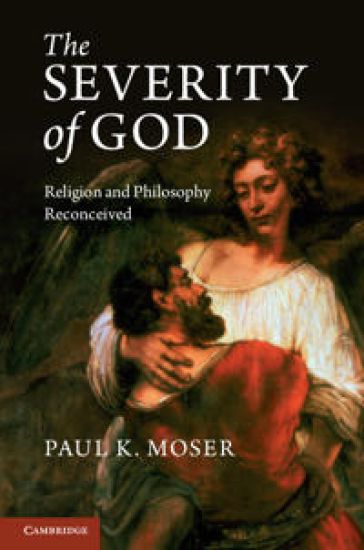
The Severity of God

The Severity of God

Paul K. Moser

Cambridge University Press
2013
sidottu
This book explores the role of divine severity in the character and wisdom of God, and the flux and difficulties of human life in relation to divine salvation. Much has been written on problems of evil, but the matter of divine severity has received relatively little attention. Paul K. Moser discusses the function of philosophy, evidence and miracles in approaching God. He argues that if God's aim is to extend without coercion His lasting life to humans, then commitment to that goal could manifest itself in making human life severe, for the sake of encouraging humans to enter into that cooperative good life. In this scenario, divine agape is conferred as free gift, but the human reception of it includes stress and struggle in the face of conflicting powers and priorities. Moser's work will be of great interest to students of the philosophy of religion, and theology.
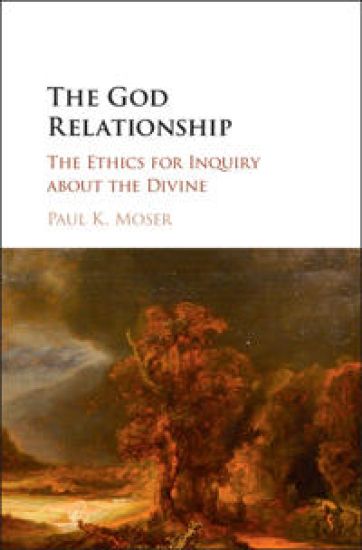
The God Relationship

The God Relationship

Paul K. Moser

Cambridge University Press
2017
sidottu
In this book, Paul K. Moser proposes a new approach to inquiry about God, including a new discipline of the ethics for inquiry about God. It is an ethics for human attitudes and relationships as well as actions in inquiry, and it includes human responsibility for seeking evidence that involves a moral priority for humans. Such ethics includes an ongoing test, a trial, for human receptivity to goodness, including morally good relationships, as a priority in human inquiry and life. Moser also defends an approach to the evidence for God that makes sense of the elusiveness and occasional absence of God in human experience. His book will be of interest to those interested in inquiry about God, with special relevance to scholars and advanced students in religious studies, philosophy, theology, and biblical studies.
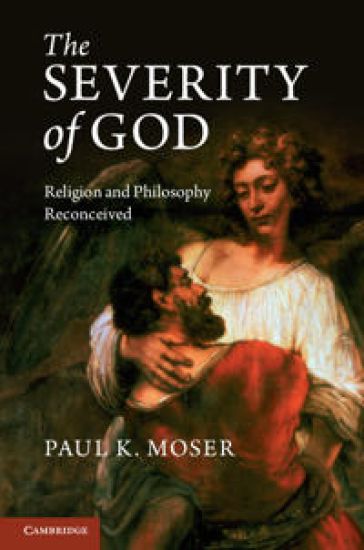
The Severity of God

The Severity of God

Paul K. Moser

Cambridge University Press
2013
pokkari
This book explores the role of divine severity in the character and wisdom of God, and the flux and difficulties of human life in relation to divine salvation. Much has been written on problems of evil, but the matter of divine severity has received relatively little attention. Paul K. Moser discusses the function of philosophy, evidence and miracles in approaching God. He argues that if God's aim is to extend without coercion His lasting life to humans, then commitment to that goal could manifest itself in making human life severe, for the sake of encouraging humans to enter into that cooperative good life. In this scenario, divine agape is conferred as free gift, but the human reception of it includes stress and struggle in the face of conflicting powers and priorities. Moser's work will be of great interest to students of the philosophy of religion, and theology.
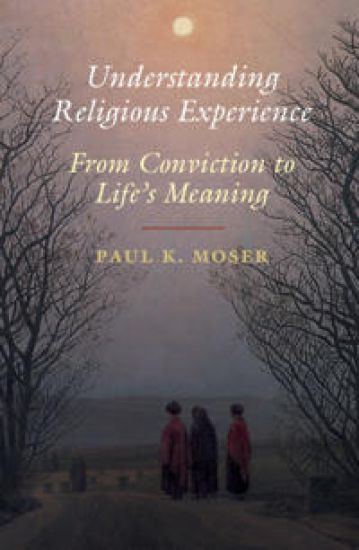
Understanding Religious Experience

Understanding Religious Experience

Paul K. Moser

Cambridge University Press
2019
pokkari
In this book, Paul K. Moser offers a new approach to religious experience and the kind of evidence it provides. Here, he explains the nature of theistic and non-theistic experience in relation to the meaning of human life and its underlying evidence, with special attention given to the perspectives of Tolstoy, Buddha, Confucius, Krishna, Moses, the apostle Paul, and Muhammad. Among the many topics explored in this timely volume are: religious experience characterized in a unifying conception; religious experience naturalized relative to science; religious experience psychologized in merely psychological phenomena; and religious experience cognized relative to potential defeaters from evil, divine hiddenness, and religious diversity. Understanding Religious Experience will benefit those interested in the nature of religion and can be used in relevant courses in religious studies, philosophy, theology, Biblical studies, and the history of religion.
Understanding Religious Experience

Understanding Religious Experience

Paul K. Moser

Cambridge University Press
2019
sidottu
In this book, Paul K. Moser offers a new approach to religious experience and the kind of evidence it provides. Here, he explains the nature of theistic and non-theistic experience in relation to the meaning of human life and its underlying evidence, with special attention given to the perspectives of Tolstoy, Buddha, Confucius, Krishna, Moses, the apostle Paul, and Muhammad. Among the many topics explored in this timely volume are: religious experience characterized in a unifying conception; religious experience naturalized relative to science; religious experience psychologized in merely psychological phenomena; and religious experience cognized relative to potential defeaters from evil, divine hiddenness, and religious diversity. Understanding Religious Experience will benefit those interested in the nature of religion and can be used in relevant courses in religious studies, philosophy, theology, Biblical studies, and the history of religion.
The God Relationship

The God Relationship

Paul K. Moser

Cambridge University Press
2018
pokkari
In this book, Paul K. Moser proposes a new approach to inquiry about God, including a new discipline of the ethics for inquiry about God. It is an ethics for human attitudes and relationships as well as actions in inquiry, and it includes human responsibility for seeking evidence that involves a moral priority for humans. Such ethics includes an ongoing test, a trial, for human receptivity to goodness, including morally good relationships, as a priority in human inquiry and life. Moser also defends an approach to the evidence for God that makes sense of the elusiveness and occasional absence of God in human experience. His book will be of interest to those interested in inquiry about God, with special relevance to scholars and advanced students in religious studies, philosophy, theology, and biblical studies.
Paul K. Carlton

Paul K. Carlton

VDM Publishing House
2010
nidottu
Observera att förlaget som ger ut denna produkt baserar innehållet i sina produkter på fria källor som Wikipedia. Boken är med stor sannolikhet endast ett utdrag ur dessa informationskällor, alltså inte en vanlig bok i den bemärkelsen.
Paradigmenwechsel und "Anything goes". Die Wissenschaftsauffassung Thomas S. Kuhns in der Kritik Paul K. Feyerabends
Studienarbeit aus dem Jahr 1999 im Fachbereich Philosophie - Theoretische (Erkenntnis, Wissenschaft, Logik, Sprache), Note: keine, Universitat Rostock (Institut fur Philosophie), Veranstaltung: Proseminar: Zur Wissenschafts- und Erkenntnistheorie im 20. Jahrhundert, Sprache: Deutsch, Abstract: Die Proseminararbeit kontrastiert die Wissenschaftsaufassung von Thomas S. Kuhn mit Paul K. Feyerabends Generalkritik an wissenschaftstheoretischen Konzeptionen. Nach Kuhns Auffassung erfolgt der Erkenntnisgewinn eines Faches nicht ausschliesslich linear und kumulativ, sondern durch so genannte Paradigmenwechsel und wissenschaftliche Revolutionen. In Abgrenzung zu Poppers Kritischem Rationalismus pladiert Feyerabend fur Wissenschaftspluralismus und Methodenfreiheit. Erkenntnisgewinn resultiert nach Feyerabend aus dem Widerstreit verschiedener Ansatze und Hypothesen und folgt nicht allein der Logik einer abstrakten ubergeordneten Wissenschaftstheorie oder einer Falisifikationsregel