Kirjojen hintavertailu. Mukana 11 699 587 kirjaa ja 12 kauppaa.

Kirjahaku

Etsi kirjoja tekijän nimen, kirjan nimen tai ISBN:n perusteella.

1000 tulosta hakusanalla Paul K. Williams

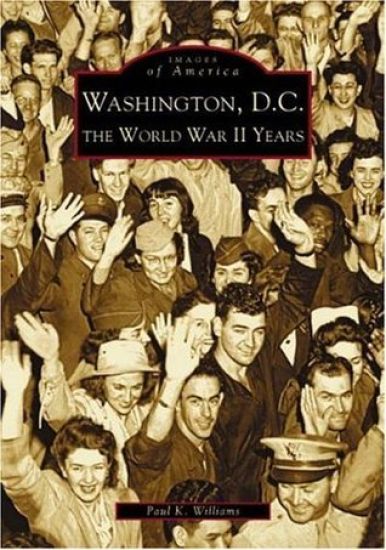
Washington D.C.: The World War II Years

Washington D.C.: The World War II Years

Paul K. Williams

Arcadia Publishing (SC)
2004
nidottu
The valiant story of the nation's capital facing the challenges of World War II told in over 200 rare, historical images that bring the past to life.As the country prepared for World War II, the nation's capital took center stage. Washington residents witnessed the local population nearly double in a few short years, as a mostly female work force descended on the city, while its male population was sent off to combat in Europe and the Pacific. Washingtonians planted victory gardens, ran scrap drives, and suffered the effects of severe rationing along with the rest of the nation, while military personnel manned anti aircraft batteries around the city. New government agencies were created and existing ones expanded dramatically-most doubled their workforce and constructed hundreds of temporary facilities on the Mall and throughout the city. Washington also witnessed the construction of the largest office building in the world, the Pentagon, which was completed in just 16 months. Washington, D.C.: The World War II Years captures nearly 200 fascinating images from this era. These archival photographs chronicle the beginning stages of war preparation, little known civic defense organizations, VE and VJ celebratory parades, and the overall spirit of the continually persevering capital city.
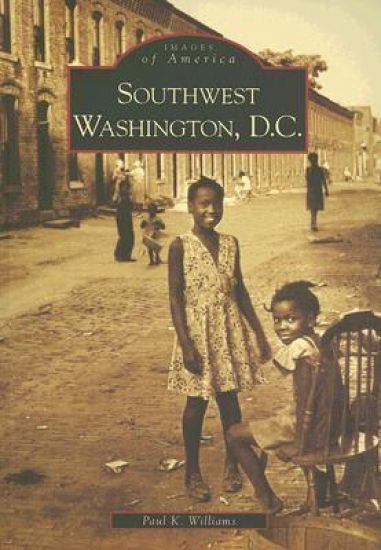
Southwest Washington, D.C.

Southwest Washington, D.C.

Paul K. Williams

Arcadia Publishing (SC)
2006
nidottu
Southwest Washington, D.C.: A defined neighborhood even without a proper name.The quadrant of Southwest Washington, D.C. has a clear border southwest of the U.S. Capitol Building, nestled along the oldest waterfront in the city. Its physical delineations have defined it as a community for more than 250 years, beginning in the mid-1700s with emerging farms. By the mid-1800s, a thriving urban, residential, and commercial neighborhood was supported by the waterfront where Washingtonians bought seafood and produce right off the boats. In the 1920s and 1930s, an aging housing stock and an overcrowded city led to an increase of African Americans and Jewish immigrants who became self-sufficient within their own communities. However, political pressures and radical urban planning concepts in the 1950s led to the large-scale razing of most of SW, creating a new community with what was then innovative apartment and cooperative living constructed with such unusual building materials as aluminum. Author and local historian Paul K. Williams provides and in-depth look at it all.
Southwest DC

Southwest DC

Paul K. Williams; Gregory J. Alexander; Southwest Neighborhood Assembly

Arcadia Publishing Library Editions
2017
sidottu
Southwest DC is a unique quadrant in the nation s capital. After a massive 1950s and 1960s urban renewal project demolished much of the area s buildings, Southwest DC began anew with a clean slate. Capitalizing on the waterfront location and utilizing modern architecture, large high-rise buildings were constructed to house thousands of new residents, who would later fight to preserve the architecture in this new planned community located close to the US Capitol. This tight-knit community would once again witness a large-scale construction boom after the turn on the 21st century, as upscale hotels, most noticeably the Mandarin-Oriental, and high-end condominiums were built, complemented by new restaurants, shops, and services. The waterfront area home to a community of live-aboard houseboats and sailboats would also later completely transform, anchored by The Wharf project. Biking and walking trails also introduced Washingtonians to this hidden jewel in the capital. Southwest DC remains a community-minded neighborhood with a thriving arts scene, important religious institutions, and nonprofit organizations, as well as government offices."
Elderly Criminals

Elderly Criminals

William Wilbanks; Paul K.H. Kim

University Press of America
1984
nidottu
A collection of nine papers that discuss patterns and trends of offenses by the elderly, violent crime by the elderly, shoplifting, and the response of the criminal justice system to elderly criminals.
Armor Command

Armor Command

Paul McDonald Robinett; William K. Harrison

Literary Licensing, LLC
2012
sidottu
Armor Command is a military science fiction novel written by Paul McDonald Robinett. The story is set in the future where humanity has colonized multiple planets and is engaged in a war with an alien race known as the Skinks. The protagonist, Captain David Spencer, is a skilled tank commander who is tasked with leading a group of soldiers to defend a critical planet from the Skinks. As the battle intensifies, Spencer and his team must navigate treacherous terrain, outsmart the enemy, and overcome their own personal demons. Along the way, they encounter unexpected allies and enemies, and the line between friend and foe becomes blurred. The book is filled with intense action sequences, intricate battle strategies, and complex characters. It explores themes of leadership, loyalty, sacrifice, and the human cost of war. Armor Command is a thrilling and thought-provoking novel that will appeal to fans of military science fiction and anyone who enjoys a gripping story of courage and heroism.The Personal Story Of A Commander Of The 13th Armored Regiment, Of The CCB, 1st Armored Division, And Of The Armored School During World War II.This scarce antiquarian book is a facsimile reprint of the old original and may contain some imperfections such as library marks and notations. Because we believe this work is culturally important, we have made it available as part of our commitment for protecting, preserving, and promoting the world's literature in affordable, high quality, modern editions, that are true to their original work.
The Reconstruction of Workplace Conflict Resolution

The Reconstruction of Workplace Conflict Resolution

William K. Roche; Paul Teague; Denise Currie

TAYLOR FRANCIS LTD
2024
sidottu
Many attempts have been made in recent decades by liberal market economies to reconstruct public workplace conflict resolution agencies in response to major changes in patterns of workplace conflict. These have often been hampered or stymied by political schisms, stalemate or inertia. The radical reconstruction of conflict resolution in Ireland marks out a major exception to the international pattern and represents a case of successful adaptation and innovation in conflict resolution services and supports. Drawing on detailed primary research, and aimed at scholars, policy makers, professionals and students, this book examines the drivers of innovation in the Irish case and shows how the new state agency for workplace conflict resolution, the Workplace Relations Commission, operates and maintains the confidence of employers, unions, people at work and government. The Irish case is considered in comparative context, and current strategic challenges facing the Workplace Relations Commission are assessed.
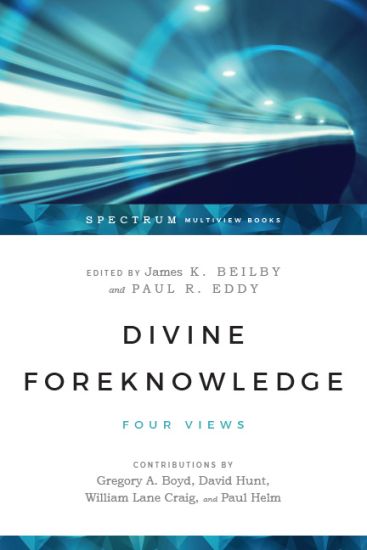
Divine Foreknowledge – Four Views

Divine Foreknowledge – Four Views

James K. Beilby; Paul R. Eddy; Gregory A. Boyd; David Hunt; William Lane Craig

Inter-Varsity Press
2001
nidottu
The question of the nature of God's foreknowledge and how that relates to human freedom has been pondered and debated by Christian theologians at least since the time of Augustine. And the issue will not go away. More recently, the terms of the debate have shifted, and the issue has taken on new urgency with the theological proposal known as the openness of God. This view maintains that God's knowledge, while perfect, is limited regarding the future inasmuch as the future is "open" and not settled. This Spectrum Multiview volume provides a venue for well-known proponents of four distinct views of divine foreknowledge to present their cases: Gregory A. Boyd of Bethel College presents the open-theism view.David Hunt of Whittier College weighs in on the simple-foreknowledge view.William Lane Craig of Talbot School of Theology takes the middle-knowledge view.Paul Helm of Regent College, Vancouver, presents the Augustinian-Calvinist view. All four respond to each of the other essayists, noting points of agreement and disagreement. Editors James K. Beilby and Paul R. Eddy introduce the contemporary debate and also offer a conclusion that helps you evaluate the relative strengths and weaknesses of each view. The result is a unique opportunity to grapple with the issues and arguments and frame your own understanding of this important debate. Spectrum Multiview Books offer a range of viewpoints on contested topics within Christianity, giving contributors the opportunity to present their position and also respond to others in this dynamic publishing format.
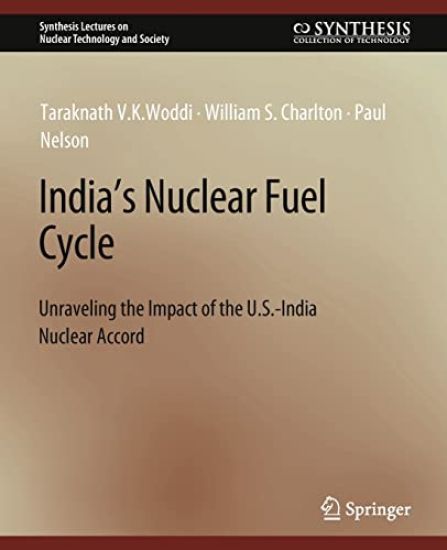
India's Nuclear Fuel Cycle

India's Nuclear Fuel Cycle

Taraknath V.K. Woddi; William S. Charlton; Paul Nelson

Springer International Publishing AG
2009
nidottu
An analysis of the current (February 2009) status and future potential of India's nuclear fuel cycle is presented in this book. Such a fuel cycle assessment is important, but relatively opaque because India regards various aspects of its nuclear fuel cycle as strategically sensitive. Any study therefore necessarily depends upon reverse calculations based on the information that is available, expert assessments, engineering judgment and anecdotal information. In this work every effort is made to provide transparency to these foundations, so that changes can be made in light of alternative expectations or subsequent information. This book should be of interest to policy experts, governmental specialists, technologists, nuclear technologists, and others seeking to understand and explain the associated facts and potential consequences of the recent U.S.-India civil nuclear accord. Table of Contents: Introduction / A Brief History of the Indian Nuclear Program / Indian Nuclear Facilities /Fuel Cycle Analysis: From Beginning to Present Day / Fuel Cycle Analysis: Future Projections / Alternate Reactor Systems / Conclusions / Acknowledgements