Kirjojen hintavertailu. Mukana 11 699 587 kirjaa ja 12 kauppaa.

Kirjahaku

Etsi kirjoja tekijän nimen, kirjan nimen tai ISBN:n perusteella.

1000 tulosta hakusanalla Paul Kahn

Political Theology

Political Theology

Paul Kahn

Columbia University Press
2011
sidottu
In this strikingly original work, Paul W. Kahn rethinks the meaning of political theology. In a text innovative in both form and substance, he describes an American political theology as a secular inquiry into ultimate meanings sustaining our faith in the popular sovereign. Kahn works out his view through an engagement with Carl Schmitt's 1922 classic, Political Theology: Four Chapters on the Concept of Sovereignty. He forces an engagement with Schmitt's four chapters, offering a new version of each that is responsive to the American political imaginary. The result is a contemporary political theology. As in Schmitt's work, sovereignty remains central, yet Kahn shows how popular sovereignty creates an ethos of sacrifice in the modern state. Turning to law, Kahn demonstrates how the line between exception and judicial decision is not as sharp as Schmitt led us to believe. He reminds readers that American political life begins with the revolutionary willingness to sacrifice and that both sacrifice and law continue to ground the American political imagination. Kahn offers a political theology that has at its center the practice of freedom realized in political decisions, legal judgments, and finally in philosophical inquiry itself.
Political Theology

Political Theology

Paul Kahn

Columbia University Press
2012
pokkari
In this strikingly original work, Paul W. Kahn rethinks the meaning of political theology. In a text innovative in both form and substance, he describes an American political theology as a secular inquiry into ultimate meanings sustaining our faith in the popular sovereign. Kahn works out his view through an engagement with Carl Schmitt's 1922 classic, Political Theology: Four Chapters on the Concept of Sovereignty. He forces an engagement with Schmitt's four chapters, offering a new version of each that is responsive to the American political imaginary. The result is a contemporary political theology. As in Schmitt's work, sovereignty remains central, yet Kahn shows how popular sovereignty creates an ethos of sacrifice in the modern state. Turning to law, Kahn demonstrates how the line between exception and judicial decision is not as sharp as Schmitt led us to believe. He reminds readers that American political life begins with the revolutionary willingness to sacrifice and that both sacrifice and law continue to ground the American political imagination. Kahn offers a political theology that has at its center the practice of freedom realized in political decisions, legal judgments, and finally in philosophical inquiry itself.
Institutions Légales Relatives À l'Enfance En Angleterre, Protection Et Répression (Mission En
Institutions legales relatives a l'enfance en Angleterre, protection et repression (mission en Angleterre, octobre 1917). Rapport a la Societe generale des prisons (seance du 20 fevrier 1918)Date de l'edition originale: 1918Ce livre est la reproduction fidele d'une oeuvre publiee avant 1920 et fait partie d'une collection de livres reimprimes a la demande editee par Hachette Livre, dans le cadre d'un partenariat avec la Bibliotheque nationale de France, offrant l'opportunite d'acceder a des ouvrages anciens et souvent rares issus des fonds patrimoniaux de la BnF.Les oeuvres faisant partie de cette collection ont ete numerisees par la BnF et sont presentes sur Gallica, sa bibliotheque numerique.En entreprenant de redonner vie a ces ouvrages au travers d'une collection de livres reimprimes a la demande, nous leur donnons la possibilite de rencontrer un public elargi et participons a la transmission de connaissances et de savoirs parfois difficilement accessibles.Nous avons cherche a concilier la reproduction fidele d'un livre ancien a partir de sa version numerisee avec le souci d'un confort de lecture optimal. Nous esperons que les ouvrages de cette nouvelle collection vous apporteront entiere satisfaction.Pour plus d'informations, rendez-vous sur www.hachettebnf.fr
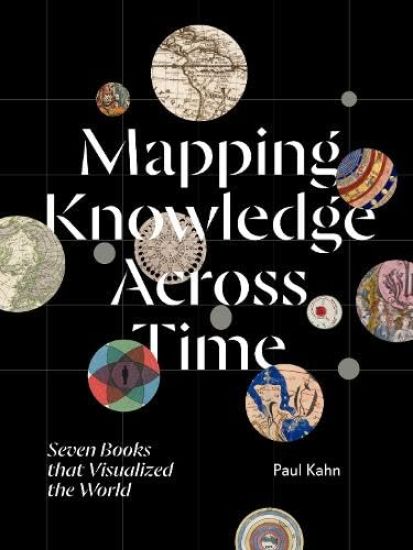
Mapping Knowledge Across Time

Mapping Knowledge Across Time

Paul Kahn

TAYLOR FRANCIS LTD
2026
nidottu
Through a lens of information design, art, and social history, Mapping Knowledge Across Time examines seven extraordinary books that transformed how humanity visualized and understood the world. Spanning continents and centuries, these books reveal striking patterns in how diverse cultures employed similar visual systems to embed complex knowledge within the book form. As our digital age increasingly distances us from these tangible artifacts, this book sheds important light on the enduring heritage of information design in the book arts and its relevance today. The remarkable works placed under the microscope include: an Arabic cosmography from medieval Sicily; an exquisite Catalan mappamundi from Jewish Majorcan workshops; Germany's most elaborately illustrated early printed book; Ming dynasty scientific illustrations; an Amsterdam-produced atlas merging geography with history from Huguenot refugees; Humboldt-inspired German scientific visualizations; and culminates with a modernist Bauhaus-influenced American atlas integrating physical and social sciences. Each chapter meticulously analyzes how these works employed visual strategies to construct comprehensive worldviews, demonstrating the remarkable continuity and evolution of information design across cultures. Mapping Knowledge Across Time: Seven Books which Visualized the World will be of great interest to readers of book history, information design, and visual culture, especially those seeking connections between historical visualization practices and contemporary information challenges. Art historians will value its analysis of cross-cultural visual systems, while historians of science will appreciate its examination of knowledge transmission through visual means. Students across disciplines will discover how these seven landmark works fundamentally shaped humanity's understanding of itself and its place in the cosmos.
Mapping Knowledge Across Time

Mapping Knowledge Across Time

Paul Kahn

TAYLOR FRANCIS LTD
2026
sidottu
Through a lens of information design, art, and social history, Mapping Knowledge Across Time examines seven extraordinary books that transformed how humanity visualized and understood the world. Spanning continents and centuries, these books reveal striking patterns in how diverse cultures employed similar visual systems to embed complex knowledge within the book form. As our digital age increasingly distances us from these tangible artifacts, this book sheds important light on the enduring heritage of information design in the book arts and its relevance today. The remarkable works placed under the microscope include: an Arabic cosmography from medieval Sicily; an exquisite Catalan mappamundi from Jewish Majorcan workshops; Germany's most elaborately illustrated early printed book; Ming dynasty scientific illustrations; an Amsterdam-produced atlas merging geography with history from Huguenot refugees; Humboldt-inspired German scientific visualizations; and culminates with a modernist Bauhaus-influenced American atlas integrating physical and social sciences. Each chapter meticulously analyzes how these works employed visual strategies to construct comprehensive worldviews, demonstrating the remarkable continuity and evolution of information design across cultures. Mapping Knowledge Across Time: Seven Books which Visualized the World will be of great interest to readers of book history, information design, and visual culture, especially those seeking connections between historical visualization practices and contemporary information challenges. Art historians will value its analysis of cross-cultural visual systems, while historians of science will appreciate its examination of knowledge transmission through visual means. Students across disciplines will discover how these seven landmark works fundamentally shaped humanity's understanding of itself and its place in the cosmos.
Testimony

Testimony

Paul W Kahn

Wipf Stock Publishers
2021
pokkari
On her seventy-fifth birthday, the author's mother confessed to an affair more than three decades past. His father's response was unforgiving. Her need to confess met his limitless rage. She acted out of love; he sought revenge. Their battle consumed everything and everyone around them. In the middle of this struggle, she was diagnosed with cancer. Two years later, she died. Testimony is a son's memoir of this struggle. Paul Kahn finds here a story of the twentieth century, beginning with poverty in the Depression and immigration from Hitler's Germany. He follows his father's experience of the war and his return with PTSD. He traces his parents' movement through the turbulent 60s. More than a study of twentieth-century culture, Testimony is a philosophical inquiry into the possibility of faith in a secular age. History, philosophy, and theology flow together as Kahn finds in his parents' lives the resources for a series of essays on the nature of truth, memory, death, and faith. Testimony is most of all a meditation on love in a time in which the very possibility of faith is constantly put to the test.
Testimony

Testimony

Paul W Kahn

Wipf Stock Publishers
2021
sidottu
On her seventy-fifth birthday, the author's mother confessed to an affair more than three decades past. His father's response was unforgiving. Her need to confess met his limitless rage. She acted out of love; he sought revenge. Their battle consumed everything and everyone around them. In the middle of this struggle, she was diagnosed with cancer. Two years later, she died.Testimony is a son's memoir of this struggle. Paul Kahn finds here a story of the twentieth century, beginning with poverty in the Depression and immigration from Hitler's Germany. He follows his father's experience of the war and his return with PTSD. He traces his parents' movement through the turbulent 60s. More than a study of twentieth-century culture, Testimony is a philosophical inquiry into the possibility of faith in a secular age. History, philosophy, and theology flow together as Kahn finds in his parents' lives the resources for a series of essays on the nature of truth, memory, death, and faith. Testimony is most of all a meditation on love in a time in which the very possibility of faith is constantly put to the test.
The Cultural Study of Law

The Cultural Study of Law

Paul W. Kahn

University of Chicago Press
1999
sidottu
Belief in the rule of law characterizes society, political order and even one's identity as a citizen. Yet despite the importance of this phenomenon, those who study culture have failed to focus on the law. In this work, Paul Kahn provides an examination of what it means to conduct a modern intellectual inquiry into the culture of law. He explains the shortcomings of late-1990s legal scholarship and charts the way for the development of a new discipline of law, one that approaches law as a way of life rather than a set of rules. Kahn argues that legal scholars, despite the appearance of some sophisticated theory in modern legal scholarship, are bound to the idea of improving the law through reform. The state of legal scholarship can be compared to the study of religion around the turn of the 20th century, when it was a part of the practice of religion and not a distinct intellectual discipline as it is today. Kahn outlines the conceptual tools and methodology necessary for such an inquiry. Drawing on modern cultural studies, he analyzes the concepts of time, space, citizen, judge, sovereignty, and theory within the culture of the rule of law.
The Cultural Study of Law

The Cultural Study of Law

Paul W. Kahn

University of Chicago Press
2000
nidottu
Belief in the rule of law characterizes our society, our political order, and even our identity as citizens. Yet despite the importance of this phenomenon, those who study culture have failed to focus on the law. In this work, Paul Kahn provides a full examination of what it means to conduct a modern intellectual inquiry into the culture of law. He explains the shortcomings of current legal scholarship and, more important, charts the way for the development of an entirely new intellectual discipline of law, one that approaches law as a way of life rather than a set of rules. Kahn argues that legal scholars, despite the appearance of some sophisticated theory in modern legal scholarship, are bound to the idea of improving the law through reform. The state of current legal scholarship can be compared to the study of religion around the turn of the century, when it was a part of the practice of religion and not a distinct intellectual discipline as it is today. To conduct a genuine study of our legal culture, we must step outside the boundaries of our legal system, abandon the ambition of reform, and instead interpret the beliefs and practices that constitute the rule of law. Kahn outlines the conceptual tools and methodology necessary for such an inquiry. Drawing on modern cultural studies, he analyzes the concepts of time, space, citizen, judge, sovereignty, and theory within the culture of the rule of law.
Finding Ourselves at the Movies

Finding Ourselves at the Movies

Paul W. Kahn

Columbia University Press
2013
sidottu
Academic philosophy may have lost its audience, but the traditional subjects of philosophy-love, death, justice, knowledge, and faith-remain as compelling as ever. To reach a new generation, Paul W. Kahn argues that philosophy must take up these fundamental concerns as we find them in contemporary culture. He demonstrates how this can be achieved through a turn to popular film. Discussing such well-known movies as Forrest Gump (1994), The American President (1995), The Matrix (1999), Memento (2000), The History of Violence (2005), Gran Torino (2008), The Dark Knight (2008), The Road (2009), and Avatar (2009), Kahn explores powerful archetypes and their hold on us. His inquiry proceeds in two parts. First, he uses film to explore the nature of action and interpretation, arguing that narrative is the critical concept for understanding both. Second, he explores the narratives of politics, family, and faith as they appear in popular films. Engaging with genres as diverse as romantic comedy, slasher film, and pornography, Kahn explores the social imaginary through which we create and maintain a meaningful world. He finds in popular films a new setting for a philosophical inquiry into the timeless themes of sacrifice, innocence, rebirth, law, and love.
Finding Ourselves at the Movies

Finding Ourselves at the Movies

Paul W. Kahn

Columbia University Press
2016
pokkari
Academic philosophy may have lost its audience, but the traditional subjects of philosophy-love, death, justice, knowledge, and faith-remain as compelling as ever. To reach a new generation, Paul W. Kahn argues that philosophy must take up these fundamental concerns as we find them in contemporary culture. He demonstrates how this can be achieved through a turn to popular film. Discussing such well-known movies as Forrest Gump (1994), The American President (1995), The Matrix (1999), Memento (2000), The History of Violence (2005), Gran Torino (2008), The Dark Knight (2008), The Road (2009), and Avatar (2009), Kahn explores powerful archetypes and their hold on us. His inquiry proceeds in two parts. First, he uses film to explore the nature of action and interpretation, arguing that narrative is the critical concept for understanding both. Second, he explores the narratives of politics, family, and faith as they appear in popular films. Engaging with genres as diverse as romantic comedy, slasher film, and pornography, Kahn explores the social imaginary through which we create and maintain a meaningful world. He finds in popular films a new setting for a philosophical inquiry into the timeless themes of sacrifice, innocence, rebirth, law, and love.
Legitimacy and History

Legitimacy and History

Paul W. Kahn

Yale University Press
1993
sidottu
This powerfully conceptualized book is both a rich intellectual history of two hundred years of American constitutional theory and an original philosophical inquiry into the possibility of self-government. Legitimate government in the United States means self-government. Yet Americans also believe that their government must be constrained by a Constitution that is now two hundred years old. Paul W. Kahn sees the development of constitutional theory as a continuous effort to resolve this conflict between self-government and history. Rejecting the conventional idea that constitutional thought has been shaped by political and social events, Kahn argues that the history of constitutionalism has been driven by logic, not experience. He brings this perspective to the familiar events of constitutional history, including the founding, the crisis of Dred Scott, Lincoln's Gettysburg Address, the rise of the Lochner Court, the assault of legal realism, and the rise of the countermajoritarian difficulty. Kahn describes a series of conceptual stages in constitutional history. He shows that the founders' project of constitutional construction was displaced by originalism, which was in turn displaced by the idea of an evolving constitution. The turn to community in contemporary constitutional theory, Kahn argues, represents the final step in this development. At this stage, the theory and practice of constitutional law split apart. This separation is the inevitable result of the effort to do the impossible: reconcile history and self-government. The authority of the state, Kahn concludes, is bound to history in a way that makes government by the people impossible.
Legitimacy and History

Legitimacy and History

Paul W. Kahn

Yale University Press
1995
pokkari
This powerfully conceptualized book is both a rich intellectual history of two hundred years of American constitutional theory and an original philosophical inquiry into the possibility of self-government. Legitimate government in the United States means self-government. Yet Americans also believe that their government must be constrained by a Constitution that is now two hundred years old. Paul W. Kahn sees the development of constitutional theory as a continuous effort to resolve this conflict between self-government and history.Rejecting the conventional idea that constitutional thought has been shaped by political and social events, Kahn argues that the history of constitutionalism has been driven by logic, not experience. He brings this perspective to the familiar events of constitutional history, including the founding, the crisis of Dred Scott, Lincoln's Gettysburg Address, the rise of the Lochner Court, the assault of legal realism, and the rise of the countermajoritarian difficulty. Kahn describes a series of conceptual stages in constitutional history. He shows that the founders' project of constitutional construction was displaced by originalism, which was in turn displaced by the idea of an evolving constitution. The turn to community in contemporary constitutional theory, Kahn argues, represents the final step in this development. At this stage, the theory and practice of constitutional law split apart. This separation is the inevitable result of the effort to do the impossible: reconcile history and self-government.The authority of the state, Kahn concludes, is bound to history in a way that makes government by the people impossible.
The Reign of Law

The Reign of Law

Paul W. Kahn

Yale University Press
2002
pokkari
"A brilliantly innovative and provocative work of pathfinding dimensions."—Robert M. Ireland, Journal of the Early Republic "No scholar of the American constitution or American history can afford not to read this book—at least twice."—Herbert A. Johnson, Law and History Review "Kahn is clearly a scholar of great intelligence and creativity."—Scott D. Gerber, Journal of American History In this ground-breaking book, Kahn uses modern cultural theory to investigate America’s most profound political myth: the belief that the rule of law is rule by the people. Kahn explores the elements of the myth, the rhetoric of law that sustains the myth, and the world of meaning the myth creates. He shows us that law must be central to religious, anthropological, and philosophical studies of American life.
Origins of Order

Origins of Order

Paul W. Kahn

Yale University Press
2020
sidottu
An examination of how two fundamental concepts of order influence our ideas about sovereignty, citizenship, law, and history Western accounts of natural and political order have deployed two basic ideas: project and system. In a project, order is produced by the intentional act of a subject; in a system, order is immanent in the world. In the former, order is made; in the latter, discovered. Paul W. Kahn shows how project and system have long been at work in our theological and philosophical tradition. Against this background, Kahn explains the development of the modern legal imagination in the nineteenth century as a movement from project to system. Americans began the century imagining the constitutional order as their common project: a deliberate construction of We the People. They ended the century imagining that order is continuous with the common law: an immanent development of the principles of civilization. This imaginative shift affected ideas of legal text, sovereignty, citizenship, interpretation, history, and science.
Democracy in Our America

Democracy in Our America

Paul W. Kahn

YALE UNIVERSITY PRESS
2023
sidottu
One of America’s most distinguished political theorists examines what happens when national politics enters a small New England town After the election of 2016 and, even more urgently, after the election of 2020, many citizens looked at the economic and cultural divisions that were causing deep disruptions in American politics and asked, “What is happening to us?” Paul W. Kahn explores these fundamental changes as they show themselves in a small New England town—his home of twenty-five years, Killingworth, Connecticut. His inquiry grounds a democratic theory that puts volunteering, not voting, at its center. Absent active participation, citizens lose the capacity for judgment that comes from working with others to solve real problems. Volunteering, however, is under existential threat today. Changes in civil society, commerce, employment, and public opinion formation have isolated families from each other and from their communities. Even middle-class families live under financial stress, uncertain of their children’s future, and without the support of civil society. Local media has disappeared. Residents do not have the time, information, or interest to volunteer. Under these conditions, national polarization enters local politics, which becomes yet another site for national conflict. To save our democracy, Kahn concludes, we need to find ways of matching opportunities for participation to the ways we live our lives today.