Kirjojen hintavertailu. Mukana 12 016 292 kirjaa ja 12 kauppaa.

Kirjahaku

Etsi kirjoja tekijän nimen, kirjan nimen tai ISBN:n perusteella.

1000 tulosta hakusanalla Paul L Dawson

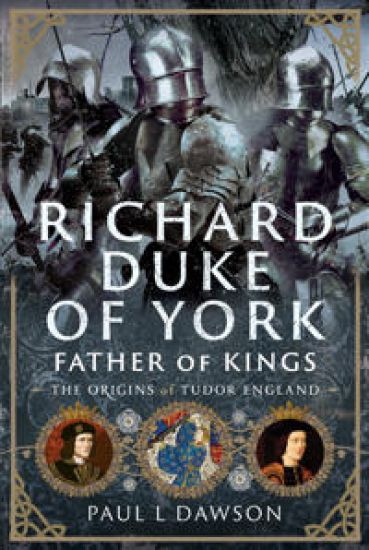
Richard Duke of York, Father of Kings

Richard Duke of York, Father of Kings

Paul L Dawson

PEN SWORD BOOKS LTD
2025
sidottu
Richard of York, Father of Kings explores the life and legacy of Richard Plantagenet, 3rd Duke of York, shedding new light on his role in the Wars of the Roses and the events surrounding the Battle of Wakefield. While Richard III often dominates historical discussions, his father’s impact has been comparatively overlooked. The Battle of Wakefield in December 1460 marked a turning point in the Wars of the Roses. Richard of York’s death paved the way for his son Edward IV’s ascent to the throne and ultimately the Tudor dynasty through his grandchildren, Edward V and Elizabeth of York. Elizabeth’s marriage to Henry VII linked Richard of York’s legacy to the English monarchy. Historian Paul Dawson, however, presents a provocative reinterpretation of these events. Utilizing previously unseen archival documents from institutions such as the Bibliothèque nationale de France and The National Archives at Kew, Paul Dawson uncovers fresh insights into the Battle of Wakefield. These sources reveal a complex web of alliances stretching across Europe, challenging traditional narratives and recontextualizing Richard’s role in the geopolitical struggles of the era. This ground-breaking work provides a nuanced understanding of Richard of York’s influence on both English and European history, reshaping perceptions of this pivotal period in the late medieval world.
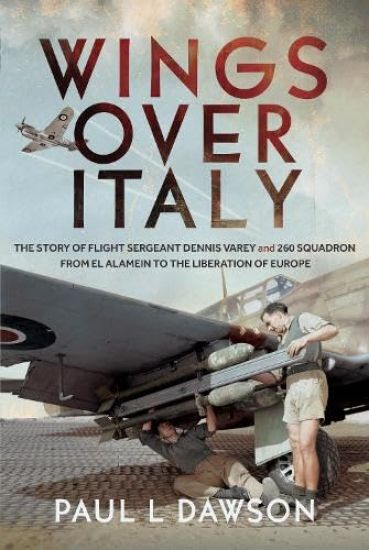
Wings Over Italy

Wings Over Italy

Paul L Dawson

PEN SWORD BOOKS LTD
2025
sidottu
In October 1941, 19-year-old Dennis Varey volunteered for the RAF, despite being in a reserved occupation as an engineer. The bombing of his hometown had pushed him to fight back. After basic training, he became an Observer in December 1941, and by June 1942, he was accepted for pilot training under the Empire Air Training Scheme. He trained in Rhodesia (now Zimbabwe), then moved to Cairo before joining the Italian campaign. Dennis participated in Operation Dragoon, the invasion of Southern France, in 1944. As the Allied forces struggled in Normandy, Dennis flew sorties to support the landings, providing air cover and ground attacks. Promoted to Flight Sergeant, he continued flying over Italy, Crete, and the Balkans until he was shot down by a Messerschmitt Bf 109. Wounded and captured, Dennis escaped captivity and returned to his unit, later being posted home to train future pilots. This book recounts the story of Dennis and his comrades in 260 Squadron, whose multi-national crew supported key battles across North Africa and Europe. Using letters, diaries, and first-hand accounts, it highlights the sacrifices of these young men, many of whom never returned or were forever changed by their experiences.
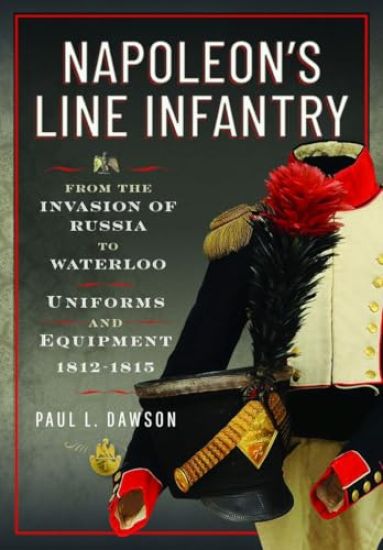
Napoleon’s Line Infantry – From the Invasion of Russia to Waterloo
Napoleon’s 1812 invasion of Russia marked a major turning point in his reign. His Grande Armée, consisting of over half a million men, was decimated within six months, leaving only about 10,000 survivors. The campaign cost over a million lives, including soldiers and civilians. Historian Paul Dawson examines the uniforms and equipment of the more than 120 regiments that participated in the invasion and later campaigns. His research, based on over 1,000 archive boxes from the Service Historique de l’Armée de Terre and the Archives Nationales, provides unprecedented detail about the army’s clothing and equipment. Dawson’s study reveals the adoption of the 1806 and Bardin regulations and their practical implementation. Each year, regiments were inspected, and soldiers were issued clothing and equipment, with repairs recorded. New recruits paid for their gear through deductions from their wages, and any damage due to misuse was charged to them. The army faced constant challenges in maintaining uniforms and supplies, from simple vests to more specialized items like epaulettes and tools for sapeurs. This groundbreaking book offers rare insights into the French line infantry’s attire, featuring period illustrations and photographs of existing uniforms, shedding light on what soldiers wore during Napoleon’s final campaigns.
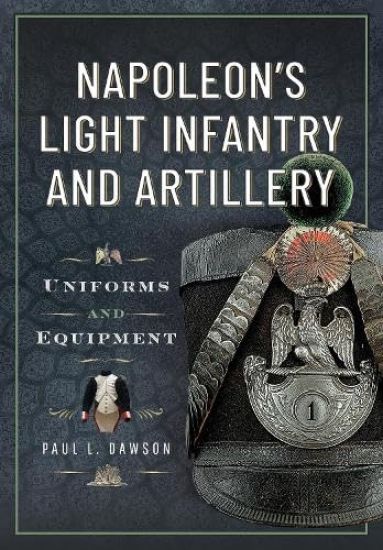
Napoleon’s Light Infantry and Artillery

Napoleon’s Light Infantry and Artillery

Paul L Dawson

PEN SWORD BOOKS LTD
2025
sidottu
This groundbreaking book offers a detailed exploration of the dress of the thirty-seven regiments of Light Infantry and other support troops in Napoleon's Grande Armée, including foot and horse artillery, sapeurs, musicians, and carabiniers. For the first time in two centuries, it accurately examines how these troops were clothed and equipped. Paul Dawson’s research draws from over 1,000 archive boxes in the Service Historique de l’Armée de Terre and the Archives Nationales in Paris. These documents reveal how the 1806 uniform regulations and Bardin regulations were implemented in practice, offering insights previously unavailable to the public. The archives focus on the annual inspections of regiments, where the condition of uniforms and equipment was assessed. Soldiers' uniforms were provided through stoppages in their pay, with a prescribed lifespan for each item. The regimental Council of Administration also drew funds for clothing renewals, repairs, and equipment. Dawson’s study demonstrates that the Bardin regulations, often seen as the standard, were largely a myth until the Waterloo Campaign. Through contemporary illustrations and photographs of existing uniforms, this book provides an authoritative understanding of the actual dress worn by Napoleon’s troops, making previous descriptions of the Grande Armée’s appearance obsolete.
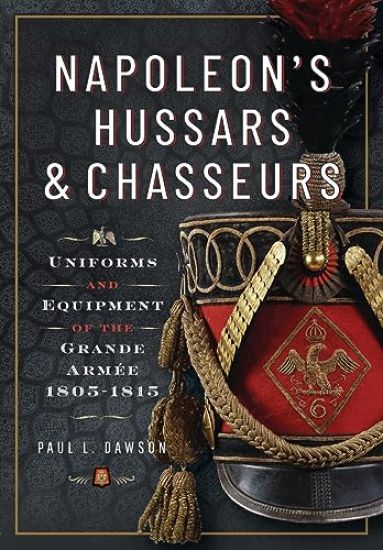
Napoleon’s Hussars and Chasseurs

Napoleon’s Hussars and Chasseurs

Paul L Dawson

PEN SWORD BOOKS LTD
2023
sidottu
Small men, with big egos and moustaches, the hussars of Napoleon’s army wore some of the most flamboyant and stylish uniforms of the epoch. In this book, the uniforms of the seventeen regiments of hussars are discussed in detail by renowned historian Paul L. Dawson, along with the dress of their brethren in the thirty-two regiments of Chasseurs à cheval, with an emphasis on the highly elaborate dress of the trumpeters. Having been granted access to over 1,000 archive boxes, held in the Service Historique de l’Armée de Terre in Paris and the Archives Nationales, the author is able to assesses how the wide ranging 1806 uniform regulations and the more famous Bardin regulations were adopted in practice. This vast resource, as yet untapped by the majority of researchers and historians for understanding the Napoleonic era in general, provides detail never previously revealed to the general public. This is possible because every year a regiment would be inspected, and the condition of the uniforms assessed. A return of all the clothing to be disposed of was made, and the appropriate number of new items ordered. Items of clothing and equipment needing repair were also recorded, as was how many pieces had been repaired since the last inspection. Upon joining a regiment, the recruit was given his first full set of clothing and equipment, which came from stoppages in his pay. Each item of clothing had a specified life – a bearskin had to last twenty years, for example. If the items needed repair or replacement inside the prescribed period due to misuse, the cost was borne by the soldier. All of this was recorded. These invaluable sources provide bias free empirical data from which we can reconstruct the life story of a regiment, its officers and above all its clothing and equipment. In addition to the official records, the author has constructed how the regiments were dressed from diaries, letters, and even cases of fraud. As well as providing the recorded details, this book shows in scores of beautiful illustrations exactly how each regiment appeared. These images include period paintings as well as works specifically commissioned for this book, plus unique photographs of existing items of uniform. Now, for the first time since the days of Napoleon, we can say exactly what was worn by Napoleon’s light cavalry.
The Napoleonic ‘Dad’s Army’

The Napoleonic ‘Dad’s Army’

Paul L Dawson

PEN SWORD BOOKS LTD
2024
sidottu
During the crisis year of 1792 when war against France was at its closest, a variety of societies and associations of ‘Loyal Britons’ were set up throughout Britain. Their aim was to organise patriotic, anti-French forces in defence of king and country, and to help maintain the established order. The need to provide an internal defence force resulted in the Volunteer Act of 1794. It witnessed the formation of hundreds of volunteer regiments on the upswell in loyalist sentiment following the disorder and instability witnessed across the Channel in Revolutionary France. By 1798, there were 118,000 volunteers but, faced with the possibility of a French invasion of Southern England, William Pitt’s government aimed to expand this number substantially. By 1804 there were an astonishing 380,000 volunteers under arms and the various Corps made up half to one third of all the home service forces. When we add in those volunteers who agreed to serve overseas, as garrison troops in India for example, the number grows to approximately 800,000 – meaning that around one in every five adult males participated in military activities. This amazing groundswell of patriotic fervour has seldom been investigated before. Using diaries and archive sources, this book seeks to explore the ‘Dad’s Army’ of the Napoleonic Wars. These men were far more than local bands of volunteers, they represented a militarisation of society not previously seen and which was repeated again when the world was thrown into war in the twentieth century.
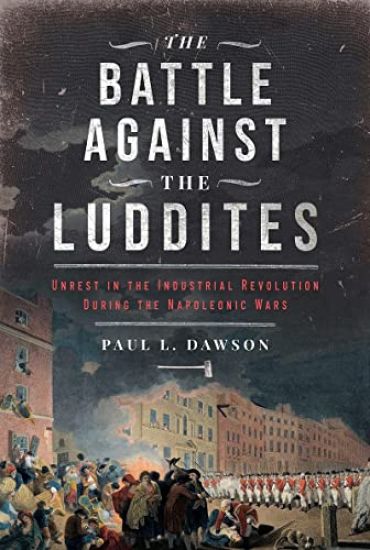
The Battle Against the Luddites

The Battle Against the Luddites

Paul L Dawson

PEN SWORD BOOKS LTD
2023
sidottu
As the columns of French infantry marched up the slopes of the Mont St Jean at Waterloo, the British heavy cavalry, the Royal Scots Greys to the fore, crashed into the packed ranks of the enemy. This was not the first time the Greys had drawn their swords during the Napoleonic Wars - but it was their first against Napoleon's troops. Three years earlier they had attacked workers in Halifax protesting at the introduction of machinery in the wool trade. Taking their name from Ned Ludd, who had smashed up knitting frames in Nottingham, the Luddites saw the emergence of mechanisation as a threat to their livelihood, with men replacing machines. In response they took matters into their own hands by wrecking the new equipment. Industrial unrest had gathered pace throughout the 18th century and exploded in an unpresented wave of violence in 1799\. Outbreaks of machine-breaking developed rapidly into strikes in a battle of capital against labour. A court battle ensued, culminating in new legislation in 1806 that backed the capitalists. This act, coupled with the impact of the Continental system introduced by Napoleon, which closed European and American ports to British merchants, heralded the largest economic depression of the era. Famine, pestilence and rising employment all fuelled the fires of Luddism. Months of violence swept across the West Midlands, Lancashire and Yorkshire which saw one factory boss murdered; other factory owners began shooting protesting workers. The disturbances resulted in the mobilising of thousands of regular soldiers - at one time there were as many British soldiers fighting the Luddites than there were fighting Napoleon on the Iberian Peninsula. As well as exploring these events, Paul L. Dawson also uncovers the origins of Luddism and their allies in the middle classes. The Napoleonic Wars marked the end of centuries old way of life in agriculture, textile production and the wider economy. The dramatic changes in Britain between 1790 and 1815 created a unique set of social grievances by those left behind by the unprecedented changes that were surging through the Britain which exploded into bitter fighting across large swathes of the country. With present day concerns over computerisation replacing labour, this is a story that echoes down the centuries.
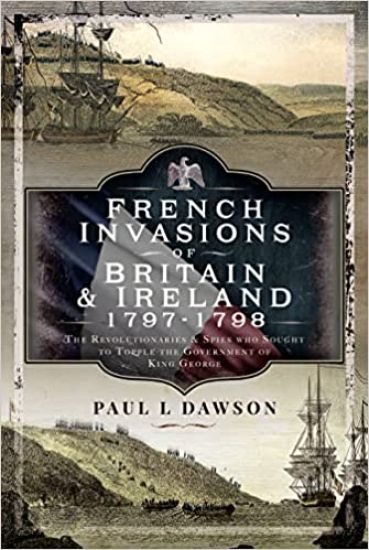
French Invasions of Britain and Ireland, 1797 1798
Not since 1066 - at least in popular myth - has an enemy force set foot on British soil. The Declaration of War with Revolutionary France in 1793 changed all that. In Ireland, the desire for home rule led Irish republicans to seek support from France and like-minded radicals in England. The scene was set for the most dangerous period in British history since William the Conqueror. Irish dreams of independence, and of Revolutionary France's goal of securing her borders against the monarchies of Europe, coalesced. What better way of keeping Britain out of a war if her troops were tied down in Ireland? If the French could support an Irish Revolution, this would ensure the British Crown would be more focused on internal security than fighting overseas. The French, with a network of secret agents in Ireland and England, made their preparations for invasion The invasion plan had been prepared by the English-born American political activist, philosopher, theorist and revolutionary Thomas Paine, whose writings had helped inspire the Americans to fight for independence from Britain. Paine sought to seize on discontent in England against the government of William Pitt and the increasing radicalism fostered by Wolfe Tone in Ireland for home rule, to topple the government, and bring about an Irish and English Republic. A network of spies spread out across the England, Scotland and Ireland gathering information for the French and arming radical groups. Everything was set for an invasion. Mad King George's throne was set to be toppled, Charles James Fox installed as leader of the embryonic English Republic, while Ireland, under Wolfe Tone, would have home rule - so too Scotland. But it took six years for the French to finally mount their attacks upon Britain. And when the invasions were eventually launched, they crumbled into chaos. This book seeks to charts the events that led up to the French invasion of Ireland in 1798, and how the invasion was foiled by William Pitt's own web of secret agents. William Huskisson, best known for being killed at the opening of the Liverpool and Manchester Railway, led a dangerous life as a spy master, whose agents foiled the French at every step. Drawing on documents in the French Army Archives, as well as the records of the French Foreign Ministry and The National Archives in London, the largely forgotten story of the last invasion of Britain in 1797, as well as the final act of 1798, is revealed. Key documents are the campaign diary of the French commander from 1798, General Humbert, which has never been published in French or English. This, then, is the complete untold story of the French invasions and their sabotage, told for the first time in some 200 years.
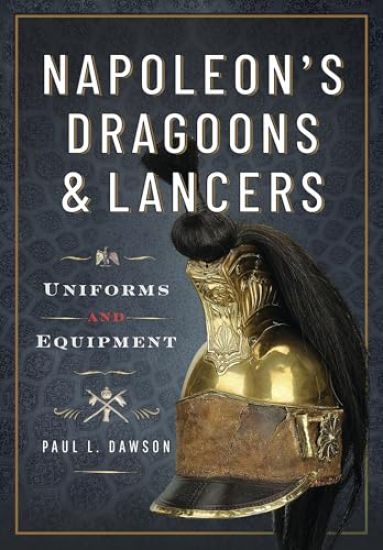
Napoleon’s Dragoons and Lancers

Napoleon’s Dragoons and Lancers

Paul L Dawson

PEN SWORD BOOKS LTD
2025
sidottu
Having their origins in the Army of Louis XIV, the dragoons were originally mounted infantry. During the wars of the 1e Empire, they became ‘jacks of all trade’ equally capable as fighting as battle cavalry, scouting or operating as infantry. Yet, precious few studies have been made of the dress of these thirty regiments or of the ten regiments of lancers which evolved from the dragoons in 1811. The dress and equipment of each regiment of dragoons and lancers in Napoleon’s army is analysed and portrayed here with greater accuracy than previously possible. This is because renowned Napoleonic author, Paul Dawson has been granted access to over 1,000 archive boxes, found in the Service Historique de l’Armée de Terre in Paris and the Archives Nationales. These have enabled the author to assesses how the wide ranging 1806 uniform regulations and the more famous Bardin regulations were adopted in practice. This vast resource, as yet untapped by the majority of researchers and historians for understanding the Napoleonic era in general, provides detail never before revealed to the general public. This is possible because every year a regiment would be inspected, and the condition of the uniforms assessed. A return of all the clothing to be disposed of was made, and the appropriate number of new items ordered. Items of clothing and equipment needing repair was also recorded, as was how many items had been repaired since the last inspection. Upon joining a regiment, the recruit was given his first full set of clothing and equipment, which came from stoppages in his pay. Each item of clothing had a specified life. If the items needed repair or replacement inside the prescribed period due to misuse the cost was borne by the soldier. All of this was recorded. There was an annual quota of money available to a colonel to pay for clothing renewals and repairs for his regiment. In addition, the regimental Council of Administration drew funds to buy raw materials, equipment and headdresses. These funds also covered sundry items such as the epaulettes of the adjutant-sous-officiers, lace for rank stripes, service chevrons, musicians and drummers lace, plumes and pompoms, such is the remarkable level of detail these records contain. These invaluable sources provide bias free empirical data from which we can reconstruct the life story of a regiment, its officers and above all its clothing. In addition to the official records, the author has constructed how the regiments were dressed from diaries, letters, and even cases of fraud. As well as providing the recorded details, this book shows in scores of beautiful illustrations exactly how each regiment appeared. These images include period paintings as well as works specifically commissioned for this book, plus unique photographs of existing items of uniform. Now, for the first time since the days of Napoleon, we can say exactly what was worn by Napoleon’s cavalry.
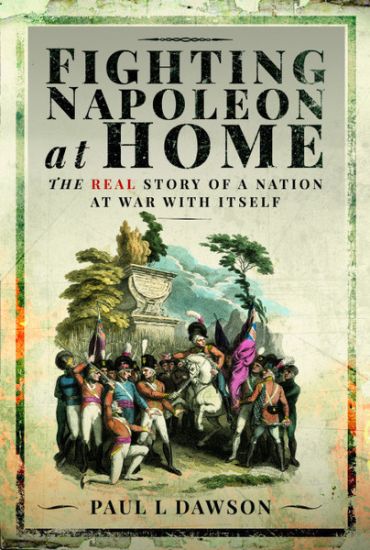
Fighting Napoleon at Home

Fighting Napoleon at Home

Paul L Dawson

PEN SWORD BOOKS LTD
2023
sidottu
From the sun-baked sierras of Spain, through the stormy waters off Cape Trafalgar to the muddy and bloody fields of Waterloo, Britain's soldiers and sailors were notching up victories which set the country on the path to becoming the greatest power on the planet. We like to imagine the country was unified against a common enemy, France, and the Tyrant of Europe - Napoleon. Yet if we scratch the surface, we find a nation not just at war with France but with itself. The great successes of Wellington and Nelson, and the glamour of Regency London, cover over the cracks of a divided society, of riots across the industrial north and widespread political opposition. Huge swathes of the country hated the war, booed and hissed at soldiers and lobbed turds' at the Scots Greys in Halifax. There were repeated Peace Petitions' which sought to stop the war - and even to prevent the British Army fighting at Waterloo. Armed Associations of gentlemen volunteers and Local Militias led the call to close down the debate on social and democratic reform, while on the other hand thousands of English reformers heeded the call from France and hundreds actually headed to France, with many thousands more believing that the time had come, when its young men were needed to fight for King and Country, for reform. The burgeoning middle class had no vote in parliament; rapidly expanding industrial towns and cities had no MPs, yet small villages - pocket boroughs - often had two. The burden of taxation fell on those least able to afford it; enclosure of common land; corn laws; restrictions on the freedom of expression; the endless killing, all fed into an undercurrent of political dissent that was ideologically opposed to the loyalist cause. It was a battle for the very sole of Britain. For the first time, the shocking reality of life in Britain, during what is often portrayed as being its greatest era, is told through diaries, letters, and newspaper comments. Fighting Napoleon at Home is a startling portrayal of the society from which the soldiers and sailors were drawn and exactly what it was they were fighting to defend. It will become essential reading for anyone attempting to understand why Britain's aristocracy had to stop Napoleon at any cost and suppress the dangerous ideals of libert , galit , fraternit .
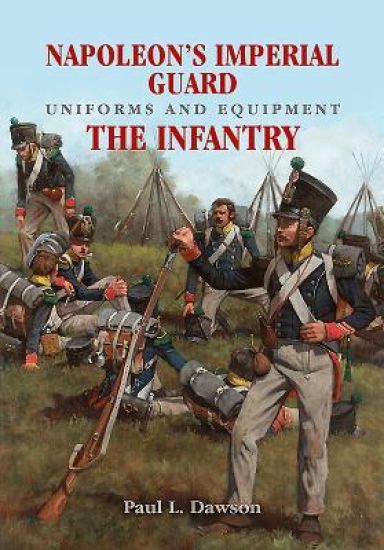
Napoleon's Imperial Guard Uniforms and Equipment: The Infantry
From its origins as the Consular Guard of the French Republic, and as Napoleon's personal bodyguard, the Imperial Guard developed into a force of all arms numbering almost 100,000 men. Used by Napoleon as his principle tactical reserve, the Guard was engaged only sparingly, being deployed at the crucial moment of battle to turn the tide of victory in favour of the Emperor of the French. Naturally, the Imperial Guard has been the subject of numerous books over many decades, yet there has never been a publication that has investigated the uniforms and equipment of the infantry of the Imperial Guard in such detail and with such precision. The author has collected copies of almost all the surviving documents relating to the Guard, which includes a vast amount of material regarding the issuing of dress items, even in some instances down to company level. This information is supported by an unrivalled collection of illustrations, many of which have never been published before, as well as images of original items of equipment held in museums and private collections across the globe. In addition, the renowned military artist, Keith Rocco, has produced a series of unique paintings commissioned exclusively for this book. This glorious book is, and will remain, unsurpassed as the standard work on the clothing and equipment of the Imperial Guard, and will not only be invaluable to historians, but also reenactors, wargamers and modellers. It is one of the most important publications ever produced on this most famous of military formations.
Napoleon's Waterloo Army

Napoleon's Waterloo Army

Paul L Dawson

Frontline Books
2019
sidottu
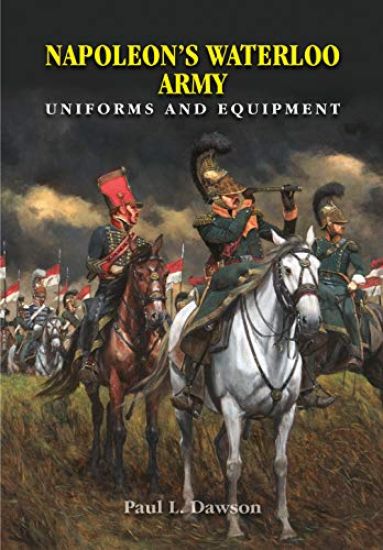
When Napoleon returned to Paris after exile on the Island of Elba, he appealed to the European heads of state to be allowed to rule France in peace. His appeal was rejected and the Emperor of the French knew he would have to fight to keep his throne. In just eight weeks, Napoleon assembled 128,000 soldiers in the French Army of the North and on 15 June moved into Belgium (then a part of the kingdom of the Netherlands). Before the large Russian and Austrian armies could invade France, Napoleon hoped to defeat two coalition armies, an Anglo-Dutch-Belgian-German force under the Duke of Wellington, and a Prussian army led by Prince von Bl cher. He nearly succeeded. Paul Dawson's examination of the troops who fought at Ligny, Quatre-Bras and Waterloo, is based on thousands of pages of French archival documents and translations. With hundreds of photographs of original artefacts, supplemented with scores of lavish colour illustrations, and dozens of paintings by the renowned military artist Keith Rocco, Napoleon's Waterloo Army is the most comprehensive, and extensive, study ever made of the French field army of 1815, and its uniforms, arms and equipment.
Napoleon's Peninsular War

Napoleon's Peninsular War

Paul L Dawson

Frontline Books
2020
sidottu
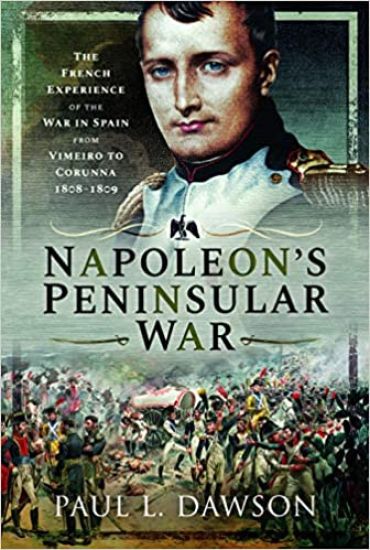
Memoirs of British soldiers who fought in the Peninsular War are commonplace and histories of the momentous campaigns and battles of Sir John Moore and Sir Arthur Wellesley, the future Duke of Wellington, can be numbered by the score. Yet surprisingly little has been published in English on their opponents, the French. Using previously unseen material from the French army archives in Paris, which includes numerous memoires that have not even been published in France, renowned historian Paul Dawson tells the story of the early years of the Peninsular War as never before. Eyewitness accounts of the horrific Siege of Zaragoza, in which more than 50,000 soldiers and civilians were killed defending the city, and of the cataclysmic Spanish defeats at Medellin and Ocana are interspersed with details of campaign life in the Iberian Peninsula and of struggling through the Galician mountains in pursuit of the British army marching to Corunna. As well as the drama of the great battles and the ever-present fear of Spanish guerrillas - the knife in the back, the flash of steel in the dark - Paul Dawson draws on the writings of the French soldiers to examine the ordinary conscript's belief in the war they were fighting for their Emperor, Napoleon. In this much-needed study of the Peninsular War from the French perspective, Paul Dawson has produced an unprecedented, yet vital addition to our understanding of the war in Iberia. _Napoleon's Peninsular War_ is destined to become one of the classic accounts of this turbulent, yet endlessly fascinating era.
Napoleon’s Line Infantry – From the Battle of Jena to the Invasion of Iberia
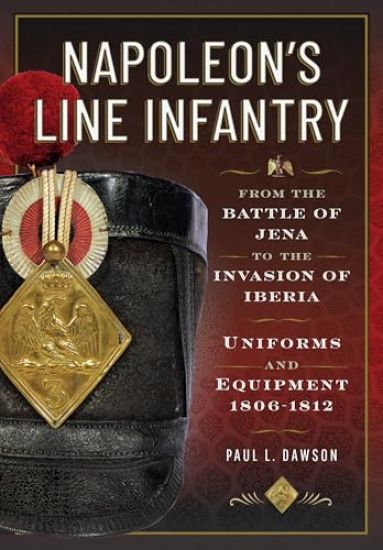
This book examines the uniforms and equipment of the backbone of the French army, the Line Infantry, at the height of its glory. The crushing defeat of the Prussian army at the twin battles of Jena and Auerstedt in 1806 was arguably the most impressive of all Napoleon’s many victories. This was followed in 1807 with the defeat of the Russians at Friedland, leaving Napoleon as the unrivalled master of Europe. Just weeks after the Battle of Friedland, Napoleon became embroiled in Spanish politics. Seeking to rid the continent of Europe of British influence, the Emperor sought to conquer Portugal and subjugate the British ally to the Empire. The Peninsular War had begun. As the Grande Armée trudged from Germany to Spain, what were the troops wearing? A huge stock take took place across the armed forces of France in winter 1807 to spring 1808. Using tens of thousands of archive sources, housed in over 1,000 archive boxes, we are able to reconstruct in meticulous detail how the army appeared at the beginning of the Peninsular War. This book looks at the dress of the Line Infantry following the reforms of 1806 which did most to change the way the army appeared until the proto-Bardin regulation of 1811. The book seeks to explore the famous or infamous white habits as well as the dress of the army on campaign, notably in the Peninsular War. The author demonstrates that the perception of ‘anything goes’ was largely myth, regarding the dress of the line infantry during the rigours of the gruelling peninsular war. The author demonstrates that not every grenadier wore a bearskin let alone had scarlet epaulettes, nor every voltigeur had unique distinctions and sapeurs were a ‘rare beast’ in the Grande Armée.
Napoleon’s Heavy Cavalry

Napoleon’s Heavy Cavalry

Paul L Dawson

PEN SWORD BOOKS LTD
2024
sidottu
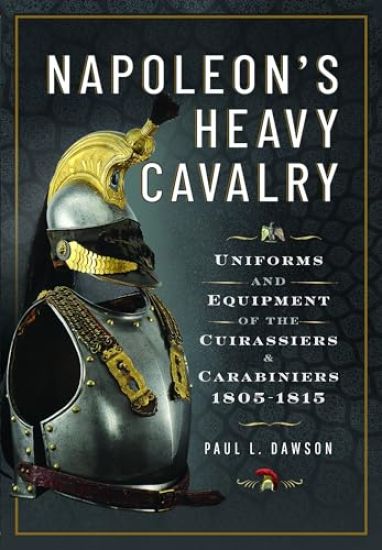
Created during the Peace of Amiens, the nineteen regiments of cuirassiers that existed during the course of the 1e Empire were, after the Imperial Guard, perhaps the most famous and recognisable soldiers of the epoch. This book explores the long gestation of clothing and equipping the cuirassiers, the development of the arm from twelve regiments to twenty-one – if we include the carabiniers from 1811 – and how their clothing evolved across the period. As well as assessing the curiassiers, the story of the evolution of the uniforms of the carabiniers is also told. Much ink has been spilt on the two regiments and their uniforms, yet, as with the cuirassiers, precious little archive research has been carried out. This is one of a series of ground-breaking books which will be the defacto study of this perennially popular subject for historians, researchers, wargamers, re-enactors and artists. Using archive records to ‘set the record straight’, as well as contemporary illustrations and original items of uniforms, the author sets out to describe the uniform of every regiment of Napoleon’s army. Using archive sources found in the Archives Nationales and Service Historique du Armee de Terre in Paris, the author’s unrivalled research over a period of twenty years, will reveal exactly how, for the first time in over 200 years, Napoleon’s army was mounted, clothed and equipped. Having been granted to access to over 1,000 archive boxes, the author assesses how the regulations were adopted in practice. This vast resource, as yet untapped by the majority of researchers and historians for understanding the Napoleonic era in general, include the many regimental archive boxes preserved in the French Army archives. These sources provide, potentially bias free empirical data from which we can reconstruct the life story of a regiment, its officers and above all its clothing. What did trumpeters wear? Did cavalry regiments really have sapeurs? We answer these questions and present the reality of how regiments were dressed derived from diaries, letters, inspection returns, regimental accounts and even cases of fraud. For the first time, this unique series of books discusses the wide ranging 1806 uniform regulation and the more famous Bardin regulation which applied to all arms of the Army and explores the way in which regiments on campaign adopted and adapted their uniforms. For the first time since the days of Napoleon, we can say exactly what was worn by the French army.
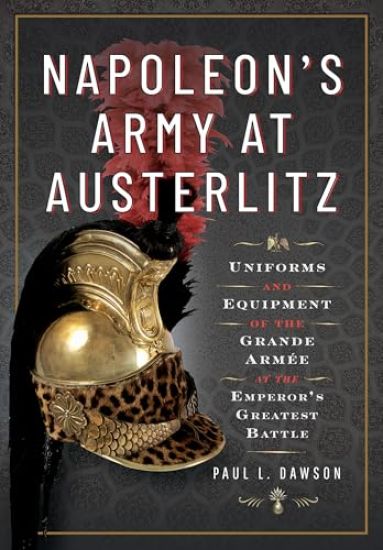
Napoleon's Army at Austerlitz

Napoleon's Army at Austerlitz

Paul L Dawson

PEN SWORD BOOKS LTD
2025
sidottu
A snow-capped hill in modern day Czech Republic, dominated by a small church with black onion dome, stands on a field of battle that cemented Napoleon’s position as Emperor of the French. His throne was secure. His power was limitless. Europe lay at his feet. The Battle of Austerlitz is almost universally regarded as the most impressive of Napoleon's many victories. The magnitude of the French achievement against a larger Russian and Austrian force was unprecedented, the great victory being met by sheer amazement and delirium in Paris, where, just days earlier, the nation had been teetering on the brink of financial collapse. It was a time when Napoleon's Grande Armée was at the apogee of its power. Trained on the Channel coast for over two years, the Grande Armée was considered to be the most powerful, and in many respects the most glamourous, fighting force in Europe. Using archive documents from the time, this book sets out to chart the story of the men who made up the army. Incorporating rare eye-witness reports, that have to date never been used in English or French histories, we assess if the army was indeed the best in the world. Men like Grouchy, Oudinot, Ney, D’hautpoul and many other famous names put the army through its paces – it is their judgements that confirm or deny the effectiveness of the army. These men also minutely examined the men’s clothing and equipment. Using these reports we present for the first time the true story of the Grande Armée. This has been possible due to the author’s access to a vast resource, as yet untapped by the vast majority of researchers and historians for understanding Napoleonic era in general. These are the regimental archive boxes preserved in the French Army Archives. From the regimental inspections, as well as the observations of Divisional commanders written at the time, these sources provide, potentially bias free empirical data – it is based on personal assessments thus is not error free – from which we can reconstruct the life story of a regiment, its officers and above all its clothing. More uniquely, the text is supported by an unrivalled collection of full colour illustrations, many of which have never been published before, including images of original items of equipment that are held in both museums and private collections to which the author has been granted special access. In this beautifully illustrated book, Paul Dawson critically re-examines the mythos and presents the judgement call made at the time about the army, that has ever since been overtly romanticised by both lovers and haters of Napoleon.
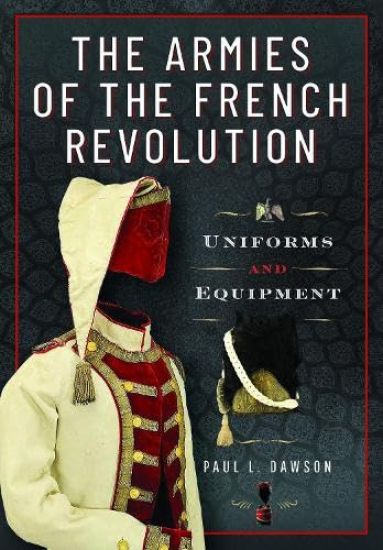
The Armies of the French Revolution

The Armies of the French Revolution

Paul L Dawson

PEN SWORD BOOKS LTD
2025
sidottu
The Revolutionary period was marked by upheaval for France and its army. The early Republic’s military comprised former Royal Army members and revolutionary volunteers, reflecting diversity in their uniforms. Despite the chaos, records were meticulously maintained, and Paul L. Dawson examined thousands of documents from the Service Historique Armée du Terre in Paris to detail the uniforms worn before Napoleon’s rise. Soldiers’ clothing followed strict regulations, with each item assigned a specific lifespan. Regular inspections assessed uniform conditions, and unserviceable items were returned and replaced. Repairs were logged, and soldiers bore the costs of replacements. A regiment’s clothing officer managed equipment purchases for enlisted men, while officers supplied their own uniforms. The regimental council ensured purchases met quality standards, recorded in a Register of Uniforms. Inspection returns and registers provide unprecedented insights into Revolutionary army uniforms, much of which was previously unpublished. Though not all regiments’ data were found, Dawson’s research offers the most accurate depiction to date. His book combines detailed records with illustrations and photographs of rare surviving items, giving readers a unique visual and historical perspective on soldiers’ appearances during this transformative era.
Wakefield: A Potted History

Wakefield: A Potted History

Paul L. Dawson

AMBERLEY PUBLISHING
2022
nidottu
Wakefield was originally a settlement on the River Calder in West Yorkshire, first Anglo-Saxon, then Viking controlled. After the Norman Conquest, the manor passed to the de Warenne family and Wakefield grew into an important market town in the area. In the Wars of the Roses Richard, Duke of York, was killed at the Battle of Wakefield. Wakefield’s prosperity was growing as an inland port and a centre for tanning, the wool trade and coal mining. By the Industrial Revolution, Wakefield was a wealthy town, benefiting from the opening of the Aire & Calder Canal, which enabled it to trade goods, particularly grain and cloth, throughout the country. Wool mills were built in the nineteenth century and Wakefield became the administrative centre in West Riding, given city status in 1888. Although many industries closed in the later decades of the twentieth century, including its extensive coalfields, the city has embarked on a programme of regeneration, which includes the new Hepworth Wakefield art gallery, named after Wakefield-born artist Barbara Hepworth. Through successive centuries the author looks at what has shaped Wakefield’s history. Illustrated throughout, this accessible historical portrait of the transformation that Wakefield has undergone through the ages will be of great interest to residents, visitors and all those with links to the city.
Celebrating Wakefield

Celebrating Wakefield

Paul L. Dawson

AMBERLEY PUBLISHING
2023
nidottu
Wakefield was an important market town in the Middle Ages, as well as an inland port on the River Calder. It prospered through trade and industry in textiles, coal mining, tanning and grain, becoming the county town of West Yorkshire in the Industrial Revolution and its parish church achieving cathedral status in 1888. The Victorian era left a legacy of grand civic buildings in the city, and it is still the administrative centre for many services in West Yorkshire. Manufacturing continues to be strong in Wakefield, although the coal mines have closed and some heavy industry moved away, but the city has also regenerated itself in recent decades, not least by its waterfront and celebrating its cultural heritage by opening the Hepworth Wakefield museum in honour of the famous artist Barbara Hepworth, who was born and brought up in Wakefield. Celebrating Wakefield chronicles the proud heritage of Wakefield, its important moments and what draws so many to this dynamic city today. Illustrated throughout, this fascinating book offers a marvellous and refreshingly positive insight into Wakefield’s rich heritage, its special events and important moments. This book will be a valuable contribution to the history of the city and provide a source of many memories to those who have known it well over the years.
Going Underground: Wakefield

Going Underground: Wakefield

Paul L. Dawson

AMBERLEY PUBLISHING
2025
nidottu
Beneath the surface of the West Yorkshire city of Wakefield lies a subterranean world, including ancient cellars, disused railway tunnels and a burial ground. Coal mining had taken place around Wakefield for centuries, with the last pits closing in the 1980s. Many large cellars are a legacy of the city’s history as an important centre of the wool trade going back to the Middle Ages, where additional safe storage was needed for the produce. Catacombs beneath the Unitarian chapel are the last resting place of some of the most influential and important persons in local, regional and national history, including four MPs, French revolutionaries, diarists, as well as women of influence on the national stage. The macabre space is unique in the north of England, with ‘residents’ from Manchester and Ireland, as well as elsewhere in Yorkshire. Nearby is a secret tunnel to a property that was the scene of a tragic attack by a grizzly bear. Wakefield also has other crypts: the medieval bridge chapel has a crypt completed c. 1347, the cathedral has a crypt completed in 1902 and the Georgian new church also has a crypt. This book provides a fascinating portrait of subterranean Wakefield, and the often strange stories associated with these hidden areas will interest all those who know the city.