

Kirjahaku
Etsi kirjoja tekijän nimen, kirjan nimen tai ISBN:n perusteella.
1000 tulosta hakusanalla Paul M Hoskins


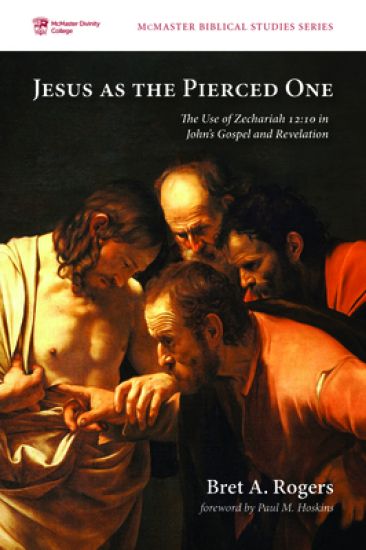
How can John use Zech 12:10 to explain both Jesus' first coming in humility (John 19:37) and Jesus' second coming in glory (Rev 1:7)? In this book, Rogers demonstrates how God's self-revelation in Jesus provides the key for understanding the fulfillment of Zech 12:10 in light of both John's high Christology and John's inaugurated and consummated eschatology. In contrast to previous approaches, Rogers proposes that John interprets Zech 12:10 not simply along a human, messianic axiom, but along a divine, messianic axiom. Moreover, by treating Zech 12:10, John 19:37, and Rev 1:7 in a single study, readers will better understand the unified narrative spanning the Testaments, the nature of Jesus' divine identity and mission in John's writings, and how Jesus' divine nature and mission compels the church to live between his two advents.
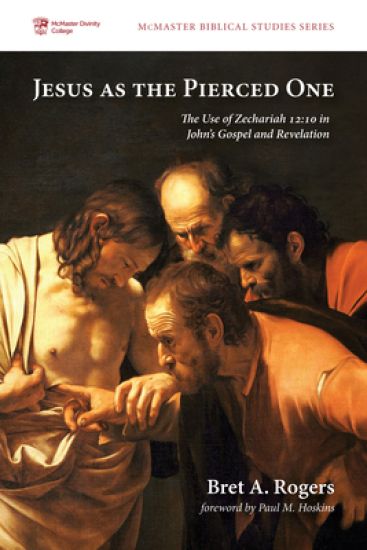
How can John use Zech 12:10 to explain both Jesus' first coming in humility (John 19:37) and Jesus' second coming in glory (Rev 1:7)? In this book, Rogers demonstrates how God's self-revelation in Jesus provides the key for understanding the fulfillment of Zech 12:10 in light of both John's high Christology and John's inaugurated and consummated eschatology. In contrast to previous approaches, Rogers proposes that John interprets Zech 12:10 not simply along a human, messianic axiom, but along a divine, messianic axiom. Moreover, by treating Zech 12:10, John 19:37, and Rev 1:7 in a single study, readers will better understand the unified narrative spanning the Testaments, the nature of Jesus' divine identity and mission in John's writings, and how Jesus' divine nature and mission compels the church to live between his two advents.
Jesus as the Fulfillment of the Temple in the Gospel of John
Paul M. Hoskins
Wipf Stock Publishers
2007
sidottu
This study examines John's portrayal of Jesus as the fulfillment and replacement of the Temple. It also shows how a traditional conception of typology can be helpful for understanding the nature of the relationship between Jesus and the Temple. Interpreters often associate John 1:14, 1:51, 2:18-22, and 4:20-24 with Jesus' replacement of the Temple. Based on these texts, one can already begin to see that he fulfills and replaces the Temple in that he is the new locus of God's presence, glory, revelation, and abundant provision for his people. In particular, John 2:18-22 clearly associates Jesus' role as the Temple with his death and resurrection. According to Isaiah, part of God's decisive action on behalf of his people, and for revealing himself to the nations, is the lifting up of the Temple above all other temples. In John, this expectation finds its fulfillment in Jesus. John's language of lifting up and glorification marks Jesus' death, resurrection, and exaltation as climactic events through which God lifts up and glorifies Jesus, the true Temple. Jesus' death, resurrection, and exaltation are also the means by which God provides for his people. Jesus offers his flesh and blood for the life of the world and sends the Spirit to enrich believers with the benefits of his sacrificial death. In doing so, he simultaneously fulfills prophecies and patterns associated with the Passover, Feast of Tabernacles, Feast of Dedication, and the Temple.

The Book of Revelation: A Theological and Exegetical Commentary
Paul M. Hoskins
Createspace Independent Publishing Platform
2017
nidottu
Jesus as the Fulfillment of the Temple in the Gospel of John
Paul M. Hoskins
Wipf Stock Publishers
2007
nidottu
This study examines John's portrayal of Jesus as the fulfillment and replacement of the Temple. It also shows how a traditional conception of typology can be helpful for understanding the nature of the relationship between Jesus and the Temple. Interpreters often associate John 1:14, 1:51, 2:18-22, and 4:20-24 with Jesus' replacement of the Temple. Based on these texts, one can already begin to see that he fulfills and replaces the Temple in that he is the new locus of God's presence, glory, revelation, and abundant provision for his people. In particular, John 2:18-22 clearly associates Jesus' role as the Temple with his death and resurrection. According to Isaiah, part of God's decisive action on behalf of his people, and for revealing himself to the nations, is the lifting up of the Temple above all other temples. In John, this expectation finds its fulfillment in Jesus. John's language of lifting up and glorification marks Jesus' death, resurrection, and exaltation as climactic events through which God lifts up and glorifies Jesus, the true Temple. Jesus' death, resurrection, and exaltation are also the means by which God provides for his people. Jesus offers his flesh and blood for the life of the world and sends the Spirit to enrich believers with the benefits of his sacrificial death. In doing so, he simultaneously fulfills prophecies and patterns associated with the Passover, Feast of Tabernacles, Feast of Dedication, and the Temple.

For more than forty years the late architect, professor at the School of Fine Arts of Athens and academician, Paul Mylonas (1915-2005) systematically photographed and drew both neoclassical as well as more humble domestic buildings of Athens. This bilingual edition, edited by Maro Kardamitsi-Adami, Professor Emerita at the National Technical University, and Alexandra Karageorgou, a close collaborator of the late professor Mylonas, highlights the drawings, photographs and texts of the distinguished architect, enhanced through the results of resent research. Together they convey an image of what was then a new capital city, a place humming with a vast range of activities, one which had thrown itself with unusual zeal and notable good taste into the stimulation of authentic architecture. Published jointly by the Academy of Athens and Kapon Editions The text is presented in both Greek and English
Paul m'a laissé sa clé !
Art et Comédie
2025
pokkari
Paul M. Davis, Jr.
VDM Publishing House
2010
nidottu
Observera att förlaget som ger ut denna produkt baserar innehållet i sina produkter på fria källor som Wikipedia. Boken är med stor sannolikhet endast ett utdrag ur dessa informationskällor, alltså inte en vanlig bok i den bemärkelsen.
Watches - The Paul M. Chamberlain Collection at the Art Institute of Chicago 1921
Anon
Read Books
2016
pokkari
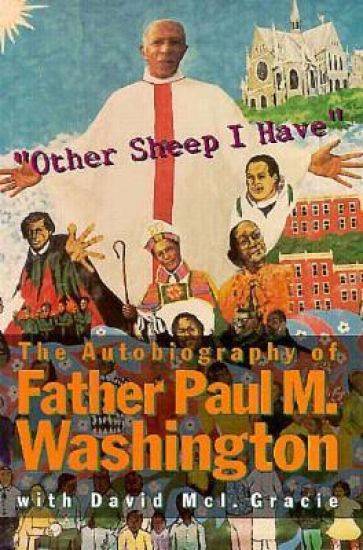
"Other Sheep I Have" the Autobiography of Father Paul M. Washington
Paul Washington
Temple University Press,U.S.
1994
pokkari
An inner-city Episcopal priest shares a lifetime of fighting for civil and women's rights

Der eliminative Materialismus nach Paul M. Churchland. Analysen und Kritik
GRIN Verlag
2023
nidottu

Mechanism of Human Relationship: An Agnostic View
Paul M
White Falcon Self Publishing Platform
2016
nidottu
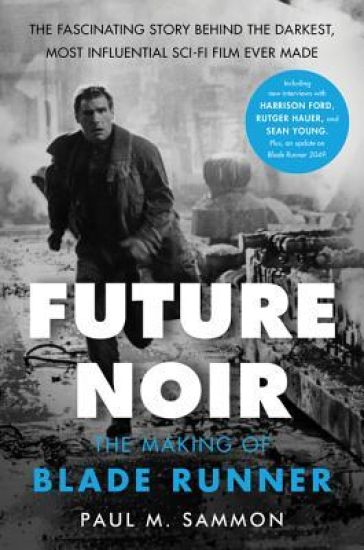
Future Noir Revised & Updated Edition: The Making of Blade Runner
Paul M. Sammon
Dey Street Books
2017
nidottu
Rediscover the groundbreaking magic of Blade Runner with this revised and updated edition of the classic guide to Ridley Scott's transformative film--and published in anticipation of its sequel, Blade Runner 2049, premiering October 2017 and starring Ryan Gosling, Jared Leto, Robin Wright, and Harrison Ford.Ridley Scott's 1992 "Director's Cut" confirmed the international film cognoscenti's judgment: Blade Runner, based on Philip K. Dick's brilliant and troubling science fiction masterpiece Do Androids Dream of Electric Sheep?, is the most visually dense, thematically challenging, and influential science fiction film ever made. Future Noir offers a deeper understanding of this cult phenomenon that is storytelling and visual filmmaking at its best. In this intensive, intimate and anything-but-glamorous behind-the-scenes account, film insider and cinephile Paul M. Sammon explores how Ridley Scott purposefully used his creative genius to transform the work of science fiction's most uncompromising author into a critical sensation, a commercial success, and a cult classic that would reinvent the genre. Sammon reveals how the making of the original Blade Runner was a seven-year odyssey that would test the stamina and the imagination of writers, producers, special effects wizards, and the most innovative art directors and set designers in the industry at the time it was made. This revised and expanded edition of Future Noir includes: An overview of Blade Runner's impact on moviemaking and its acknowledged significance in popular culture since the book's original publication An exploration of the history of Blade Runner: The Final Cut and its theatrical release in 2007 An up-close look at its long-awaited sequel Blade Runner 2049A 2007 interview with Harrison Ford now available to American readersExclusive interviews with Rutger Hauer and Sean YoungA fascinating look at the ever-shifting interface between commerce and art, illustrated with production photos and stills, Future Noir provides an eye-opening and enduring look at modern moviemaking, the business of Hollywood, and one of the greatest films of all time.
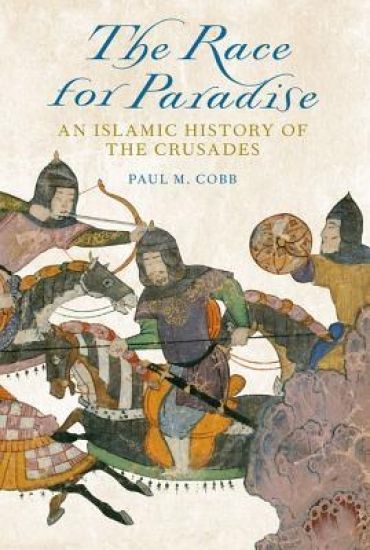
The Race for Paradise: An Islamic History of the Crusades
Paul M. Cobb
Oxford University Press
2016
nidottu
In 1099, when the first Frankish invaders arrived before the walls of Jerusalem, they had carved out a Christian European presence in the Islamic world that endured for centuries, bolstered by subsequent waves of new crusaders and pilgrims. The story of how this group of warriors, driven by faith, greed, and wanderlust, created new Christian-ruled states in parts of the Middle East is one of the best-known in history. Yet it is offers not even half of the story, for it is based almost exclusively on Western sources and overlooks entirely the perspective of the crusaded. How did medieval Muslims perceive what happened? In The Race for Paradise, Paul M. Cobb offers a new history of the confrontations between Muslims and Franks we now call the "Crusades," one that emphasizes the diversity of Muslim experiences of the European holy war. There is more to the story than Jerusalem, the Templars, Saladin, and the Assassins. Cobb considers the Arab perspective on all shores of the Muslim Mediterranean, from Spain to Syria. In the process, he shows that this is not a straightforward story of warriors and kings clashing in the Holy Land, but a more complicated tale of border-crossers and turncoats; of embassies and merchants; of scholars and spies, all of them seeking to manage a new threat from the barbarian fringes of their ordered world. When seen from the perspective of medieval Muslims, the Crusades emerge as something altogether different from the high-flying rhetoric of the European chronicles: as a cultural encounter to ponder, a diplomatic chess-game to be mastered, a commercial opportunity to be seized, and as so often happened, a political challenge to be exploited by ambitious rulers making canny use of the language of jihad. An engrossing synthesis of history and scholarship, The Race for Paradise fills a significant historical gap, considering in a new light the events that distinctively shaped Muslim experiences of Europeans until the close of the Middle Ages.