Richard Hudson (b. 1954, Yorkshire, UK) began working on his organic forms and sculptures at a relatively late age after many years of traveling. Drawing inspiration from luminaries such as Henry Moore, Jean Arp, and Constantin Brancu?i, Hudson creates work that is meticulously refined, timeless, and contemporary. Hudson s imaginative forms are frequently emblematic of the human figure and, at the same time, possess reflective surfaces and evoke surreal reflections of the environment. This landscape-format book illustrates a wide range of Hudson s work, from never-before-seen models and sketches to miniature and monumental pieces, including his major installations at Chatsworth, notably Frog with Fly in 2015 and Tear in 2016, and his numerous commissions globally, such as Love Me in Donum Sculpture Park, California, in 2016, and a second version in Valle de Bravo, Mexico, in 2021. Despite the immense size of these installations, Hudson s creative process nevertheless remains distinctively unassuming, studio-based, private, and introspective. This book substantiates Hudson s cultural impact, positioning him as a pivotal figure in contemporary sculpture.
This book, which accompanies a major exhibition at the National Portrait Gallery, considers Cindy Sherman’s oeuvre through the lens of portraiture. Featuring key examples of her work – from her earliest photographs through to her most recent – it explores the mercurial relationship between appearance and reality Cindy Sherman is among the most influential artists of her generation. Using herself as model, wearing a range of costumes and portraying herself in invented situations, she interrogates the imagery employed by the mass media, po pular culture and fine art. Television, advertising, magazines, fashion and Old Master paintings all form part of her visual language. Whether using make-up, costumes, props and prosthetics to manipulate her own appearance, or devising elaborate tableaux, her entire body of 40 years’ work constitutes a highly distinctive response to contemporary and earlier culture, whose stylistic tropes she appropriates and quotes. This book will explore the rich cultural sources that Sherman plunders in creating provocative and ambiguous images that lead us to question the things we see. Sherman’s work is surveyed through two related themes. Examining Sherman’s art within the context of portraiture it explores the way that identity is constructed from appearance. It also considers the nature of Sherman’s involvement with a range of styles by positioning her work in the context of the pre-existing imagery that she appropriates.
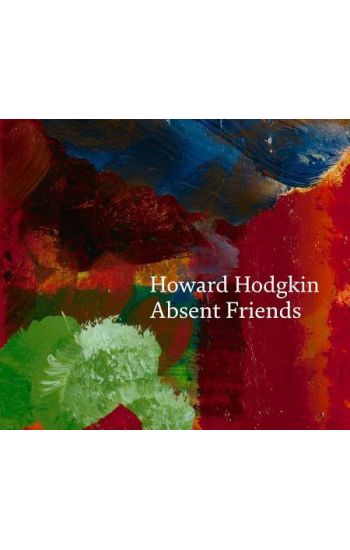
Hodgkin’s art can be seen as providing memorials for people, many of whom are friends, whose absence is countered by th e corresponding physical presence of particular paintings. Descriptive elements visible in his earlier portraits from the 1950s are subsumed within paintings that have, over the course of more than fifty years, become more psychologically charged, but no l ess connected with evoking specific individuals in particular situations. This book, like the exhibition it accompanies, surveys the development of Hodgkin’s portraiture from its beginnings in 1949 to the present, including new paintings. Comprising key works from a range of international public and private collections, it traces the evolution of the artist’s visual language and his engagement with a range of friends and others within the artist’s circle. Exhibition curator Paul Moorhouse provides a compe lling introduction to Hodgkin’s portraits, his subjects, working methods, the role of memory, and his distinctive approach to representing people. Peter Blake, Stephen Buckley, Patrick Caulfield, David Hockney, Philip King, R . B . Kitaj and Richard Smith are among the many leading artists portrayed, so that the British art world emerges as the wider subject of Hodgkin’s art. The book also contains a fully illustrated chronology and commentaries on individual work
This volume focuses on Bridget Riley's energetic ‘curvilinear’ works from a 2006 exhibition by Bridget Riley. The paintings incorporate complex layers of flowing forms that interlock and move with one another, reflecting the artist's exploration of curves to create paintings of great energy and movement. Using a patch of colour that is similar to a brush mark, Riley’s forms interrupt and threaten to break out from the picture plane, overhanging the frame to jostle and animate the visual field. Refining and developing this form in recent paintings, the artist's work offers an incredible melding of form and colour. Featuring over 20 full-colour illustrations, this publication includes an in-depth essay by Paul Moorhouse examining the changes within Riley’s work throughout her multi-decade career.
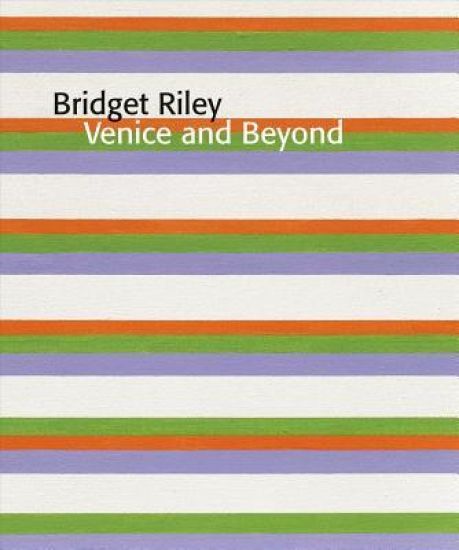
During the early 1960s, Riley’s black-and-white work employed elementary shapes to convey movement and light. Having tested this limited set of means, the artist incorporated colour into her paintings in 1967. This volume accompanied an exhibition at Graves Gallery, Sheffield (18 February–25 June 2016) that chronicles the period of change which took place before, during and after Riley’s representation of Great Britain at the 34th Venice Biennale. Using Rise 1 (1968) as a starting point, the carefully selected group of paintings and works on paper from 1967–85 situate this important painting within its context. Alongside over 30 full-colour illustrations, an essay by Paul Moorhouse explores how the adoption of colour informs developments throughout Riley’s ensuing career.
'"As Paul Moorhouse shows in this thorough and sensitive first biography, which concentrates on [Riley's] early years up to the age of thirty-four, it was only after many false starts, bracing shocks and firm decisions that Riley found her way as an abstract painter in the early 1960s with her eye-dazzling lines, squares, curves ... in ultra-hard-edged black-and-white". –Times Literary Supplement "In “Bridget Riley: A Very Very Person – The Early Years,” Paul Moorhouse ... homes in on the period between the artist’s childhood and her earliest success, and makes a surprising but compelling case for the influence of landscape on Ms Riley’s distinctive style." –Wall Street Journal "An entertaining and informative text that adds greatly to our understanding of a very prominent and still highly intriguing British artist." –Hyperallergic In January 1965 the international art world converged on New York to pay homage to a brilliant new star. The glittering opening of The Responsive Eye, a major exhibition of abstract painting at the Museum of Modern Art, signalled the latest phenomenon, op art – and its centre of attention was a young painter named Bridget Riley, whose dazzling painting Current appeared on the cover of the catalogue. Riley’s first solo show in New York sold out, and, following a feature in Vogue magazine, the Riley 'look' became a fashion craze. Overnight, she had become a sensation, yet only three years earlier, she was a virtual unknown. How did success arrive so suddenly? Authored by the acclaimed curator and writer Paul Moorhouse, A Very Very Person is the first biography of Bridget Riley and addresses that tantalising question. Focusing on her early years, it tells the story of a remarkable woman whose art and life were entwined in surprising ways. This intimate narrative explores Riley’s wartime childhood spent in the idyllic Cornish countryside, her subsequent struggles to find her way as an artist, and the personal challenges she faced before finally arriving as one of the world’s most celebrated artists in Swinging Sixties London.
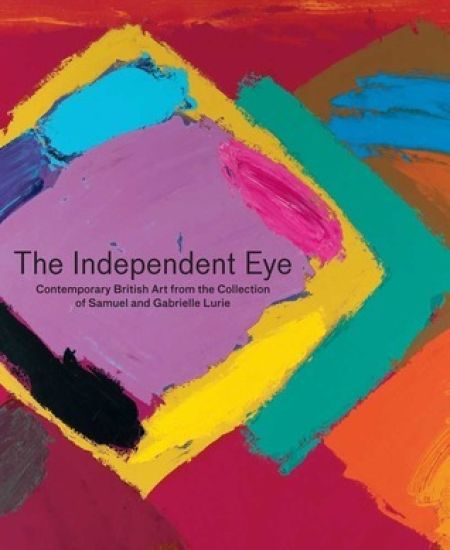
This beautifully illustrated book takes readers inside Samuel and Gabrielle Lurie's dynamic private collection of contemporary British art, an intended gift to the Yale Center for British Art. Spanning the past four decades, the collection includes major works by Ian Stephenson, Patrick Caulfield, and John Walker, as well as important prints by Howard Hodgkin and R. B. Kitaj. At its core are 52 paintings and drawings by John Hoyland, widely considered one of Britain's foremost abstract painters. The Independent Eye features an interview with the Luries, as well as essays by leading critics and writers, some of whom were and are personally acquainted with the artists represented. These experts assess individual artists and works, explore their inspirations and methods, and define their shared experiences and values. They also address subjects such as the overall importance of the collection and postwar art in Britain.Distributed for the Yale Center for British ArtExhibition Schedule:Yale Center for British Art(09/16/10-01/02/11)
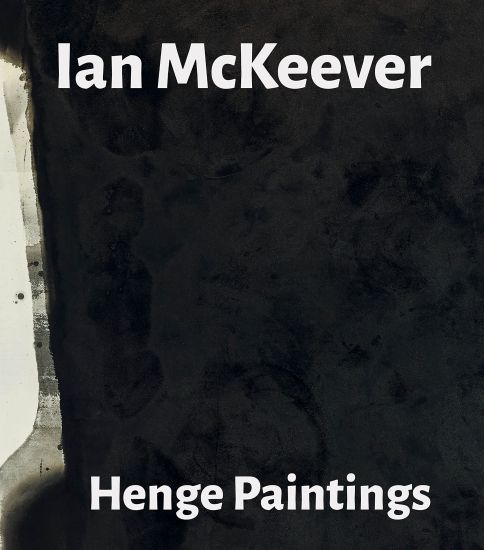
With a career spanning more than five decades, Ian McKeever is one of Britain’s most senior artists working on the international stage. This publication documents the Henge paintings – a series started in 2017 and completed over the course of five years, inspired by prehistoric standing stones in the county of Wiltshire, England, and continuing the artist’s long-standing investigation into the languages and possibilities of abstract painting.Comprising thirty paintings along with numerous works on paper, the genesis of the series was a visit by McKeever to the world-famous neolithic site in the village of Avebury in 2016, where he took black and white photographs of the large stones that form three discrete circles: two smaller ones contained within the largest. Erected some 4500 years ago, Avebury is the largest stone circle in Britain, and forms part of what English Heritage asserts to be ‘a set of neolithic and Bronze Age ceremonial sites that seemingly formed a vast sacred landscape.’Art historian and curator Paul Moorhouse, in his essay commissioned for the publication, describes how McKeever ‘framed each megalith in close-up, their edges visible at the extremity of the resulting images,’ explaining how ‘the experience of moving around Avebury and responding to the huge stones’ monumental presence made an abiding impression that resonated with deep-seated preoccupations.’ McKeever’s resulting body of work is an earnest and considered exploration into how paint can convey universal forces and properties such as mass, gravity and time, and how colour, texture and abstraction can converse with three-dimensional space, form and materiality. The relationship between painting and sculpture in McKeever’s work is discussed by means of an in-conversation between the artist and Dr Jon Wood. ‘My interest in alluding to early megalithic sites in titling the group of paintings Henge paintings,’ says McKeever, ‘was in touching that deeper sense of time, time’s weight, so to speak. How to imbue a painting with its own weight of time, forsake the immediacy of the here and now.’Designed and produced by Tim Harvey, the publication has been printed by Narayana Press in Odder, Denmark. It is published by Anomie, London, with support from Galleri Susanne Ottesen, Copenhagen, and Heather Gaudio Fine Art, New Canaan, Connecticut. The publication accompanies exhibitions of selected works from the Henge paintings at both galleries in 2022.Ian McKeever was born 1946, Withernsea, Yorkshire, UK. He lives and works in Hartgrove, Dorset. McKeever has received numerous awards including the prestigious DAAD scholarship in Berlin 1989/90 and was elected a Royal Academician in 2003. He has held several teaching positions including Guest Professor at the Städel Akademie der Kunst in Frankfurt, Senior Lecturer, Slade, University of London and Visiting Professor at the University of Brighton. He has also published many texts on painting.Recent public solo exhibitions include Ian McKeever / Tony Cragg – Painting and Sculpture, Skulpturenpark Waldfrieden, Wuppertal, Germany (2020); Paintings 1992–2018, Ferens Art Gallery, Hull, UK (2018); Hours of Darkness, Hours of Light, Kunstmuseet i Tønder, Denmark (2015); Between Darkness and Light, National Gallery of the Faroe Islands, Tórshavn, Faroe Islands (2015); Hours of Darkness, Hours of Light, Kunst-Station Sankt Peter Ko¨ln, Cologne, Germany (2014); and Hartgrove. Malerei und Fotografie, Josef Albers Museum, Bottrop, Germany (2012). McKeever’s work is represented in leading international public collections, including Tate, British Museum, Royal Academy of Arts, London; Museum Moderner Kunst (mumok), Vienna; Museum of Fine Arts, Budapest; Louisiana Museum of Modern Art, Humlebæk; Glyptotek, Copenhagen; Museum of Contemporary Art, Helsinki; Brooklyn Museum of Art, New York; Metropolitan Museum of Art, New York; Boston Museum of Fine Art and Yale Center for British Art, Connecticut.
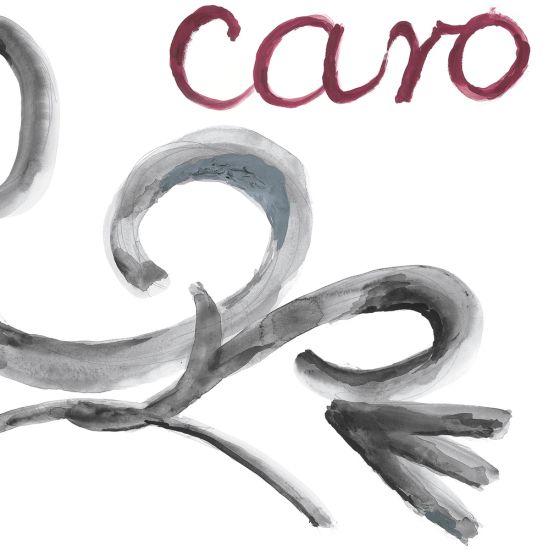
This is a boxed set of Anthony Caro: Drawing in Space, Anthony Caro: Interior and Exterior, Anthony Caro: Figurative and Narrative Sculpture, Anthony Caro: Small Sculptures and Anthony Caro: Presence. The box has been specially designed by Anthony Caro.Anthony Caro restlessly explored an unpredictable range of sculptural possibilities, testing limits and positing new ideas about the nature of eloquent three-dimensional objects. Through his expansion and transformation of the legacy of construction in metal pioneered by Julio González and Pablo Picasso, and further developed by David Smith in the USA, Caro created a new, multivalent language of three-dimensional abstraction.The Caro pendulum swung between extremes of linearity and robustness, abstractness and allusion. He countered his mastery of line and transparency with investigations of our responses to mass and perceptions of interior and exterior, even experimenting with literally enterable sculptures. He made rigorously abstract constructions that resemble nothing but themselves, intimate table-based pieces, monumental constructions like metaphorical architecture, and complex multi-part cycles of narrative works that pulse in and out of explicit illusionism. And more. The range and variety of Caro's sculpture notwithstanding, there are also common threads that run through all of his work.The five volumes in this set, each by a different critic, examine the various aspects of Caro's evolution individually, tracing the permutations of different themes – narrative, volume and mass, line and openness – throughout his work, over time. Each volume is independent and explores different territory, but cumulatively, by tracing these dominant themes, they provide new insight into the achievement of one of the undisputed giants of Modernist art.
Bioinformatics, Biocomputing and Perl presents a modern introduction to bioinformatics computing skills and practice. Structuring its presentation around four main areas of study, this book covers the skills vital to the day-to-day activities of today’s bioinformatician. Each chapter contains a series of maxims designed to highlight key points and there are exercises to supplement and cement the introduced material. Working with Perl presents an extended tutorial introduction to programming through Perl, the premier programming technology of the bioinformatics community. Even though no previous programming experience is assumed, completing the tutorial equips the reader with the ability to produce powerful custom programs with ease. Working with Data applies the programming skills acquired to processing a variety of bioinformatics data. In addition to advice on working with important data stores such as the Protein DataBank, SWISS-PROT, EMBL and the GenBank, considerable discussion is devoted to using bioinformatics data to populate relational database systems. The popular MySQL database is used in all examples. Working with the Web presents a discussion of the Web-based technologies that allow the bioinformatics researcher to publish both data and applications on the Internet. Working with Applications shifts gear from creating custom programs to using them. The tools described include Clustal-W, EMBOSS, STRIDE, BLAST and Xmgrace. An introduction to the important Bioperl Project concludes this chapter and rounds off the book.
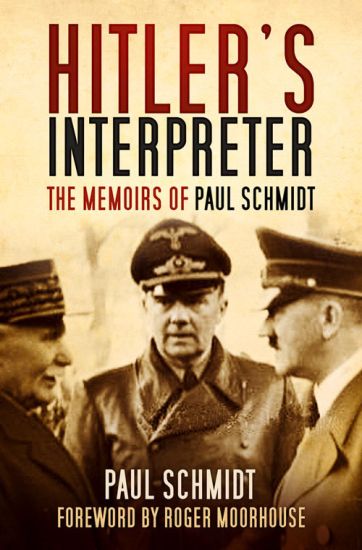
As an interpreter in the German Foreign Ministry, Paul-Otto Schmidt (1899–1970) was in attendance at some of the most decisive moments of twentieth-century history. Fluent in both English and French, he served as Hitler’s translator during negotiations with Chamberlain, the British declaration of war and the surrender of France, as well as translating the Führer’s infamous speeches for radio. Having gained favour with the Nazi Party – donning first the uniform of the SS then that of the Luftwaffe – Paul Schmidt was given ‘absolute authority’ in everything to do with foreign languages. He later presided over the interrogation of Canadian soldiers captured after the 1942 Dieppe Raid. Arrested in May 1945, Schmidt was freed by the Americans in 1948. In 1946 he testified at the Nuremberg Trials, where conversations with him were noted down by the psychiatrist Leon Goldensohn and later published. After the war he taught at the Sprachen und Dolmetscher Institut in Munich. Hitler’s Interpreter presents a highly atmospheric account of the bizarre life led behind the scenes at the highest level of the Third Reich. Roger Moorhouse is a historian of the Third Reich. He is the author of the acclaimed Berlin at War, Killing Hitler and The Devil’s Pact. He has contributed to He Was My Chief, I Was Hitler’s Chauffeur, With Hitler to the End and Hitler’s Last Witness.
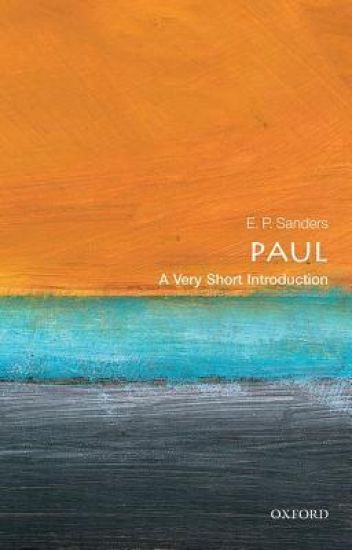
Paul is the most powerful human personality in the history of the Church. A missionary, theologian, and religious genius, in his epistles he laid the foundations on which later Christian theology was built. In his highly original introduction to Paul's life and thought, E. P. Sanders, whose research on Paul has substantially influenced recent scholarship, pays equal attention to Paul's fundamental convictions and the sometimes convoluted ways in which they were worked out. ABOUT THE SERIES: The Very Short Introductions series from Oxford University Press contains hundreds of titles in almost every subject area. These pocket-sized books are the perfect way to get ahead in a new subject quickly. Our expert authors combine facts, analysis, perspective, new ideas, and enthusiasm to make interesting and challenging topics highly readable.
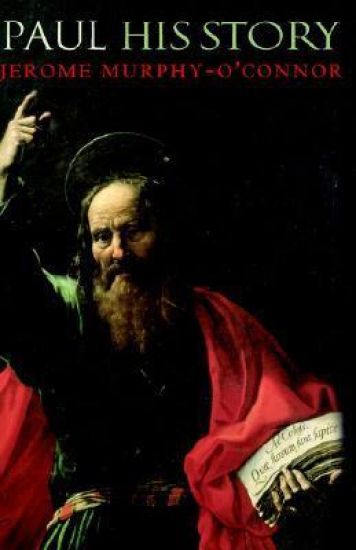
For someone who has exercised such a profound influence on Christian theology, Paul remains a shadowy figure behind the barrier of his complicated and difficult biblical letters. Debates about his meaning have deflected attention from his personality, yet his personality is an important key to understanding his theological ideas. This book redresses the balance. Jerome Murphy-O'Connor's disciplined imagination, nourished by a lifetime of research, shapes numerous textual, historical, and archaeological details into a colourful and enjoyable story of which Paul is the flawed but undefeated hero. This chronological narrative offers new insights into Paul's intellectual, emotional, and religious development and puts his travels, mission, and theological ideas into a plausible biographical context. As he changes from an assimilated Jewish teenager in Tarsus to a competitive Pharisee in Jerusalem and then to a driven missionary of Christ, the sometimes contradictory components of Paul's complex personality emerge from the way he interacts with people and problems. His theology was forged in dialogue and becomes more intelligible as our appreciation of his person deepens. In Jerome Murphy-O'Connor's engaging biography, the Apostle comes to life as a complex, intensely human individual.
For someone who has exercised such a profound influence on Christian theology, Paul remains a shadowy figure behind the barrier of his complicated and difficult biblical letters. Debates about his meaning have deflected attention from his personality, yet his personality is an important key to understanding his theological ideas. This book redresses the balance. Jerome Murphy-O'Connor's disciplined imagination, nourished by a lifetime of research, shapes numerous textual, historical, and archaeological details into a colourful and enjoyable story of which Paul is the flawed but undefeated hero. This chronological narrative offers new insights into Paul's intellectual, emotional, and religious development and puts his travels, mission, and theological ideas into a plausible biographical context. As he changes from an assimilated Jewish teenager in Tarsus to a competitive Pharisee in Jerusalem and then to a driven missionary of Christ, the sometimes contradictory components of Paul's complex personality emerge from the way he interacts with people and problems. His theology was forged in dialogue and becomes more intelligible as our appreciation of his person deepens. In Jerome Murphy-O'Connor's engaging biography, the Apostle comes to life as a complex, intensely human individual.
This study of the Apostle to the Gentiles combines scholarship with an unusual approach. Schoeps interprets Paul's theology in the light of his Jewish background, which coloured and conditioned his Christological teaching.
Since its first publication in German in 1959, Paul has been hailed as a major study of the apostle to the Gentiles, combining exceptional scholarship with an unusual approach. Schoeps interprets Paul's theology in the light of his Jewish background, which coloured and conditioned his Christological teaching. Paul's conception of Jesus differs from that of the Synoptics: what and how extensive the difference is and whence it is derived are among the questions Schoeps examines. After surveying major problems in Pauline research, the Author relates the apostle to primitive Christianity, discussing his eschatology and his teachings on salvation, the law, and saving history. The final chapter shows that Paul's distinctive doctrines result from two converging factors: that Paul never saw Jesus in the flesh, and the influence of Jewish teaching. The consequence was his concern with the resurrected Saviour of the world, the pre-existent and eternal Son of God. Schoeps shows that Paul betrayed a fundamental misconception of the law and the covenantal agreement between God and his chosen people. The result is a thought-provoking, and somewhat startling, study of the first, the greatest, and the most difficult of all Christian theologians.
'There is neither Jew nor Greek, there is neither slave nor free, there is no male and female; for you are all one in Christ Jesus.' (Galatians 3.28) The revolutionary writings of St Paul have had an incalculable impact on Western history, and continue to influence directly the two billion Christians living today. Written by a world authority, this brief history begins by assessing what we know about Paul's life and letters, and his impact on the Roman world of the first century. It concludes by highlighting the key elements of Paul's thought and considering their consequences as they have played out over two millennia.
This compelling reconstruction of the life and thought of St Paul paints a vivid picture of the Roman world in which he preached his revolutionary message and explains the significance of his lasting impact on both the Church and the world. Regarded by many as the founder of Christianity, Paul of Tarsus is one of the most controversial and powerful figures in history. His writings have had an incalculable influence on Western culture and beyond, and his words continue to guide the lives of over two billion Christians across the world today. In this superbly detailed biography Tom Wright traces Paul's career from zealous persecutor of the fledgling Church, through his journeys as the world's greatest missionary theologian, to his likely death as a Christian martyr at the hands of Nero in the mid 60s CE. Drawing judiciously on the latest research into the Jewish, Greek and Roman worlds, and enriched by a wealth of critical insight into Paul's own writings, this is the most rounded portrait of the apostle ever painted – his development, motivations, spiritual struggles and intellectual achievements, and his lasting impact over two millennia.
A groundbreaking new portrait of the apostle Paul, from one of today’s leading historians of antiquity Often seen as the author of timeless Christian theology, Paul himself heatedly maintained that he lived and worked in history’s closing hours. His letters propel his readers into two ancient worlds, one Jewish, one pagan. The first was incandescent with apocalyptic hopes, expecting God through his messiah to fulfill his ancient promises of redemption to Israel. The second teemed with ancient actors, not only human but also divine: angry superhuman forces, jealous demons, and hostile cosmic gods. Both worlds are Paul’s, and his convictions about the first shaped his actions in the second. Only by situating Paul within this charged social context of gods and humans, pagans and Jews, cities, synagogues, and competing Christ-following assemblies can we begin to understand his mission and message. This original and provocative book offers a dramatically new perspective on one of history’s seminal figures.