Kirjojen hintavertailu. Mukana 11 244 527 kirjaa ja 12 kauppaa.

Kirjahaku

Etsi kirjoja tekijän nimen, kirjan nimen tai ISBN:n perusteella.

1000 tulosta hakusanalla Paul Preston

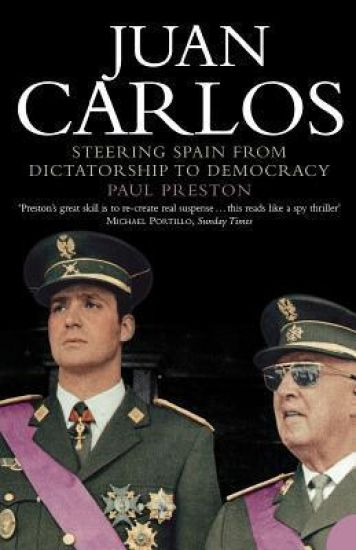
Juan Carlos

Juan Carlos

Paul Preston

HARPERCOLLINS PUBLISHERS
2005
nidottu
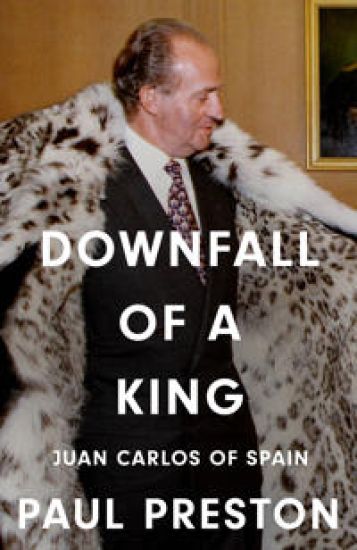
A powerful biography of Spain’s great king, Juan Carlos, by the pre-eminent writer on 20th-century Spanish history. There are two central mysteries in the life of Juan Carlos, one personal, the other political.The first is the apparent serenity with which he accepted that his father had surrendered him, to all intents and purposes, into the safekeeping of the Franco regime. In any normal family, this would have been considered a kind of cruelty or, at the very least, baleful negligence. But a royal family can never be normal, and the decision to send the young Juan Carlos away from Spain was governed by a certain ‘superior’ dynastic logic. The second mystery lies in how a prince raised in a family with the strictest authoritarian traditions, who was obliged to conform to the Francoist norms during his youth and educated to be a cornerstone of the plans for the reinforcement of the dictatorship, eventually sided so emphatically and courageously with democratic principles. Paul Preston – perhaps the greatest living commentator on modern Spain – has set out to address these mysteries, and in so doing has written the definitive biography of King Juan Carlos. He tackles the king’s turbulent relationship with his father, his cloistered education, his bravery in defending Spain’s infant democracy after Franco’s death and his immense hard work in consolidating parliamentary democracy in Spain. The resulting biography is both rigorous and riveting, its vibrant prose doing justice to its vibrant subject. It is a book fit for a king.
Doves of War

Doves of War

Paul Preston

HARPERCOLLINS PUBLISHERS
2003
nidottu
Love, war, duty, faith, betrayal and belief - here is the Spanish Civil War through the eyes and experiences of those who endured it. These are the stories of four women whose personal histories should dispel any illusions that the Spanish Civil War was an all-male war.
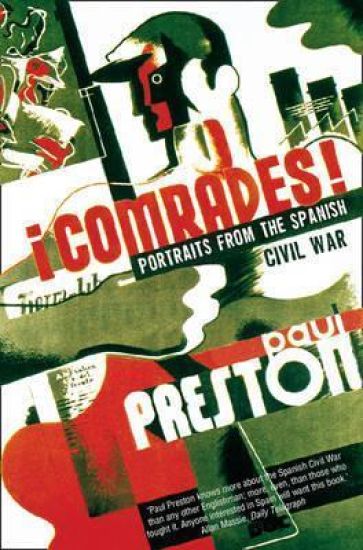
Comrades

Comrades

Paul Preston

HARPERCOLLINS PUBLISHERS
2000
nidottu
A brilliant new portrait of the Spanish Civil War from our greatest historian of Spain. ‘Anyone interested in Spain will want this book.‘ Alan Massie, Daily Telegraph A bravura new interpretation of the course, causes and characters of the Spanish Civil War, still the twentieth century’s bloodiest internal conflict. Analysis of the Civil War has always focused on victors and vanquished, but what of those who eschewed the struggle, those who stood apart from the carnage and chaos? Was there a Third Way? Starting at the extreme right of the political spectrum and moving across it to the extreme left, using the emblematic lives of ten key individuals, Preston builds up an astonishingly vivid picture of how the War came to pass, and how those who started, suffered and stopped it were coloured by the experience. Here are brilliant psychological profiles of the communist firebrand La Pasionaria, of the canny falangist Primo de Rivera, of the aloof intellectual non-participant Salvador Madariaga, and of the enigma himself, Generalissimo Franco. ‘Comrades presents us with fascinating portraits, case studies that illustrate variously nobility, arrogance, self-delusion and evil. It remains difficult to comprhend the passions that lead to civil war; but this book helps us to understand.’ Michael Portillo, Sunday Telegraph
Franco

Franco

Paul Preston

Harpercollins Publishers
1995
pokkari
â??Magisterial â?¦ As engagingly readable as a good novelâ?? Observer The definitive biography of Generalissimo Francisco Franco, from the acclaimed historian Paul Preston.
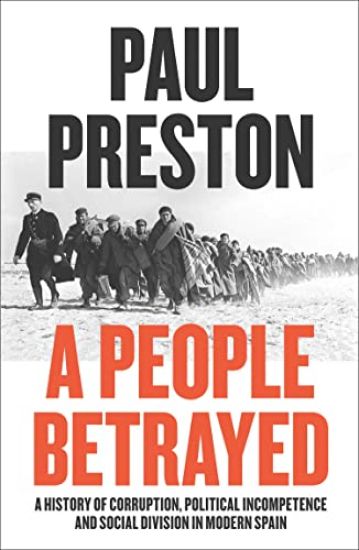
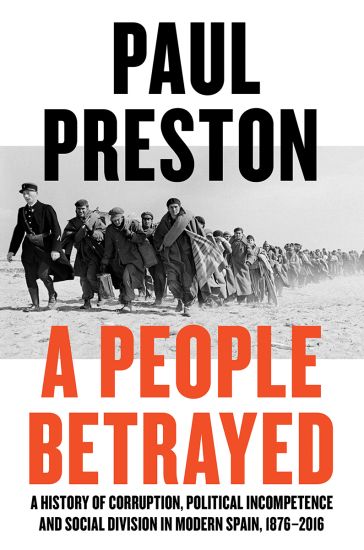
People Betrayed

People Betrayed

Paul Preston

HARPERCOLLINS PUBLISHERS
2021
pokkari
From the foremost historian of 20th century Spain, A People Betrayed is the story of the devastating betrayal of Spain by its political class, its military and its Church.
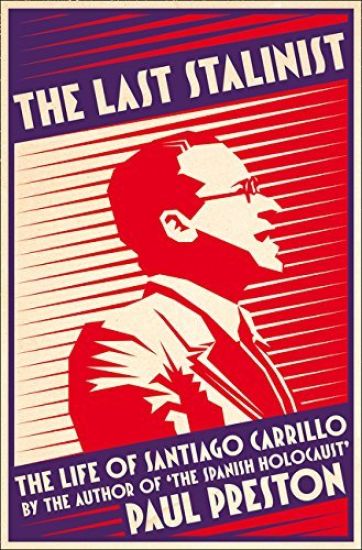
The Last Stalinist

The Last Stalinist

Paul Preston

William Collins
2015
nidottu
The life of the complex, ruthless adversary of General Franco, whose life spanned much of Spain’s turbulence in the 20th century. From 1939 to 1975, the Spanish Communist Party, effectively lead for two decades by Santiago Carrillo, was the most determined opponent of General Franco’s Nationalist regime. Admired by many on the left as a revolutionary and a pillar of the anti-Franco struggle and hated by others as a Stalinist gravedigger of the revolution, Santiago Carrillo was arguably the dictator’s most consistent left-wing enemy. For many on the right, Carrillo was a monster to be vilified as a mass murderer for his activities during the Civil War. But his survival owed to certain qualities that he had in abundance – a capacity for hard work, stamina and endurance, writing and oratorical skills, intelligence and cunning – though honesty and loyalty were not among them. One by one he turned on those who helped him in his desire for advancement, revealing the ruthless streak that he shared with Franco, and a zeal for rewriting his past. Drawing on the numerous, continuously revised accounts Carillo created of his life, and contrasting them with those produced by his friends and enemies, Spain’s greatest modern historian Paul Preston unravels the legend of a devastating and controversial figure at the heart of 20th century Spanish politics.
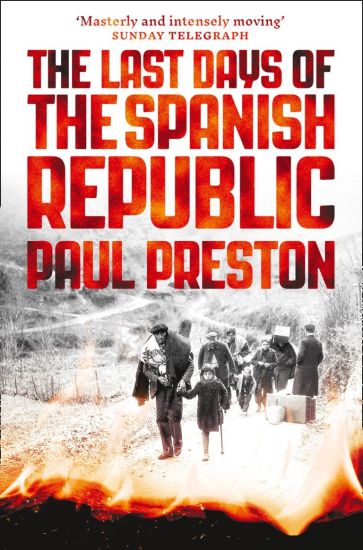
The Last Days of the Spanish Republic

The Last Days of the Spanish Republic

Paul Preston

William Collins
2017
nidottu
Told for the first time in English, Paul Preston’s new book tells the story of a preventable tragedy that cost many thousands of lives and ruined tens of thousands more at the end of the Spanish Civil War. This is the story of an avoidable humanitarian tragedy that cost many thousands of lives and ruined tens of thousands more. On 5 March 1939, the eternally malcontent Colonel Segismundo Casado launched a military coup against the government of Juan Negrín. To fulfil his ambition to go down in history as the man who ended the Spanish Civil War, he claimed that Negrín was the puppet of Moscow and that a coup was imminent to establish a Communist dictatorship. Instead his action ensured the Republic ended in catastrophe and shame. Paul Preston, the leading historian of twentieth-century Spain, tells this shocking story for the first time in English. It is a harrowing tale of how the flawed decisions of politicans can lead to tragedy.
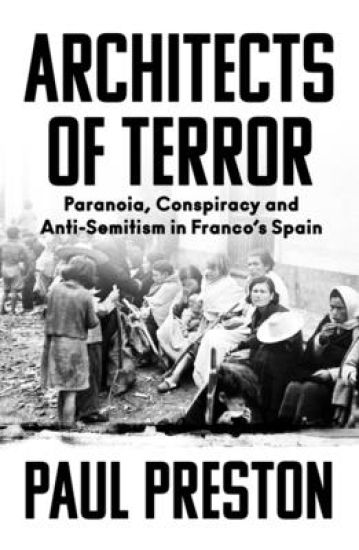
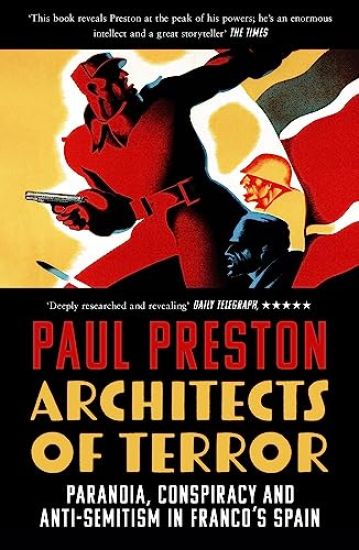
Architects of Terror

Architects of Terror

Paul Preston

HARPERCOLLINS PUBLISHERS
2023
sidottu
A TIMES HISTORY BOOK OF THE YEAR From the preeminent historian of 20th century Spain Paul Preston, Architects of Terror is a new history of how paranoia, conspiracy and anti-Semitism was used to justify the military coup of 1936 and enabled the construction of a dictatorship built on violence and persecution. It is the previously untold story of how antisemitic beliefs were weaponised to justify and propagate the Franco overthrow of liberal Spain. The Spanish military coup of 1936 was launched to overturn the social and economic reforms of the democratic Second Republic, and its educational and cultural challenges to the established order. The consequent civil war was fought in the interests of the landowners, industrialists, bankers, clerics and army officers whose privileges were threatened. However, a central justification for a war that took the lives of around 500,000 Spaniards was that it was being fought to combat an alleged scheme for world domination by a non-existent ‘Jewish- Masonic-Bolshevik Conspiracy’. Despite the fact that Spain had only a tiny minority of Jews and Freemasons, Franco and his inner circle were ardent believers in this fabricated conspiracy and spread the notion that the survival of Catholic Spain, as well, of course, of the establishment ’ s economic interests, required the total annihilation of Jews and Freemasons. Architects of Terror is the story of how fake news, mendacity, corruption and nostalgia for lost empire generated violence and hatred. The book presents vivid portraits of the key ideologues who propagated the myth of the Jewish-Masonic-Bolshevik Conspiracy and of the military figures who implemented the atrocities that it justified. Among the convictions shared by these individuals was their belief in the idea that Freemasonry was responsible for Spain ’ s loss of empire and in the factual veracity of The Protocols of the Elders of Zion, the notorious fiction about the global domination of the Jews. This is a history that reverberates in our own political moment
Architects of Terror

Architects of Terror

Paul Preston

HARPERCOLLINS PUBLISHERS
2023
nidottu
From the preeminent historian of 20th century Spain Paul Preston, Architects of Terror is a new history of how paranoia, conspiracy and anti-Semitism was used to justify the military coup of 1936 and enabled the construction of a dictatorship built on violence and persecution.
Architects of Terror

Architects of Terror

Paul Preston

HARPERCOLLINS PUBLISHERS
2024
nidottu
A TIMES HISTORY BOOK OF THE YEAR From the preeminent historian of 20th century Spain Paul Preston, Architects of Terror is a new history of how paranoia, conspiracy and anti-Semitism was used to justify the military coup of 1936 and enabled the construction of a dictatorship built on violence and persecution. It is the previously untold story of how antisemitic beliefs were weaponised to justify and propagate the Franco overthrow of liberal Spain. The Spanish military coup of 1936 was launched to overturn the social and economic reforms of the democratic Second Republic, and its educational and cultural challenges to the established order. The consequent civil war was fought in the interests of the landowners, industrialists, bankers, clerics and army officers whose privileges were threatened. However, a central justification for a war that took the lives of around 500,000 Spaniards was that it was being fought to combat an alleged scheme for world domination by a non-existent ‘Jewish- Masonic-Bolshevik Conspiracy’. Despite the fact that Spain had only a tiny minority of Jews and Freemasons, Franco and his inner circle were ardent believers in this fabricated conspiracy and spread the notion that the survival of Catholic Spain, as well, of course, of the establishment ’ s economic interests, required the total annihilation of Jews and Freemasons. Architects of Terror is the story of how fake news, mendacity, corruption and nostalgia for lost empire generated violence and hatred. The book presents vivid portraits of the key ideologues who propagated the myth of the Jewish-Masonic-Bolshevik Conspiracy and of the military figures who implemented the atrocities that it justified. Among the convictions shared by these individuals was their belief in the idea that Freemasonry was responsible for Spain ’ s loss of empire and in the factual veracity of The Protocols of the Elders of Zion, the notorious fiction about the global domination of the Jews. This is a history that reverberates in our own political moment
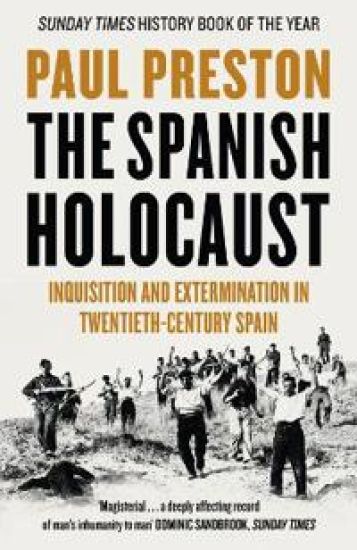
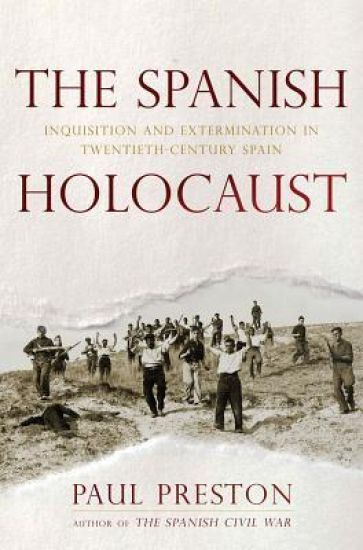
The Spanish Holocaust

The Spanish Holocaust

Paul Preston

WW Norton Co
2012
sidottu
The remains of General Francisco Franco lie in an immense mausoleum near Madrid, built with the blood and sweat of twenty thousand slave laborers. His enemies, however, met less-exalted fates. Besides those killed on the battlefield, tens of thousands were officially executed between 1936 and 1945, and as many again became "non-persons." As Spain finally reclaims its historical memory, a full picture can now be given of the Spanish Holocaust-ranging from judicial murders to the abuse of women and children. The story of the victims of Franco's reign of terror is framed by the activities of four key men-General Mola, Quiepo de Llano, Major Vallejo Najera, and Captain Don Gonzalo Aguilera-whose dogma of eugenics, terrorization, domination, and mind control horrifyingly mirror the fascism of Italy and Germany. Evoking such classics as Gulag and The Great Terror, The Spanish Holocaust sheds crucial light on one of the darkest and most unexamined eras of modern European history.
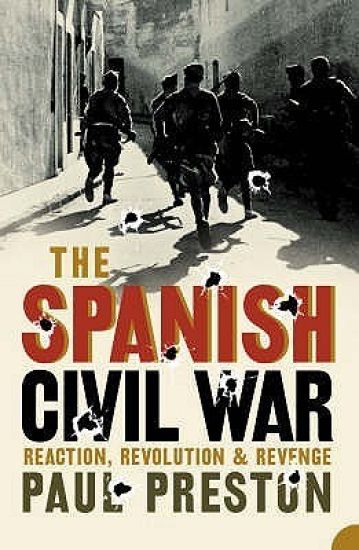
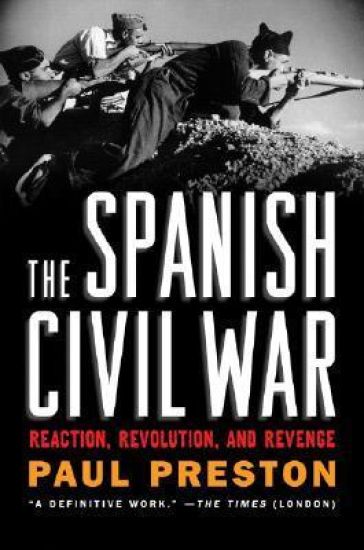
The Spanish Civil War

The Spanish Civil War

Paul Preston

WW Norton Co
2007
pokkari
Paul Preston is the world's foremost historian of Spain. This surging history recounts the struggles of the 1936 war in which more than 3,000 Americans took up arms. Tracking the emergence of Francisco Franco's brutal (and, ultimately, extraordinarily durable) fascist dictatorship, Preston assesses the ways in which the Spanish Civil War presaged the Second World War that ensued so rapidly after it. The attempted social revolution in Spain awakened progressive hopes during the Depression, but the conflict quickly escalated into a new and horrific form of warfare. As Preston shows, the unprecedented levels of brutality were burned into the American consciousness as never before by the revolutionary war reporting of Ernest Hemingway, John Dos Passos, Herbert Matthews, Vincent Sheean, Louis Fischer, and many others. Completely revised, including previously unseen material on Franco's treatment of women in wartime prisons, "The Spanish Civil War" is a classic work on this pivotal epoch in the twentieth century.
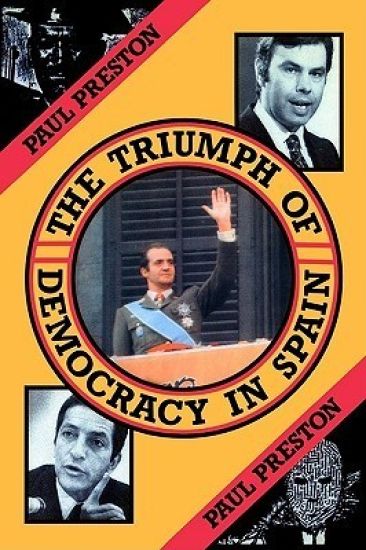
The Triumph of Democracy in Spain
The Triumph of Democracy in Spain tells a gripping story of the tortuous creation of Spain's constitutional monarchy. The book provides an authoritative account of the tribulations of the forces of progress, beginning in 1969 with the disintegration of Franco's dictatorship and ending with the remarkable Socialist election victory in 1982.
A People Betrayed: A History of Corruption, Political Incompetence and Social Division in Modern Spain
The culmination of a half-century of historical investigation, A People Betrayed is not only a definitive history of modern Spain but also a compelling narrative that becomes a lens for understanding the challenges that virtually all democracies have faced in the modern world.Whereas so many twentieth-century Spanish histories begin with Franco and the devastating Civil War, Paul Preston's magisterial work begins in the late nineteenth century with Spain's collapse as a global power, especially reflected in its humiliating defeat in 1898 at the hands of the United States and its loss of colonial territory.This loss hung over Spain in the early years of the twentieth century, its agrarian economic base standing in stark contrast to the emergence of England, Germany, and France as industrial powers. Looking back to the years prior to 1923, Preston demonstrates how electoral corruption infiltrated almost every sector of Spanish life, thus excluding the masses from organized politics and giving them a bitter choice between apathetic acceptance of a decrepit government or violent revolution. So ineffective was the Republic--which had been launched in 1873--that it paved the way for a military coup and dictatorship, led by Miguel Primo de Rivera in 1923, exacerbating widespread profiteering and fraud. When Rivera was forced to resign in 1930, his fall brought forth a succession of feeble governments, stoking rancorous tensions that culminated in the tragic Spanish Civil War.With astonishing detail, Preston describes the ravages that rent Spain in half between 1936 and 1939. Tracing the frightening rise of Francisco Franco, Preston recounts how Franco grew into Spain's most powerful military leader during the Civil War and how, after the war, he became a fascistic dictator who not only terrorized the Spanish population through systematic oppression and murder but also enriched corrupt officials who profited from severe economic plunder of Spain's working class.The dictatorship lasted through World War II--during which Spain sided with Mussolini and Hitler--and only ended decades later, in 1975, when Franco's death was followed by a painful yet bloodless transition to republican democracy. Yet, as Preston reveals, corruption and political incompetence continued to have a corrosive effect on social cohesion into the twenty-first century, as economic crises, Catalan independence struggles, and financial scandals persist in dividing the country.Filled with vivid portraits of politicians and army officers, revolutionaries and reformers, and written in the "absorbing" (Economist) style for which Preston is so revered, A People Betrayed is the first historical work to examine the continuities of political unrest and national anxiety in Spain up until the present, providing a chilling reminder of just how fragile democracy remains in the twenty-first century.