
Kirjahaku
Etsi kirjoja tekijän nimen, kirjan nimen tai ISBN:n perusteella.
1000 tulosta hakusanalla Paul R Secord

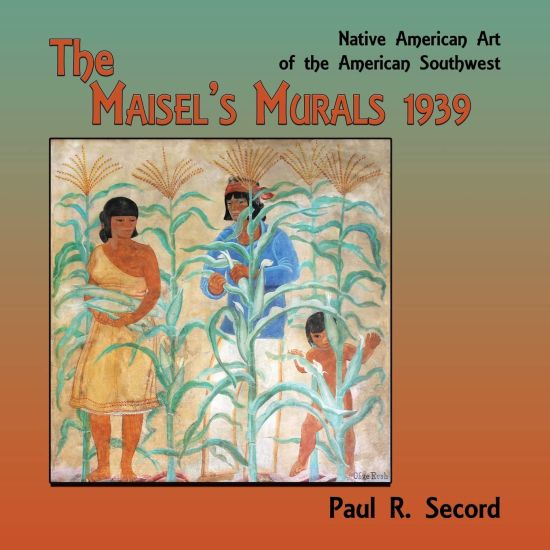
The murals fronting the entrance of Skip Maisel's Indian Jewelry and Crafts store at 510 Central Avenue SW in Albuquerque, New Mexico are a treasure of Native American painting and are of national importance. They represent some of the earliest and finest paintings by a seminal group of Southwestern native artists. Commissioned in 1939 by the store's founder, Maurice Maisel, the grandfather of the current owner, the murals are an extraordinary expression of fine arts, rarely seen on a commercial building. Despite their prominence on the building's fa ade, a fixture in downtown Albuquerque, they are essentially hidden in plain sight. The murals' subject matter demonstrates a unifying thematic context. Through the use of paired opposites, cultural themes and subjects can be compared and contrasted. In addition, the stylistic differences between artists, while showing the strong influence of training at "The Studio" art program at the Santa Fe Indian School established by Dorothy Dunn, they also demonstrate considerable differences in execution. The Maisel's building was designed by legendary New Mexico architect John Gaw Meem, popularizer of the Santa Fe Style. Meem hired well known Santa Fe artist Olive Rush for a total of $1,500 to paint the murals. She then hired eleven Native Americans to undertake the project and saw to it that they were paid a fair wage. Maisel's was to be Rush's last Native American project and she clearly wished the project to be a culmination statement of the mural work she had been engaged in with The Studio for nearly a decade. To that end, she included artists of varying ages, from forty-four year old Awa Tsireh of the first generation of Pueblo painters, to sixteen year old Popovi Da, a beginning Studio painter and the son of famous potters Maria and Julian Martinez, as well as including representatives of three principal Native American cultures in the Southwest: Pueblo, Navajo and Apache.
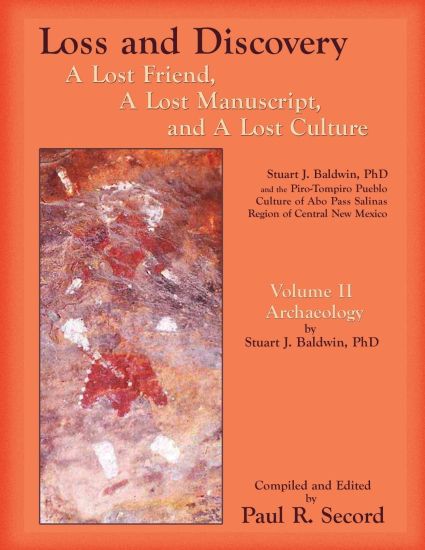
This book in two volumes is the culmination of over twenty-five years of conjecture. Why didn't archaeologist Stuart Baldwin, PhD (1946-1999) fully write up his research after a decade of work on the now extinct Piro-Tompiro culture in Central New Mexico? Why didn't he return to the Southwest after 1988? What happened to the artifacts and notes from five years of excavation by a University of Calgary, Alberta, Canada, field school at Tenabo Pueblo, a large fourteenth to seventeenth century pueblo? The answers to these questions, and a treasure trove of physical evidence and years of scholarship were discovered in 2016. This included detailed reports on the archaeology, ethnohistory and history of the Abo Pass region of New Mexico, along with complete site analyses of numerous surveys and limited excavations carried out in the region. Although completed nearly thirty years ago, Baldwin's work remains the single most comprehensive and accurate presentation on the Native American Pueblo culture in Central New Mexico. In these volumes we tell the story of rediscovering Baldwin's life work and present all of a nearly 1,400 page unpublished manuscript that remained hidden for years in a research library's archives. This is the second of these volumes and deals with archaeology and prehistory including rock art. Volume I is focused on history and ethnology. As Baldwin wrote in the preface of his "lost" manuscript: "I believe (in) any attempt to pull together and present available information on (a)...cultur(e)..., even if it is 'only' the morality of saving a people from historical obscurity."
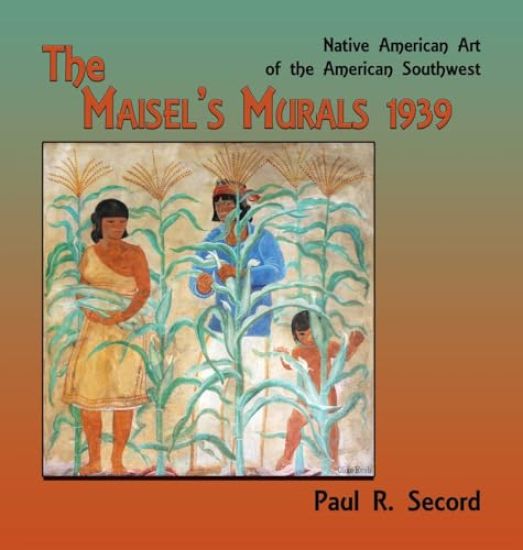
The murals fronting the entrance of Skip Maisel's Indian Jewelry and Crafts store at 510 Central Avenue SW in Albuquerque, New Mexico are a treasure of Native American painting and are of national importance. They represent some of the earliest and finest paintings by a seminal group of Southwestern native artists. Commissioned in 1939 by the store's founder, Maurice Maisel, the grandfather of the current owner, the murals are an extraordinary expression of fine arts, rarely seen on a commercial building. Despite their prominence on the building's fa ade, a fixture in downtown Albuquerque, they are essentially hidden in plain sight. The murals' subject matter demonstrates a unifying thematic context. Through the use of paired opposites, cultural themes and subjects can be compared and contrasted. In addition, the stylistic differences between artists, while showing the strong influence of training at "The Studio" art program at the Santa Fe Indian School established by Dorothy Dunn, they also demonstrate considerable differences in execution. The Maisel's building was designed by legendary New Mexico architect John Gaw Meem, popularizer of the Santa Fe Style. Meem hired well known Santa Fe artist Olive Rush for a total of $1,500 to paint the murals. She then hired eleven Native Americans to undertake the project and saw to it that they were paid a fair wage. Maisel's was to be Rush's last Native American project and she clearly wished the project to be a culmination statement of the mural work she had been engaged in with The Studio for nearly a decade. To that end, she included artists of varying ages, from forty-four year old Awa Tsireh of the first generation of Pueblo painters, to sixteen year old Popovi Da, a beginning Studio painter and the son of famous potters Maria and Julian Martinez, as well as including representatives of three principal Native American cultures in the Southwest: Pueblo, Navajo and Apache.
History of the Cerrillos Mining Area
Paul R. Secord; Homer E. Milford
Independently Published
2019
nidottu
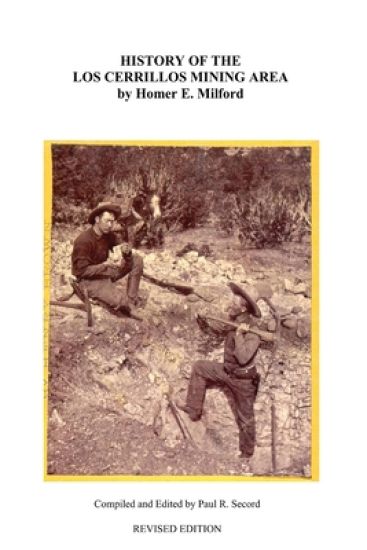
This book presents a detailed account of mining in the Cerrillos Hills, New Mexico which are located about fifteen miles south of Santa Fe. This area contains some of the oldest mining activity in North America. There is evidence Turquoise, which continues to be mined today, being mined as early as 900 A.D. and lead in about 1300 A.D. The Spanish in the sixteenth and seventeenth century mined silver there. The area was most active in the last quarter of the Nineteenth Century with well over 500 claims staked by 1880.This material was originally written for New Mexico Abandoned Mine Land Bureau Reports ion the mid-1990s. The author, Homer E. Milford was the former Environmental Coordinator of the Abandoned Mine Land Bureau, the State of New Mexico Energy Minerals and Natural Resources Department, and was responsible for documenting mine history before a mine was closed for safety reason. He had been active in efforts to preserve the Cerrillos Hills for over thirty years and passed away in April 2019 within hours of working on revisions to this book.
The Galisteo Basin and Cerrillos Hills
Paul R. Secord; Homer E. Milford
Arcadia Publishing Library Editions
2018
sidottu
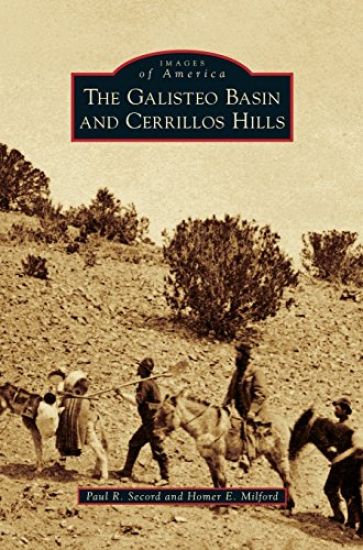
The Galisteo Basin and the Cerrillos Hills, an ancient seabed ringed by ancient volcanic upheavals, are located in Central New Mexico. The region has been occupied for thousands of years. The oldest known turquoise mines in North America, as well as the earliest significant gold strike in North America, can be found in this region. The town of Galisteo was founded in 1617, while Los Cerrillos got its start as a railroad stop and regional center in 1880. Archaeological work on eight major Pueblo ruins was initiated in 1912 by Nels Nelson of the American Museum of Natural History. Many photographs from his expedition are found in this book, with several of them never having been published before. Also included are images of Cerrillos Hills mining in 1880; again, some of these photographs have never been previously published.
The Cerrillos Hills & Mining
William Bill Baxter; Paul R. Secord; Homer E. Milford
Independently Published
2019
nidottu
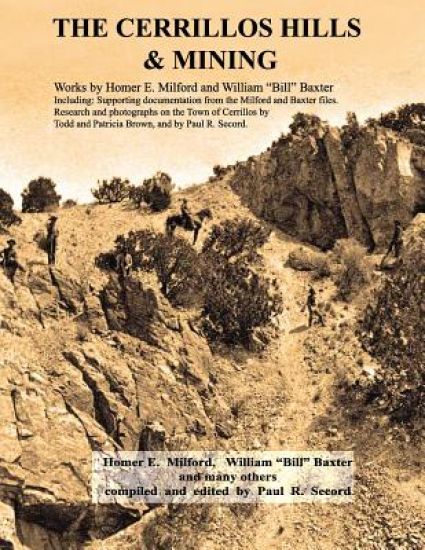
This history of over 1,000 years of mining in the Cerrillos Hills, that contain some of the richest and most varied mineral deposits in New Mexico. The oldest known and largest prehistoric turquoise mine in North America is found in this area. Siver and lead were mined by the Spanish, Mexicans and Americans. In addition to works by Homer E. Milford and Bill Baxter this book contains extensive supporting documentation including transcription of the 1880 and 1900 census, Cerrillos Town Records, Mining District Minutes.
90 Seconds with God's Promises: Inspiration for Living Volume One
Paul R. Anderson; Richard B. Anderson
Createspace Independent Publishing Platform
2017
nidottu
Sermons On The Second Readings
Frederick R Harm; Paul E Robinson; Glenn W McDonald
CSS Publishing Company
2002
pokkari
The sermons in this anthology reaffirm the hope that is ours through Jesus Christ, and challenge readers to a deeper and more intense faith relationship with the almighty. The collection provides a complete set of sermons for each Sunday and major celebration throughout the Christian year based on the Second Readings from Cycle B of the Revised Common Lectionary. Outstanding preachers from across the denominational spectrum draw on texts from the New Testament epistles to explore how the practical and moral concerns of the early church offer lessons for modern Christian living. Each biblically grounded message confronts real issues with Christ-honoring solutions that bring challenge, comfort, and conviction to those who look at life with the eyes of faith. This is an essential resource that's useful for: - Fresh homiletical approaches to the lectionary texts - Preaching illustrations - A clearer understanding of scripture passages - Adult study and discussion groups - Personal devotions and Bible study on each Sunday's readings Rarely is there such a wonderful blend of the pastoral heart and the scholarly intellect. Frederick Harm's sermons draw on a wide spectrum of literature, from Luther to Paul Harvey, from Seneca to Yogi Berra, from Epicurus to John Bunyan. Harm's illustrations, far from being contrived or trite, naturally illumine the truths of the scriptures. Permeating each sermon is the deep desire to share Christ and his love with the hearer. Pastors will find ample ideas and inspiration in these sermons as they seek to build their own message for the people of God. Stephen A. Gewecke Counselor, Circuit 5 New Jersey District, Lutheran Church - Missouri Synod
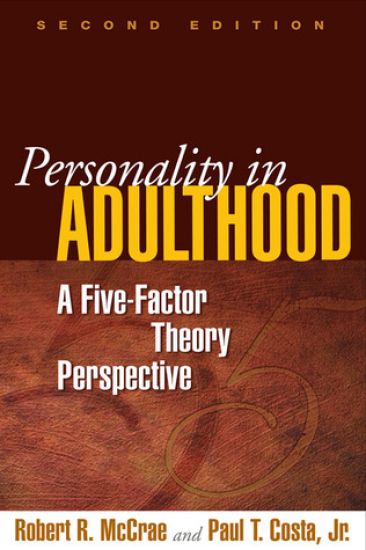
Personality in Adulthood, Second Edition
Robert R. McCrae; Paul T. Costa Jr.
Guilford Publications
2005
nidottu
This influential work examines how enduring dispositions or traits affect the process of aging and shape each individual’s life course. From two well-known authorities in the field, the volume is grounded in a growing body of empirical evidence. Critically reviewing different theories of personality and adult development, the authors explain the logic behind the scientific assessment of personality, present a comprehensive model of trait structure, and examine patterns of trait stability and change after age 30, incorporating data from ongoing cross-sectional and longitudinal studies. Written in a clear, jargon-free style, this book is an ideal text for advanced students and a timely reference for researchers and clinicians.
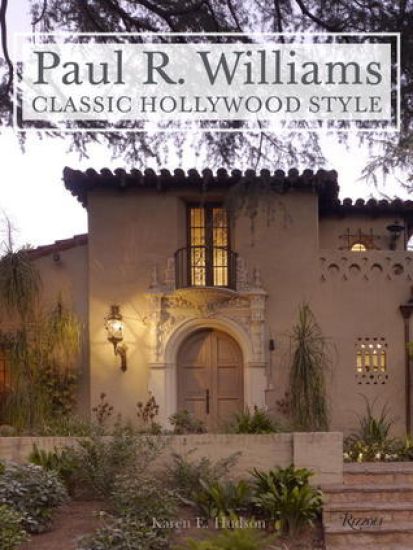
Over a career spanning six decades, architect Paul Revere Williams came to define what gracious living looked like for the Hollywood elite. Williams mastered an array of architectural idioms—including American Colonial, Spanish Mediterranean, English Tudor, French Normandy, Art Deco, and, of course, the California ranch style—to create the sophisticated yet understated showplaces that are featured here in all new full-color photography.Among the most celebrated architects of his generation, Williams was also the first African-American member of the American Institute of Architects, and he was deeply involved in the black community in Los Angeles and in African-American affairs nationally. Williams moved among many worlds, and with celebrity clients such as Frank Sinatra, Lucille Ball and Desi Arnaz, Tyrone Power, and Barbara Stanwyck, as well as clients who made Hollywood run behind the scenes, not to mention members of Los Angeles high society, Williams left his mark in the city’s most glamorous and exclusive enclaves—Beverly Hills, Brentwood, Bel Air, and the Hollywood Hills.Paul R. Williams: Classic Hollywood Style is a dazzling tour of this prolific architect’s most spectacular houses, by his granddaughter Karen Hudson, with a special focus on their roles not only as places for high living but also as venues for world-class entertaining.

Paul R. Casavina, Petitioner, V. United States. U.S. Supreme Court Transcript of Record with Supporting Pleadings
Frederic C Ritger; Thurgood Marshall
Gale, U.S. Supreme Court Records
2011
pokkari
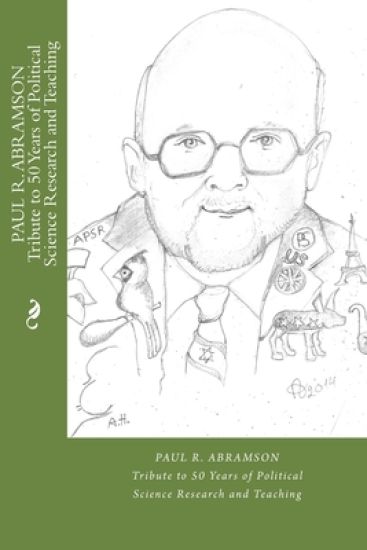
PAUL R. ABRAMSON Tribute to 50 Years of Political Science Research and Teaching
Heather Krasna
Createspace Independent Publishing Platform
2015
nidottu
Tribute to Paul R. Abramson, PhD, political scientist

Janna Ireland, an award-winning photographer, presents a collection of stunning, intimate black-and-white photographs of the work of Paul Revere Williams, who was known as "Hollywood's Architect" and was the first black architect admitted to the American Institute of Architecture. Regarding Paul R. Williams: A Photographer's View is a photographic exploration of the work of the first AIA-certified African American architect west of the Mississippi River. Known as "Hollywood's Architect", Paul Revere Williams was a Los Angeles native who built a wildly successful and as an architect decades before the Civil Rights Movement. He designed municipal buildings and private homes as well as banks, churches, hospitals, and university halls. He designed public housing projects and mansions for celebrities like Frank Sinatra and Lucille Ball. In 1923, Williams became the first black member of the American Institute of Architects. In 2017, nearly forty years after his death, he became the first black recipient of the AIA Gold Medal. In her book Regarding Paul R. Williams: A Photographer's View, artist Janna Ireland explores the work and legacy of Williams through a series of intimate black-and-white photographs. Ireland gives the reader a vision of Williams that is both universal and highly personal. More than a book of architectural photographs, Regarding Paul R. Williams is the result of one artist's encounter with another, connecting across different generations within the same city. Janna Ireland was born in Philadelphia, but has chosen Los Angeles as her home. She holds an MFA the from UCLA Department of Art and a BFA from the Department of Photography and Imaging at NYU. Ireland is the 2013 recipient of the Snider Prize, presented by the Museum of Contemporary Photography, Columbia College Chicago. Her work has been shown in solo exhibitions in Los Angeles, San Francisco, New Orleans, and Chicago, and in group exhibitions across the United States and internationally. She has been published in Aperture, Harper's, Art Papers, Vice, and The Los Angeles Times.
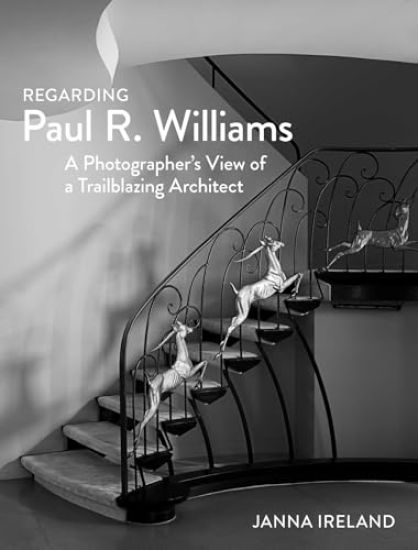
Regarding Paul R. Williams: A Photographer's View of a Trailblazing Architect
Janna Ireland
ANGEL CITY PRESS
2026
sidottu