

Kirjahaku
Etsi kirjoja tekijän nimen, kirjan nimen tai ISBN:n perusteella.
1000 tulosta hakusanalla Paul T. Mascia
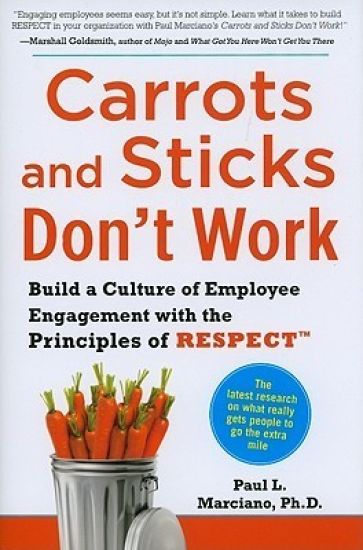
Carrots and Sticks Don't Work: Build a Culture of Employee Engagement with the Principles of RESPECT
Paul Marciano
McGraw-Hill Professional
2010
sidottu
Advance praise for Carrots and Sticks Don't Work:"Paul Marciano provides a wealth of prescriptive advice that absolutely makes sense. You can actually open the book to any chapter and gain ideas for immediate implementation." -- Beverly Kaye, coauthor of Love 'Em or Lose 'Em"This book should be in the hands of anyone who has to get work done through other people! It's an invaluable tool for any manager at any level." -- John L. Rice, Vice President Human Resources, Tyco International"Carrots and Sticks Don't Work provides a commonsense approach to employee engagement. Dr. Marciano provides great real-world insights, data, and practicalexamples to truly bring the RESPECT model to life." -- Renee Selman, President, Catalina Health Resources"The RESPECT model is one of the most dynamic, engaging, and thought-provoking employee engagement tools that I have seen. Dr. Marciano's work will help you providemeaningful long-term benefits for your employees, for your organization, and for yourself." -- Andy Brantley, President and CEO, College and University Professional Association for Human Resources"This book provides clear advice and instruction on how to engage your team members and inspire them to a higher level of productivity, work satisfaction, and enjoyment. I am already utilizing its techniques and finding immediate positive changes." -- Robert Roth, Director, Accounting and Reporting, Colgate Palmolive CompanyThe title says it all: Carrots and Sticks Don't Work.Reward and recognition programs can be costly and inefficient, and they primarily reward employees who are already highly engaged and productive performers. Worse still, these programs actually decrease employee motivation because they can make individual recognition, rather than the overall success of the team, the goal. Yet many businesses turn to these measures first—unawareof a better alternative. So, when it comes to changingyour organizational culture, carrots and sticks don’t work!What does work is Dr. Paul Marciano's acclaimed RESPECT model, which gives you specific, low-cost, turnkey solutions and action plans-- based on seven key drivers of employee engagement that are proven and supported by decades of research and practice—that will empower youto assess, troubleshoot, and resolve engagement issuesin the workplace:Recognition and acknowledgment of employees' contributionsEmpowerment via tools, resources, and information that set employees up to succeedSupportive feedback through ongoing performance coaching and mentoringPartnering to encourage and foster collaborative working relationshipsExpectations that set clear, challenging, and attainable performance goalsConsideration that lets employees know that they are cared aboutTrust in your employees' abilities, skills, and judgmentCarrots and Sticks Don't Work delivers the sameproven resources and techniques that have enabledtrainers, executives, managers, and owners at operations ranging from branches of the United States government to Fortune 500 corporations to twenty-person outfits to realize demonstrable gains in employee productivity andjob satisfaction.When you give a little RESPECT you get a more effective organization, with reduced turnover and absenteeism and employees at all levels who areengaged, focused, and committed to succeed as a team. In short, you get maximum ROI from your organization's most powerful resource: its people!

The New York City Audubon Society Guide to Finding Birds in the Metropolitan Area
Marcia T. Fowle; Paul Kerlinger
Comstock Publishing Associates
2001
pokkari
Positioned along the major East Coast migratory flyway, New York City and the surrounding areas offer some of the finest birding opportunities in North America. More than 355 species have been sighted there. Tapping the expertise of 47 metropolitan birders, Marcia T. Fowle and Paul Kerlinger provide residents, tourists, and visiting birders with the information they need to make the most of the area's extraordinary birding sites. The New York City Audubon Society Guide to Finding Birds in the Metropolitan Area contains up-to-date descriptions of 40 birding sites within the metropolitan area, which includes the five boroughs of New York City and adjacent areas in New Jersey, Long Island, and Westchester County. An additional section features 9 birding day-trips. Entries for each site include detailed maps, descriptions of the birds that can be seen, best season to visit, safety precautions, and public transportation. This exciting new guide is notable for its:*rankings for the birding opportunities at each site during each season;*checklist of 355 bird species found in New York City;*information on site-specific conservation and ecology;*coverage of practical issues; *suggestions for day-trips, regional hawkwatches, and pelagic birding trips;*birding resources, web sites, hotlines, and suggested reading for novices and experts

A gem of an historical source...This unique book provides a wonderfully illustrated and nuanced account of one of America's most significant twentieth-century designers. -- Alison J. Clarke, University of Applied Arts, Vienna A page turner [that] captures this leading Modernist in his own words. -- Bennett Johnson, Chicago Art Deco Society Magazine Frankl's autobiography sheds even more light on the man, other key artists and designers, and most important, Austrian and American culture in the first half of the twentieth century. -- Wendy Kaplan, Los Angeles County Museum of Art Viennese emigre Paul T. Frankl was a pioneer of early modern design in America, known for his "Skyscraper" furniture of the 1920s and later for the work he did for Hollywood celebrities such as Fred Astaire, Alfred Hitchcock, Cary Grant and Katherine Hepburn. His autobiography, thought for decades to be lost, was written at the end of Frankl's long career and is a vivid account of his early life, his rise in the profession, and his many travels in search of ideas and forms. What will now be known as Frankl's last book is written in a captivating style befitting the personality of a gentle and cultured man who revolutionized and advocated for American modernism. This edition, hand-sewn with a printed linen cover, won a design award in Austria and is introduced and annotated by modern design scholar Christopher Long, author of Paul T. Frankl and Modern American Design (Yale 2007). The book includes a remembrance written by his daughter Paulette Frankl as well as many previously unpublished photographs and drawings.
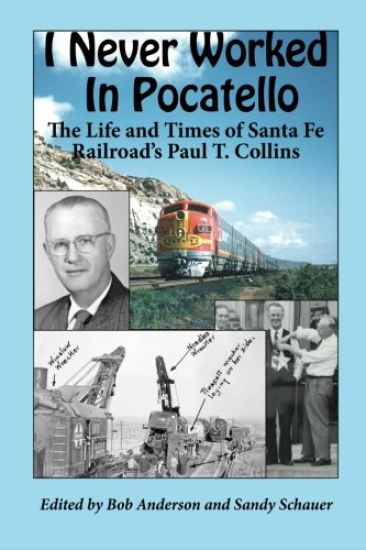
I Never Worked in Pocatello: The Life and Times of Santa Fe Railroad's Paul T. Collins
Paul T. Collins
Createspace Independent Publishing Platform
2014
nidottu
The story of Paul T. Collins's life working on the Atchison, Topeka and Santa Fe Railroad, I Never Worked In Pocatello -The Life and Times of Santa Fe Railroad's Paul T. Collins, is the story of the changes in railroading from the end of the Nineteenth Century to past the middle of the Twentieth Century. Collins had the railroad and railroad wanderlust in his blood. His father spent his career working for railroads. Paul started at the age of sixteen as a station attendant for the Katy, the Missouri-Kansas-Texas Railroad, working twenty-four hours a day. His career path took him to: - Walsenburg, Colorado, where he learned many of the fundamentals of the railroad business and married his first wife, a woman who he had nicknamed "Old Sour Face." - Pueblo, Colorado, where he and his family lived through the devastating flood of 1921 that killed hundreds (many swept so far away their bodies were never found) and meant rebuilding the tracks. - Kansas City, where he tried his hand at business but his dream of selling concrete wall form ties nationally, perhaps internationally, was killed by Black Thursday and The Great Depression. - Dodge City, Kansas, where he tried to reconcile differences with his first wife, but it was futile, and they soon divorced. - Chicago, where he served as the assistant to J.J. Mahoney, general railroad superintendent. This job brought Collins immense job and personal satisfaction as he investigated train timing and car content. He also spent considerable time investigating the business of carrying cattle on the railroads and the rates charged for transporting cattle. - Winslow, Arizona, where he oversaw the double tracking of twenty-one important miles and solved a longstanding bottleneck for the Santa Fe. In Winslow he fell in love with and courted his second wife. - San Bernardino, California, during World War II where Santa Fe railroad men suffered physical as well as nervous breakdowns and died from the work overload brought on by the crush of handling two transcontinental railroads with freight and passengers. - Wellington, Kansas, where his youngest daughter was born and he, along with his wife, became active in community affairs. - Amarillo, Texas, his final stop while working with the Santa Fe where he served as rules examiner for the railroad, creating new and better rules while butting heads with his fellow examiners, and sometimes his superiors. He ended his fifty-one years of service with the Santa Fe at this station. Immediately following his retirement, Collins took his wife for an extensive European tour. Always the railroader, part of the tour was spent on trains and talking about the difference between European and American trains with fellow railroaders. The railroads changed over the many decades Paul T. Collins worked on the Santa Fe. He changed with them, from a callow but strong youth moving freight to a middle-aged divorc e overseeing double tracking that moved the trains faster and, finally, to a senior rules examiner who retired after making the railroad safer for all.
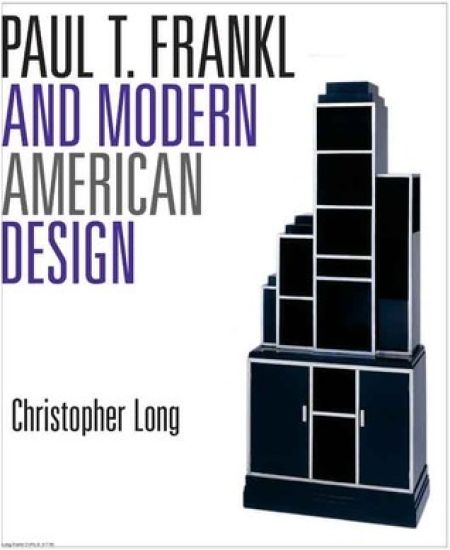
A comprehensive view of the life, work, and ideas of one of the creative giants of modern American design Arriving in the United States in 1914, Viennese-born Paul T. Frankl (1886–1958) brought with him an outsider’s fresh perspective and an enthusiasm for forging a uniquely American design aesthetic. In the years between the two world wars he, more than any other designer, helped shape the distinctive look of American modernism. This authoritative book draws on an extensive collection of unpublished documents and family papers and photographs to provide the first full account of Frankl’s life and ideas. The book also explores the history of modern American design and the extent of Frankl’s influence on its trajectory. In the early 1920s, Frankl opened a New York City shop that became an epicenter of American modernism. Over the next decades, his work encompassed everything from individual pieces of furniture and decorative accessories to entire interiors, and his style continuously evolved, from early “Skyscraper” furniture to relaxed and casual designs favored by the Hollywood elite in the 1930s to manufactured pieces for the mass market in the 1950s. The book charts the impact of Frankl’s ideas on merchants and consumers, on his fellow designers, and on the changing look of American homes and workplaces. With close to 170 illustrations, Paul T. Frankl and Modern American Design is an essential reference on 20th-century design.
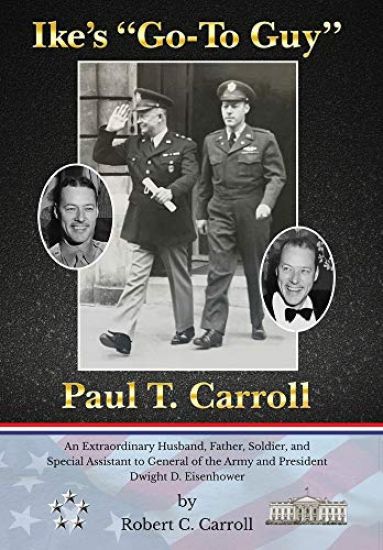
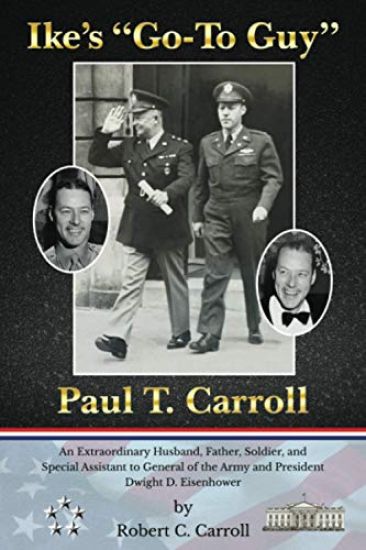
Ike's "Go-To Guy"...the life story of Paul T. Carroll, told in loving memory by his son, Bob Carroll. The text is brought to life by scores of family photographs, personal stories, letters, telegrams, newspaper and magazine articles, and historic papers and diaries dating from the early 1900s through the WWII era and beyond. Paul Carroll progressed from West Point to Army assignments across the United States, to Iceland, and through France. He fought in Patton's Third Army, earning the Combat Infantryman Badge, two Silver Stars, two Bronze Stars, and the Legion of Merit. He was truly an outstanding combat commander, highly respected by his commanders, fellow officers, and troops.Later in the Pentagon, Lieutenant Colonel Carroll worked for three successive Army Chiefs of Staff: Marshall, Eisenhower, and Bradley. It was while he was working for General of the Army Eisenhower for over two years that Paul developed a unique relationship of mutual respect and trust. This bond led Eisenhower, after he left the Pentagon, to call on Carroll for assistance. In the late 1940s and early 1950s, Carroll became Ike's "Go-to Guy" to put together the core team in Paris for NATO's military headquarters; to plan, organize, and run President-elect Eisenhower's trip to Korea; to organize the White House staff; and to serve as the first Secretary of the White House Staff.Not long after Carroll was promoted to Brigadier General, he tragically died of a heart attack at age 44, leaving behind his beloved wife, Ruth, and sons Peter, 16, Bobby, 14, and David, 8.This book is a well-documented account of Carroll as Eisenhower's "Go-to Guy" and also is the story of his family, a life story that is both historical and poignant.
Sumner, J: Practical exposition of the epistle of St. Paul t
Antigonos Verlag
2024
nidottu
Sumner, J: Practical exposition of the epistle of St. Paul t
Antigonos Verlag
2024
sidottu
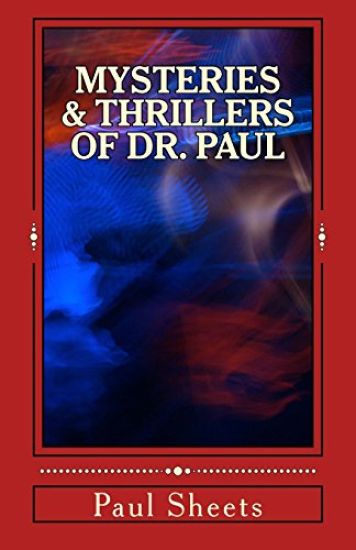
MYSTERIES & THRILLERS of DR. PAUL: Six Thrilling Tales of Suspense
Paul T. Sheets Jr
Createspace Independent Publishing Platform
2013
nidottu
Six thrilling tales of mystery and suspense. You'll read about the "Witches who battle a strange man for survival of their lair. A man who collects human body parts. Robots battling for their lives on a strange planet called "Heleron-5". A lady will entertain you with her fabulous killing garden whose flowers can walk, and kill. Next you'll hear of a demon taking over a small town; can he be stopped? These stories and more, in fact, all six of them, are inside this fabulous book. Get yours today
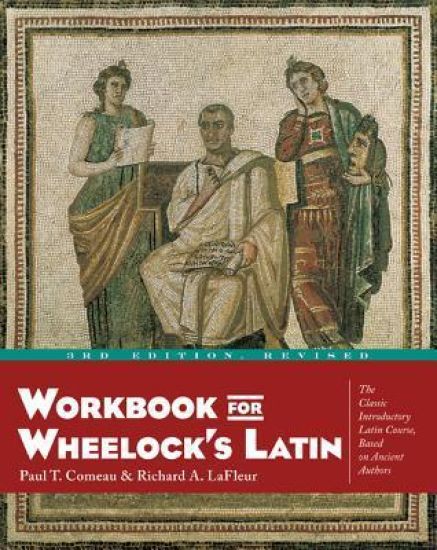
When Professor Frederic M. Wheelock's Latin first appeared in 1956, the reviews extolled its thoroughness, organization, and conciseness; at least one reviewer predicted that the book -might well become the standard text- for introducing students to elementary Latin. Now, decades later, that prediction has certainly proved accurate.Workbook for Wheelock's Latin is an essential companion to the classic introductory textbook. Designed to supplement the course of study in Wheelock's Latin, 7th Edition, each of the forty chapters in this newly updated edition features: Transformation drills, word and phrase translations, and other exercises to test and sharpen the student's skills-Word Power- sections that focus on vocabulary and derivativesReading comprehension questions and sentences for translation practicePerforated pages for hand-in homework assignments and space for the student's name and date

Inherent Safety at Chemical Sites
Paul T Anastas; David G Hammond
Elsevier Science Publishing Co Inc
2015
nidottu
Inherent Safety at Chemical Sites: Reducing Vulnerability to Accidents and Terrorism Through Green Chemistry highlights the use of green chemistry principles to identify and address serious threats and potential consequences caused by accidental and deliberate industrial chemical releases. Through valuable case studies, the book suggests wholesale replacements of hazardous chemicals with benign and inherently safer, or "greener," materials. More than physical security barriers and plans, such preventative measures better guarantee the safety of industrial employees and nearby residents. This valuable primer begins with an introduction to the concepts of green chemistry and outlines the various ways that a green approach to chemical design, production, and management is not only good for the planet, but also serves to protect people and infrastructure from terrorist acts. Specific examples and case studies are cited to illustrate what has been done to advance this cause, and offer guidance to those decision-makers who similarly aspire to greater safety and security for the people and resources they manage.
In one form or another, health care is now being rationed; not every patient receives all that is possibly beneficial for him - sometimes with tragic consequences. Decisions to ration raise a classic dilemma: how can we treat an individual with dignity and genuine respect when he is being short-changed by an efficient policy that seems best overall? Strong Medicine argues that we can respect the individual, if those policies represent the hard trade-off preferences of patients controlling resources for their larger lives. Rationing is still strong medicine to swallow, but then it becomes what patients, as well as the doctor, ordered. Menzel develops this central idea and applies it to major issues of health policy and economics: the notion of pricing life, the long-run cost of prevention, measuring quality of life, imperilled newborns, adequate care for the poor, containing costs by market competition, malpractice suits, procuring organs for transplant, and dying expensively in old age. He provides a hard-hitting, critical philosophical discussion of these issues, in non-technical language accessible to a wide range of readers.

Translational Dynamics and Magnetic Resonance
Paul T. Callaghan
Oxford University Press
2014
nidottu
Taking the reader through the underlying principles of molecular translational dynamics, this book outlines the ways in which magnetic resonance, through the use of magnetic field gradients, can reveal those dynamics. The measurement of diffusion and flow, over different length and time scales, provides unique insight regarding fluid interactions with porous materials, as well as molecular organisation in soft matter and complex fluids. The book covers both time and frequency domain methodologies, as well as advances in scattering and diffraction methods, multidimensional exchange and correlation experiments and orientational correlation methods ideal for studying anisotropic environments. At the heart of these new methods resides the ubiquitous spin echo, a phenomenon whose discovery underpins nearly every major development in magnetic resonance methodology. Measuring molecular translational motion does not require high spectral resolution and so finds application in new NMR technologies concerned with 'outside the laboratory' applications, in geophysics and petroleum physics, in horticulture, in food technology, in security screening, and in environmental monitoring.

Translational Dynamics and Magnetic Resonance
Paul T. Callaghan
Oxford University Press
2011
sidottu
Taking the reader through the underlying principles of molecular translational dynamics, this book outlines the ways in which magnetic resonance, through the use of magnetic field gradients, can reveal those dynamics. The measurement of diffusion and flow, over different length and time scales, provides unique insight regarding fluid interactions with porous materials, as well as molecular organization in soft matter and complex fluids. The book covers both time and frequency domain methodologies, as well as advances in scattering and diffraction methods, multidimensional exchange and correlation experiments and orientational correlation methods ideal for studying anisotropic environments. At the heart of these new methods resides the ubiquitous spin echo, a phenomenon whose discovery underpins nearly every major development in magnetic resonance methodology. Measuring molecular translational motion does not require high spectral resolution and so finds application in new NMR technologies concerned with 'outside the laboratory' applications, in geophysics and petroleum physics, in horticulture, in food technology, in security screening and in environmental monitoring.
A Democratic Constitution for Public Education
Paul T. Hill; Ashley E. Jochim
University of Chicago Press
2014
sidottu
America's education system faces a stark dilemma: it needs governmental oversight, rules and regulations, but it also needs to be adaptable enough to address student needs and the many different problems that can arise at any given school-something that large educational bureaucracies are notoriously bad at. Paul T. Hill and Ashley E. Jochim offer here a solution that is brilliant for its simplicity and distinctly American sensibility: our public education system needs a constitution. Adapting the tried-and-true framework of our forefathers to the specific governance of education, they show that the answer has been part of our political DNA all along. Most reformers focus on who should control education, but Hill and Jochim show that who governs is less important than determining what powers they have. They propose a Civic Education Council-a democratic body subject to checks and balances that would define the boundaries of its purview as well as each school's particular freedoms. They show how such a system would prevent regulations meant to satisfy special interests and shift the focus to the real task at hand: improving school performance. Laying out the implications of such a system for parents, students, teachers, unions, state and federal governments, and courts, they offer a vision of educational governance that stays true to - and draws on the strengths of - one of the greatest democratic tools we have ever created.
A Democratic Constitution for Public Education
Paul T. Hill; Ashley E. Jochim
University of Chicago Press
2014
nidottu
America's education system faces a stark dilemma: it needs governmental oversight, rules and regulations, but it also needs to be adaptable enough to address student needs and the many different problems that can arise at any given school - something that large educational bureaucracies are notoriously bad at. Paul T. Hill and Ashley E. Jochim offer here a solution that is brilliant for its simplicity and distinctly American sensibility: our public education system needs a constitution. Adapting the tried-and-true framework of our forefathers to the specific governance of education, they show that the answer has been part of our political DNA all along. Most reformers focus on who should control education, but Hill and Jochim show that who governs is less important than determining what powers they have. They propose a Civic Education Council-a democratic body subject to checks and balances that would define the boundaries of its purview as well as each school's particular freedoms. They show how such a system would prevent regulations meant to satisfy special interests and shift the focus to the real task at hand: improving school performance. Laying out the implications of such a system for parents, students, teachers, unions, state and federal governments, and courts, they offer a vision of educational governance that stays true to - and draws on the strengths of - one of the greatest democratic tools we have ever created.
An expansive study shows how politics can work for, not just against, efforts to improve America’s schools. The education reform project has always been about making America’s schools more effective for the children who attend them. In Making Politics Work, authors Paul T. Hill and Ashley E. Jochim show that this project cannot succeed without mastering what is the single largest constraint on its success: politics. Drawing upon more than a decade of work with dozens of school systems, Hill and Jochim show how failures to secure political support or mitigate inevitable opposition dooms the education reform project from the start. But this outcome is not inevitable. By tracing the evolution of the “portfolio strategy” across 27 localities that implemented it, they uncover practical lessons that superintendents, state leaders, and foundation officials can use to increase the likelihood that their ideas for improving public education don’t join the list of once-promising initiatives that could not be sustained in the face of intractable political conflict.
An expansive study shows how politics can work for, not just against, efforts to improve America’s schools. The education reform project has always been about making America’s schools more effective for the children who attend them. In Making Politics Work, authors Paul T. Hill and Ashley E. Jochim show that this project cannot succeed without mastering what is the single largest constraint on its success: politics. Drawing upon more than a decade of work with dozens of school systems, Hill and Jochim show how failures to secure political support or mitigate inevitable opposition dooms the education reform project from the start. But this outcome is not inevitable. By tracing the evolution of the “portfolio strategy” across 27 localities that implemented it, they uncover practical lessons that superintendents, state leaders, and foundation officials can use to increase the likelihood that their ideas for improving public education don’t join the list of once-promising initiatives that could not be sustained in the face of intractable political conflict.