Kirjojen hintavertailu. Mukana 11 576 571 kirjaa ja 12 kauppaa.

Kirjahaku

Etsi kirjoja tekijän nimen, kirjan nimen tai ISBN:n perusteella.

1000 tulosta hakusanalla Paul U. Unschuld

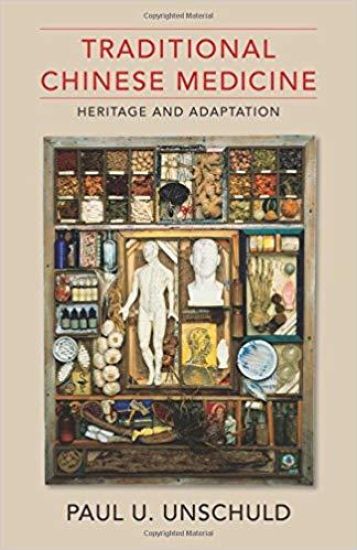
Traditional Chinese Medicine

Traditional Chinese Medicine

Paul U. Unschuld

Columbia University Press
2018
sidottu
A leading authority explains the origins and history of Chinese medicine from its beginnings in antiquity to today. Paul U. Unschuld describes medicine's close connection with culture and politics throughout Chinese history. He brings together texts, techniques, and worldviews to understand changing Chinese attitudes toward healing and the significance of traditional Chinese medicine in both China and the Western world. Unschuld reveals the emergence of a Chinese medical tradition built around a new understanding of the human being, considering beliefs in the influence of cosmology, numerology, and the supernatural on the health of the living. He describes the variety of therapeutic approaches in Chinese culture, the history of pharmacology and techniques such as acupuncture, and the global exchange of medical knowledge. Insights are offered into the twentieth-century decline of traditional medicine, as military defeats caused reformers and revolutionaries to import medical knowledge as part of the construction of a new China. Unschuld also recounts the reception of traditional Chinese medicine in the West since the 1970s, where it is often considered an alternative to Western medicine at the same time as China seeks to incorporate elements of its medical traditions into a scientific framework. This concise and compelling introduction to medical thought and history suggests that Chinese medicine is also a guide to Chinese civilization.
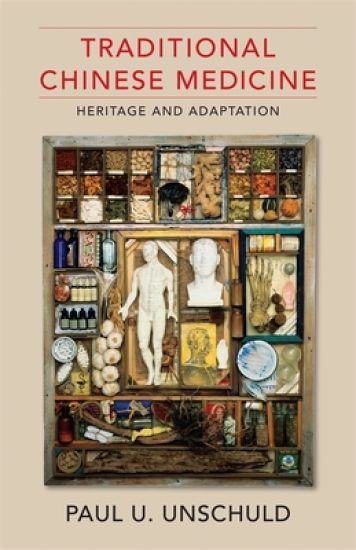
Traditional Chinese Medicine

Traditional Chinese Medicine

Paul U. Unschuld

Columbia University Press
2018
pokkari
A leading authority explains the origins and history of Chinese medicine from its beginnings in antiquity to today. Paul U. Unschuld describes medicine's close connection with culture and politics throughout Chinese history. He brings together texts, techniques, and worldviews to understand changing Chinese attitudes toward healing and the significance of traditional Chinese medicine in both China and the Western world. Unschuld reveals the emergence of a Chinese medical tradition built around a new understanding of the human being, considering beliefs in the influence of cosmology, numerology, and the supernatural on the health of the living. He describes the variety of therapeutic approaches in Chinese culture, the history of pharmacology and techniques such as acupuncture, and the global exchange of medical knowledge. Insights are offered into the twentieth-century decline of traditional medicine, as military defeats caused reformers and revolutionaries to import medical knowledge as part of the construction of a new China. Unschuld also recounts the reception of traditional Chinese medicine in the West since the 1970s, where it is often considered an alternative to Western medicine at the same time as China seeks to incorporate elements of its medical traditions into a scientific framework. This concise and compelling introduction to medical thought and history suggests that Chinese medicine is also a guide to Chinese civilization.
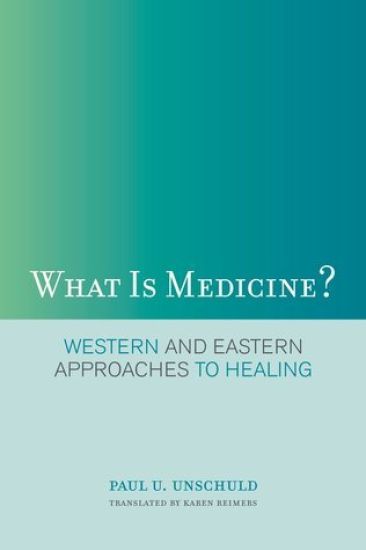
What Is Medicine?

What Is Medicine?

Paul U. Unschuld

University of California Press
2009
sidottu
"What Is Medicine? Western and Eastern Approaches to Healing" is the first comparative history of two millennia of Western and Chinese medicine from their beginnings in the centuries BCE through present advances in sciences like molecular biology and in Western adaptations of traditional Chinese medicine. In his revolutionary interpretation of the basic forces that undergird shifts in medical theory, Paul U. Unschuld relates the history of medicine in both Europe and China to changes in politics, economics, and other contextual factors. Drawing on his own extended research of Chinese primary sources as well as his and others' scholarship in European medical history, Unschuld argues against any claims of 'truth' in former and current, Eastern and Western models of physiology and pathology. "What Is Medicine?" makes an eloquent and timely contribution to discussions on health care policies while illuminating the nature of cognitive dynamics in medicine, and it stimulates fresh debate on the essence and interpretation of reality in medicine's attempts to manage the human organism.
What Is Medicine?

What Is Medicine?

Paul U. Unschuld

University of California Press
2009
pokkari
"What Is Medicine? Western and Eastern Approaches to Healing" is the first comparative history of two millennia of Western and Chinese medicine from their beginnings in the centuries BCE through present advances in sciences like molecular biology and in Western adaptations of traditional Chinese medicine. In his revolutionary interpretation of the basic forces that undergird shifts in medical theory, Paul U. Unschuld relates the history of medicine in both Europe and China to changes in politics, economics, and other contextual factors. Drawing on his own extended research of Chinese primary sources as well as his and others' scholarship in European medical history, Unschuld argues against any claims of 'truth' in former and current, Eastern and Western models of physiology and pathology. "What Is Medicine?" makes an eloquent and timely contribution to discussions on health care policies while illuminating the nature of cognitive dynamics in medicine, and it stimulates fresh debate on the essence and interpretation of reality in medicine's attempts to manage the human organism.
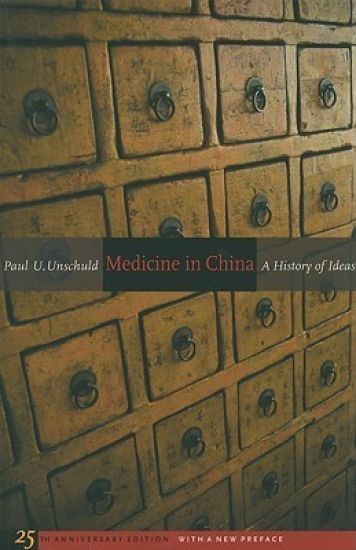
Medicine in China

Medicine in China

Paul U. Unschuld

University of California Press
2010
pokkari
In the first comprehensive and analytical study of therapeutic concepts and practices in China, Paul Unschuld traced the history of documented health care from its earliest extant records to present developments. This edition is updated with a new preface which details the immense ideological intersections between Chinese and European medicines in the past 25 years.
Huang Di Nei Jing Ling Shu

Huang Di Nei Jing Ling Shu

Paul U. Unschuld

University of California Press
2016
sidottu
The Ling Shu, also known as the Ling Shu Jing, is part of a unique and seminal trilogy of ancient Chinese medicine, together with the Su Wen and Nan Jing. It constitutes the foundation of a two-thousand-year healing tradition that remains active to this day. Its therapeutic approach is based on a purely secular science of nature, with natural laws serving as guidelines for human behavior and medical treatment. No other text offers such broad insights into the thinking and manifest action of the authors of the time. Following an introduction, this volume contains the full original Chinese text of the Ling Shu, an English translation of all eighty-one chapters, and notes on difficult-to-grasp passages and possible changes in the text over time on the basis of Chinese primary and secondary literature of the past two thousand years and translator Paul Unschuld's own work. The Ling Shu reveals itself as a completely rational work, and, in many of its statements, a surprisingly modern one. It will provide the foundation for comparisons with the nearly contemporaneous Corpus Hippocraticum of ancient Europe and today's iterations of traditional Chinese Medicine as well.
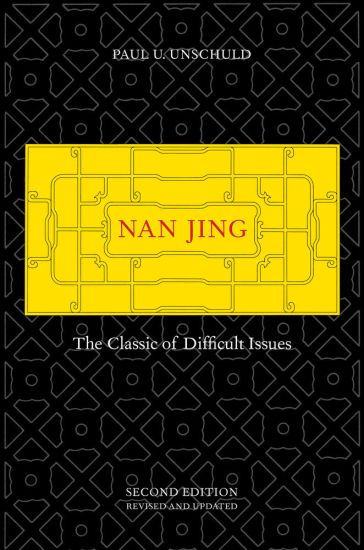
Nan Jing

Nan Jing

Paul U. Unschuld

University of California Press
2016
sidottu
This newly revised and updated edition of Paul U. Unschuld's original 1986 groundbreaking translation reflects the latest philological, methodological, and sinological standards of the past thirty years. The Nan Jing was compiled in China during the first century C.E., marking both an apex and a conclusion to the initial development stages of Chinese medicine. Based on the doctrines of the Five Phases and yinyang, the Nan Jing covers all aspects of theoretical and practical health care in an unusually systematic fashion. Most important is its innovative discussion of pulse diagnosis and needle treatment. This new edition also includes selected commentaries by twenty Chinese and Japanese authors from the past seventeen centuries. The commentaries provide insights into the processes of reception and transmission of ancient Chinese concepts from the Han era to the present time. Together with the Huang Di Nei Jing Su Wen and the Huang Di Nei Jing Ling Shu, this new translation of the Nan Jing constitutes a trilogy of writings offering scholars and practitioners today unprecedented insights into the beginnings of a two-millennium tradition of what was a revolutionary understanding of human physiology and pathology.
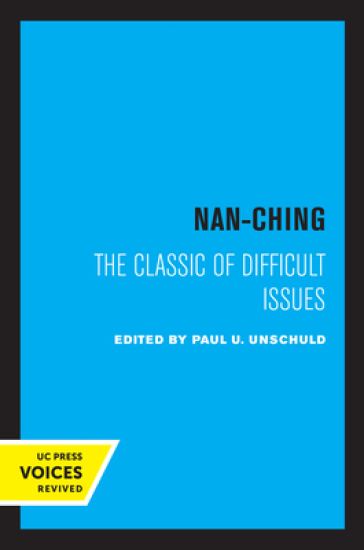
Nan-Ching

Nan-Ching

Paul U. Unschuld

University of California Press
2022
pokkari
Although the study of traditional Chinese medicine has attracted unprecedented attention in recent years, Western knowledge of it has been limited because, until now, not a single Chinese classical medical text has been available in a serious philological translation. The present book offers, for the first time in any Western language, a complete translation of an ancient Chinese medical classic, the Nan-ching. The translation adheres to rigid sinological standards and applies philological and historiographic methods. The original text of the Nan-ching was compiled during the first century A.D. by an unknown author. From that time forward, this ancient text provoked an ongoing stream of commentaries. Following the Sung era, it was misidentified as merely an explanatory sequel to the classic of the Yellow Emperor, the Huang-ti nei-ching. This volume, however, demonstrates that the Nan-ching should once again be regarded as a significant and innovative text in itself. It marked the apex and the conclusion of the initial development phase of a conceptual system of health care based on the doctrines of the Five Phases and yinyang. As the classic of the medicine of systematic correspondence, the Nan-ching covers all aspects of theoretical and practical health care within these doctrines in an unusually systematic fashion. Most important is its innovative discussion of pulse diagnosis and needle treatment. Unschuld combines the translation of the text of the Nan-ching with selected commentaries by twenty Chinese and Japanese authors from the past seventeen centuries. These commentaries provide insights into the processes of reception and transmission of ancient Chinese concepts from the Han era to the present time, and shed light on the issue of progress in Chinese medicine. Central to the book, and contributing to a completely new understanding of traditional Chinese medical thought, is the identification of a “patterned knowledge” that characterizes—in contrast to the monoparadigmatic tendencies in Western science and medicine—the literature and practice of traditional Chinese health care. Unschuld’s translation of the Nan-ching is an accomplishment of monumental proportions. Anthropologists, historians, and sociologists as well as general readers interested in traditional Chinese medicine—but who lack Chinese language abilities—will at last have access to ancient Chinese concepts of health care and therapy. Filling an enormous gap in the literature, Nan-ching—The Classic of Difficult Issues is the kind of landmark work that will shape the study of Chinese medicine for years to come. This title is part of UC Press's Voices Revived program, which commemorates University of California Press’s mission to seek out and cultivate the brightest minds and give them voice, reach, and impact. Drawing on a backlist dating to 1893, Voices Revived makes high-quality, peer-reviewed scholarship accessible once again using print-on-demand technology. This title was originally published in 1986.
Nan-Ching

Nan-Ching

Paul U. Unschuld

University of California Press
2022
sidottu
Although the study of traditional Chinese medicine has attracted unprecedented attention in recent years, Western knowledge of it has been limited because, until now, not a single Chinese classical medical text has been available in a serious philological translation. The present book offers, for the first time in any Western language, a complete translation of an ancient Chinese medical classic, the Nan-ching. The translation adheres to rigid sinological standards and applies philological and historiographic methods. The original text of the Nan-ching was compiled during the first century A.D. by an unknown author. From that time forward, this ancient text provoked an ongoing stream of commentaries. Following the Sung era, it was misidentified as merely an explanatory sequel to the classic of the Yellow Emperor, the Huang-ti nei-ching. This volume, however, demonstrates that the Nan-ching should once again be regarded as a significant and innovative text in itself. It marked the apex and the conclusion of the initial development phase of a conceptual system of health care based on the doctrines of the Five Phases and yinyang. As the classic of the medicine of systematic correspondence, the Nan-ching covers all aspects of theoretical and practical health care within these doctrines in an unusually systematic fashion. Most important is its innovative discussion of pulse diagnosis and needle treatment. Unschuld combines the translation of the text of the Nan-ching with selected commentaries by twenty Chinese and Japanese authors from the past seventeen centuries. These commentaries provide insights into the processes of reception and transmission of ancient Chinese concepts from the Han era to the present time, and shed light on the issue of progress in Chinese medicine. Central to the book, and contributing to a completely new understanding of traditional Chinese medical thought, is the identification of a “patterned knowledge” that characterizes—in contrast to the monoparadigmatic tendencies in Western science and medicine—the literature and practice of traditional Chinese health care. Unschuld’s translation of the Nan-ching is an accomplishment of monumental proportions. Anthropologists, historians, and sociologists as well as general readers interested in traditional Chinese medicine—but who lack Chinese language abilities—will at last have access to ancient Chinese concepts of health care and therapy. Filling an enormous gap in the literature, Nan-ching—The Classic of Difficult Issues is the kind of landmark work that will shape the study of Chinese medicine for years to come. This title is part of UC Press's Voices Revived program, which commemorates University of California Press’s mission to seek out and cultivate the brightest minds and give them voice, reach, and impact. Drawing on a backlist dating to 1893, Voices Revived makes high-quality, peer-reviewed scholarship accessible once again using print-on-demand technology. This title was originally published in 1986.
Chinas Trauma – Chinas Stärke

Chinas Trauma – Chinas Stärke

Paul U. Unschuld

Springer Fachmedien Wiesbaden
2016
sidottu
Paul U. Unschuld bietet eine kulturhistorisch begründete Analyse der politischen Geschichte Chinas der vergangenen zwei Jahrhunderte. Ein erster Teil beschreibt die verschiedenen Traumata, die dem Land im 19. und frühen 20. Jahrhundert durch ausländische Interventionen zugefügt wurden. In der zweiten Hälfte werden die Ursachen offen gelegt, die zu einem historisch einmaligen Vorgang geführt haben: dem Wiederaufstieg eines Staates, der von Staaten einer fremden, militärisch-technisch überlegenen Kultur besiegt und an den Rand des Abgrunds gebracht wurde. In seinem Geleitwort erläutert Ulrich Sendler die Bedeutung des Wissens um diese Hintergründe für ein Verständnis der Motivation und Erfolgsaussichten der Modernisierungsstrategien Chinas in einer zunehmend digitalisierten Welt.
The Fall and Rise of China

The Fall and Rise of China

Paul U. Unschuld

Reaktion Books
2013
nidottu
For over a century, from the First Opium War in 1839–42 to the end of the Second World War, China was repeatedly humiliated by Western imperial powers and by its smaller neighbour, Japan. For a time the Middle Kingdom seemed on the verge of becoming a pawn of foreign interests. Then, in a process unmatched in history, this great culture recovered vigorously from its seemingly hopeless plight – so much so that today the state, its leaders and its burgeoning economic and military might are globally acknowledged and not infrequently feared. The Fall and Rise of China: Healing the Trauma of History traces the country’s development in the nineteenth and early twentieth centuries up to the present day and offers an explanation of the collective mentality that enabled China, confronted by the superiority of Western science and technology, to commit to the unsparing self-diagnosis that enabled its impressive rise and radical transformation. The country identified the aspects of Western civilization it must adopt in order to remove the cultural impediments to its own renaissance. Profoundly wounded, China prescribed for itself a therapy that followed the same principle used in Chinese medicine: that the cause lies first and foremost within oneself. Prevention and treatment must therefore always begin with one’s own deficiencies and mistakes. In this powerful polemic Paul Unschuld presents an entirely new understanding and analysis of China’s past and offers fascinating insights into its possible future.
Huang Di Nei Jing Su Wen

Huang Di Nei Jing Su Wen

Paul U. Unschuld; Hermann Tessenow

University of California Press
2011
sidottu
A foundation of Chinese life sciences and medicine, "The Huang Di Nei Jing Su Wen" is now available for the first time in a complete, fully annotated English translation. Also known as "Su Wen," or "The Yellow Emperor's Inner Classic," this influential work came into being over a long period reaching from the 2nd century bce to the 8th century ce. Combining the views of different schools, it relies exclusively on natural law as conceptualized in "yin/yang" and Five Agents doctrines to define health and disease, and repeatedly emphasizes personal responsibility for the length and quality of one's life. This two-volume edition includes excerpts from all the major commentaries on "The Su Wen," and extensive annotation drawn from hundreds of monographs and articles by Chinese and Japanese authors produced over the past 1600 years and into the twentieth century.
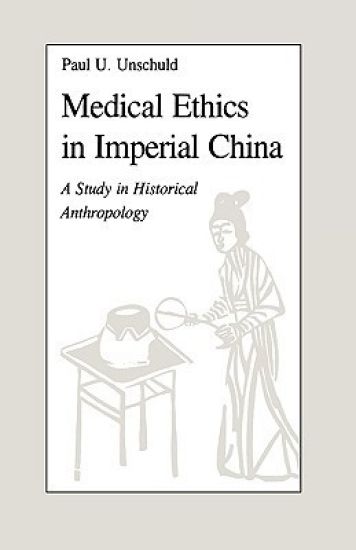
Medical Ethics in Imperial China

Medical Ethics in Imperial China

Unschuld Paul U.

University of California Press
1979
sidottu
This book, the first comprehensive history of explicity medical ethics in pre-modern China, spans the period from 500 B.C. through the nineteenth century and provides literal translations of all accessible codes of ethics in the known Chinese medical literature. The inclusion in addition of writings possessing ethical implications makes possible cultural comparisons with the corresponding literatures in the West.
Huang Di Nei Jing Su Wen

Huang Di Nei Jing Su Wen

Unschuld Paul U.

University of California Press
2003
sidottu
"The Huang Di nei jing su wen", known familiarly as the "Su wen", is a seminal text of ancient Chinese medicine, yet until now there has been no comprehensive, detailed analysis of its development and contents. At last Paul U. Unschuld offers entry into this still - vital artifact of China's cultural and intellectual past. Unschuld traces the history of the "Su wen" to its origins in the final centuries B.C.E., when numerous authors wrote short medical essays to explain the foundations of human health and illness on the basis of the newly developed vessel theory. He examines the meaning of the title and the way the work has been received throughout Chinese medical history, both before and after the eleventh century when the text as it is known today emerged. Unschuld's survey of the contents includes illuminating discussions of the yin-yang and five-agents doctrines, the perception of the human body and its organs, qi and blood, pathogenic agents, concepts of disease and diagnosis, and a variety of therapies, including the new technique of acupuncture. An extensive appendix, furthermore, offers a detailed introduction to the complicated climatological theories of Wu yun liu qi ('five periods and six qi'), which were added to the "Su wen" by Wang Bing in the Tang era. In an epilogue, Unschuld writes about the break with tradition and innovative style of thought represented by the "Su wen". For the first time, health care took the form of 'medicine', in that it focused on environmental conditions, climatic agents, and behavior as causal in the emergence of disease and on the importance of natural laws in explaining illness. Unschuld points out that much of what we surmise about the human organism is simply a projection, reflecting dominant values and social goals, and he constructs a hypothesis to explain the formation and acceptance of basic notions of health and disease in a given society. Reading the "Su wen", he says, not only offers a better understanding of the roots of Chinese medicine as an integrated aspect of Chinese civilization; it also provides a much needed starting point for discussions of the differences and parallels between European and Chinese ways of dealing with illness and the risk of early death.
A Dictionary of the Huang Di Nei Jing Su Wen

A Dictionary of the Huang Di Nei Jing Su Wen

Hermann Tessenow; Paul U. Unschuld

University of California Press
2008
sidottu
This dictionary reflects the English meanings of Chinese characters and character compounds laid down in the annotated edition of the Huang Di Nei Jing Su Wen, translated by Hermann Tessenow and Paul U. Unschuld. The Huang Di Nei Jing Su Wen is a seminal text of ancient Chinese medicine and natural philosophy. It reflects empirical knowledge and the doctrines of yin-yang and Five Agents in the perception of the human body and its organs, qi and the blood, pathogenic agents, concepts of disease and diagnosis, and a variety of therapies, including acupuncture. The original printing of this title contained an enclosed CD containing two concordances that list all characters along the pinyin-alphabetical sequence.
Dictionary of the Ben cao gang mu, Volume 1

Dictionary of the Ben cao gang mu, Volume 1

Zhibin Zhang; Paul U. Unschuld

University of California Press
2014
sidottu
The Ben cao gang mu, compiled in the second half of the sixteenth century by a team led by the physician Li Shizhen (1518 1593) on the basis of previously published books and contemporary knowledge, is the largest encyclopedia of natural history in a long tradition of Chinese materia medica works. Its description of almost 1,900 pharmaceutically used natural and man-made substances marks the apex of the development of premodern Chinese pharmaceutical knowledge. The Ben cao gang mu dictionary offers access to this impressive work of 1,600,000 characters. This first book in a three-volume series analyzes the meaning of 4,500 historical illness terms.
Paul U. Kellogg and the Survey

Paul U. Kellogg and the Survey

Clarke A. Chambers

University of Minnesota Press
1971
nidottu
Paul U. Kellogg and the Survey was first published in 1971. Minnesota Archive Editions uses digital technology to make long-unavailable books once again accessible, and are published unaltered from the original University of Minnesota Press editions.This joint biography of an editor, Paul U. Kellogg, and a journal, the Survey,provides new insights into the story of social work, social welfare policy, and political and social reform in the United States during the first half of the twentieth century. Under Kellogg's editorship, the Survey and Survey Graphic journals stood at the heart of the evolution of social work as a profession and the development of a public social welfare policy during those years. Early in his career, in 1901, Kellogg joined the staff of the Charities Review,the leading social service publication at that time. In 1912 he became editor in chief of the successor to that journal, the Survey, and he held this position of leadership for forty years until the magazine ceased publication. The journals Kellogg edited played a major role in shaping and defining areas and methods of social service in all its diverse fields — the settlement movement, casework, recreation and group work, community organization, and social action. They carried news in depth about all manner of social work practice—juvenile courts, penology, health, education, institutional care, public relief, the administration of social insurance, and other aspects. The Survey's influence was profound in promoting the elaboration of public policy in social welfare fields, such as housing reform, workmen's compensation, the rights of organized labor, old age and survivors' insurance, unemployment compensation, aid to dependent children, and health insurance. Thus this account represents an important chapter in American social history.
Eco-Finance

Eco-Finance

Paul U Ali; Kanako Yano

Kluwer Law International
2004
sidottu
Eco-Finance is the first in-depth legal analysis of this extraordinary hybrid of environmental regulation and global financial markets. It deals with what are currently the two dominant types of market-based environmental instruments: market-traded environmental instruments (which include the tradable pollution allowances envisaged by the Kyoto Protocol), and environmental financing instruments (which include the emerging class of environmental and socially responsible investment funds). Among the numerous topics and issues treated by Ali and Yano are the following: - the 'cap-and-trade' regime; - debt-for-environment swaps; - forestry securitisations; - greenhouse gas emissions markets; - carbon funds and swaps; - tradable green certificates- weather derivatives; - duty to hedge climatic risks; - catastrophe bonds; - protected cell companies; - the prudent investor rule; and- ethical security indices.