

Kirjahaku
Etsi kirjoja tekijän nimen, kirjan nimen tai ISBN:n perusteella.
1000 tulosta hakusanalla Paul Vanderbroeck

Discover the legendary life and career of Julius Caesar in this insightful and thought-provoking book that breaks down the bold strategies, leadership skills, and motivations behind his rise to power. Beyond his triumphs, the book examines the cautionary tale of his downfall, offering timeless lessons for managers, leaders, and business students to reflect on and benchmark their careers. Through a modern lens – by applying leadership theories – this book explores Caesar's personal traits, relationships, and decisions that shaped his leadership, providing insights into his competencies and the factors behind his meteoric rise. It's a valuable case study for organizations aiming to develop strong leaders and teams, making it a must-read for history enthusiasts, professionals, and anyone seeking practical strategies for success. For managers, leaders, professionals, and business students alike, this book offers a unique opportunity to reflect on their careers and benchmark their success and ambition against one of the greatest leaders of all time.
Leadership Strategies for Women
Paul Vanderbroeck
Springer-Verlag Berlin and Heidelberg GmbH Co. K
2013
sidottu
How do women leaders make it to the top of an organization? How can women stay at the top when most of their colleagues are men? What should women do to exercise leadership well? This book tells the stories of four powerful women who knew the answers to these three questions. Therefore, this book also explicitly identifies the key factors in these leaders’ career success, and it elucidates the competencies that enabled the women to exercise leadership effectively. The four success stories offer women who already serve in leadership roles and those who aspire to become great leaders both inspiration and practical lessons that can be applied to real-world challenges.“A wonderful selection of much-needed role models of powerful women who shaped their time with distinctively authentic styles, all their own. An inspiration for both men and women of what more gender balance in global political and economic roles has to offer the world.” Avivah Wittenberg-Cox, CEO 20-first and best-selling author of Why Women Mean Business and How Women Mean Business. “We all know we can learn a lot from history. Leadership Strategies for Women does this in the unexpected context of gender diversity. Nicely written and original, the book is a powerful example of how looking back can help us moving forward.”Frank Uit de Weerd, Vice-President HR Innovation, Research & Development, Royal Dutch/Shell “Aninspiring narrative that creatively leverages lessons from four women from the past, each of whom had to play the cards she was dealt, and each a force of nature who prevailed against the odds and shaped her world. Today’s crop of aspiring women leaders, who often start from scratch and face a bewildering array of options and tough performance expectations, would do well to absorb this book’s tightly drawn lessons.”Ingo Walter, Seymour Milstein Professor of Finance, Corporate Governance and Ethics, NYU Stern School of Business
Leadership Strategies for Women
Paul Vanderbroeck
Springer-Verlag Berlin and Heidelberg GmbH Co. K
2016
nidottu
How do women leaders make it to the top of an organization? How can women stay at the top when most of their colleagues are men? What should women do to exercise leadership well? This book tells the stories of four powerful women who knew the answers to these three questions. Therefore, this book also explicitly identifies the key factors in these leaders’ career success, and it elucidates the competencies that enabled the women to exercise leadership effectively. The four success stories offer women who already serve in leadership roles and those who aspire to become great leaders both inspiration and practical lessons that can be applied to real-world challenges.“A wonderful selection of much-needed role models of powerful women who shaped their time with distinctively authentic styles, all their own. An inspiration for both men and women of what more gender balance in global political and economic roles has to offer the world.” Avivah Wittenberg-Cox, CEO 20-first and best-selling author of Why Women Mean Business and How Women Mean Business. “We all know we can learn a lot from history. Leadership Strategies for Women does this in the unexpected context of gender diversity. Nicely written and original, the book is a powerful example of how looking back can help us moving forward.”Frank Uit de Weerd, Vice-President HR Innovation, Research & Development, Royal Dutch/Shell “Aninspiring narrative that creatively leverages lessons from four women from the past, each of whom had to play the cards she was dealt, and each a force of nature who prevailed against the odds and shaped her world. Today’s crop of aspiring women leaders, who often start from scratch and face a bewildering array of options and tough performance expectations, would do well to absorb this book’s tightly drawn lessons.”Ingo Walter, Seymour Milstein Professor of Finance, Corporate Governance and Ethics, NYU Stern School of Business

Popular Leadership and Collective Behavior in the Late Roman Republic (ca. 80 - 50 B.C.)
Paul Vanderbroeck
jJ.C. Gieben, Uitgeverij
2022
nidottu
Law, Religion and Homosexuality is the first book-length study of how religion has shaped, and continues to shape, legislation that regulates the lives of gay men and lesbians . Through a systematic examination of how religious discourse influences the making of law – in the form of official interventions made by faith communities and organizations, as well as by expressions of faith by individual legislators – the authors argue that religion continues to be central to both enabling and restricting the development of sexual orientation equality. Whilst some claim that faith has been marginalized in the legislative processes of contemporary western societies, Johnson and Vanderbeck show the significant impact of religion in a number of substantive legal areas relating to sexual orientation including: same-sex sexual relations, family life, civil partnership and same-sex marriage, equality in employment and the provision of goods and services, hate speech regulation, and education. Law, Religion and Homosexuality demonstrates the dynamic interplay between law and religion in respect of homosexuality and will be of considerable interest to a wide audience of academics, policy makers and stakeholders.
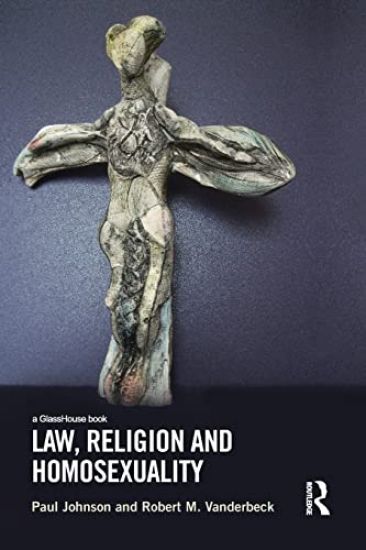
Law, Religion and Homosexuality is the first book-length study of how religion has shaped, and continues to shape, legislation that regulates the lives of gay men and lesbians . Through a systematic examination of how religious discourse influences the making of law – in the form of official interventions made by faith communities and organizations, as well as by expressions of faith by individual legislators – the authors argue that religion continues to be central to both enabling and restricting the development of sexual orientation equality. Whilst some claim that faith has been marginalized in the legislative processes of contemporary western societies, Johnson and Vanderbeck show the significant impact of religion in a number of substantive legal areas relating to sexual orientation including: same-sex sexual relations, family life, civil partnership and same-sex marriage, equality in employment and the provision of goods and services, hate speech regulation, and education. Law, Religion and Homosexuality demonstrates the dynamic interplay between law and religion in respect of homosexuality and will be of considerable interest to a wide audience of academics, policy makers and stakeholders.
Paul is the most powerful human personality in the history of the Church. A missionary, theologian, and religious genius, in his epistles he laid the foundations on which later Christian theology was built. In his highly original introduction to Paul's life and thought, E. P. Sanders, whose research on Paul has substantially influenced recent scholarship, pays equal attention to Paul's fundamental convictions and the sometimes convoluted ways in which they were worked out. ABOUT THE SERIES: The Very Short Introductions series from Oxford University Press contains hundreds of titles in almost every subject area. These pocket-sized books are the perfect way to get ahead in a new subject quickly. Our expert authors combine facts, analysis, perspective, new ideas, and enthusiasm to make interesting and challenging topics highly readable.
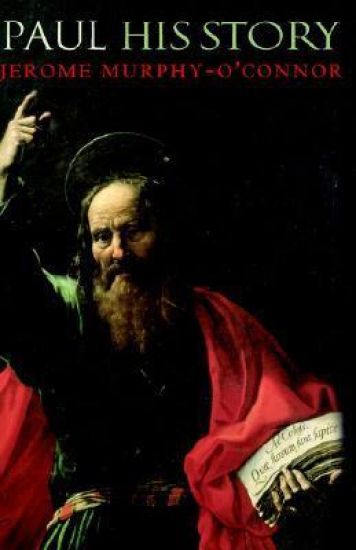
For someone who has exercised such a profound influence on Christian theology, Paul remains a shadowy figure behind the barrier of his complicated and difficult biblical letters. Debates about his meaning have deflected attention from his personality, yet his personality is an important key to understanding his theological ideas. This book redresses the balance. Jerome Murphy-O'Connor's disciplined imagination, nourished by a lifetime of research, shapes numerous textual, historical, and archaeological details into a colourful and enjoyable story of which Paul is the flawed but undefeated hero. This chronological narrative offers new insights into Paul's intellectual, emotional, and religious development and puts his travels, mission, and theological ideas into a plausible biographical context. As he changes from an assimilated Jewish teenager in Tarsus to a competitive Pharisee in Jerusalem and then to a driven missionary of Christ, the sometimes contradictory components of Paul's complex personality emerge from the way he interacts with people and problems. His theology was forged in dialogue and becomes more intelligible as our appreciation of his person deepens. In Jerome Murphy-O'Connor's engaging biography, the Apostle comes to life as a complex, intensely human individual.

For someone who has exercised such a profound influence on Christian theology, Paul remains a shadowy figure behind the barrier of his complicated and difficult biblical letters. Debates about his meaning have deflected attention from his personality, yet his personality is an important key to understanding his theological ideas. This book redresses the balance. Jerome Murphy-O'Connor's disciplined imagination, nourished by a lifetime of research, shapes numerous textual, historical, and archaeological details into a colourful and enjoyable story of which Paul is the flawed but undefeated hero. This chronological narrative offers new insights into Paul's intellectual, emotional, and religious development and puts his travels, mission, and theological ideas into a plausible biographical context. As he changes from an assimilated Jewish teenager in Tarsus to a competitive Pharisee in Jerusalem and then to a driven missionary of Christ, the sometimes contradictory components of Paul's complex personality emerge from the way he interacts with people and problems. His theology was forged in dialogue and becomes more intelligible as our appreciation of his person deepens. In Jerome Murphy-O'Connor's engaging biography, the Apostle comes to life as a complex, intensely human individual.
This study of the Apostle to the Gentiles combines scholarship with an unusual approach. Schoeps interprets Paul's theology in the light of his Jewish background, which coloured and conditioned his Christological teaching.

Since its first publication in German in 1959, Paul has been hailed as a major study of the apostle to the Gentiles, combining exceptional scholarship with an unusual approach. Schoeps interprets Paul's theology in the light of his Jewish background, which coloured and conditioned his Christological teaching. Paul's conception of Jesus differs from that of the Synoptics: what and how extensive the difference is and whence it is derived are among the questions Schoeps examines. After surveying major problems in Pauline research, the Author relates the apostle to primitive Christianity, discussing his eschatology and his teachings on salvation, the law, and saving history. The final chapter shows that Paul's distinctive doctrines result from two converging factors: that Paul never saw Jesus in the flesh, and the influence of Jewish teaching. The consequence was his concern with the resurrected Saviour of the world, the pre-existent and eternal Son of God. Schoeps shows that Paul betrayed a fundamental misconception of the law and the covenantal agreement between God and his chosen people. The result is a thought-provoking, and somewhat startling, study of the first, the greatest, and the most difficult of all Christian theologians.

'There is neither Jew nor Greek, there is neither slave nor free, there is no male and female; for you are all one in Christ Jesus.' (Galatians 3.28) The revolutionary writings of St Paul have had an incalculable impact on Western history, and continue to influence directly the two billion Christians living today. Written by a world authority, this brief history begins by assessing what we know about Paul's life and letters, and his impact on the Roman world of the first century. It concludes by highlighting the key elements of Paul's thought and considering their consequences as they have played out over two millennia.

This compelling reconstruction of the life and thought of St Paul paints a vivid picture of the Roman world in which he preached his revolutionary message and explains the significance of his lasting impact on both the Church and the world. Regarded by many as the founder of Christianity, Paul of Tarsus is one of the most controversial and powerful figures in history. His writings have had an incalculable influence on Western culture and beyond, and his words continue to guide the lives of over two billion Christians across the world today. In this superbly detailed biography Tom Wright traces Paul's career from zealous persecutor of the fledgling Church, through his journeys as the world's greatest missionary theologian, to his likely death as a Christian martyr at the hands of Nero in the mid 60s CE. Drawing judiciously on the latest research into the Jewish, Greek and Roman worlds, and enriched by a wealth of critical insight into Paul's own writings, this is the most rounded portrait of the apostle ever painted – his development, motivations, spiritual struggles and intellectual achievements, and his lasting impact over two millennia.
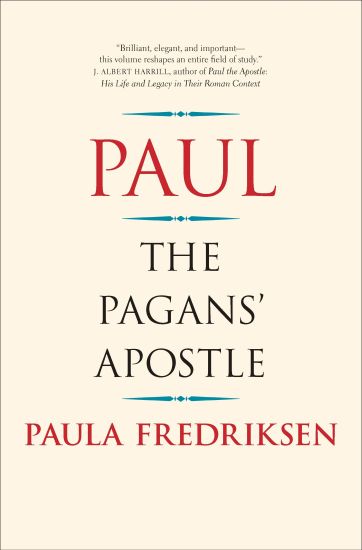
A groundbreaking new portrait of the apostle Paul, from one of today’s leading historians of antiquity Often seen as the author of timeless Christian theology, Paul himself heatedly maintained that he lived and worked in history’s closing hours. His letters propel his readers into two ancient worlds, one Jewish, one pagan. The first was incandescent with apocalyptic hopes, expecting God through his messiah to fulfill his ancient promises of redemption to Israel. The second teemed with ancient actors, not only human but also divine: angry superhuman forces, jealous demons, and hostile cosmic gods. Both worlds are Paul’s, and his convictions about the first shaped his actions in the second. Only by situating Paul within this charged social context of gods and humans, pagans and Jews, cities, synagogues, and competing Christ-following assemblies can we begin to understand his mission and message. This original and provocative book offers a dramatically new perspective on one of history’s seminal figures.

A groundbreaking new portrait of the apostle Paul, from one of today’s leading historians of antiquity Often seen as the author of timeless Christian theology, Paul himself heatedly maintained that he lived and worked in history’s closing hours. His letters propel his readers into two ancient worlds, one Jewish, one pagan. The first was incandescent with apocalyptic hopes, expecting God through his messiah to fulfill his ancient promises of redemption to Israel. The second teemed with ancient actors, not only human but also divine: angry superhuman forces, jealous demons, and hostile cosmic gods. Both worlds are Paul’s, and his convictions about the first shaped his actions in the second. Only by situating Paul within this charged social context of gods and humans, pagans and Jews, cities, synagogues, and competing Christ-following assemblies can we begin to understand his mission and message. This original and provocative book offers a dramatically new perspective on one of history’s seminal figures.
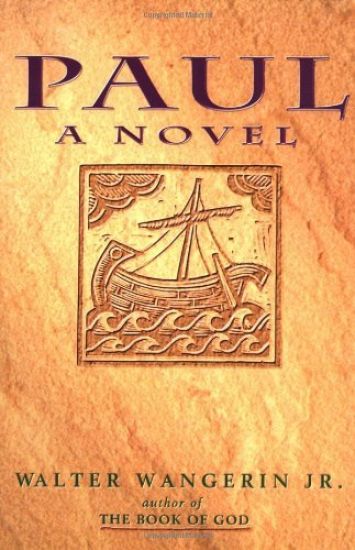
An intimate portrait of a complex individual through whom God was at work, turning the world upside down. With vivid imagination and scholarly depth, award-winning author Walter Wangerin Jr. weaves together the history of the early church with the life story of its greatest apostle--Paul. Wangerin begins to unfold Paul's incredible life by imagining the childhood and early family life of a boy then called "Saul." A fierce prosecutor of Christians before his conversion, Paul never lost his fiery dedication, boldness, and strong personality. After his shocking encounter with God on the road to Damascus, he applied his formidable strengths to spreading the gospel. Wangerin deftly reveals Paul's character through each stage of his life, and enables us to see Paul the person, living and complex, viewed through the eyes of his contemporaries: Barnabas, James, Prisca, Seneca, and Luke. Paul's rich interaction and brilliant dialogue with friends and foes, leaders and slaves, Jews and Greeks, creates a swift and intense historical drama around the man who spread the seed of the Gospel to the ends of the known world.

Lucas Grollenberg, a Dutch Dominican, is already known to English readers as the author of one of the best illustrated atlases of the Bible. In this short book he provides one of the most engaging and non-technical introductions to the often difficult thought and work of St Paul. The book arose out of a series of meetings with a group of lay people. Its style is informal and there are no disconcerting details to cope with which presuppose a certain level of knowledge. At the same time, however, the book reflects the best modern critical scholarship and does not gloss over the difficulties which Paul presents to twentieth-century readers. Fr Grollenberg draws on three sources for his account: the letters of Paul, Acts, and the knowledge that has come down to us from the ancient world. To this he can add his own first-hand knowledge of the territories involved, gained not least from travels in an old Volkswagen over the routes covered by Paul. The result is a vivid and even controversial picture of the apostle. Was Paul married? 'No doubt about it', says the author, and to those who might raise their eyebrows gives utterly convincing reasons for such judgment. Perhaps his activities led in due course to a marital separation. If only we had her story. . . .
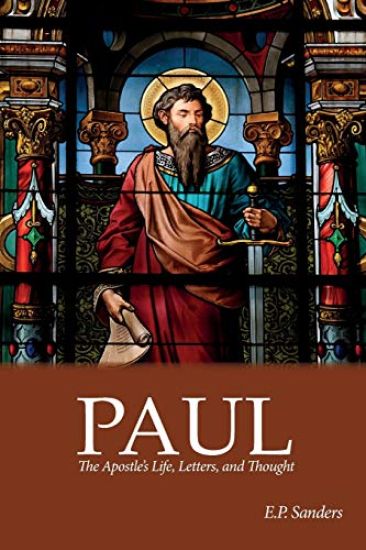
E. P. Sanders offers a comprehensive study of Paul's life and work, drawing on a lifetime of studying Christianity's most controversial apostle, a rabbi who became the apostle to the Gentiles