Kirjahaku
Etsi kirjoja tekijän nimen, kirjan nimen tai ISBN:n perusteella.
1000 tulosta hakusanalla Paul W. Gooch
Paul and Religion demonstrates the continuing and contemporary relevance of the most important, and most controversial, figure of early Christianity. Paul Gooch interrogates the Pauline writings for their meaning as well as implications for religion as an entire form of life, a stance on the world expressed in distinctive practices. Bringing a philosophical approach to this topic, he connects Paul's ideas to lived experience. In a conversational style, Gooch explores Paul's experience of grace and his dismissal of distinctive markers of religious identity in favour of love as binding together a community. Contrary to common expectations, he finds within Paul's letters material for conversations about issues in our day, such as gender and sexuality. From his close reading of the Letters, Gooch argues that the Pauline religious form of life is not identical with institutional Christianity. Indeed, his conclusions may be welcome to those who belong to other faiths.
Course Correction engages in deliberation about what the twenty-first-century university needs to do in order to re-find its focus as a protected place for unfettered commitment to knowledge, not just as a space for creating employment or economic prosperity. The university’s business, Paul W. Gooch writes, is to generate and critique knowledge claims, and to transmit and certify the acquisition of knowledge. In order to achieve this, a university must have a reputation for integrity and trustworthiness, and this, in turn, requires a diligent and respectful level of autonomy from state, religion, and other powerful influences. It also requires embracing the challenges of academic freedom and the effective governance of an academic community. Course Correction raises three important questions about the twenty-first-century university. In discussing the dominant attention to student experience, the book asks, "Is it now all about students?" Secondly, in questioning "What knowledge should undergraduates gain?" it provides a critique of undergraduate experience, advocating a Socratic approach to education as interrogative conversation. Finally, by asking "What and where are well-placed universities?" the book makes the case against placeless education offered in the digital world, in favour of education that takes account of its place in time and space.
Geochronology and Thermochronology
Peter W. Reiners; Richard W. Carlson; Paul R. Renne; Kari M. Cooper; Darryl E. Granger; Noah M. McLean; Blair Schoene
John Wiley Sons Inc
2018
nidottu
This book is a welcome introduction and reference for users and innovators in geochronology. It provides modern perspectives on the current state-of-the art in most of the principal areas of geochronology and thermochronology, while recognizing that they are changing at a fast pace. It emphasizes fundamentals and systematics, historical perspective, analytical methods, data interpretation, and some applications chosen from the literature. This book complements existing coverage by expanding on those parts of isotope geochemistry that are concerned with dates and rates and insights into Earth and planetary science that come from temporal perspectives. Geochronology and Thermochronology offers chapters covering: Foundations of Radioisotopic Dating; Analytical Methods; Interpretational Approaches: Making Sense of Data; Diffusion and Thermochronologic Interpretations; Rb-Sr, Sm-Nd, Lu-Hf; Re-Os and Pt-Os; U-Th-Pb Geochronology and Thermochronology; The K-Ar and 40Ar/39Ar Systems; Radiation-damage Methods of Geo- and Thermochronology; The (U-Th)/He System; Uranium-series Geochronology; Cosmogenic Nuclides; and Extinct Radionuclide Chronology. Offers a foundation for understanding each of the methods and for illuminating directions that will be important in the near futurePresents the fundamentals, perspectives, and opportunities in modern geochronology in a way that inspires further innovation, creative technique development, and applicationsProvides references to rapidly evolving topics that will enable readers to pursue future developments Geochronology and Thermochronology is designed for graduate and upper-level undergraduate students with a solid background in mathematics, geochemistry, and geology."Geochronology and Thermochronology is an excellent textbook that delivers on the difficult balance between having an appropriate level of detail to be useful for an upper undergraduate to graduate-level class or research reference text without being too esoteric for a more general audience, with content and descriptions that are understandable and enlightening to the non-specialist. I would recommend this textbook for anyone interested in the history, principles, and mechanics of geochronology and thermochronology." --American Mineralogist, 2021Read an interview with the editors to find out more:https://eos.org/editors-vox/the-science-of-dates-and-rates
Geochronology and Thermochronology
Peter W. Reiners; Richard W. Carlson; Paul R. Renne; Kari M. Cooper; Darryl E. Granger; Noah M. McLean; Blair Schoene
John Wiley Sons Inc
2018
sidottu
This book is a welcome introduction and reference for users and innovators in geochronology. It provides modern perspectives on the current state-of-the art in most of the principal areas of geochronology and thermochronology, while recognizing that they are changing at a fast pace. It emphasizes fundamentals and systematics, historical perspective, analytical methods, data interpretation, and some applications chosen from the literature. This book complements existing coverage by expanding on those parts of isotope geochemistry that are concerned with dates and rates and insights into Earth and planetary science that come from temporal perspectives. Geochronology and Thermochronology offers chapters covering: Foundations of Radioisotopic Dating; Analytical Methods; Interpretational Approaches: Making Sense of Data; Diffusion and Thermochronologic Interpretations; Rb-Sr, Sm-Nd, Lu-Hf; Re-Os and Pt-Os; U-Th-Pb Geochronology and Thermochronology; The K-Ar and 40Ar/39Ar Systems; Radiation-damage Methods of Geo- and Thermochronology; The (U-Th)/He System; Uranium-series Geochronology; Cosmogenic Nuclides; and Extinct Radionuclide Chronology. Offers a foundation for understanding each of the methods and for illuminating directions that will be important in the near futurePresents the fundamentals, perspectives, and opportunities in modern geochronology in a way that inspires further innovation, creative technique development, and applicationsProvides references to rapidly evolving topics that will enable readers to pursue future developments Geochronology and Thermochronology is designed for graduate and upper-level undergraduate students with a solid background in mathematics, geochemistry, and geology."Geochronology and Thermochronology is an excellent textbook that delivers on the difficult balance between having an appropriate level of detail to be useful for an upper undergraduate to graduate-level class or research reference text without being too esoteric for a more general audience, with content and descriptions that are understandable and enlightening to the non-specialist. I would recommend this textbook for anyone interested in the history, principles, and mechanics of geochronology and thermochronology." --American Mineralogist, 2021Read an interview with the editors to find out more:https://eos.org/editors-vox/the-science-of-dates-and-rates
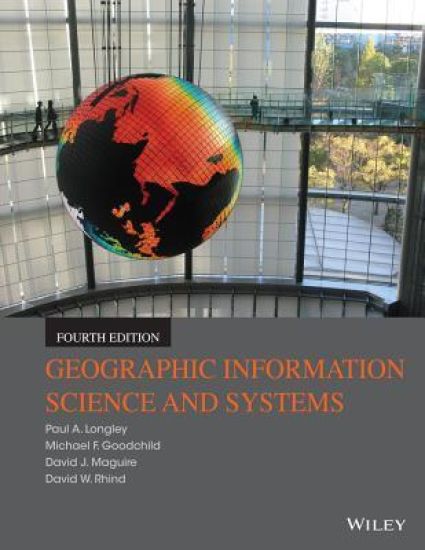
Geographic Information Science and Systems
Paul A. Longley; Michael F. Goodchild; David J. Maguire; David W. Rhind
John Wiley Sons Inc
2015
nidottu
Effective use of today’s powerful GIS technology requires an understanding of the science of problem-solving that underpins it. Since the first edition published over a decade ago, this book has led the way, with its focus on the scientific principles that support GIS usage. It has also provided thorough, upto- date coverage of GIS procedures, techniques and public policy applications. This unique combination of science, technology and practical problem solving has made this book a best-seller across a broad spectrum of disciplines. This fully updated 4th edition continues to deliver on these strengths.
Paul McCracken's influence on how we think about economic policy has reached from the academy, to the popular press, to the highest reaches of government. He is the Edmund Ezra Day Distinguished University Professor of Business Administration at the University of Michigan, where he has been a member of the faculty since 1948. Approximate running time: 61 minutes.
History of New Tribes Mission: Early History of the New Tribes Mission and Life and Work of Paul Fleming
Paul W. Fleming
Literary Licensing, LLC
2012
sidottu
""History of New Tribes Mission: Early History of the New Tribes Mission and Life and Work of Paul Fleming"" is a comprehensive book written by Paul W. Fleming. The book provides an in-depth account of the early days of the New Tribes Mission, a Christian organization that aims to spread the gospel to remote and unreached tribes around the world. The book covers the life and work of Paul Fleming, one of the founding members of the New Tribes Mission. The reader is taken on a journey through Fleming's life, from his childhood to his missionary work in South America, where he spent over 20 years working with indigenous tribes. The book provides a detailed account of the challenges and obstacles that the New Tribes Mission faced in its early days, such as cultural barriers, language barriers, and the dangers of working in remote and often hostile environments. It also highlights the successes and achievements of the organization, including the establishment of Bible schools and the conversion of many indigenous people to Christianity. Overall, ""History of New Tribes Mission: Early History of the New Tribes Mission and Life and Work of Paul Fleming"" is a fascinating read for anyone interested in the history of Christian missions, the challenges of cross-cultural communication, and the power of faith in overcoming obstacles.This scarce antiquarian book is a facsimile reprint of the old original and may contain some imperfections such as library marks and notations. Because we believe this work is culturally important, we have made it available as part of our commitment for protecting, preserving, and promoting the world's literature in affordable, high quality, modern editions, that are true to their original work.
History of New Tribes Mission: Early History of the New Tribes Mission and Life and Work of Paul Fleming
Paul W. Fleming
Literary Licensing, LLC
2012
nidottu
The Gospel According to Paul The Apathetic Agnostic: The Gospel Truth About The Gospel
Paul W. Sharkey
Createspace Independent Publishing Platform
2015
nidottu
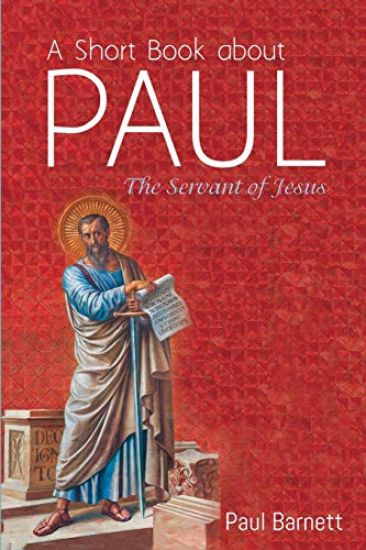
Most books about Paul the apostle are long and very detailed, and for many a potential reader a daunting prospect. A Short Book about Paul is deliberately brief, but its brevity is not at the cost of accuracy. We trace the main contours of Paul's life, which turn on the hinge of the singular event outside Damascus in c. AD 34. From that time the leading persecutor of the disciples became the dedicated preacher of the message about Jesus. This short book shares with many the opinion that Paul remains the most influential voice from Greco-Roman antiquity apart, that is, from the Lord whose servant he was. At the same time, many critics have found fault with him, especially from the time of the Enlightenment. Paul's achievements were considerable. Between AD 47-56 he established a network of congregations in five Roman provinces--Syria-Cilicia, Galatia, Macedonia, Achaia, and Asia. His thirteen surviving letters are witnesses to his dedicated pastoral care of these tiny, far-flung gatherings. Not to be missed was his remarkable skill in recruiting a small army of loyal coworkers like Timothy, Luke, and Titus. The result of Paul's decade-long journeys in the provinces of Anatolia and Greece was the planting of the seeds of Christianity that would develop into the official religion of the eastern Roman Empire, based in Constantinople. ""In relatively small compass, this book succeeds not only as a basic introduction to Paul and his thought, but also as a corrective to common misunderstandings of the apostle, and as an appreciation of his ongoing significance for today's world. By setting Paul solidly in his historical context, Barnett's book will promote not only more effective exegesis of Paul's letters, but also enable readers to see how the Bible finds its unity in salvation history, and its climax in the sending of God's Son."" --Donald Hagner, George Eldon Ladd Professor Emeritus of New Testament, Fuller Theological Seminary ""This is now the best, brief, English-language book on the apostle Paul. It is equally attentive to history and theology. It owns up to objections to Paul and then forthrightly answers them. It never loses sight of the fact that Paul pointed to Jesus Christ and not himself. It traces Paul's still-important legacy. Readers both novice and advanced will profit from this careful exploration of the main contours of Paul's life, teaching, and testimony to Jesus."" --Robert W. Yarbrough, Professor of New Testament, Covenant Theological Seminary Paul Barnett is visiting professor at Regent College, Vancouver; Lecturer Emeritus at Moore College, Sydney; and Honorary Fellow in Ancient History at Macquarie University.
The Oxford Handbook of Jewish Philosophy
Paul W. Franks; Yitzhak Y. Melamed
OXFORD UNIVERSITY PRESS INC
2025
sidottu
This Handbook provides an examined and nuanced overview of the history and devlopment of Jewish philosophy, from antiquity up to current trends in the field. Editors Paul W. Franks and Yitzhak Y. Melamed have brought together an international team of philosophers and scholars to tackle a complex and multi-layered literary corpus that stretches over two millennia. This volume is comprised of six divisions, each telling the story of Jewish philosophy from a distinctive vantage point: an introductory section addressing the place and historiography of Jewish philosophy within broader academia; the history of Jewish philosophy with an eye towards major schools and periods; interactions between Jewish philosophy and other branches of the Jewish literarary tradition; interactions with non-Jewish philosophy; key topics in Jewish philosophy; and new directions in the field. The result is a uniquely comprehensive and multi-layered survey of this incredibly important intellectual tradition. Drawing from thinkers at the top of their field and edited by two of the most important philosophers working today, this Handbook is the authoritative guide to the history, development, and trajectory of Jewish philosophy.
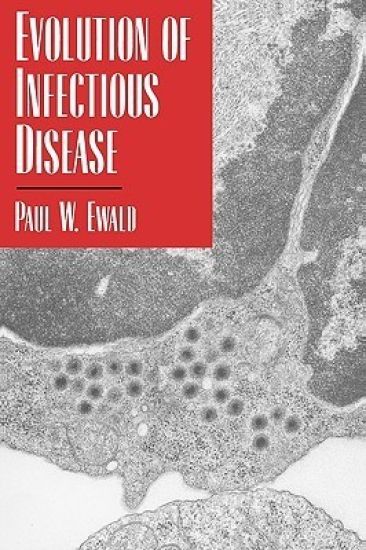
Ewald is the first author to present a Darwinian perspective on infectious disease, which opens up a whole new approach to health science, one that emphasizes new possibilities for combatting deadly diseases like malaria, tuberculosis, and AIDS. Taking an evolutionary approach, Ewald views disease-producing bacteria and viruses as parasites and explains the history of disease as a host-parasite relationship, one which can evolve in many different effects on the host population. He explains why the agents of cholera, malaria, and AIDS are so dangerous and why treatment of virtually all diseases would be improved by applications of evolutionary principles. This merging of evolutionary biology with health sciences offers a new dimension to policy-making in the health sciences by identifying interventions that will force infectious organisms to evolve toward a benign state, to subdue the plagues of the past and help us to avert the plagues of the future. A wholly readable account of an enthralling and important subject of concern to us all.
This ground-breaking work is the first book to present a Darwinian perspective on infectious disease. It views disease-producing bacteria and viruses as parasites and explains the history of disease as a host-parasite relationship, one which can evolve in many different ways and with radically different effects on the host population. The author's evolutionary approach is interdisciplinary, drawing on theory and example from the fields of epidemiology, molecular genetics, biochemistry, physiology, evolutionary ecology, and the ecology of populations and communities.
This is the only modern study of European politics to cover the entire timespan from the end of the Seven Years' War in 1763 to the revolutionary year of 1848. Paul Schroeder's comprehensive and authoritative volume charts the course of international history over this turbulent period, in which the map of Europe was redrawn time and again. Professor Schroeder examines the wars, political crises, and diplomatic opportunities of the age, many of which - the Revolutionary and Napoleonic Wars, the Congress of Vienna and its aftermath - had far-reaching consequences for modern Europe. Professor Schroeder provides a new account of the course of international politics over these years and a major reinterpretation of the structure and operation of the international system. He shows how the practice of international politics was transformed in revolutionary ways, with far-reaching and beneficial effects. The Vienna Settlement established peace by abandoning the competitive balance-of-power politics of the eighteenth century, and devising a new political equilibrium. It created a European consensus on a new political balance with new rules to maintain it, ushering in a uniquely peaceful, progessive period in European international politics.