Kirjojen hintavertailu. Mukana 11 699 587 kirjaa ja 12 kauppaa.

Kirjahaku

Etsi kirjoja tekijän nimen, kirjan nimen tai ISBN:n perusteella.

1000 tulosta hakusanalla Paul W. Kahn

The Cultural Study of Law

The Cultural Study of Law

Paul W. Kahn

University of Chicago Press
1999
sidottu
Belief in the rule of law characterizes society, political order and even one's identity as a citizen. Yet despite the importance of this phenomenon, those who study culture have failed to focus on the law. In this work, Paul Kahn provides an examination of what it means to conduct a modern intellectual inquiry into the culture of law. He explains the shortcomings of late-1990s legal scholarship and charts the way for the development of a new discipline of law, one that approaches law as a way of life rather than a set of rules. Kahn argues that legal scholars, despite the appearance of some sophisticated theory in modern legal scholarship, are bound to the idea of improving the law through reform. The state of legal scholarship can be compared to the study of religion around the turn of the 20th century, when it was a part of the practice of religion and not a distinct intellectual discipline as it is today. Kahn outlines the conceptual tools and methodology necessary for such an inquiry. Drawing on modern cultural studies, he analyzes the concepts of time, space, citizen, judge, sovereignty, and theory within the culture of the rule of law.
The Cultural Study of Law

The Cultural Study of Law

Paul W. Kahn

University of Chicago Press
2000
nidottu
Belief in the rule of law characterizes our society, our political order, and even our identity as citizens. Yet despite the importance of this phenomenon, those who study culture have failed to focus on the law. In this work, Paul Kahn provides a full examination of what it means to conduct a modern intellectual inquiry into the culture of law. He explains the shortcomings of current legal scholarship and, more important, charts the way for the development of an entirely new intellectual discipline of law, one that approaches law as a way of life rather than a set of rules. Kahn argues that legal scholars, despite the appearance of some sophisticated theory in modern legal scholarship, are bound to the idea of improving the law through reform. The state of current legal scholarship can be compared to the study of religion around the turn of the century, when it was a part of the practice of religion and not a distinct intellectual discipline as it is today. To conduct a genuine study of our legal culture, we must step outside the boundaries of our legal system, abandon the ambition of reform, and instead interpret the beliefs and practices that constitute the rule of law. Kahn outlines the conceptual tools and methodology necessary for such an inquiry. Drawing on modern cultural studies, he analyzes the concepts of time, space, citizen, judge, sovereignty, and theory within the culture of the rule of law.
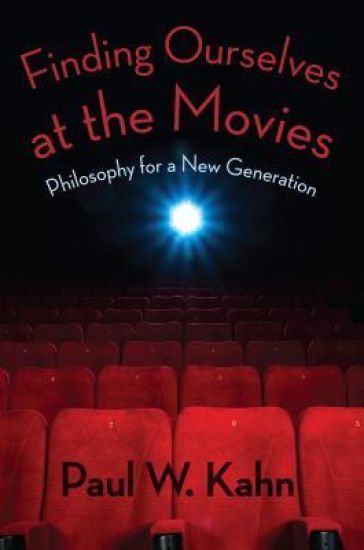
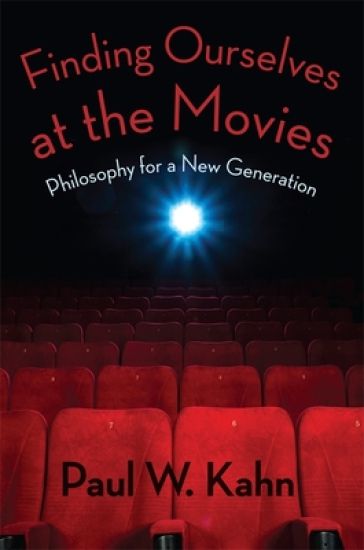
Finding Ourselves at the Movies

Finding Ourselves at the Movies

Paul W. Kahn

Columbia University Press
2013
sidottu
Academic philosophy may have lost its audience, but the traditional subjects of philosophy-love, death, justice, knowledge, and faith-remain as compelling as ever. To reach a new generation, Paul W. Kahn argues that philosophy must take up these fundamental concerns as we find them in contemporary culture. He demonstrates how this can be achieved through a turn to popular film. Discussing such well-known movies as Forrest Gump (1994), The American President (1995), The Matrix (1999), Memento (2000), The History of Violence (2005), Gran Torino (2008), The Dark Knight (2008), The Road (2009), and Avatar (2009), Kahn explores powerful archetypes and their hold on us. His inquiry proceeds in two parts. First, he uses film to explore the nature of action and interpretation, arguing that narrative is the critical concept for understanding both. Second, he explores the narratives of politics, family, and faith as they appear in popular films. Engaging with genres as diverse as romantic comedy, slasher film, and pornography, Kahn explores the social imaginary through which we create and maintain a meaningful world. He finds in popular films a new setting for a philosophical inquiry into the timeless themes of sacrifice, innocence, rebirth, law, and love.
Finding Ourselves at the Movies

Finding Ourselves at the Movies

Paul W. Kahn

Columbia University Press
2016
pokkari
Academic philosophy may have lost its audience, but the traditional subjects of philosophy-love, death, justice, knowledge, and faith-remain as compelling as ever. To reach a new generation, Paul W. Kahn argues that philosophy must take up these fundamental concerns as we find them in contemporary culture. He demonstrates how this can be achieved through a turn to popular film. Discussing such well-known movies as Forrest Gump (1994), The American President (1995), The Matrix (1999), Memento (2000), The History of Violence (2005), Gran Torino (2008), The Dark Knight (2008), The Road (2009), and Avatar (2009), Kahn explores powerful archetypes and their hold on us. His inquiry proceeds in two parts. First, he uses film to explore the nature of action and interpretation, arguing that narrative is the critical concept for understanding both. Second, he explores the narratives of politics, family, and faith as they appear in popular films. Engaging with genres as diverse as romantic comedy, slasher film, and pornography, Kahn explores the social imaginary through which we create and maintain a meaningful world. He finds in popular films a new setting for a philosophical inquiry into the timeless themes of sacrifice, innocence, rebirth, law, and love.
Legitimacy and History

Legitimacy and History

Paul W. Kahn

Yale University Press
1993
sidottu
This powerfully conceptualized book is both a rich intellectual history of two hundred years of American constitutional theory and an original philosophical inquiry into the possibility of self-government. Legitimate government in the United States means self-government. Yet Americans also believe that their government must be constrained by a Constitution that is now two hundred years old. Paul W. Kahn sees the development of constitutional theory as a continuous effort to resolve this conflict between self-government and history. Rejecting the conventional idea that constitutional thought has been shaped by political and social events, Kahn argues that the history of constitutionalism has been driven by logic, not experience. He brings this perspective to the familiar events of constitutional history, including the founding, the crisis of Dred Scott, Lincoln's Gettysburg Address, the rise of the Lochner Court, the assault of legal realism, and the rise of the countermajoritarian difficulty. Kahn describes a series of conceptual stages in constitutional history. He shows that the founders' project of constitutional construction was displaced by originalism, which was in turn displaced by the idea of an evolving constitution. The turn to community in contemporary constitutional theory, Kahn argues, represents the final step in this development. At this stage, the theory and practice of constitutional law split apart. This separation is the inevitable result of the effort to do the impossible: reconcile history and self-government. The authority of the state, Kahn concludes, is bound to history in a way that makes government by the people impossible.
Legitimacy and History

Legitimacy and History

Paul W. Kahn

Yale University Press
1995
pokkari
This powerfully conceptualized book is both a rich intellectual history of two hundred years of American constitutional theory and an original philosophical inquiry into the possibility of self-government. Legitimate government in the United States means self-government. Yet Americans also believe that their government must be constrained by a Constitution that is now two hundred years old. Paul W. Kahn sees the development of constitutional theory as a continuous effort to resolve this conflict between self-government and history.Rejecting the conventional idea that constitutional thought has been shaped by political and social events, Kahn argues that the history of constitutionalism has been driven by logic, not experience. He brings this perspective to the familiar events of constitutional history, including the founding, the crisis of Dred Scott, Lincoln's Gettysburg Address, the rise of the Lochner Court, the assault of legal realism, and the rise of the countermajoritarian difficulty. Kahn describes a series of conceptual stages in constitutional history. He shows that the founders' project of constitutional construction was displaced by originalism, which was in turn displaced by the idea of an evolving constitution. The turn to community in contemporary constitutional theory, Kahn argues, represents the final step in this development. At this stage, the theory and practice of constitutional law split apart. This separation is the inevitable result of the effort to do the impossible: reconcile history and self-government.The authority of the state, Kahn concludes, is bound to history in a way that makes government by the people impossible.
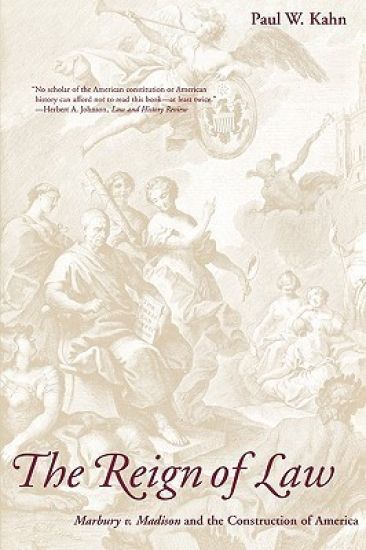
The Reign of Law

The Reign of Law

Paul W. Kahn

Yale University Press
2002
pokkari
"A brilliantly innovative and provocative work of pathfinding dimensions."—Robert M. Ireland, Journal of the Early Republic "No scholar of the American constitution or American history can afford not to read this book—at least twice."—Herbert A. Johnson, Law and History Review "Kahn is clearly a scholar of great intelligence and creativity."—Scott D. Gerber, Journal of American History In this ground-breaking book, Kahn uses modern cultural theory to investigate America’s most profound political myth: the belief that the rule of law is rule by the people. Kahn explores the elements of the myth, the rhetoric of law that sustains the myth, and the world of meaning the myth creates. He shows us that law must be central to religious, anthropological, and philosophical studies of American life.
Origins of Order

Origins of Order

Paul W. Kahn

Yale University Press
2020
sidottu
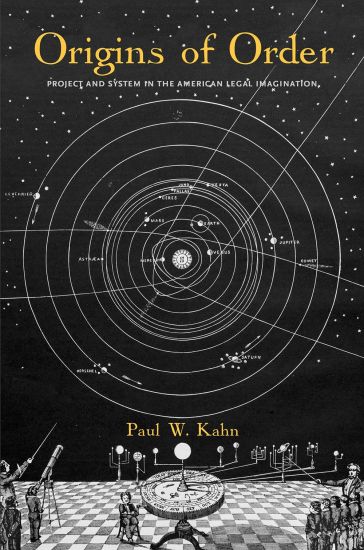
An examination of how two fundamental concepts of order influence our ideas about sovereignty, citizenship, law, and history Western accounts of natural and political order have deployed two basic ideas: project and system. In a project, order is produced by the intentional act of a subject; in a system, order is immanent in the world. In the former, order is made; in the latter, discovered. Paul W. Kahn shows how project and system have long been at work in our theological and philosophical tradition. Against this background, Kahn explains the development of the modern legal imagination in the nineteenth century as a movement from project to system. Americans began the century imagining the constitutional order as their common project: a deliberate construction of We the People. They ended the century imagining that order is continuous with the common law: an immanent development of the principles of civilization. This imaginative shift affected ideas of legal text, sovereignty, citizenship, interpretation, history, and science.
Democracy in Our America

Democracy in Our America

Paul W. Kahn

YALE UNIVERSITY PRESS
2023
sidottu
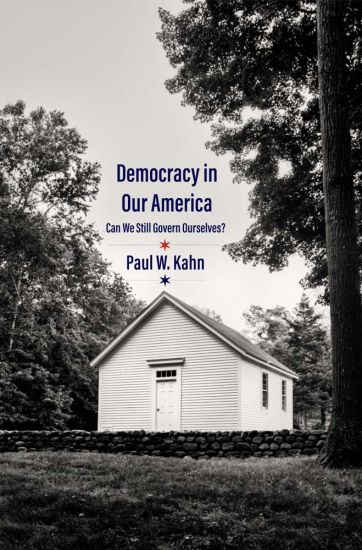
One of America’s most distinguished political theorists examines what happens when national politics enters a small New England town After the election of 2016 and, even more urgently, after the election of 2020, many citizens looked at the economic and cultural divisions that were causing deep disruptions in American politics and asked, “What is happening to us?” Paul W. Kahn explores these fundamental changes as they show themselves in a small New England town—his home of twenty-five years, Killingworth, Connecticut. His inquiry grounds a democratic theory that puts volunteering, not voting, at its center. Absent active participation, citizens lose the capacity for judgment that comes from working with others to solve real problems. Volunteering, however, is under existential threat today. Changes in civil society, commerce, employment, and public opinion formation have isolated families from each other and from their communities. Even middle-class families live under financial stress, uncertain of their children’s future, and without the support of civil society. Local media has disappeared. Residents do not have the time, information, or interest to volunteer. Under these conditions, national polarization enters local politics, which becomes yet another site for national conflict. To save our democracy, Kahn concludes, we need to find ways of matching opportunities for participation to the ways we live our lives today.
Origins of Order

Origins of Order

Paul W. Kahn

Yale University Press
2021
pokkari
An examination of how two fundamental concepts of order influence our ideas about sovereignty, citizenship, law, and history Western accounts of natural and political order have deployed two basic ideas: project and system. In a project, order is produced by the intentional act of a subject; in a system, order is immanent in the world. In the former, order is made; in the latter, discovered. Paul W. Kahn shows how project and system have long been at work in our theological and philosophical tradition. Against this background, Kahn explains the development of the modern legal imagination in the nineteenth century as a movement from project to system. Americans began the century imagining the constitutional order as their common project: a deliberate construction of We the People. They ended the century imagining that order is continuous with the common law: an immanent development of the principles of civilization. This imaginative shift affected ideas of legal text, sovereignty, citizenship, interpretation, history, and science.
Sacred Violence

Sacred Violence

Paul W. Kahn

The University of Michigan Press
2008
nidottu
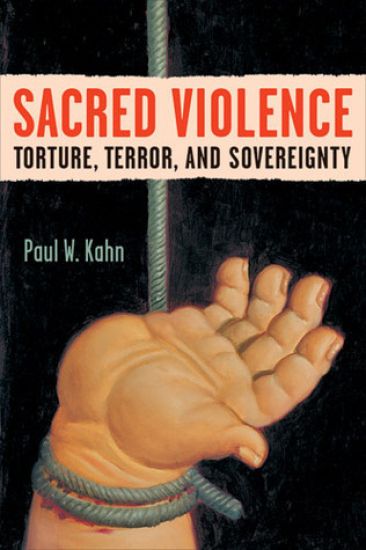
In Sacred Violence, the distinguished political and legal theorist Paul W. Kahn investigates the reasons for the resort to violence characteristic of premodern states. In a startling argument, he contends that law will never offer an adequate account of political violence. Instead, we must turn to political theology, which reveals that torture and terror are, essentially, forms of sacrifice. Kahn forces us to acknowledge what we don't want to see: that we remain deeply committed to a violent politics beyond law.Paul W. Kahn is Robert W. Winner Professor of Law and the Humanities at Yale Law School and Director of the Orville H. Schell, Jr. Center for International Human Rights.Cover Illustration: "Abu Ghraib 67, 2005" by Fernando Botero. Courtesy of the artist and the American University Museum.
Sacred Violence

Sacred Violence

Paul W. Kahn

The University of Michigan Press
2008
sidottu
In Sacred Violence, the distinguished political and legal theorist Paul W. Kahn investigates the reasons for the resort to violence characteristic of premodern states. In a startling argument, he contends that law will never offer an adequate account of political violence. Instead, we must turn to political theology, which reveals that torture and terror are, essentially, forms of sacrifice. Kahn forces us to acknowledge what we don't want to see: that we remain deeply committed to a violent politics beyond law.Paul W. Kahn is Robert W. Winner Professor of Law and the Humanities at Yale Law School and Director of the Orville H. Schell, Jr. Center for International Human Rights.Cover Illustration: "Abu Ghraib 67, 2005" by Fernando Botero. Courtesy of the artist and the American University Museum.
Out of Eden

Out of Eden

Paul W. Kahn

Princeton University Press
2006
sidottu
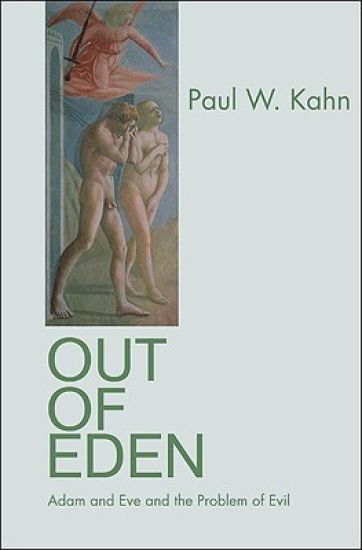
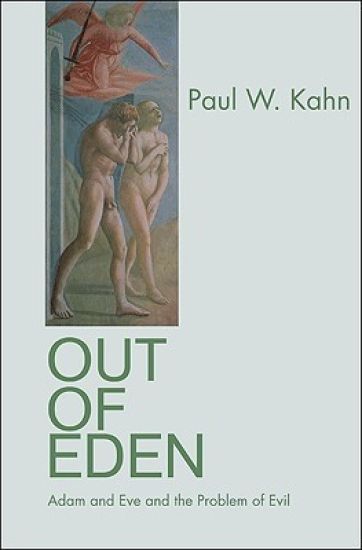
In Out of Eden, Paul W. Kahn offers a philosophical meditation on the problem of evil. He uses the Genesis story of the Fall as the starting point for a profound articulation of the human condition. Kahn shows us that evil expresses the rage of a subject who knows both that he is an image of an infinite God and that he must die. Kahn's interpretation of Genesis leads him to inquiries into a variety of modern forms of evil, including slavery, torture, and genocide. Kahn takes issue with Hannah Arendt's theory of the banality of evil, arguing that her view is an instance of the modern world's lost capacity to speak of evil. Psychological, social, and political accounts do not explain evil as much as explain it away. Focusing on the existential roots of evil rather than on the occasions for its appearance, Kahn argues that evil originates in man's flight from death. He urges us to see that the opposite of evil is not good, but love: while evil would master death, love would transcend it. Offering a unique perspective that combines political and cultural theory, law, and philosophy, Kahn here continues his project of advancing a political theology of modernity.
Putting Liberalism in Its Place

Putting Liberalism in Its Place

Paul W. Kahn

Princeton University Press
2008
pokkari
In this wide-ranging interdisciplinary work, Paul W. Kahn argues that political order is founded not on contract but on sacrifice. Because liberalism is blind to sacrifice, it is unable to explain how the modern state has brought us to both the rule of law and the edge of nuclear annihilation. We can understand this modern condition only by recognizing that any political community, even a liberal one, is bound together by faith, love, and identity. Putting Liberalism in Its Place draws on philosophy, cultural theory, American constitutional law, religious and literary studies, and political psychology to advance political theory. It makes original contributions in all these fields. Not since Charles Taylor's The Sources of the Self has there been such an ambitious and sweeping examination of the deep structure of the modern conception of the self. Kahn shows that only when we move beyond liberalism's categories of reason and interest to a Judeo-Christian concept of love can we comprehend the modern self. Love is the foundation of a world of objective meaning, one form of which is the political community. Arguing from these insights, Kahn offers a new reading of the liberalism/communitarian debate, a genealogy of American liberalism, an exploration of the romantic and the pornographic, a new theory of the will, and a refoundation of political theory on the possibility of sacrifice. Approaching politics from the perspective of sacrifice allows us to understand the character of twentieth-century politics, which combined progress in the rule of law with massive slaughter for the state. Equally important, this work speaks to the most important political conflicts in the world today. It explains why American response to September 11 has taken the form of war, and why, for the most part, Europeans have been reluctant to follow the Americans in their pursuit of a violent, sacrificial politics. Kahn shows us that the United States has maintained a vibrant politics of modernity, while Europe is moving into a postmodern form of the political that has turned away from the idea of sacrifice. Together with its companion volume, Out of Eden, Putting Liberalism in Its Place finally answers Clifford Geertz's call for a political theology of modernity.
Out of Eden

Out of Eden

Paul W. Kahn

Princeton University Press
2010
pokkari
In Out of Eden, Paul W. Kahn offers a philosophical meditation on the problem of evil. He uses the Genesis story of the Fall as the starting point for a profound articulation of the human condition. Kahn shows us that evil expresses the rage of a subject who knows both that he is an image of an infinite God and that he must die. Kahn's interpretation of Genesis leads him to inquiries into a variety of modern forms of evil, including slavery, torture, and genocide. Kahn takes issue with Hannah Arendt's theory of the banality of evil, arguing that her view is an instance of the modern world's lost capacity to speak of evil. Psychological, social, and political accounts do not explain evil as much as explain it away. Focusing on the existential roots of evil rather than on the occasions for its appearance, Kahn argues that evil originates in man's flight from death. He urges us to see that the opposite of evil is not good, but love: while evil would master death, love would transcend it. Offering a unique perspective that combines political and cultural theory, law, and philosophy, Kahn here continues his project of advancing a political theology of modernity.
Making the Case

Making the Case

Paul W. Kahn

Yale University Press
2016
sidottu
Writing in the tradition of Karl Llewellyn’s classic The Bramble Bush, Paul Kahn speaks in this book simultaneously to students and scholars. Drawing on thirty years of teaching experience, Kahn introduces students to the deep, narrative structure of the judicial opinion. Learning to read the opinion, the student learns the nature of legal argument. Thus Kahn’s exposition of the opinion simultaneously offers a theory of legal meaning that will be of great interest to scholars of law, humanities, and the social sciences. At the center of Kahn’s approach are ideas of narrative, persuasion, and self-government. His sweeping account of interpretation in law offers innovative views of the nature of authorship, the development and decline of doctrine, and the construction of facts.
Testimony

Testimony

Paul W Kahn

Wipf Stock Publishers
2021
pokkari
On her seventy-fifth birthday, the author's mother confessed to an affair more than three decades past. His father's response was unforgiving. Her need to confess met his limitless rage. She acted out of love; he sought revenge. Their battle consumed everything and everyone around them. In the middle of this struggle, she was diagnosed with cancer. Two years later, she died. Testimony is a son's memoir of this struggle. Paul Kahn finds here a story of the twentieth century, beginning with poverty in the Depression and immigration from Hitler's Germany. He follows his father's experience of the war and his return with PTSD. He traces his parents' movement through the turbulent 60s. More than a study of twentieth-century culture, Testimony is a philosophical inquiry into the possibility of faith in a secular age. History, philosophy, and theology flow together as Kahn finds in his parents' lives the resources for a series of essays on the nature of truth, memory, death, and faith. Testimony is most of all a meditation on love in a time in which the very possibility of faith is constantly put to the test.
Testimony

Testimony

Paul W Kahn

Wipf Stock Publishers
2021
sidottu
On her seventy-fifth birthday, the author's mother confessed to an affair more than three decades past. His father's response was unforgiving. Her need to confess met his limitless rage. She acted out of love; he sought revenge. Their battle consumed everything and everyone around them. In the middle of this struggle, she was diagnosed with cancer. Two years later, she died.Testimony is a son's memoir of this struggle. Paul Kahn finds here a story of the twentieth century, beginning with poverty in the Depression and immigration from Hitler's Germany. He follows his father's experience of the war and his return with PTSD. He traces his parents' movement through the turbulent 60s. More than a study of twentieth-century culture, Testimony is a philosophical inquiry into the possibility of faith in a secular age. History, philosophy, and theology flow together as Kahn finds in his parents' lives the resources for a series of essays on the nature of truth, memory, death, and faith. Testimony is most of all a meditation on love in a time in which the very possibility of faith is constantly put to the test.
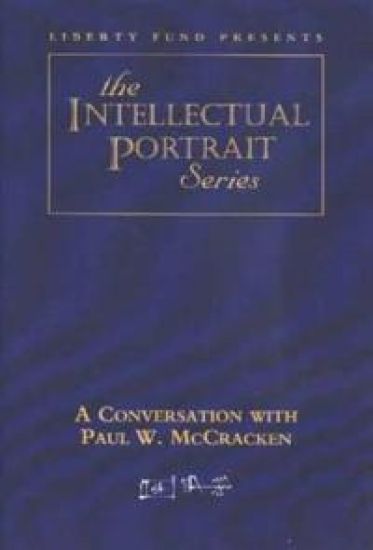
Conversation with Paul W McCracken DVD
Paul McCracken's influence on how we think about economic policy has reached from the academy, to the popular press, to the highest reaches of government. He is the Edmund Ezra Day Distinguished University Professor of Business Administration at the University of Michigan, where he has been a member of the faculty since 1948. Approximate running time: 61 minutes.