What does it mean to be British? It is now recognized that being British is not innate, static or permanent, but that national identities within Britain are constantly constructed and reconstructed. Britishness since 1870 examines this definition and redefinition of the British national identity since the 1870s. Paul Ward argues that British national identity is a resilient force, and looks at how Britishness has adapted to changing circumstances.Taking a thematic approach, Britishness since 1870 examines the forces that have contributed to a sense of Britishness, and considers how Britishness has been mediated by other identities such as class, gender, region, ethnicity and the sense of belonging to England, Scotland, Wales and Ireland.
What does it mean to be British? It is now recognized that being British is not innate, static or permanent, but that national identities within Britain are constantly constructed and reconstructed. Britishness since 1870 examines this definition and redefinition of the British national identity since the 1870s. Paul Ward argues that British national identity is a resilient force, and looks at how Britishness has adapted to changing circumstances.Taking a thematic approach, Britishness since 1870 examines the forces that have contributed to a sense of Britishness, and considers how Britishness has been mediated by other identities such as class, gender, region, ethnicity and the sense of belonging to England, Scotland, Wales and Ireland.
This volume analyzes the meaning of the term ‘sovereignty’ in early twentieth century thought by tracing the historical roots of the doctrine and surveying the origin of it back to feudal times.
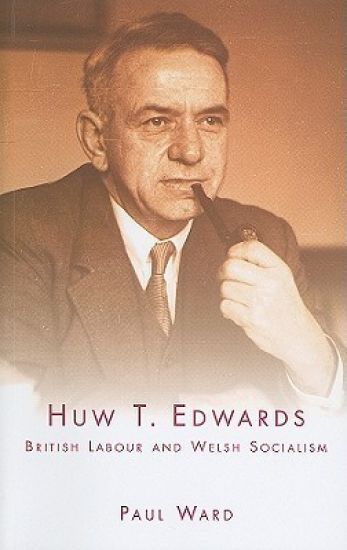
This book is the first biography of Huw T. Edwards (1929 - 1970), a key figure in the Welsh labour movement, who was known in the 1950s as the 'unofficial Prime Minister of Wales'. He was of working-class origin, a Welsh speaker and trade unionist involved in a wide range of activities associated with Welsh culture. He represented Wales to the BBC, chaired the Welsh Tourist Board, and was president of the Welsh Language Society.
Conscious leadership is a journey, not a destination - and it starts with the simple framework of practices found in this book. Paul Ward draws on his coaching, consulting, and leadership experience along with his academic studies and the writings of experts in the emerging fields of conscious leadership and conscious business to illustrate the real-life application of conscious leadership practices. Conscious leaders, he explains, want to make the world a better place to live and work. They constantly ask themselves three questions: What am I noticing? What are my intentions about what I am noticing? What responsible actions can I take in response to what I am noticing? The themes of noticing what is going on, setting intention, and acting responsibly provide a framework for learning about the practices for leading consciously. Using all the conscious leadership practices provides a process of transformation on your inner journey to becoming a more conscious leader. This book is for leaders - and even if you dont consider yourself to be a leader, you can apply the practices to living and leading consciously. The practices are simple, but they are not easy: It will take dedication, a leap of faith, and daily practice to navigate The Inner Journey to Conscious Leadership.
Conscious leadership is a journey, not a destination - and it starts with the simple framework of practices found in this book. Paul Ward draws on his coaching, consulting, and leadership experience along with his academic studies and the writings of experts in the emerging fields of conscious leadership and conscious business to illustrate the real-life application of conscious leadership practices. Conscious leaders, he explains, want to make the world a better place to live and work. They constantly ask themselves three questions: What am I noticing? What are my intentions about what I am noticing? What responsible actions can I take in response to what I am noticing? The themes of noticing what is going on, setting intention, and acting responsibly provide a framework for learning about the practices for leading consciously. Using all the conscious leadership practices provides a process of transformation on your inner journey to becoming a more conscious leader. This book is for leaders - and even if you dont consider yourself to be a leader, you can apply the practices to living and leading consciously. The practices are simple, but they are not easy: It will take dedication, a leap of faith, and daily practice to navigate The Inner Journey to Conscious Leadership.
In "Dancing Bears", the author takes us on a profound exploration of life's most pressing philosophical questions: What drives human behaviour? How do love, fear and societal norms shape our actions? With incisive reflections on violence, divorce, theft and racial abuse, this book delves deep into the evolutionary roots that dictate our lives.Through the metaphor of a "giant jigsaw puzzle", the author illustrates the intricate complexity of human existence. Each piece of the puzzle represents a different facet of life, and only by fitting them together can we uncover the blueprint for a harmonious society.The author's insights guide us towards understanding our motivations and making better decisions. The author recounts a harrowing battle against Satan and malevolent spirits. When his beloved dogs, Suzy and Poppy, became possessed, Paul documented their eerie behaviours and sought spiritual means to protect them. After the difficult decision to put the dogs to sleep, the spirits targeted him directly. Through relentless prayer and the discovery of love as a powerful weapon, the author fought back, facing both supernatural threats and living devil worshippers. This gripping narrative showcases his resilience and determination to combat evil forces.
Examines the relationship between the British left and national identity in socialism's formative years. It is generally assumed that the language of patriotism and national identity belongs to the political right, but the emergence of socialism in the 1880s shows clearly that the left also drew on such ideas in its formative years to legitimate a particular form of socialism, one presented as a restoration of an English past lost to industrial capitalism. The First World War dealt a severe blow to this radical patriotism: though the anti-war left continued to use radical patriotic language in the early years, the war degraded patriotism generally, while the Russian Revolution gave internationalism a new focus, and also threatened the dominant concept of British socialism. Moderate Labour sought to prove their fitness to govern, and concentrated on the "national interest" rather than oppositional Englishness, while the left of the movement looked to Soviet Russia rather than the English past for models for a future socialist society. Paul Ward teaches at the School of Music, Humanities and Media, University of Huddersfield.
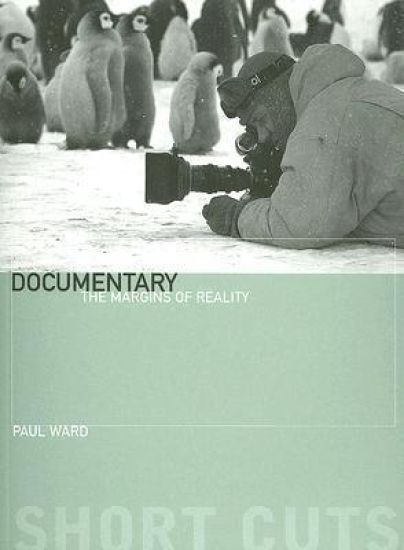
In using case studies such as Touching the Void (2003) and the films of Nick Broomfield, this timely introduction to the growing field of documentary explores the definition and understanding of the form, as well as the relationship between documentary and drama, specifically the notion of reconstruction and reenactment. Paul Ward also discusses animated documentaries, the fertile genre of comedy, and feature-length contemporary works that have achieved widespread cinematic release.
David Smith was raised in an orphanage from the time he was a baby until his late teens. Now, as an adult, he decided to have his d.n.a. checked in order to gain some knowledge of his background. He was not expecting the results that showed up while he was on vacation. It was during his vacation that he accidentally found out he may have the ability to access places ordinary people do not have knowledge of. Upon his return from vacation he learns that someone is, to the point of violence, very interested in him. His friends have discovered who it is that is after him, but not why. When Dave tells his friends about his escapades while on vacation they want to test his abilities for themselves. His friends then talk him into giving them a demonstration, which Dave did not find to be a positive experience. As the negative experiences pile up his friends gather and stand with him, becoming the family he had always hoped for.
Derived from the renowned multi-volume International Encyclopaedia of Laws, this concise exposition and analysis of the essential elements of law with regard to family relations, marital property, and succession to estates in Ireland covers the legal rules and customs pertaining to the intertwined civic status of persons, the family, and property. After an informative general introduction, the book proceeds to an in-depth discussion of the sources and instruments of family and succession law, the authorities that adjudicate and administer the laws, and issues surrounding the person as a legal entity and the legal disposition of property among family members. Such matters as nationality, domicile, and residence; marriage, divorce, and cohabitation; adoption and guardianship; succession and inter vivos arrangements; and the acquisition and administration of estates are all treated to a degree of depth that will prove useful in nearly any situation likely to arise in legal practice. The book is primarily designed to assist lawyers who find themselves having to apply rules of international private law or otherwise handling cases connected with Ireland. It will also be of great value to students and practitioners as a quick guide and easy-to-use practical resource in the field, and especially to academicians and researchers engaged in comparative studies by providing the necessary, basic material of family and succession law.
This is an innovative analysis of the agrarian world and growth of government in early modern Germany through the medium of pre-industrial society's most basic material resource, wood. Paul Warde offers a regional study of south-west Germany from the late fifteenth to the early eighteenth century, demonstrating the stability of the economy and social structure through periods of demographic pressure, warfare and epidemic. He casts light on the nature of 'wood shortages' and societal response to environmental challenge, and shows how institutional responses largely based on preventing local conflict were poor at adapting to optimise the management of resources. Warde further argues for the inadequacy of models that oppose the 'market' to a 'natural economy' in understanding economic behaviour. This is a major contribution to debates about the sustainability of peasant society in early modern Europe, and to the growth of ecological approaches to history and historical geography.
This is an innovative analysis of the agrarian world and growth of government in early modern Germany through the medium of pre-industrial society's most basic material resource, wood. Paul Warde offers a regional study of south-west Germany from the late fifteenth to the early eighteenth century, demonstrating the stability of the economy and social structure through periods of demographic pressure, warfare and epidemic. He casts light on the nature of 'wood shortages' and societal response to environmental challenge, and shows how institutional responses largely based on preventing local conflict were poor at adapting to optimise the management of resources. Warde further argues for the inadequacy of models that oppose the 'market' to a 'natural economy' in understanding economic behaviour. This is a major contribution to debates about the sustainability of peasant society in early modern Europe, and to the growth of ecological approaches to history and historical geography.
The issue of sustainability, and the idea that economic growth and development might destroy its own foundations, is one of the defining political problems of our era. This groundbreaking study traces the emergence of this idea, and demonstrates how sustainability was closely linked to hopes for growth, and the destiny of expanding European states, from the sixteenth century. Weaving together aspirations for power, for economic development and agricultural improvement, and ideas about forestry, climate, the sciences of the soil and of life itself, this book sets out how new knowledge and metrics led people to imagine both new horizons for progress, but also the possibility of collapse. In the nineteenth century, anxieties about sustainability, often driven by science, proliferated in debates about contemporary and historical empires and the American frontier. The fear of progress undoing itself confronted society with finding ways to live with and manage nature.
The issue of sustainability, and the idea that economic growth and development might destroy its own foundations, is one of the defining political problems of our era. This groundbreaking study traces the emergence of this idea, and demonstrates how sustainability was closely linked to hopes for growth, and the destiny of expanding European states, from the sixteenth century. Weaving together aspirations for power, for economic development and agricultural improvement, and ideas about forestry, climate, the sciences of the soil and of life itself, this book sets out how new knowledge and metrics led people to imagine both new horizons for progress, but also the possibility of collapse. In the nineteenth century, anxieties about sustainability, often driven by science, proliferated in debates about contemporary and historical empires and the American frontier. The fear of progress undoing itself confronted society with finding ways to live with and manage nature.
An in-depth look at the history of the environment.Is it possible for the economy to grow without the environment being destroyed? Will our lifestyles impoverish the planet for our children and grandchildren? Is the world sick? Can it be healed? Less than a lifetime ago, these questions would have made no sense. This was not because our ancestors had no impact on nature—nor because they were unaware of the serious damage they had done. What people lacked was an idea: a way of imagining the web of interconnection and consequence of which the natural world is made. Without this notion, we didn't have a way to describe the scale and scope of human impact upon nature. This idea was "the environment." In this fascinating book, Paul Warde, Libby Robin, and Sverker Sörlin trace the emergence of the concept of the environment following World War II, a period characterized by both hope for a new global order and fear of humans' capacity for almost limitless destruction. It was at this moment that a new idea and a new narrative about the planet-wide impact of people's behavior emerged, closely allied to anxieties for the future. Now we had a vocabulary for talking about how we were changing nature: resource exhaustion and energy, biodiversity, pollution, and—eventually—climate change.With the rise of "the environment," the authors argue, came new expertise, making certain kinds of knowledge crucial to understanding the future of our planet. The untold history of how people came to conceive, to manage, and to dispute environmental crisis, The Environment is essential reading for anyone who wants to help protect the environment from the numerous threats it faces today.