Kirjojen hintavertailu. Mukana 11 627 067 kirjaa ja 12 kauppaa.

Kirjahaku

Etsi kirjoja tekijän nimen, kirjan nimen tai ISBN:n perusteella.

1000 tulosta hakusanalla Paula L. Moya

The Social Imperative

The Social Imperative

Paula L. Moya

Stanford University Press
2015
sidottu
In the context of the ongoing crisis in literary criticism, The Social Imperative reminds us that while literature will never by itself change the world, it remains a powerful tool and important actor in the ongoing struggle to imagine better ways to be human and free. Figuring the relationship between reader and text as a type of friendship, the book elaborates the social-psychological concept of schema to show that our multiple social contexts affect what we perceive and how we feel when we read. Championing and modeling a kind of close reading that attends to how literature reflects, promotes, and contests pervasive sociocultural ideas about race, ethnicity, gender, and sexuality, Paula M. L. Moya demonstrates the power of works of literature by writers such as Junot Diaz, Toni Morrison, and Helena Maria Viramontes to alter perceptions and reshape cultural imaginaries. Insofar as literary fiction is a unique form of engagement with weighty social problems, it matters not only which specific works of literature we read and teach, but also how we read them, and with whom. This is what constitutes the social imperative of literature.
The Social Imperative

The Social Imperative

Paula L. Moya

Stanford University Press
2015
pokkari
In the context of the ongoing crisis in literary criticism, The Social Imperative reminds us that while literature will never by itself change the world, it remains a powerful tool and important actor in the ongoing struggle to imagine better ways to be human and free. Figuring the relationship between reader and text as a type of friendship, the book elaborates the social-psychological concept of schema to show that our multiple social contexts affect what we perceive and how we feel when we read. Championing and modeling a kind of close reading that attends to how literature reflects, promotes, and contests pervasive sociocultural ideas about race, ethnicity, gender, and sexuality, Paula M. L. Moya demonstrates the power of works of literature by writers such as Junot Diaz, Toni Morrison, and Helena Maria Viramontes to alter perceptions and reshape cultural imaginaries. Insofar as literary fiction is a unique form of engagement with weighty social problems, it matters not only which specific works of literature we read and teach, but also how we read them, and with whom. This is what constitutes the social imperative of literature.
Learning from Experience

Learning from Experience

Paula M. L. Moya

University of California Press
2002
pokkari
In "Learning from Experience", Paula Moya offers an alternative to some influential philosophical assumptions about identity and experience in contemporary literary theory. Arguing that the texts and lived experiences of subordinated people are rich sources of insight about our society, Moya presents a nuanced universalist justification for identity-based work in ethnic studies. This strikingly original book provides eloquent analyses of such postmodernist feminists as Judith Butler, Donna Haraway, Norma Alarcon, and Chela Sandoval, and counters the assimilationist proposals of minority neoconservatives such as Shelby Steele and Richard Rodriguez. It advances realist proposals for multicultural education and offers an understanding of the interpretive power of Chicana feminists including Cherrie Moraga, Gloria Anzaldua, and Helena Maria Viramontes. Learning from Experience enlarges our concept of identity and offers new ways to situate aspects of race, gender, class, and sexual orientation in discursive and sociopolitical contexts.
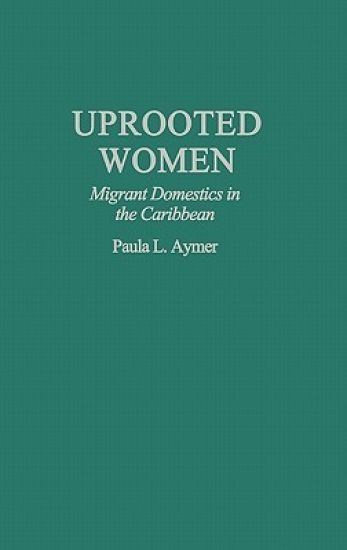
Uprooted Women

Uprooted Women

Paula L. Aymer

Praeger Publishers Inc
1997
sidottu
"Traces labor migration of women from Eastern Caribbean to oil-producing countries such as Venezuela, Trinidad, Curaðcao, and especially Aruba. Discusses women's participation in the labor force, gender relations, domestic service, the social and economic position of the migrants, and motherhood. Argues that US investments are an important factor in the migration of Caribbean women"--Handbook of Latin American Studies, v. 57.http://www.loc.gov/hlas/
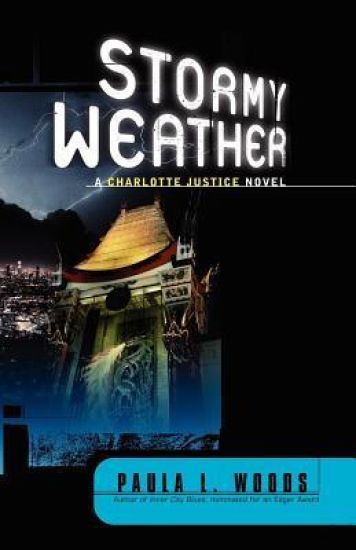
Stormy Weather

Stormy Weather

Paula L Woods

W. W. Norton Company
2001
pokkari
Los Angeles is in the midst of rebuilding in the aftermath of the Rodney King riots when Detective Charlotte Justice of the LAPD's elite Robbery-Homicide division takes on a high-profile case. The victim is pioneering black film director Maynard Duncan, a show business contemporary of her father. Charlotte, fueled by a desire to see the job done right and out of respect for a great man's memory, plunges badge-deep into the murky relationships between the director, his family, caregivers, business associates, and an elusive young man who seems to hold the key to unlocking the crime. Even when storm clouds gather, Detective Justice won't give upputting her career, her personal relationships, even her own life on the line.
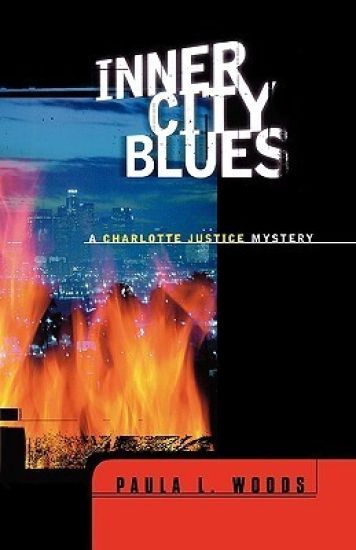
Inner City Blues

Inner City Blues

Paula L Woods

W. W. Norton Company
2002
pokkari
Meet Detective Charlotte Justice, a black woman in the very white, very male, and sometimes very racist Los Angeles Police Department. The time is 48 hours into the epochal L.A. riots and she and her fellow officers are exhausted. She saves the curfew-breaking black doctor Lance Mitchell from a potentially lethal beating from some white officers--only to discover nearby the body of one-time radical Cinque Lewis, a thug who years before had murdered her husband and young daughter. Was it a random shooting or was Mitchell responsible? And what had brought Lewis back to a city he'd long since fled?Charlotte's quest for the truth behind Cinque's death will set her at odds with the LAPD hierarchy, plunge her into the intricacies of everything from L.A.'s gang-banging politics to its black blue-bloods, and lead her into deep emotional waters with Mitchell's partner (and her old flame), Dr. Aubrey Scott.In Charlotte Justice, Paula L. Woods has created a tough, tart, but also vulnerable heroine sure to draw comparisons to such classic figures as Easy Rawlins and Kinsey Milhone, but a true original as well.Winner of the Macavity Award for Best First Mystery Novel from Mystery Readers International.
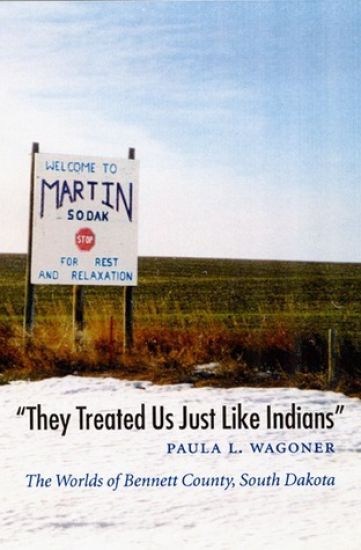
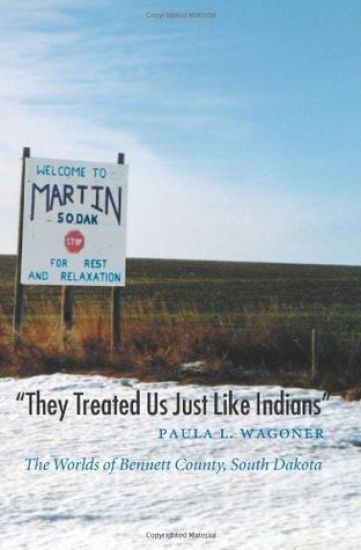
"They Treated Us Just Like Indians"

"They Treated Us Just Like Indians"

Paula L. Wagoner

University of Nebraska Press
2002
sidottu
On a typical day in Bennett County, South Dakota, farmers and ranchers work their fields and tend animals, merchants order inventory and stock shelves, teachers plan and teach classes, health workers aid the infirm in the county hospital or clinic, and women make quilts and heirlooms for their families or the county fair. Life is usually unhurried, with time for chatting with neighbors and catching up on gossip. But Bennett County is far from typical. Nearly a century ago the county was carved out of Pine Ridge Reservation and opened to white settlers. Today Bennett County sits awkwardly between the Pine Ridge and Rosebud Sioux Reservations, with nearly one-third of its land classified as "Indian Country" and the rest considered by many Pine Ridge Lakotas to still belong to the reservation. The county is home to a dynamic population, divided by the residents into three groups—"whites," "fullbloods," and "mixedbloods." Tensions between the three groups lurk admid the quiet harmony of Bennett County's everyday rural life and emerge in moments of community crisis.In a moving account, anthropologist Paula L. Wagoner tells the story of Bennett County, using snapshots of community events and crises, past and present, to reveal the complexity of race relations and identities there. A homecoming weekend at Bennett County High School becomes a flashpoint for controversy because of the differences of meaning ascribed by the county's three identity groups to the school's team name—the Warriors. At another time, the shooting of a Lakota man by a local non-Indian rancher and the volatile wake that follows demonstrate the impulse to racialize disputes that lies just beneath the surface of everyday life.Yet such very real problems of identity have not completely overwhelmed Bennett County. Wagoner also shows that despite their differences, residents have managed to find common ground as a region of "diverse insiders" who share an economic dependency on federal funds, distrust outsiders, and, above all, deeply love their land.
"They Treated Us Just Like Indians"

"They Treated Us Just Like Indians"

Paula L. Wagoner

University of Nebraska Press
2002
pokkari
On a typical day in Bennett County, South Dakota, farmers and ranchers work their fields and tend animals, merchants order inventory and stock shelves, teachers plan and teach classes, health workers aid the infirm in the county hospital or clinic, and women make quilts and heirlooms for their families or the county fair. Life is usually unhurried, with time for chatting with neighbors and catching up on gossip. But Bennett County is far from typical. Nearly a century ago the county was carved out of Pine Ridge Reservation and opened to white settlers. Today Bennett County sits awkwardly between the Pine Ridge and Rosebud Sioux Reservations, with nearly one-third of its land classified as "Indian Country" and the rest considered by many Pine Ridge Lakotas to still belong to the reservation. The county is home to a dynamic population, divided by the residents into three groups—"whites," "fullbloods," and "mixedbloods." Tensions between the three groups lurk admid the quiet harmony of Bennett County's everyday rural life and emerge in moments of community crisis.In a moving account, anthropologist Paula L. Wagoner tells the story of Bennett County, using snapshots of community events and crises, past and present, to reveal the complexity of race relations and identities there. A homecoming weekend at Bennett County High School becomes a flashpoint for controversy because of the differences of meaning ascribed by the county's three identity groups to the school's team name—the Warriors. At another time, the shooting of a Lakota man by a local non-Indian rancher and the volatile wake that follows demonstrate the impulse to racialize disputes that lies just beneath the surface of everyday life.Yet such very real problems of identity have not completely overwhelmed Bennett County. Wagoner also shows that despite their differences, residents have managed to find common ground as a region of "diverse insiders" who share an economic dependency on federal funds, distrust outsiders, and, above all, deeply love their land.
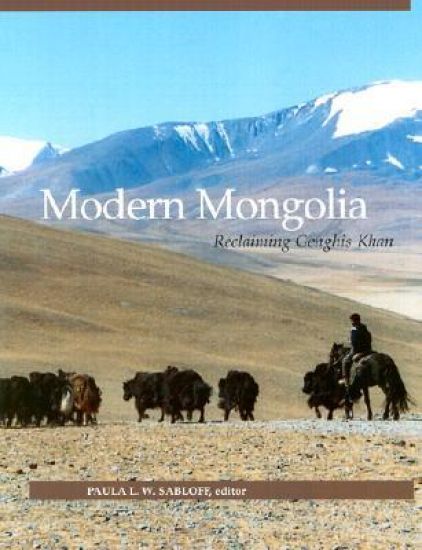
Modern Mongolia – Reclaiming Genghis Khan

Modern Mongolia – Reclaiming Genghis Khan

Paula L.w. Sabloff

University of Pennsylvania Press
2001
nidottu
Mongolia, a country that evokes romantic curiosity on the part of American readers, has emerged from its former Soviet cocoon. It has achieved independence, democracy, and a twenty-first-century market economy. This book provides factual information about Mongolia and new ways of looking at a historical figure, Genghis Khan, whose ideals of nationhood and democratic principles are in practice now. Modern Mongolia is unique in providing multiple perspectives--Mongolian and American, scholarly and less formal--about the country's developments in a readable style, richly illustrated with 120 full-color contemporary and archival photographs, both scenic and artifactual. The first chapter provides an overview of Mongolian geography and history to the twentieth century and the author's personal experience as a teenager during the 1989-90 democratic revolution. Chapter 2, by a Mongolian historian, recounts the exciting changes from Manchu Dynasty feudal society and autonomous theocracy to Communist nationhood and, finally, full independence as a democratic nation. The third chapter, by a cultural historian, describes the effects of historical changes on the daily life of Mongolian nomads-their clothing, family dwellings (gers), and furnishings. Chapter 4, by an American political anthropologist, shows the connection between modern Mongolians' devotion to democracy and the political ideas of Genghis Khan. Readers of all ages seeking an accessible and picturesque presentation of Mongolian history and society will find Modern Mongolia a fascinating introduction.
Evangelical Awakenings in the Anglophone Caribbean
This book examines the evangelical Christian worship focusing primarily in the island-state of Grenada. The study is based upon the author’s detailed study of Pentecostal communities in that island-state as well as her own background in Barbados. The study traces the development of Pentecostal religious communities from Eighteenth- and Nineteenth-Century Wesleyan Methodist movement.