Kirjojen hintavertailu. Mukana 11 244 527 kirjaa ja 12 kauppaa.

Kirjahaku

Etsi kirjoja tekijän nimen, kirjan nimen tai ISBN:n perusteella.

1000 tulosta hakusanalla Paula Maurutto

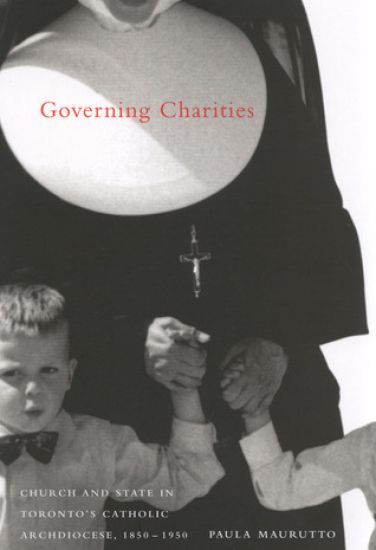
Governing Charities

Governing Charities

Paula Maurutto

McGill-Queen's University Press
2003
sidottu
"Governing Charities" challenges received accounts of the welfare state by highlighting the complex web of relationships that characterize the delivery of social services. In tracing the connections between the Catholic Church in Toronto and provincial and municipal governments, Paula Maurutto takes issue with the view that the welfare state marks a modern, secular, and scientific progression from a pre-1920 'Golden Age' when churches dominated the voluntary sector. Maurutto details how welfare bureaucracies, as they began to expand during the 1930s and 1940s, did so by building stronger links with private voluntary agencies, not by disabling them. Far from being shunted aside, voluntary organizations such as Catholic charities became increasingly entrenched within the expanding welfare state.Standardized reports, state inspections, financial audits, and social work case records, to name only a few, were emblematic of the social scientific impulse that permeated the operations of Catholic charities and enabled them to more systematically police, discipline, and regulate the lives of relief recipients and those designated as moral and social 'deviants'. Notably, they allowed church authorities and the state to exercise greater control and supervision over the internal operations and procedures of charities, in effect enabling these institutions to govern the daily affairs of the voluntary sector. Maurutto highlights the historical role of Catholic voluntary organizations in the policing of citizens, the regulation of juvenile delinquents, and the maintenance of national security. She advances a broader understanding of law enforcement and policing by examining the interplay between public and private institutions.
Governing Charities

Governing Charities

Paula Maurutto

McGill-Queen's University Press
2004
nidottu
Maurutto details how welfare bureaucracies, as they began to expand during the 1930s and 1940s, did so by building stronger links with private voluntary agencies, not by disabling them. Far from being shunted aside, voluntary organizations such as Catholic charities became increasingly entrenched within the expanding welfare state. Standardized reports, state inspections, financial audits, and social work case records, to name only a few, were emblematic of the social scientific impulse that permeated the operations of Catholic charities and enabled them to more systematically police, discipline, and regulate the lives of relief recipients and those designated as moral and social "deviants." Notably, they allowed church authorities and the state to exercise greater control and supervision over the internal operations and procedures of charities, in effect enabling these institutions to govern the daily affairs of the voluntary sector.
Paula

Paula

Isabel Allende

Harpercollins Publishers
2005
pokkari
In December 1991, Allendeâ??s daughter Paula, aged 26, fell gravely ill and sank into a coma. This book started as a letter to Paula written during the hours spent at her bedside, and became a personal memoir and a testament to the ties that bind families â?? a brave, enlightening, inspiring true story.
Paula

Paula

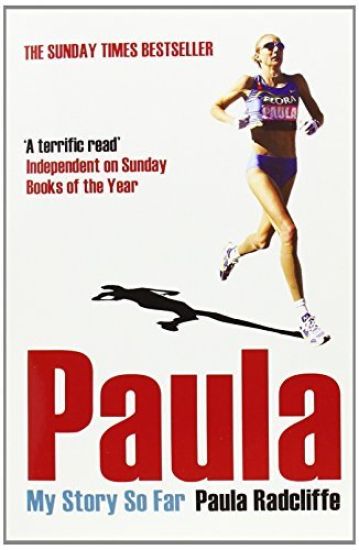
Paula Radcliffe

Simon Schuster
2005
pokkari
With two new chapters on Paula's heart-stopping victories in the New York and London marathons, this is the autobiography of one of the greatest British athletes of modern times -- including the full story of her Greek tragedy in Athens.
Paula

Paula

GHOSTWRITY
2022
pokkari
Ha olvidado a adir el inicio de su menstruaci n?Cuando Paula M ndez ley esa frase en la pantalla de su tel fono, trag saliva y sinti el sudor fr o bajar por su frente. A pesar detus temores, abri la aplicaci n y mir con atenci n el calendario, tratando de calcular cu ntos d as pasaron desde que debi llegarle elper odo.
Paula

Paula

Sandra Hoffmann

V Q Books
2020
nidottu
"Sandra Hoffmann is one of Germany's most exciting contemporary writers. [...] An incredibly dense, finely woven text that immediately grabs you and pulls you mercilessly in." Brigitte Woman. Sandra Hoffmann's "Paula" is a moving piece of autofiction about the writer's relationship to her grandmother, a devout Swabian Catholic who refused to reveal who fathered her child in 1946. Growing up in a family where silence reigns, Hoffmann asks: What kind of person, what kind of writer, does this environment produce?
Paula

Paula

Isabel Allende

Politikens Forlag
2023
pokkari
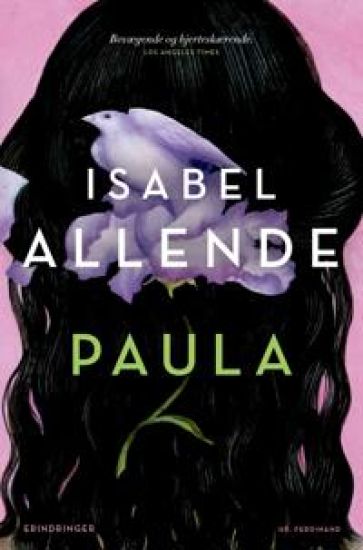
Isabel Allendes datter er midt i tyverne, da hun bliver ramt af alvorlig sygdom. Under de mange måneders indlæggelse på hospitalet sad Isabel Allende ved hendes side og nedskrev fortællingen om sit og familiens farverige og begivenhedsrige liv – i håbet om at Paula en dag ville vågne op fra sin koma. Det gjorde hun ikke. Paula er en bevægende beretning, fyldt med lykkelige stunder og sorgfyldte øjeblikke fra Allendeslægtens liv og den svære tid med datterens sygdom og død. Isabel Allende har det hele. New York Times En historie om moderkærlighed, som [Isabel Allende] skriver frem med fortvivlelse og lidenskab, fra det punkt, hvor hun må slippe og forvandle den. Politiken.
Paula

Paula

Isabel Allende

BLOOMSBURY PUBLISHING PLC
2026
nidottu
'Allende's best work to date' New York Times In December 1991, Isabel Allende’s daughter Paula fell into a coma. This book was written by her beside – a memoir, a family history and a letter from mother to daughter Isabel intended to give to Paula once she’d overcome her illness. Revisiting Allende’s childhood, her early career and marriage, and the turbulent political events of 1970s Chile, Paula is an extraordinary blend of memory and retrospective, past and present. A fascinating account of the breakdown of a country and an immensely moving description of parenthood, loss and grief, this is a wholly unique narrative from an exceptional writer. 'An emotionally charged, spellbinding memoir' Washington Post
Paula: A Memoir

Paula: A Memoir

Isabel Allende

Harpervia
2020
nidottu
"Beautiful and heartrending. . . . Memoir, autobiography, epicedium, perhaps even some fiction: they are all here, and they are all quite wonderful."--Los Angeles TimesIn this literary classic, New York Times bestselling author Isabel Allende recalls the story of her beloved daughter and her remarkable family's past.When her daughter, Paula, became gravely ill and fell into a coma, Isabel Allende began to write the story of her family for her unconscious child. Bizarre ancestors are introduced; delightful and bitter childhood memories are shared; amazing anecdotes of youthful years are relived, and the most intimate secrets are quietly passed along. Like Allende's first novel, The House of the Spirits, this powerful memoir is infused with the real, the magical, and the spiritual, creating a haunting, sad, and beautiful tale.
Paula Spencer

Paula Spencer

Roddy Doyle

Vintage
2007
pokkari
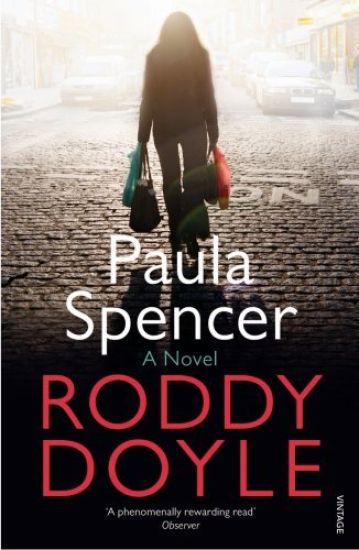
Ten years on from The Woman Who Walked into Doors, Booker Prize-winning author, Roddy Doyle, returns to one of his greatest characters, Paula Spencer. Paula Spencer is turning forty-eight, and hasnâ??t had a drink for four months and five days.
Paula Spencer

Paula Spencer

Roddy Doyle

PENGUIN BOOKS
2008
nidottu
Picking up nearly ten years after the tale, The Woman Who Walked into Doors, Dublin widow Paula begins her fifth month of sobriety while endeavoring to raise the two children who are still at home, an endeavor during which she struggles to make ends meet, attends parent-teacher conferences, and develops a taste for rock music. Reprint.
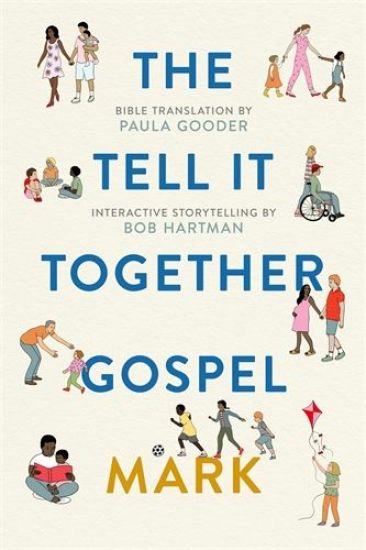
Tell All Bible: Mark (Translated by Paula Gooder)

Tell All Bible: Mark (Translated by Paula Gooder)

Paula Gooder; Bob Hartman

SPCK Publishing
2019
nidottu
The Tell-It-Together Gospel brings together a new translation of Mark's Gospel by renowned biblical scholar Paula Gooder and interactive storytelling tips from bestselling author Bob Hartman. Remaining faithful to the Bible text itself, Paula and Bob combine Mark's Gospel with fun and engaging actions to bring the text to life and make it memorable for all ages - even the very young. Clearly presented with easy-to-read text and accompanying directives for audience participation, this book is ideal for use in churches, children's groups, at home and in many other settings.
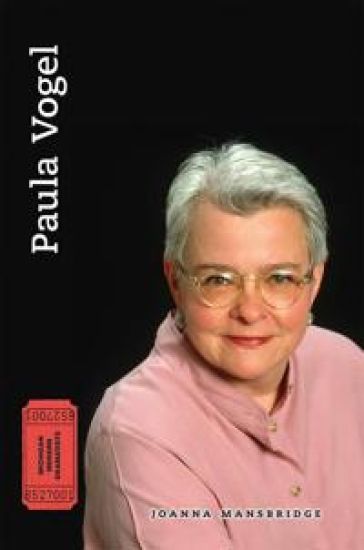
Paula Vogel

Paula Vogel

Joanna Mansbridge

The University of Michigan Press
2014
nidottu
Paula Vogel’s plays, including the Pulitzer–prizewinning How I Learned to Drive, initiate a conversation with contemporary culture, staging vexed issues like domestic violence, pornography, and AIDS. She does not write "about" these concerns, but instead examines how they have become framed as “issues­”–as sensationalized topics–focusing on the histories and discourses that have defined them and the bodies that bear their meanings. Mobilizing campy humor, keen insight, and nonlinear structure, her plays defamiliarize the identities and issues that have been fixed as "just the way things are." Vogel crafts collage-like playworlds that are comprised of fragments of history and culture, and that are simultaneously inclusive and alienating, familiar and strange, funny and disturbing. At the center of these playworlds are female characters negotiating with the images and discourses that circumscribe their lives and bodies. In this, the first book-length study of Vogel and her work, Joanna Mansbridge explores how Vogel’s plays speak back to the canon, responding to and rewriting works by William Shakespeare, Edward Albee, Sam Shepard, and David Mamet, rearranging their plots, revising their conflicts, and recasting their dramatis personae. The book examines the theories shaping the playwright and her plays, the production and reception of her work, and the aesthetic structure of each play, grounding the work in cultural materialist, feminist and queer theory, and theater and performance studies scholarship.
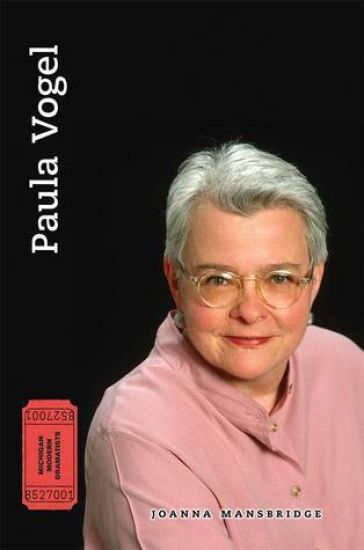
Paula Vogel

Paula Vogel

Joanna Mansbridge

The University of Michigan Press
2014
sidottu
Paula Vogel’s plays, including the Pulitzer–prizewinning How I Learned to Drive, initiate a conversation with contemporary culture, staging vexed issues like domestic violence, pornography, and AIDS. She does not write "about" these concerns, but instead examines how they have become framed as “issues­”–as sensationalized topics–focusing on the histories and discourses that have defined them and the bodies that bear their meanings. Mobilizing campy humor, keen insight, and nonlinear structure, her plays defamiliarize the identities and issues that have been fixed as "just the way things are." Vogel crafts collage-like playworlds that are comprised of fragments of history and culture, and that are simultaneously inclusive and alienating, familiar and strange, funny and disturbing. At the center of these playworlds are female characters negotiating with the images and discourses that circumscribe their lives and bodies. In this, the first book-length study of Vogel and her work, Joanna Mansbridge explores how Vogel’s plays speak back to the canon, responding to and rewriting works by William Shakespeare, Edward Albee, Sam Shepard, and David Mamet, rearranging their plots, revising their conflicts, and recasting their dramatis personae. The book examines the theories shaping the playwright and her plays, the production and reception of her work, and the aesthetic structure of each play, grounding the work in cultural materialist, feminist and queer theory, and theater and performance studies scholarship.
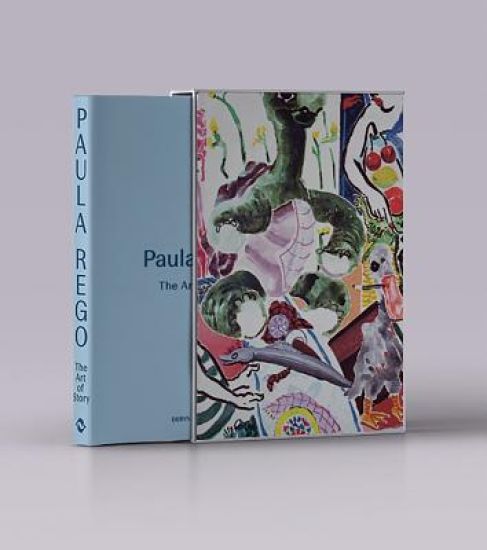
Paula Rego

Paula Rego

Deryn Rees-Jones; Marina Warner

Thames Hudson Ltd
2019
sidottu
Paula Rego is an artist of astonishing power with a unique and unforgettable aesthetic. Taking its cues from the artist, this fascinating study invites us to reflect on the complexities of storytelling on which Rego’s work draws, emphasizing both the stories the pictures tell, and how it is that they are told. Deryn Rees-Jones sets interpretations of the pictures in the context of Rego’s personal and artistic development across sixty years. We see how Rego’s art intersects with the work of both the literary and the visual, and come to understand her rich and textured layering of reference: her use of the Old Masters; fiction, fairy tales and poems; the folk traditions of Rego’s native Portugal; and her wider engagement with politics, feminism and more. The result is a highly original work that addresses urgent and topical questions of gender, subject and object, self and other.