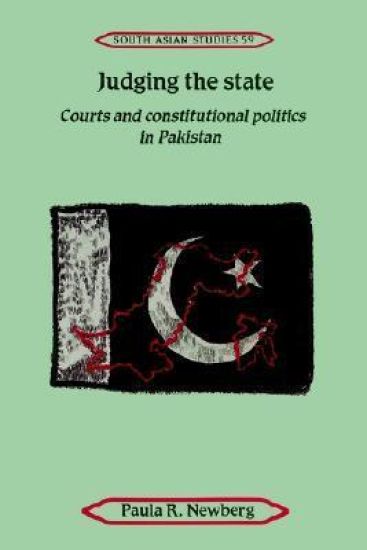
The political history of Pakistan is characterised by incomplete constitution-making, a process which has placed the burden of constitutional interpretation on state instruments ranging from the bureaucracy to the military to the judiciary. In a penetrating and original study of the relationship between state and civil society in Pakistan, Paula Newberg demonstrates how the courts have influenced constitutional development and the structure of the state. By examining judicial decisions, particularly those made at times of political crisis, she considers how tensions within the judiciary, and between courts and other state institutions, have affected the ways political society views itself, and explores the consequences of these debates for the formal organisation of political power.
The political history of Pakistan is characterised by incomplete constitution-making, a process which has placed the burden of constitutional interpretation on state instruments ranging from the bureaucracy to the military to the judiciary. In a penetrating and original study of the relationship between state and civil society in Pakistan, Paula Newberg demonstrates how the courts have influenced constitutional development and the structure of the state. By examining judicial decisions, particularly those made at times of political crisis, she considers how tensions within the judiciary, and between courts and other state institutions, have affected the ways political society views itself, and explores the consequences of these debates for the formal organisation of political power.
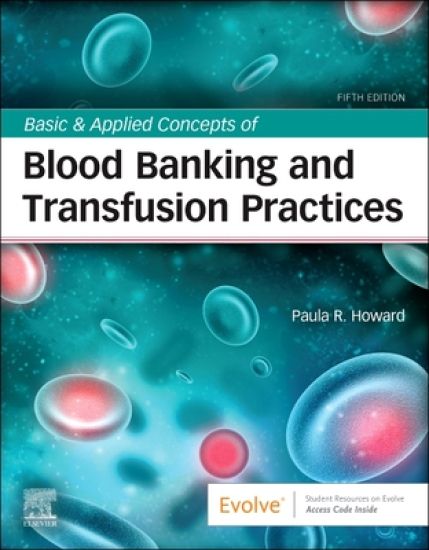
Make complex blood banking concepts easier to understand with Basic & Applied Concepts of Blood Banking and Transfusion Practices, 5th Edition. Combining the latest information in a highly digestible format, this approachable text helps you easily master all areas of blood banking by utilizing common theory, clinical scenarios, case studies, and critical-thinking exercises. With robust user resources and expanded content on disease testing and DNA, it's the effective learning resource you need to successfully work in the modern lab. Coverage of advanced topics such as transplantation and cellular therapy, the HLA system, molecular techniques and applications, automation, electronic cross-matching, and therapeutic apheresis make the text more relevant for 4-year MLS/CLS programs. Illustrated blood group boxes provide the ISBT symbol, number, and clinical significance of antibodies at a glance. Robust chapter pedagogy helps break down this difficult subject with learning objectives, outlines, key terms with definitions, chapter summaries, critical thinking exercises, study questions, and case studies. NEW! Completely updated content prepares you to work in today's clinical lab environment. NEW! Additional information on disease testing covers diseases such as Zika and others of increased importance. NEW! Expanded content on DNA covers the latest developments in related testing. NEW! Enhanced user resources on the Evolve companion website now include expanded case studies, and new animations in addition to the existing review questions and lab manual.
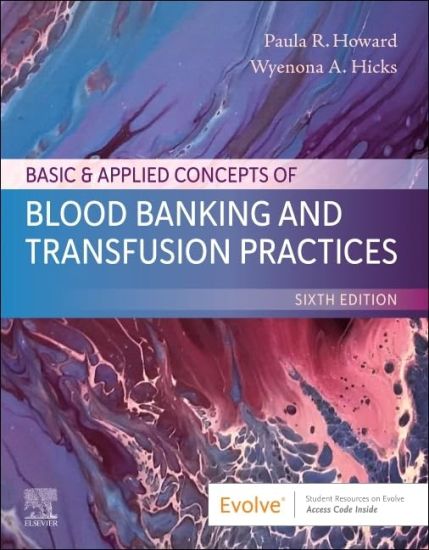
Master the role of the medical laboratory scientist working in the blood bank and transfusion services! Basic & Applied Concepts of Blood Banking and Transfusion Practices, 6th Edition combines scientific principles with practice tips to engage learners with realistic laboratory experiences. These concepts are delivered through relevant case studies and critical thinking exercises. The text provides an overview of topics including quality and safety, the major blood groups, blood collecting and testing, transfusion reactions, and blood component preparation. Written by Paula Howard and Wyenona “Nonie” Hicks, both experienced Medical Laboratory Scientists and certified as Specialists in Blood Banking (SBB), this text is ideal for students in any Medical Laboratory Science (MLS), Medical Laboratory Technician (MLT), or Blood Bank Technology (BBT) training program, as well as for practicing laboratory and healthcare professionals who wish to train for work in blood banks and transfusion services. NEW! Full-color illustrations that break down concepts for enhanced learner comprehension, especially for those who favor visual learning NEW! Did You Know?, Case Study, ALERT! What’s the Impact?, and Practice Tips provide important facts and guidelines to prepare you for situations encountered in practice NEW! Additional case studies relate to donor qualification and testing, ABO discrepancies, molecular immunohematology techniques, antibody identification, stem cell transplants, and coagulation disorders, offering extra practice in critical thinking development NEW! Cell therapy and flow cytometry information, expanded HLA and platelet antigen and antibody material, detailed molecular genetic information in the Rh blood group system chapter, and an expanded molecular genetics section prepare you for the questions you’ll be challenged with on the certification exam NEW! End-of-chapter Critical Thinking and Study Questions are keyed to the objectives Coverage of current clinical practices includes transplantation and cellular therapy, the HLA system, molecular techniques and applications, automation, blood donor qualification, collection and testing, component manufacturing and transfusion practices, therapeutic phlebotomy and therapeutic apheresis, and antibody identification and special techniques Learning features in each chapter break down difficult concepts with outlines, learning objectives, key terms with definitions, special callouts, chapter summaries, basic and challenging case studies, critical thinking exercises, and study questions Numerous new, updated, and expanded tables summarize key information and make it easier to compare content. These will certainly continue to provide excellent references for graduates practicing in blood banks and transfusion services Updated illustrated blood group antigen toolbars show at a glance the ISBT symbol, number, clinical significance, reactions to chemical treatments, and more for antibodies Comprehensive glossary provides definitions to key terms throughout the text Expanded online resources for students and instructors include additional study/test questions and case studies
Throughout one of English history's most tumultuous periods, Daniel Defoe (1660-1731) took part in and reported on nearly every major political, religious, and social controversy. This widely acclaimed biography offers a fascinating account of Defoe's remarkable life. Paula Backscheider reveals new information about Defoe's secret career as a double agent, his daring business ventures, his dangerous pen-and his cat-and-mouse games with those who sought to control it. This is the definitive biography of one of eighteenth-century England's most influential figures-and one of the most prolific and widely read authors of all time
This large-scale project aims to present a broad, original perspective on the writing and lives of eighteenth century (British) women poets. More specifically, it seeks to do so by giving close attention to the intersections of agency-as evident in the distinct ways in which women made use of poetry in their lives-and genre. Like some other recent scholars, Paula Backscheider here construes the latter term to include categories based on popular contemporary ideas of poems and their purposes, defined sometimes more by form and sometimes more by subject matter. She focuses in particular on the commonalities and differences, both of which she often finds revealing, between the functions of individual genres for men and for women. The roughly forty poets she considers are meant to constitute a diverse but not systematic or exhaustively comprehensive selection.
This major study offers a broad view of the writing and careers of eighteenth-century women poets, casting new light on the ways in which poetry was read and enjoyed, on changing poetic tastes in British culture, and on the development of many major poetic genres and traditions. Rather than presenting a chronological survey, Paula R. Backscheider explores the forms in which women wrote and the uses to which they put those forms. Considering more than forty women in relation to canonical male writers of the same era, she concludes that women wrote in all of the genres that men did but often adapted, revised, and even created new poetic kinds from traditional forms. Backscheider demonstrates that knowledge of these women's poetry is necessary for an accurate and nuanced literary history. Within chapters on important canonical and popular verse forms, she gives particular attention to such topics as women's use of religious poetry to express candid ideas about patriarchy and rape; the continuing evolution and important role of the supposedly antiquarian genre of the friendship poetry; same-sex desire in elegy by women as well as by men; and the status of Charlotte Smith as a key figure of the long eighteenth century, not only as a Romantic-era poet.
"Elizabeth Singer Rowe and the Development of the English Novel" is the first in-depth study of Rowe's prose fiction. A four-volume collection of her work was a bestseller for a hundred years after its publication, but today Rowe is a largely unrecognized figure in the history of the novel. Although her poetry was appreciated by poets such as Alexander Pope for its metrical craftsmanship, beauty, and imagery, by the time of her death in 1737 she was better known for her fiction. According to Paula R. Backscheider, Rowe's major focus in her novels was on creating characters who were seeking a harmonious, contented life, often in the face of considerable social pressure. This quest would become the plotline in a large number of works in the second half of the eighteenth century, and it continues to be a major theme today in novels by women. Backscheider relates Rowe's work to popular fiction written by earlier writers as well as by her contemporaries. Rowe had a lasting influence on major movements, including the politeness (or gentility) movement, the reading revolution, and the Bluestocking society. The author reveals new information about each of these movements, and Elizabeth Singer Rowe emerges as an important innovator. Her influence resulted in new types of novel writing, philosophies, and lifestyles for women. Backscheider looks to archival materials, literary analysis, biographical evidence, and a configuration of cultural and feminist theories to prove her groundbreaking argument.
A revelatory history of the characters that playwrights and managers created out of the real lives of women in intimate relationships with military men to serve Great Britain's greatest needs during the war-saturated eighteenth century.During the long eighteenth century, Great Britain was almost continuously at war. As the era unfolded, the theatre gradually discovered the potential in having actresses, recently introduced to the stage in the 1660s, perform as wartime women characters. As playwrights and managers began casting women in transformative roles to meet each major national need, female characters came to be central figures in bringing the war home to the nation, transforming them into deeply patriotic British subjects.Paula Backscheider's Women in Wartime is the first study of theatrical representations of women with intimate connections to military men. Drawing upon her extensive expertise in gender, performance studies, popular culture, and archival studies, Backscheider traces the rise of the London theatre's acceptance that one of its responsibilities was to support its country's wars. Rather than focusing on the historical, mythical "warrior women" on the battlefield who have been much studied, Backscheider explores the lives and work of sweethearts, wives, mothers, sisters, barmaids, provision sellers, seaport prostitutes, and more, whose relationships to active-duty men made them recruits, volunteers, or even conscripts. They represent a distinct group of thousands of real women, and the actresses who portrayed them gave performances of change, struggle, celebration, mourning, survival, love, and patriotism. Backscheider explicates more than fifty plays—from main pieces, short farces, interludes, afterpieces, and comic operas to entr'actes, pantomimes, and even masques—as both entertainment and as ideological and propagandistic vehicles in times of severe crises. She also reveals how these works, many written by men with military experience, attest to the context of difficult, inescapable realities and momentous needs. Through the debunking of sexual stereotypes and attention to audience-pleasing roles such as impoverished-wife and breeches parts, Backscheider adds a dimension to theatrical history that substantially contributes to women's and military histories. Women in Wartime demonstrates the startling acuity and prescience of the repertoire in responding to the war-steeped culture of the period.
A revelatory history of the characters that playwrights and managers created out of the real lives of women in intimate relationships with military men to serve Great Britain's greatest needs during the war-saturated eighteenth century.During the long eighteenth century, Great Britain was almost continuously at war. As the era unfolded, the theatre gradually discovered the potential in having actresses, recently introduced to the stage in the 1660s, perform as wartime women characters. As playwrights and managers began casting women in transformative roles to meet each major national need, female characters came to be central figures in bringing the war home to the nation, transforming them into deeply patriotic British subjects.Paula Backscheider's Women in Wartime is the first study of theatrical representations of women with intimate connections to military men. Drawing upon her extensive expertise in gender, performance studies, popular culture, and archival studies, Backscheider traces the rise of the London theatre's acceptance that one of its responsibilities was to support its country's wars. Rather than focusing on the historical, mythical "warrior women" on the battlefield who have been much studied, Backscheider explores the lives and work of sweethearts, wives, mothers, sisters, barmaids, provision sellers, seaport prostitutes, and more, whose relationships to active-duty men made them recruits, volunteers, or even conscripts. They represent a distinct group of thousands of real women, and the actresses who portrayed them gave performances of change, struggle, celebration, mourning, survival, love, and patriotism. Backscheider explicates more than fifty plays—from main pieces, short farces, interludes, afterpieces, and comic operas to entr'actes, pantomimes, and even masques—as both entertainment and as ideological and propagandistic vehicles in times of severe crises. She also reveals how these works, many written by men with military experience, attest to the context of difficult, inescapable realities and momentous needs. Through the debunking of sexual stereotypes and attention to audience-pleasing roles such as impoverished-wife and breeches parts, Backscheider adds a dimension to theatrical history that substantially contributes to women's and military histories. Women in Wartime demonstrates the startling acuity and prescience of the repertoire in responding to the war-steeped culture of the period.
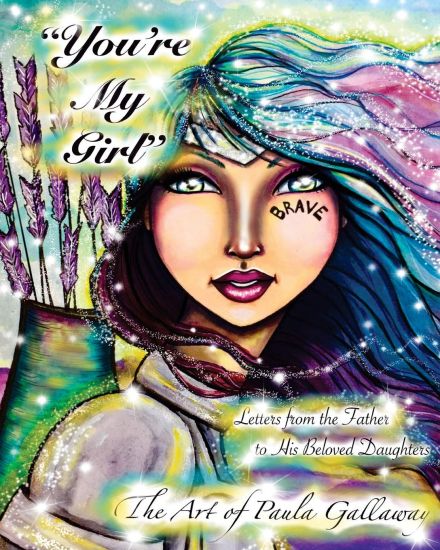
A beautiful and colorful collection of the artwork of Paula Gallaway. "You're My Girl" is an inspirational devotional which includes encouraging scriptures and letters from the Heavenly Father to comfort girls and women of all ages.
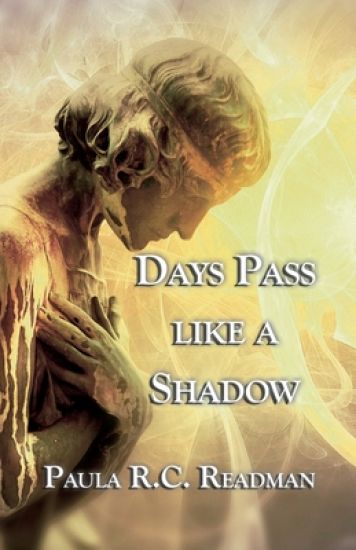
Within the pages of Days Pass like a Shadow are thirteen dark tales covering the theme of death and loss. At the centre of every story is a beating heart. For the reader to make the journey to that centre, along the flowing veins of the words, all they need is a few minutes during a lunch break, or at the end of the day. The reader will be introduced to a rich and diverse collection of characters - a gardener, a serial killer, a time traveller, a sleepwalker and many more.On the Streets of Kabul, which is set in Afghanistan, a soldier faces a life-threatening situation while searching for his missing comrade and childhood friend among the narrow alleys. Perfect Justice finds a secretary planning a murder. Shelved takes a reader into the unusual librarian's office, while Burning the Midnight Oil has a son uncovering the truth about his dying mother.So put your feet up, relax with a cup, or glass of your favourite beverage and let's begin with The Meetings...