Kirjahaku
Etsi kirjoja tekijän nimen, kirjan nimen tai ISBN:n perusteella.
1000 tulosta hakusanalla Pauline J. Neck
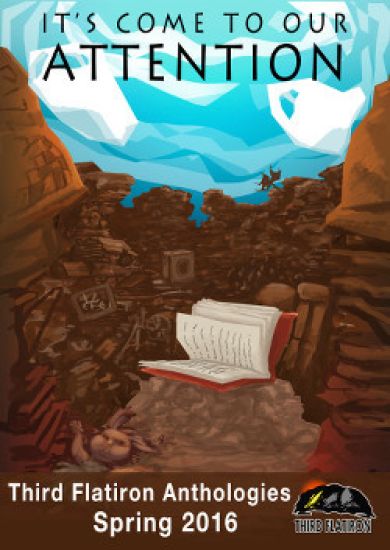
It's Come to Our Attention
Pauline J. Alama; James H. Zorn; Wendy Nikel
Third Flatiron Publishing
2016
nidottu

A Future Fairytale is a science fiction romantic comedy in which a troupe of traveling entertainers in an unarmed spaceship get caught up in a quest to go back in time to prevent a devastating war. However time travel has been outlawed for a thousand years and the ruthless Time Guardians will stop at nothing to protect the timeline. Our heroes must fight duels, juggle fire, cross deserts, bore people to sleep, and locate a working time machine, while keeping one step ahead of the dreaded Time Guardians. They're not rich and only one of them is good looking but the fate of half a billion people and the future of the galaxy hangs on their shoulders. Success could mean losing everything including their lives but they must not fail. A Future Fairytale is a fun filled adventure written in the traditional story telling medium. It can be enjoyed by the whole family. To find out about Pauline's upcoming novels please visit www.cozyread.com



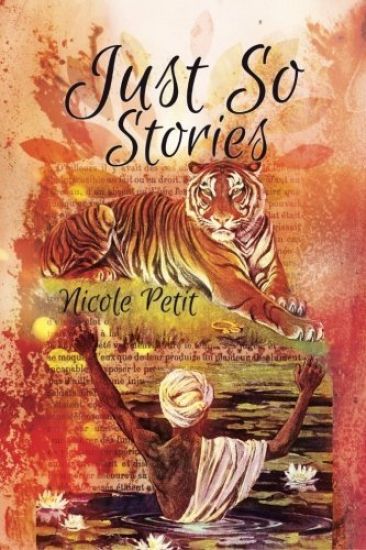
From Award-Winning Curator Nicole Petit Best Beloved, have you ever wondered why the whale has such a small throat? Why the elephant has such a long nose? Why cats are such jerks? In 1902, Rudyard Kipling answered these questions in a collection of fables explaining the whys and wherefores of the world in whimsical ways. Kipling answered many of life's questions, but there are so many more questions to be answered. How did time learn to be bedtime? Who found the letters of the alphabet, and first minded P and Q? Why does gravity hold us so tight? Why do ducks have such silly voices? How did the firefly receive her flame? Nicole Petit gathered nine stories to answer these questions, and more, from some of the very best of today's authors. Additionally, she includes one of Rudyard Kipling's rarely seen Just So Stories (omitted from most editions), and his all the more rarely seen introduction. HOW THE READER BOUGHT THE BOOK In the days when everyone sought books to read, O Best Beloved, there was a reader 'sclusively interested in Fairy Tales. 'Member, it wasn't Mystery Tales or Magic Tales or Dragon Tales, but the 'sclusively rich, glimmering, jubilationy Fairy Tales. After a long time-things went for ever so long in those days-the reader found this very book, O Best Beloved, Just So Stories. Opening the pages-why these stories were the most 'sclusively rich, glimmering, jubilationy Fairy Tales of all. The reader bought the book. And from that day to this, the reader has loved Just So Stories best of all.

Minerals - The Forgotten Nutrient: Your Secret Weapon for Getting and Staying Healthy
MD Mph de; MD Mph Gliederer; MD Pauline J. Jose
Proactive Health Labs, Inc.
2017
nidottu
Minerals are, in many ways, the unheralded and often forgotten heroes of keeping our bodies functioning at their best. While the nutrients carbohydrates, proteins and fat may be better well known, minerals are equally vital for helping us get and stay healthy. They play a key role in combatting disease, helping your body heal, managing ongoing chronic health problems such as high blood pressure, minimizing the impact of such common maladies as headaches and PMS, helping children grow up strong, enhancing mental performance at all ages, and fatigue. They truly are your secret weapon for getting and staying your healthiest.In this easy-to-read and easy-to-use guide, pH Lab's team of recognized medical doctors and specialists tell you about the role minerals play with common health issues along with detailed information about individual minerals. You'll also learn more about the relationship between minerals and prescription medicines, why you need more than routine blood tests to see what minerals your body may need, and where you can get these tests.Enjoy your healthy life
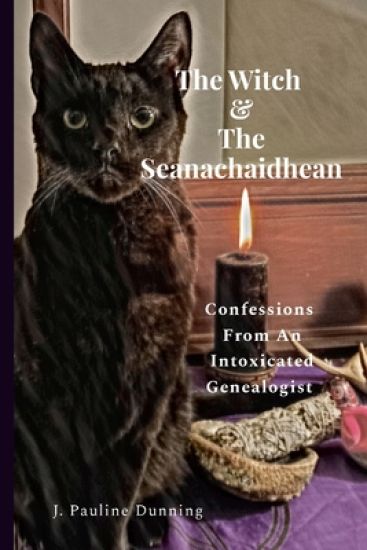
My name is Rowan Imogene Dunnigan, and I come from a good family. What I have come to learn over time, however, is that not everyone in my family is inherently good. In my neighborhood, I am often called "That Neighbor." I am the one that the rest of the neighbors only smile and wave at nervously if they realize I've seen them first. Otherwise, they just scurry as quickly as mice back into their homes closing the door behind them. I am the wand-welding, tree-hugging, cat-loving, "medicinal" garden-growing, wine-drinking, "wise" woman at the end of the block. You know the one. My house is the one that the kids are all afraid to go up to on Halloween. It is also why I buy extra-large bags of Halloween candy so that I can eat the many leftovers snack-size Snicker bars myself. I am also our family historian. I am the one you go to if you want to know why Grandma and Grandpa got divorced, what Great-Grandma put in her homemade hooch, or what was truly behind Great-Grandpa Lucian's mysterious disappearance. Often this is something that has left me the target of the family "Drama Dragons." We all have Drama Dragons in our families. Within these pages is the story that my Drama Dragons don't want me to tell. For centuries, the women in my family, have created a clatter. The tales of these utterly captivating if not completely bewitching women have been passed down from generation to generation. Their stories are tales of love, survival, magic, and the occasional family murder. I, myself, am one accused of murder. But I am getting ahead of myself, dear Reader. Let me take you back to the beginning where our story truly begins. Come with me to when the Seanachaidhean told their tales....

Eula Mae Dunning was our family matriarch, bootlegger, and speakeasy madame in one of the most notorious and violent establishments in Nortonville, Kentucky during the late 1940s. To put it simply, Eula was captivating. She had a way of drawing people in like moths to a flame. That does not mean she had a charmed life or that it was always easy for her. In fact, I think it was just the opposite. Eula's charisma was forged from the hardships of her life. Her "Moxie" that drew people to her was her greatest shield against the things that hurt her most. It's what kept her humor up when life had dragged her so far down that most people wouldn't know how to tie their own shoes. One hundred and twenty eight years after her birth, people are still talking about her. Her stories are still being told and passed down from generation to generation. It's almost as if Eula worked her roots and weaved her own form of magic and immortality in our family's stories about her. When I first learned of the Nortonville speakeasy, I had romantic images of Eula serving up her homemade hooch, keeping the gamblers in line, raising her children and staying one step ahead of the law. But the truth was not so romantic. I had to ask myself, what did I really know about Eula to start with? I knew she lived through the women's suffrage movement, prohibition, two world wars and the Great Depression. Neither of her two marriages were ideal or even very happy ones. Both of Eula's husbands had long criminal histories with alleged ties to Chicago's dark seedy underbelly. Both marriages were abusive in one way or another. I knew there was much more to Eula's story and much more to the woman herself than what was seen on the surface. I began to wonder what story Eula would now tell if she were able to tell her own story without being penalized by the people and prejudices of her time. What story would she tell if she had no repercussions to fear from either of her two husbands? The more I dug into the Eula's history and the Nortonville murder I realized I had more questions than I started with. What would make a good woman who loved her children and grandchildren so deeply remain silent and complacent when there was not just one, but two sexual predators in their midst? What did Eula's marriages and choices reveal about the women and circumstances who forged her? And perhaps even just as important, what does it reveal about the woman I am and the woman my daughter will become?

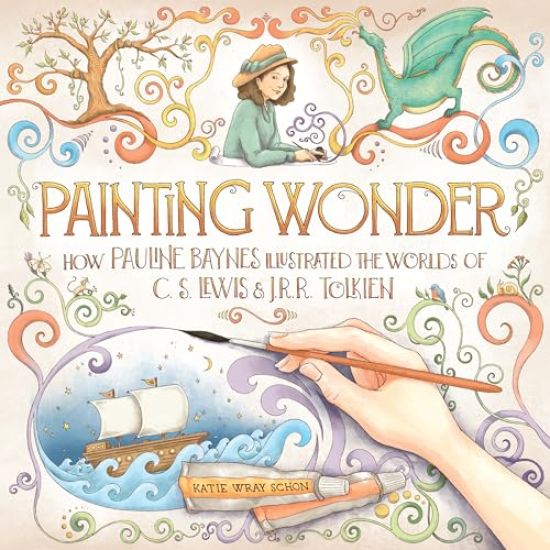
Painting Wonder: How Pauline Baynes Illustrated the Worlds of C. S. Lewis and J.R.R. Tolkien
Katie Wray Schon
Waxwing Books
2025
sidottu
★ "It's a beautiful tribute. An accessible and inspiring mini-biography, delightfully illustrated."--Kirkus Reviews (Starred Review) Just in time for the 75th anniversary of The Lion, the Witch, and the Wardrobe comes Painting Wonder, an enchanting picture book biography about the artist whose illustrations brought the worlds of C. S. Lewis and J. R. R. Tolkien to life. Young Pauline Baynes lives in India, a land of towering mountains, sparkling lakes, and bright flowers. She even has a pet monkey that joins her for tea. Then her life takes a turn, and Pauline is sent to dreary England. Books bring light and color to her world, so she sets out to paint the stories she loves. Years later, two iconic authors see her paintings and know she's the illustrator for their stories--of fire-breathing dragons, towering giants, a golden lion, and four brave children. Follow Pauline into some of the most beloved and prominent landscapes in all of children's literature: the magical lands of J.R.R. Tolkien and C. S. Lewis.


The Pauline Book and the Dilemma of Ephesians
Benjamin J. Petroelje
BLOOMSBURY PUBLISHING PLC
2022
sidottu
Benjamin J. Petroelje argues that how one reads Ephesians is a function of deeper questions about how to read the Pauline book. Petroelje suggests the contemporary consensus—that Ephesians depicts development of/away from the “real Paul”—is largely a construct of modern criticism, rooted in shifting strategies about how to read a letter collection that developed in the 19th-century.Using Ephesians 3:1-13 as a point of analysis, Petroelje theorizes that the text’s “image of Paul” not only anticipates recent revisionist interpretations of Paul’s Jewish identity and gentile gospel, but also holds together tensions in the collection itself surrounding these questions. By analysing ancient letter collections beside their own hermeneutical priorities, and applying this method to the late-antique and modern reception of the corpus Paulinum, Petroelje is able to historicize the origins of the split of Paul's corpus, revealing the constructed nature of the critical consensus on Ephesians and the effect that such modern reading strategies have on interpreting the letter. Urging a return to reading Ephesians alongside Pauline co-texts, Petroelje advocates for Ephesians as a crucial source for the study of Paul, whether Paul wrote it or not.
The Pauline Book and the Dilemma of Ephesians
Benjamin J. Petroelje
BLOOMSBURY PUBLISHING PLC
2024
nidottu
Benjamin J. Petroelje argues that how one reads Ephesians is a function of deeper questions about how to read the Pauline book. Petroelje suggests the contemporary consensus—that Ephesians depicts development of/away from the “real Paul”—is largely a construct of modern criticism, rooted in shifting strategies about how to read a letter collection that developed in the 19th-century.Using Ephesians 3:1-13 as a point of analysis, Petroelje theorizes that the text’s “image of Paul” not only anticipates recent revisionist interpretations of Paul’s Jewish identity and gentile gospel, but also holds together tensions in the collection itself surrounding these questions. By analysing ancient letter collections beside their own hermeneutical priorities, and applying this method to the late-antique and modern reception of the corpus Paulinum, Petroelje is able to historicize the origins of the split of Paul's corpus, revealing the constructed nature of the critical consensus on Ephesians and the effect that such modern reading strategies have on interpreting the letter. Urging a return to reading Ephesians alongside Pauline co-texts, Petroelje advocates for Ephesians as a crucial source for the study of Paul, whether Paul wrote it or not.

Once in awhile we are confronted with a person's life and insight so remarkable, we pause to reflect upon our own beliefs, meaning, maturing, theory and theology. This memoir of Pauline Thompson encompasses the astonishing life and career of a twentieth-century woman, a life that variously embraced religious symbolism, Jungian analysis, protests and arrests, careers in education and medicine, as well as relationships ranging from bigamous to bisexual. Writing Pauline: Wisdom From A Long Life explores how Thompson's reflections pose challenges to our common and academic notions of feminist theory, ethical development, Christian theology, Jungian psychology, and ethnographic research.