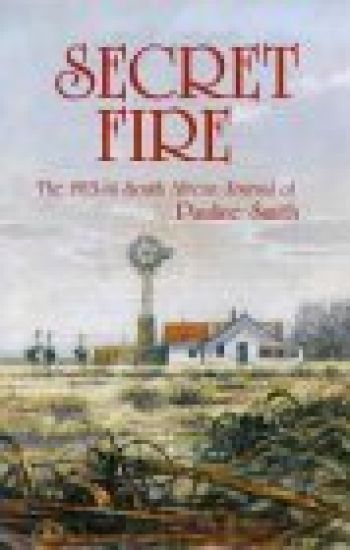
During Pauline Smith's visit to the Little Karoo and environs, she kept a journal containing descriptive material, anecdotes, character sketches and imagery, which would later be worked into five of the stories of ""The Little Karoo"". This journal reveals as much about the creative process as it does about the historical and sociological themes and issues of South Africa at the time.
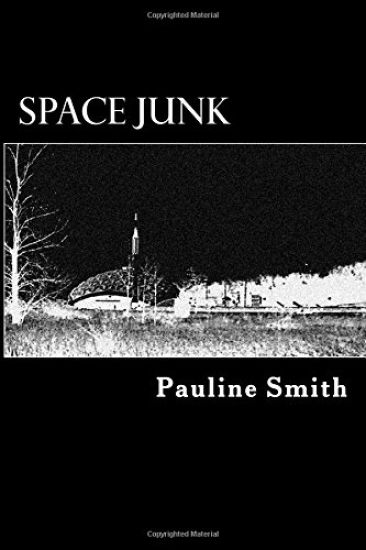
Space Junk is a collection of ten short stories. Each was inspired by events that took place during 1989 when the British author was on a 7-month trip to the United States of America, her first visit. The profound collision of cultures she met at every turn resulted in stories that focus on expressions glimpsed from the corner of an eye, snippets of conversation overheard in a store, looks that pass, seemingly unnoticed, between two people, and what lies behind them all - the unwritten, the unspoken, the unacknowledged. The tiny details and crystallising flashes of realisation contained in each of these stories encapsulate the varied form of classic short story. But that is fused with a British perspective of The United States from an author who experienced first-hand the growing influence of popular American culture on her own life during the Cold War, the Vietnam War and the Space Race. By 1989, all consigned to history and yet, everywhere she went on her travels, the author encountered discarded remnants of these living layers of history - and it is these remnants that underpin her stories in a society still trying to catch up with itself. Universal messages prevail in every seemingly insignificant incident, every nuance, every action: -the effect of a severe ice storm on a family where cracks are also beginning to show; -a misunderstanding between a young cleaner and a pretty girl he finds curled up on a sofa in the university library; -the emotional realities of sharing a room with a manic depressive; -the after-effects of the Vietnam war on a young soldier on duty in Arlington National Cemetery; -the secrets of a country musician that haunt him as he prepares for a riverboat concert in Nashville; -the life-changing choices that overtake Anna, a tourist chasing a 60s dream in The Big Easy; -the revelation of a earth-shattering birthday secret that will change Sonny's life forever; -the desire and anticipation building for Donna, a memorabilia shop worker in Music Village, as she prepares for a trip to the annual Music Fair; -how a chance meeting in a restaurant, near a state park filled with fossils, leads to an unexpected outcome; -the trauma and problems of losing a front tooth far from home. The Space Junk of the title, the metal relics of war, endeavour and the pioneering American desire to be first was everywhere, proudly displayed. For the author, this is what fuses with the space junk that forms all her characters, the space junk of which we all consist.
This practical guide, written by a chief examiner, gives you the tools and planning techniques for making light work of assignments, essays, reports and dissertations. It covers: - Thoroughly understanding the title, question or brief- Choosing the right format for your assignment - Producing an outline plan, researching and taking notes - Drafting the structure and improving your style - Presenting the final assignment Examples and mini case studies show the difference between good and bad practice. - Self-evaluation exercises ensure you stay on the right track.Contents: List of Illustrations; Preface; 1. What is an assignment?; 2. Making the right start; 3. Analysing the title question or brief; 4. How to plan and take notes; 5. Drafting the structure; 6. Improving your style; 7. Presenting your final assignment; 8. Improving through reflection; 9. Where are you now?; Glosssary; Further reading; Index.
This work has been selected by scholars as being culturally important and is part of the knowledge base of civilization as we know it.This work is in the public domain in the United States of America, and possibly other nations. Within the United States, you may freely copy and distribute this work, as no entity (individual or corporate) has a copyright on the body of the work.Scholars believe, and we concur, that this work is important enough to be preserved, reproduced, and made generally available to the public. To ensure a quality reading experience, this work has been proofread and republished using a format that seamlessly blends the original graphical elements with text in an easy-to-read typeface.We appreciate your support of the preservation process, and thank you for being an important part of keeping this knowledge alive and relevant.
This is a unique resource to improve this difficult and highly sensitive area of communication, ideal for both individual use and by groups or in teaching. It offers a visual, interactive training experience, linking with supportive care frameworks. It is accompanied bya DVD which contains filmed scenes illustrating a range of challenging dialogues between health workers and a patient and his family through the journey of his terminal illness. Accompanying booklet highlights communication issues with suggested exercises, reflection points and advice. It is available as individual-use-only product for self-reflective learning, or institutional-use product for tutored learning, both priced to give excellent value.
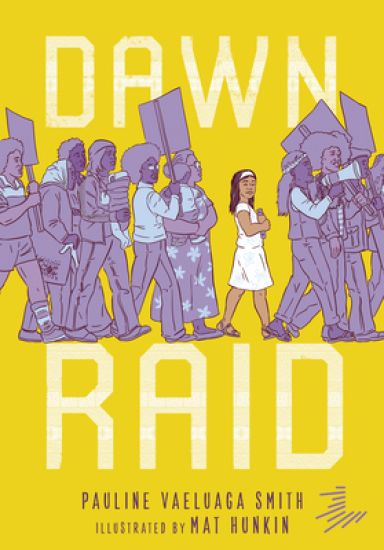
"Imagine this: You're having an amazing family holiday, one where everyone is there and all 18 of you are squeezed into one house. All of sudden it's 4 o'clock in the morning and there's banging and yelling and screaming. The police are in the house pulling people out of bed ..." Sofia is like most 12-year-old girls in New Zealand. How is she going to earn enough money for those boots? WHY does she have to give that speech at school? Who is she going to be friends with this year? It comes as a surprise to Sofia and her family when her big brother, Lenny, starts talking about protests, "overstayers", and injustices against Pacific Islanders by the government. Inspired by the Black Panthers in America, a group has formed called the Polynesian Panthers, who encourage immigrant and Indigenous families across New Zealand to stand up for their rights. Soon the whole family becomes involved in the movement. Told through Sofia's diary entries, with illustrations throughout, Dawn Raid is the story of one ordinary girl living in extraordinary times, learning how to stand up and fight.
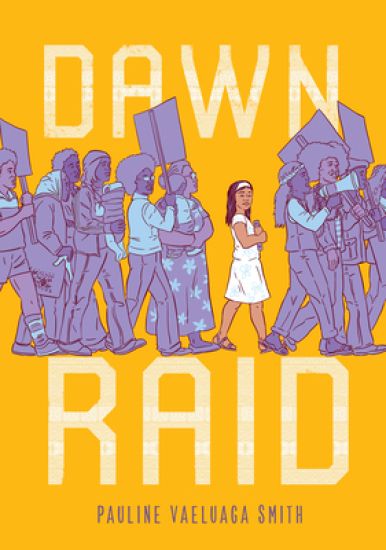
NOW IN PAPERBACK! ? "Encourages empathy and understanding while spotlighting underrepresented history, and providing an example of how young people can take action. Highly recommended."-School Library Journal (starred) ? "Well-crafted and wonderfully fresh."-Kirkus Reviews (starred)ALSC Notables Selection Capitol Choices Selection Kirkus Best Book of the Year CCBC Choices Selection It's the summer of 1976. You're having an amazing family holiday, one where everyone is there and all 18 of you are squeezed into one house. All of sudden it's 4 o'clock in the morning and there's banging and yelling and screaming. The police are in the house pulling people out of bed . . . Sofia is like most 12-year-old girls in New Zealand. How is she going to earn enough money for those boots? WHY does she have to give that speech at school? Who is she going to be friends with this year? It comes as a surprise to Sofia and her family when her big brother, Lenny, starts talking about protests, "overstayers", and injustices against Pacific Islanders by the government. Inspired by the Black Panthers in America, a group has formed called the Polynesian Panthers, who encourage immigrant and Indigenous families across New Zealand to stand up for their rights. Soon the whole family becomes involved in the movement. Told through Sofia's diary entries, with illustrations throughout, Dawn Raid is the story of one ordinary girl living in extraordinary times, learning how to stand up and fight.
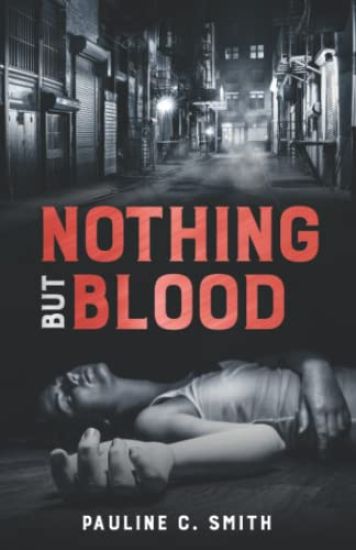
Los Angeles. 1962. The body of Mary Barnes is found in a seedy hotel, ... with a bloody X carved into her breast. Is it a signature? Or something else? Laine has been investigating homicides for the L.A. Sheriff's department for years, rolling streets as pallid as a tired prostitute, but this case is different. Why was Mary in a cheap hotel, and where was the baby that she'd recently given birth to? His search for the answer could lead him to a truth that's too dark and unsettling even for him, a hard man who believes he's already seen the worst horrors the city has to hide.Pauline C. Smith (1908-1994) was the author of several novels and many short stories, including the Edgar Award finalist My Daughter is Dead, published in Alfred Hitchcock Mystery Magazine.
`This book makes an important contribution to the debate on how school and individual performance may be enhanced. It would be of value to any teachers, education manager or academic who is interested in the issues of improvement in school performance'- Scottish Educational Review `....there is much to commend this book. The diagrams are very clear and `lift' the text so that creative thought, rather than mere comprehension, becomes possible' - Nurturing Potential Managing the performance of staff has become a key concern in education. It is a controversial area with a number of approaches based on very different assumptions. This book provides an overview of some of the key issues in developing professional performance and examines critically some of the strategies that can be used to enhance it. - The first section of the book sets out the development of performance management. - The second section deals with theoretical issues. - The third section adopts a case study approach mapping out and critiquing a range of strategies that can be used to improve performance. - Current issues such as work-based learning, performance related pay, the assessment of performance and the use of standards are examined. Performance Management in Education is a valuable resource for practitioners, those involved in professional development, and academics in the field of school leadership and administration.
`This book makes an important contribution to the debate on how school and individual performance may be enhanced. It would be of value to any teachers, education manager or academic who is interested in the issues of improvement in school performance'- Scottish Educational Review `....there is much to commend this book. The diagrams are very clear and `lift' the text so that creative thought, rather than mere comprehension, becomes possible' - Nurturing Potential Managing the performance of staff has become a key concern in education. It is a controversial area with a number of approaches based on very different assumptions. This book provides an overview of some of the key issues in developing professional performance and examines critically some of the strategies that can be used to enhance it. - The first section of the book sets out the development of performance management. - The second section deals with theoretical issues. - The third section adopts a case study approach mapping out and critiquing a range of strategies that can be used to improve performance. - Current issues such as work-based learning, performance related pay, the assessment of performance and the use of standards are examined. Performance Management in Education is a valuable resource for practitioners, those involved in professional development, and academics in the field of school leadership and administration.
In The Pauline Letters: A Rhetorical Analysis, David Oliver Smith unveils his revolutionary discovery that the apostle Paul divided his letters into structured literary units as he wrote them. These literary units are based upon repeated words, phrases, and abstract concepts and are invariably patterned into chiastic, parallel, or hybrid structures. Using his technique of rhetorical analysis, Smith sets out each literary unit in the seven undisputed letters of Paul. After the structures of the literary units have been exposed, the units reveal interpolations that disrupt Paul's original structure. When the interpolations revealed by this technique are compared with interpolations heretofore proposed by Pauline scholars, there are some surprising results. Smith also uses his technique to analyze the Deutero-Pauline letters to determine whether any of those letters exhibit the same literary attributes as the undisputed letters.