Kirjahaku
Etsi kirjoja tekijän nimen, kirjan nimen tai ISBN:n perusteella.
1000 tulosta hakusanalla Peder B. Skafsgaard
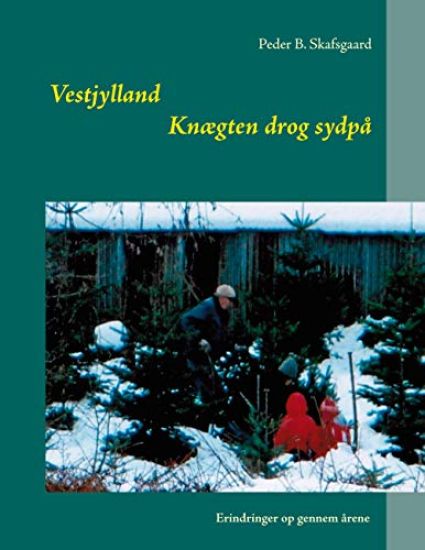
Knægten drog sydpå - Erindringer op gennem livet I modgang og medgang, fortællinger fra barndom, hjælpe på gården, skolegang under krigen hvor vi måtte forlade skolen, tjente på flere gårde, soldat i 16 mdr. og 14 dage. Skiftede herefter erhverv, rutebil privat, herefter DSB. Blev gift og fik 4 børn.
Pavelige Nuntiers (J. de Serone, B. de Ortolis, P. Gervasii). Regnskabs-Og Dagboger, Forte Under Tiende-Opkraevningen I Norden 1282-1334. Med Et Anhang AF Diplomer.
Peder Andreas Munch; Henrik J Huitfeldt-Kaas
British Library, Historical Print Editions
2011
pokkari
Pavelige Nuntiers [J. de Serone, B. de Ortolis, P. Gervasii] Regnskabs-Og Dagboger, Forte Under Tiende-Opkraevningen I Norden 1282-1334. Med Et Anhang AF Diplomer. Udgivne ... Ved P. A. M. with a Preface by H. J. Huitfeldt.]
Peder Andreas Munch; Afterwards Huitfeldt Huitfeldt
British Library, Historical Print Editions
2012
pokkari
Virksomhedsøkonomi B & A1
Henrik Frølich; Jeanette Hassing; Marianne Poulsen; Gitte Størup; Peder Vinther Emdal Hay
Systime
2019
nidottu
I Virksomhedsøkonomi B & A1 finder du teori-stoffet til din undervisning i virksomhedsøkonomi i grundforløbet samt på på B-niveau og første del af A-niveau. Det betyder, at alle elever kan starte med at gennemgå det samme stof – uanset om eleverne vælger at afslutte faget på A- eller B-niveau.Eleverne vil opleve sproglig og faglig progression i materialet. Samtidig sigter materialet efter at sætte læreplanens økonomiske kompetencer i spil og til at klæde eleven på til videregående studier.Udgivelsen giver gode muligheder for at tilrettelægge en alsidig og differentieret undervisning.Virksomhedsøkonomi B & A1 er beregnet til brug i faget virksomhedsøkonomi på B-niveau og første del af A-niveau på hhx og tilsvarende enkeltfag under åben uddannelse. Materialet kan også anvendes på andre uddannelser, hvor der er behov for en grundlæggende indføring i virksomhedsøkonomi.Materialet sælges også i Virksomhedsøkonomi iBog®Vær opmærksom på at opgaver, excelskabeoner, videoer og interaktiviteter kun findes i iBogen og kræver indkøbt adgang.
La Petite Mort / Den lille død
Jo Blicher Møller og Thorstein Thomsen; Kristian Himmelstrup; Jens Blendstrup; Brian B. Christensen; Dennis Gade Kofod; Peder Frederik Jensen; Frank Egholm Andersen
-
2019
nidottu
La Petite Mort Den Lille Død Det franske begreb ”La Petite Mort” er en metafor for orgasme. I videre betydning kan temaet referere til den spirituelle udfrielse, som kommer med orgasme, eller en kort periode af melankoli eller transcendens, som resultat af udladningen af livskraft. At gi slip. "La Petite Mort" er fællestitlen for en serie erotiske tegninger, jeg påbegyndte for flere år siden og i perioder er vendt tilbage til. For et par år siden fik jeg ideen til en bogudgivelse med en slags ”omvendt illustration”. At få nogle andre bud på mine tegninger, i litterær fiktion. Derfor opfordrede jeg forskellige forfattere til at byde ind på én af de tematiske tegninger efter eget valg. Forfatterhjerner interagerer faktisk meget forskelligt (ligesom billedkunstneres), og for nogle er det en ubrugelig fremgangsmåde. Men der var heldigvis nogle mere visuelt orienterede forfattere, som tog udfordringen op. Deres fine og meget forskellige tekster har gjort denne bog mulig. En yndet påstand blandt nogle kvinder, blandt andet en kvindelig forfatter jeg hørte i radioen, er at kvinder er optaget af det erotiske, hvorimod mænd kun tænker på sex. Påstanden er muligvis baseret på disse kvinders erfaringer med den type mænd som de tænder på, men jeg opfattede det som en grov sexistisk generalisering. Derfor er det kun mænd der kommer til orde i denne lille bogudgivelse. Forskellige mænd. Bedøm selv. Jo Blicher Møller JOMO.DK
Central Eurasia in the Middle Ages: Studies in Honour of Peter B. Golden
Harrassowitz
2016
nidottu
Professor Peter B. Golden, Professor Emeritus of History, Turkish and Middle Eastern Studies at Rutgers University, is an outstanding historian and orientalist in the field of medieval Eurasian studies. His achievement regarding the history of the Turkic speaking peoples and the medieval history of Eastern Europe is fundamental. Osman Karatay and Istvan Zimonyi have edited the Festschrift in which 32 leading experts from all over the world have paid tribute to Peter B. Golden's scientific achievement. Among the authors are Thomas Allsen, Farda Asadov, Christopher I. Beckwith, Edmund Bosworth, Eva A. Csato and Lars Johanson, Devin DeWeese, Anatoly M. Khazanov, Roman Kovalev, Ruth Meserve, Uli Shamiloglu, Victor Spinei, Isenbike Togan, and Istvan Vasary.
Reciprocal Translation Between Pathophysiology and Practice in Health and Disease
Peter B. Soeters; Peter W. de Leeuw
Academic Press Inc
2021
nidottu
Reciprocal Translation Between Pathophysiology and Practice in Health and Disease brings a novel perspective, closing the knowledge gap between normal/abnormal physiology. Chapters describe the basic mechanisms underlying a disease or trauma-related response, describe consequences in practice, and provide insights on how to use information to better understand disease outcomes. Other sections explore how these responses are beneficial and driven by similar hormones and inflammatory immune cell derived modulators. This is a must-have resource for those seeking an authoritative and comprehensive understanding on how to treat the basic mechanisms underlying disease or trauma-related responses. With contributions from Petronella L.M. Reijven.
Applied psychology in work settings has made considerable progress in the 30 years since the original version of this book was published. This new collection of essays aims to illustrate both the empirical and practical richness of the field as wellas its theoretical development. The chapters cover psychological processes, the study of groups and workteams, and the nature of complex organizations as a whole. Reflecting recent developments in psychology as well as society generally, topics range from skill and workload, shiftwork, personnel selection, training and careers, and the effects of new technology, leadership and management, to job stress and well-being, women in employment, corporate culture and processes of organizational change.
The incredible tale of how ambitious oil rivals Marcus Samuel, Jr. and Henri Deterding joined forces to topple the Standard Oil empire Marcus Samuel, Jr., is an unorthodox Jewish merchant trader. Henri Deterding is a take-no-prisoners oilman. In 1889, John D. Rockefeller is at the peak of his power. Having annihilated all competition and possessing near-total domination of the market, even the U.S. government is wary of challenging the great "anaconda" of Standard Oil. The Standard never loses--that is until Samuel and Deterding team up to form Royal Dutch Shell. A riveting account of ambition, oil, and greed, Breaking Rockefeller traces Samuel's rise from outsider to the heights of the British aristocracy, Deterding's conquest of America, and the collapse of Rockefeller's monopoly. The beginning of the twentieth century is a time when vast fortunes were made and lost. Taking readers through the rough and tumble of East London's streets, the twilight turmoil of czarist Russia, to the halls of the British Parliament, and right down Broadway in New York City, Peter Doran offers a richly detailed, fresh perspective on how Samuel and Deterding beat the world's richest man at his own game. "Gripping . . . timely . . . a vivid reminder of the dangers of monopolies, and of the merits of no-holds barred competition and technological upheaval." --The Economist
Live performance has changed poetry more than anything else in the last hundred years: it has given poets new audiences and a new economy, and it has generated new styles, from Imagism, to confessional, to contemporary Spoken Word. But the creative impact that public reading had right through the twentieth century has not been well understood. Mixing close listening to archive performances with intimate histories of modernist venues and promotors, The Poetry Circuit tells the story of how poets met their audience again, and how the feedback loops between their voices, the venues, and the occasions turned poems into running dramas between poet and listener. A nervous T. S. Eliot reveals himself to be anything but impersonal, while Marianne Moore's accident-prone readings become subtle ways of keeping her poems in constant re-draft. Robert Frost used his poems to spar with his fans and rivals, while Langston Hughes wrote Ask Your Mama to expose the prejudice circulating in the room as he spoke it. The Poetry Circuit also shows how the post-war reading boom made new kinds of poetry involving their audience and setting in the performance, such as John Ashbery's anti-charismatic Poets' Theatre, Amiri Baraka's documentary soundtracks of the streets, or the confessional readings of Allen Ginsberg, which shame the listeners more than the poet. Covering the first seventy years of the poetry reading, The Poetry Circuit demonstrates that there never were 'page' and 'stage' poets: the reading simply changed what every modern poet could do.
This book deals with critical issues resulting from the impact of corporate restructuring on workers. U.S. industry has undergone a shakeout resulting from increasing competitive pressures and the globalization of production. As a result, some two million workers have been laid-off from their employers. Individual chapters have been drafted by an interdisciplinary group of academics who explore seven key areas: demographic changes of younger and older workers, workforce displacement from lay-offs, human resources planning for downsizing and mergers, technological change, changes in the roles of unions, changes in managerial and professional work, and `contingent' and flexible employment. The drafts of the chapters have been extensively edited and, in some cases, rewritten so that the book will read more like a series of chapters than a group of papers. The work was commissioned by the National Planning Association who will be a party to the contract.
Solute Movement in the Rhizosphere
Peter B. Tinker; Peter Nye
Oxford University Press Inc
2000
sidottu
This is a new edition of the book previously titled Solute Movement in the Soil-Root System, and describes in detail how plant nutrients and other solutes move in the soil in response to plant uptake. It provides a basis for understanding processes in the root zone so that they can be modelled realistically in order to predict the effects of variations in natural conditions or our own practices. The new edition brings the text up-to-date, and it will be less technical.
Startup Factories
Peter B. Doeringer; Christine Evans-Klock; David G. Terkla
Oxford University Press Inc
2002
sidottu
This book gives the findings of a concise study of start-up factories in the United States by Japanese companies. This in-depth look at this increased phenomenon discusses not only the quality of jobs these factories produce, but it also expands to reveal their keys to success in achieving a strong competitive advantage. Finally, this volume gives the four inter-related strategies ( high performance management strategy, the economics of efficient wages, the quality of technology plants and regional economic development) that make for successful, high performance factories.
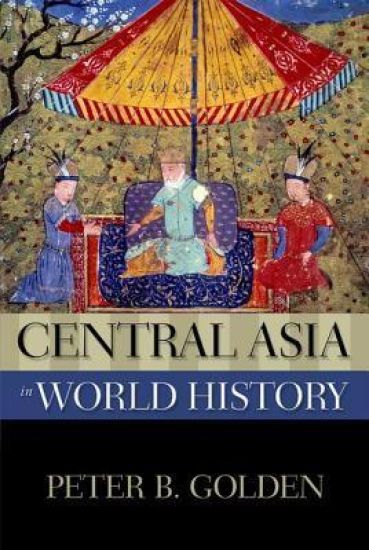
A vast region stretching roughly from the Volga River to Manchuria and the northern Chinese borderlands, Central Asia has been called the "pivot of history," a land where nomadic invaders and Silk Road traders changed the destinies of states that ringed its borders, including pre-modern Europe, the Middle East, and China. In Central Asia in World History, Peter B. Golden provides an engaging account of this important region, ranging from prehistory to the present, focusing largely on the unique melting pot of cultures that this region has produced over millennia. Golden describes the traders who braved the heat and cold along caravan routes to link East Asia and Europe; the Mongol Empire of Chinggis Khan and his successors, the largest contiguous land empire in history; the invention of gunpowder, which allowed the great sedentary empires to overcome the horse-based nomads; the power struggles of Russia and China, and later Russia and Britain, for control of the area. Finally, he discusses the region today, a key area that neighbors such geopolitical hot spots as Iran, Afghanistan, Pakistan, and China.
A vast region stretching roughly from the Volga River to Manchuria and the northern Chinese borderlands, Central Asia has been called the "pivot of history," a land where nomadic invaders and Silk Road traders changed the destinies of states that ringed its borders, including pre-modern Europe, the Middle East, and China. In Central Asia in World History, Peter B. Golden provides an engaging account of this important region, ranging from prehistory to the present, and focusing largely on the unique melting pot of cultures that this region has produced. Golden describes the traders who braved the heat and cold along caravan routes to link East Asia and Europe; the Mongol Empire of Genghis Khan and his successors, the largest contiguous land empire in history; the invention of gunpowder, which allowed the great sedentary empires to overcome the horse-based nomads; the power struggles of Russia and China, and later Russia and Britain, for control of the area. Finally, he discusses the region today, a key area that neighbors such geopolitical hot spots as Iran, Afghanistan, Pakistan, and China.
The Japanese mafia - known collectively as yakuza - has had a considerable influence on Japanese society over the past fifty years. Based on extensive interviews with criminals, police officers, lawyers, journalists, and academics, this is the first academic analysis in English of Japan's criminal syndicates. Peter Hill argues that the essential characteristic of Japan's criminal syndicates is their provision of protection to consumers in Japan's under- and upper-worlds. In this respect they are analogous to the Sicilian Mafia, and the mafias of Russia, Hong Kong and the United States. Although the yakuza's protective mafia role has existed at least since the end of the Second World War, and arguably longer, their sources of income have not remained constant. The yakuza have undergone considerable change in their business activities over the last half-century. The two key factors driving this evolution have been the changes in the legal, and law-enforcement environment within which these groups must operate, and the economic opportunities available to them. This first factor demonstrates that the complex and ambiguous relationship between the yakuza and the state has always been more than purely symbiotic. With the introduction of the boryokudan (yakuza) countermeasures law in 1992, the relationship between the yakuza and the state has become more unambiguously antagonistic. Assessing the impact of this law is, however, problematic; the contemporaneous bursting of Japan's economic bubble at the beginning of the 1990s also profoundly and adversely influenced yakuza sources of income. It is impossible to completely disentangle the effects of these two events. By the end of the twentieth century, the outlook for the yakuza was bleak and offered no short-term prospect of amelioration. More profoundly, state-expropriation of protection markets formerly dominated by the yakuza suggests that the longer-term prospects for these groups are bleaker still: no longer, therefore, need the yakuza be seen as an inevitable and necessary evil.
The Japanese mafia - known collectively as yakuza - has had a considerable influence on Japanese society over the past fifty years. Based on extensive Japanese language source material and interviews with criminals, police officers, lawyers, journalists, and scholars, this is the first English language academic monography to analyse Japan's criminal syndicates. Peter Hill argues that the essential characteristic of Japan's criminal syndicates is their provision of protection to consumers in Japan's under- and upper-worlds. In this respect they are analogous to the Sicilian Mafia, and the mafias of Russia, Hong Kong, and the United States. Although the yakuza's protective mafia role has existed at least since the end of the Second World War, and arguably longer, the range of economic transactions to which such protection has been afforded has not remained constant. The yakuza have undergone considerable change in their business activities over the last half-century. The two key factors driving this evolution have been the changes in the legal and law enforcement environment within which these groups must operate, and the economic opportunities available to them. This first factor demonstrates that the complex and ambiguous relationship between the yakuza and the state has always been more than purely symbiotic. With the introduction of the boryokudan (Iyakuza) countermeasures law in 1992, the relationship between the yakuza and the state has become more unambiguously antagonistic. Assessing the impact of this law is, however, problematic; the contemporaneous bursting of Japan's economic bubble at the beginning of the 1990s also profoundly and adversely influenced yakuza sources of income. It is impossible to completely disentangle the effects of these two events. By the end of the twentieth century, the outlook for the yakuza was bleak and offered no short-term prospect of amelioration. More profoundly, state-expropriation of protection markets formerly dominated by the yakuza suggests that the longer-term prospects for these groups are bleaker still: no longer, therefore, need the yakuza be seen as an inevitable and necessary evil.