Kirjahaku
Etsi kirjoja tekijän nimen, kirjan nimen tai ISBN:n perusteella.
1000 tulosta hakusanalla Pedro J. Aphalo
Learning a computer language like R can be either frustrating, fun, or boring. Having fun requires challenges that wake up the learner’s curiosity but also provide an emotional reward on overcoming them. This book is designed so that it includes smaller and bigger challenges, in what I call playgrounds, in the hope that all readers will enjoy their path to R fluency. Fluency in the use of a language is a skill that is acquired through practice and exploration. Although rarely mentioned separately, fluency in a computer programming language involves both writing and reading. The parallels between natural and computer languages are many, but differences are also important. For students and professionals in the biological sciences, humanities, and many applied fields, recognizing the parallels between R and natural languages should help them feel at home with R. The approach I use is similar to that of a travel guide, encouraging exploration and describing the available alternatives and how to reach them. The intention is to guide the reader through the R landscape of 2020 and beyond.Features R as it is currently used Few prescriptive rules—mostly the author’s preferences together with alternatives Explanation of the R grammar emphasizing the "R way of doing things" Tutoring for "programming in the small" using scripts The grammar of graphics and the grammar of data described as grammars Examples of data exchange between R and the foreign world using common file formats Coaching for becoming an independent R user, capable of both writing original code and solving future challengesWhat makes this book different from others: Tries to break the ice and help readers from all disciplines feel at home with R Does not make assumptions about what the reader will use R for Attempts to do only one thing well: guide readers into becoming fluent in the R languagePedro J. Aphalo is a PhD graduate from the University of Edinburgh, and is currently a lecturer at the University of Helsinki. A plant biologist and agriculture scientist with a passion for data, electronics, computers, and photography, in addition to plants, Dr. Aphalo has been a user of R for 25 years. He first organized an R course for MSc students 18 years ago, and is the author of 13 R packages currently in CRAN.
Learning a computer language like R can be either frustrating, fun or boring. Having fun requires challenges that wake up the learner’s curiosity but also provide an emotional reward for overcoming them. The book is designed so that it includes smaller and bigger challenges, in what I call playgrounds, in the hope that all readers will enjoy their path to R fluency. Fluency in the use of a language is a skill that is acquired through practice and exploration. For students and professionals in the biological sciences, humanities and many applied fields, recognizing the parallels between R and natural languages should help them feel at home with R. The approach I use is similar to that of a travel guide, encouraging exploration and describing the available alternatives and how to reach them. The intention is to guide the reader through the R landscape of 2024 and beyond.What is new in the second edition?Text expanded by more than 25% to include additional R features and gentler and more detailed explanationsContains 24 new diagrams and flowcharts, seven new tables, and revised text and code examples for clarityAll three indexes were expanded, and answers to 28 frequently asked questions addedWhat will you find in this book?Programming concepts explained as they apply to current REmphasis on the role of abstractions in programmingFew prescriptive rules—mostly the author’s preferences together with alternativesPresentation of the R language emphasizing the “R way of doing things”Tutoring for “programming in the small” using scripts for data analysisExplanation of the differences between R proper and extensions for data wranglingThe grammar of graphics is described as a language for the construction of data visualisationsExamples of data exchange between R and the foreign world using common file formatsCoaching to become an independent R user, capable of writing original scripts and solving future challenges
This book approaches the topic of false friends from a theoretical perspective, arguing that false friends carry out a positive role as a cognitive device, mainly in literature and jokes, and suggesting some pragmatic strategies in order to restore the original sense of a text/utterance when a given translator (or a foreign speaker) falls victim to false friends. This theoretical account is successively verified by appealing to texts from the fields of literature, science, philosophy, journalism, and everyday speech.
Bioremediation and Natural Attenuation
Pedro J. Alvarez; Walter A. Illman
John Wiley Sons Inc
2006
sidottu
A groundbreaking text and professional resource on natural attenuation technology Natural attenuation is rapidly becoming a widely used approach to manage groundwater and soil contamination by hazardous substances in petroleum-product releases and leachate from hazardous waste sites and landfills. This book provides, under one cover, the current methodologies needed by groundwater scientists and engineers in their efforts to evaluate subsurface contamination problems, to estimate risk to human health and ecosystems through mathematical models, and to design and formulate appropriate remediation strategies. Incorporating the authors' extensive backgrounds as educators, researchers, and consultants in environmental biotechnology and hydrogeology, the text emphasizes new concepts and recent advances in the science, including: Quantification of the role of microbes in natural attenuationBiodegradation and chemical transformation principlesImmobilization and phase changeBiotransformation mechanismsGroundwater flow and contaminant transportAnalytical models for contaminant transport and reaction processesNumerical modeling of contaminant transport, transformation, and degradation Detailed descriptions of fundamental processes, characterization approaches, and analytical and numerical methods tied to relevant real-world applications make Bioremediation and Natural Attenuation: Process Fundamentals and Mathematical Models both a timely course text in hydrogeology and environmental engineering and a valuable reference for anyone in the groundwater or risk assessment professions.
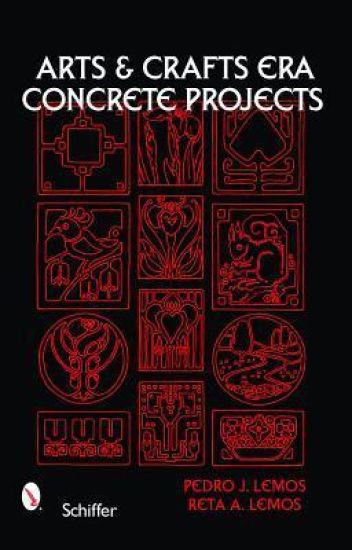
Arts & Crafts Era Concrete Projects
Pedro J. Lemos; Reta A. Lemos
Schiffer Publishing Ltd
2007
nidottu
This reprint of an important work details the authors' groundbreaking work in Arts & Crafts era projects created with concrete. Projects include majolica and mosaic tiles, bowls and vases, flower boxes and garden pottery, and architectural applications. Techniques covered include the creation of plaster molds, surface finishes, and slip painting as well as recipes for cement mixes, color applications, and the simple tools needed to get started. The processes are so basic, and the materials so widely available, that the authors even suggest projects for school children. Moreover they offer design tips that are perfect for anyone hoping to recreate Arts & Crafts era accents for their home.
Cultural Competency in Health, Social & Human Services
Pedro J. Lecca; Ivan Quervalu; Joao V. Nunes; Hector F. Gonzales
CRC Press Inc
1998
sidottu
Cultural competency is an issue that is becoming increasingly more important as thousands of people come to this country every year. Because of widely different social mores, living conditions, traditions, personal beliefs, and practices of clients, health professionals in all specialties are finding it difficult to communicate effectively with the members of the diverse racial and ethnic groups that come to them for help. To give health and human services professionals the necessary training, material on cultural competency has been mandated in several different curricula, yet appropriate pedagogical material remains relatively rare. This pioneering volume presents the latest information and techniques for improving cultural competency in the delivery of health, social, and human services to ethnic and racial minority groups in the United States. Special attention is paid to the importance of understanding the social and culture backgrounds of clients when assessing diagnosis of policy and economic issues, which are rarely examined in this context. Notable for its combination of theory and practice, which will be invaluable for both professionals and students, this book also includes material on cultural competency within such special populations as the mentally ill, the elderly, children, and families.
Pathways for Minorities into the Health Professions
Pedro J. Lecca; Thomas D. Watts
University Press of America
1989
sidottu
This book introduces the reader to the scope and extent of minority underrepresentation in the health professions. Underrepresented minority groups include Afro-Americans, Hispanics and Native Americans. Drs. Lecca and Watts have cited a number of studies and papers describing trends in minority enrollment in health profession institutions. Among the areas which the authors focus on are the recruitment and admissions process which they note need intensive reexamination by higher education administrators and educators. They describe examples of academic enrichment and retention programs. They suggest that minority retention and the ultimate goal, increase in graduation, will only be achieved if financial and other forms of institutional and private/public support are forthcoming. The book concludes with some 'modest' recommendations.
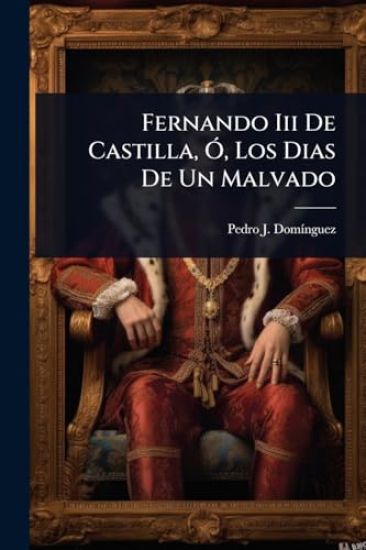
Fernando Iii De Castilla, Ã", Los Dias De Un Malvado
Pedro J Domã-Nguez
Hutson Street Press
2025
sidottu
Fernando Iii De Castilla, Ã", Los Dias De Un Malvado
Pedro J Domã-Nguez
Hutson Street Press
2025
pokkari
Todos, alguna vez en la vida, hemos perdido un amor y sabemos lo dif cil que es superar la partida. Con el tiempo te haces m s fuerte, m s valiente, m s resistente y aprendes a curar esa herida que te deja en el alma. Con el tiempo... Pero, cu nto tiempo se necesita para olvidar? Es un olvido lento, angustiante y muchas veces, hasta in til; siempre terminas recordando "algo". La nica y la manera m s efectiva de olvidar a esa persona, es abolir completamente sus recuerdos. Lograrlo, es cuesti n de suerte, de desearlo tanto que se convierta en realidad; sin embargo, el precio que debes pagar a cambio, es muy alto, tan alto que debes enfrentar esa delicada l nea de la vida y la muerte.
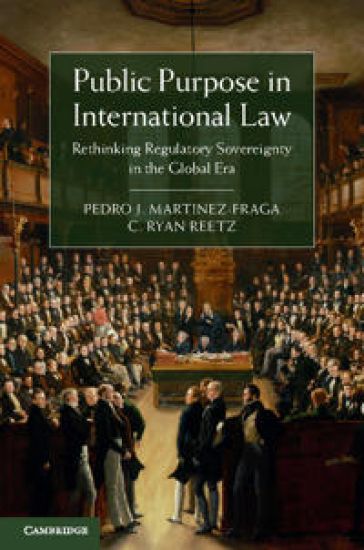
Public Purpose in International Law
Pedro J. Martinez-Fraga; C. Ryan Reetz
Cambridge University Press
2015
sidottu
This text explores how the public purpose doctrine reconciles the often conflicting, but equally binding, obligations that states have to engage in regulatory sovereignty while honoring host-state obligations to protect foreign investment. The work examines the multiple permutations and iterations of the public purpose doctrine and concludes that this principle needs to be reconceptualized to meet the imperatives of economic globalization and of a new paradigm of sovereignty that is based on the interdependence, and not independence, of states. It contends that the historical expression of the public purpose doctrine in customary and conventional international law is fraught with fundamental flaws that, if not corrected, will give rise to disparities in the relationship between investors and states, asymmetries with respect to industrialized nations and developing states, and, ultimately, process legitimacy concerns.
The American Influence on International Commercial Arbitration
Pedro J. Martinez-Fraga
Cambridge University Press
2020
sidottu
As in its first edition, this book traces the contours of select US common law doctrinal developments concerning international commercial arbitration. This new edition supplements the foundational work contained in the first edition in order to produce a broader and deeper work. The author explores how the US common law may help bridge cross-cultural legal differences by focusing on the need to address these contrasting approaches through the nomenclature and goal of securing equality between party-autonomy and arbitrator discretion in international commercial arbitration. This book thus focuses on the common law development of arbitrator immunity, as well as the precepts of party-initiative and –autonomy forming part of the US common law discovery rubric that may contribute to promoting expediency, efficiency and transparency in international commercial arbitration proceedings. It does so by carefully analyzing, among other things, the International Bar Association (IBA) Rules on Evidence Gathering, the Prague Rules, and the role of 28 USC. §1782 in international arbitration.
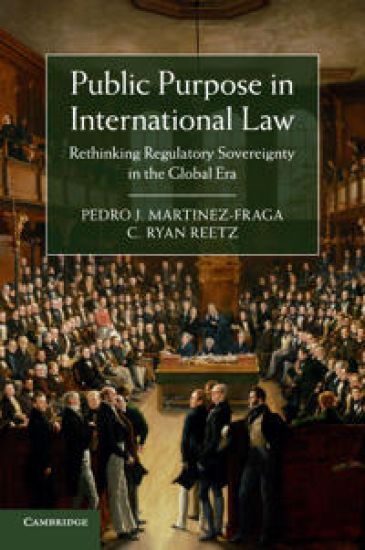
Public Purpose in International Law
Pedro J. Martinez-Fraga; C. Ryan Reetz
Cambridge University Press
2017
pokkari
This text explores how the public purpose doctrine reconciles the often conflicting, but equally binding, obligations that states have to engage in regulatory sovereignty while honoring host-state obligations to protect foreign investment. The work examines the multiple permutations and iterations of the public purpose doctrine and concludes that this principle needs to be reconceptualized to meet the imperatives of economic globalization and of a new paradigm of sovereignty that is based on the interdependence, and not independence, of states. It contends that the historical expression of the public purpose doctrine in customary and conventional international law is fraught with fundamental flaws that, if not corrected, will give rise to disparities in the relationship between investors and states, asymmetries with respect to industrialized nations and developing states, and, ultimately, process legitimacy concerns.
""Ships in Decoration: School Arts Portfolios"" is a book by Pedro J. Lemos that showcases a collection of artwork featuring ships as a decorative motif. The book includes a variety of artistic styles and techniques, including painting, drawing, and printmaking, as well as examples of how ships have been used in decorative arts throughout history. The portfolio also includes detailed descriptions of the artists and their techniques, making it a valuable resource for art students and enthusiasts. Overall, ""Ships in Decoration"" offers a unique perspective on the use of ships in art and design, and is a must-read for anyone interested in the decorative arts.Fifteen Easy Methods Of Applied Decoration.This scarce antiquarian book is a facsimile reprint of the old original and may contain some imperfections such as library marks and notations. Because we believe this work is culturally important, we have made it available as part of our commitment for protecting, preserving, and promoting the world's literature in affordable, high quality, modern editions, that are true to their original work.