Kirjojen hintavertailu. Mukana 12 390 323 kirjaa ja 12 kauppaa.

Kirjahaku

Etsi kirjoja tekijän nimen, kirjan nimen tai ISBN:n perusteella.

863 tulosta hakusanalla Pertti Kivinen

Karu ja kivinen

Karu ja kivinen

Pentti Mansukoski

Elfhill
2011
sidottu
Hämäläisjärven kesäinen maisema on kaunis ja moni-ilmeinen. Kuvakirjaa rytmittää järvellä soutelevan mieshahmon välityksellä kerrottu kuvaus järven tunnelmista, valoista ja varjoista, kasveista ja eläimistä. Teos on saanut alkunsa mökillä Renkajärven rannalla. Tämä laajojen metsä- ja suoalueiden ympäröimä, Kokemäenjoen vesistön alkulähteillä sijaitseva karu järvi on yksi alueen puhtaimmista.Noin 140 värikuvaa.
Suomalaisen mediataiteen ensimmäinen vuosisata

Suomalaisen mediataiteen ensimmäinen vuosisata

Hanna Maria Anttila, Annette Arlander, Taru Elfving, Veli Granö, Erkki Huhtamo, Otso Huopaniemi, Juha Huuskonen, Juri Joensuu, Pekka Kantonen, Mari Keski-Korsu, Kati Kivinen, Mia Kivinen, Oliver Kochta-Kalleinen, Tellervo Kalleinen, Raine Koskimaa, Petri Kuljuntausta, Leena Kuumola, Teemu Lehmusruusu, Sini Mononen, Asko Mäkelä, Teemu Mäki, Josefina Nelimarkka, Riikka Niemelä, Juuso Paaso, Jussi Parikka, Andrew Paterson, Tuuli Penttinen-Lampisuo, Merja Puustinen, Tytti Rantanen, Perttu Rastas, Helena Sederholm, Tanja Sihvonen

Kustannusosakeyhtiö Parvs
2023
nidottu
Suomalaisen mediataiteen ensimmäinen vuosisata -antologia on ensimmäinen kattava esitys Suomen mediataiteen monialaisesta kentästä. Teos kartoittaa mediataiteen historiaa alkaen varhaisista kokeilijoista ja keksijöistä 1900-luvun alkupuolella. Mediataiteen lajeista esillä ovat muun muassa video-, valo- ja äänitaide, elektroninen kirjallisuus, digitaalinen ja vuorovaikutteinen taide sekä biotaide. Antologian teemaluvut tarkastelevat mediataiteen käytäntöjä ja rakenteita, jotka muotoutuvat vuorovaikutuksessa kulttuurin, teknologian, yhteiskunnan ja ekologian muutosten kanssa. Historiallinen tarkastelu tuo esiin unohdettuja tekijöitä ja arvioi alan kulttuurikeskusteluja eri aikakausilla. Kronologinen aikajana taltioi alan merkittävät tapahtumat ja ilmiöt. Runsaasti kuvitettu teos esittelee yli 150 taiteilijan teoksia.Teos on osa MEHI - Mediataiteen historia Suomessa -hanketta, ja sen kirjoittajina on yli 30 alan asiantuntijaa. Teoksen tuottaa Suomen Mediataideverkosto ry.
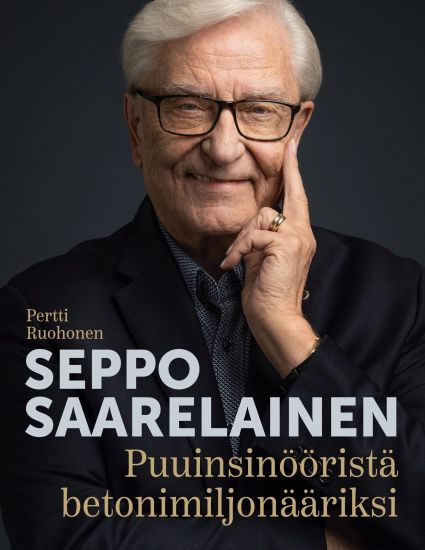
Pertti Ruohonen Puuinsinööristä betonimiljonääriksi

Pertti Ruohonen Puuinsinööristä betonimiljonääriksi

Seppo Saarelainen

BoD - Books on Demand
2025
sidottu
Seppo Saarelainen eteni kansallismaisema Kolin kupeen vaatimattomista kotioloista kansallisesti merkittäväksi yritysjohtajaksi. Lapsuuden 7 vuotta kestänyt sairaalareissu satojen kilometrien päässä kotoa kasvatti sitkeyttä, jota tarvittiin myös aikuisiän syövän nujertamisessa. Nuorukaisen tie vei Kuopion kautta savolaisten Amerikkaan Kotkaan, jossa opiskeli puuteollisuusteknikoksi. Ensimmäiset liikevoitot ja opiskelurahaa kertyi viinatrokauksella. Itseopiskelun ihmemies eteni insinööriksi ja pääsi puusta pitkälle - betonimiljonääriksi ja teollisuusneuvokseksi. Palkkatyö vaihtui perheyrittäjyyteen. Iisalmesta ostettu konkurssipesä kasvoi 1990-luvun alun lamasta huolimatta ja useilla yrityskaupoilla isoja kilpailijoita voittavaksi Betonimestareiksi. Niistä betoneista urakoitsijat rakensivat useita nimekkäitä kohteita eri puolille Suomea ja Ruotsia. Intian ihmemarkkinoille yritys lähti rohkeasti. Valtionjohdon tapaamisia oli Egyptissä ja Keniassa sekä prinssiyhteys Saudi-Arabiaan. Vain Manhattanin katujen heikko kantokyky esti 10 miljoonan euron autotalourakan Yhdysvaltojen New Yorkissa. Betonimestarit myytiin kolmella isolla kaupalla kansainvälisille yrityksille. BM:n eri vaiheissa tuli perheen lisäksi 12 muuta markka- tai euromiljonääriä. Nyt Invest Saarelainen Oy sijoittaa nouseviin aloihin ja yrityksiin. Perheyrittäjyyttä on ollut myös Sepon yksityiselämässä. Menevä mies rauhoittui vasta kolmannen puolison kohdalla.
National Parliaments as a Global Institution

National Parliaments as a Global Institution

Pertti Alasuutari

Oxford University Press
2025
sidottu
Countries all over the world make decisions of national and international importance in a national parliament. Today, for a country to have a national parliament is a global norm, but this has only been the case for the last few hundred years. The development of this remarkable uniformity has seen national parliaments become a global institution. National Parliaments as a Global Institution scrutinizes how the current world order comprising national legislatures evolved, how parliaments work, and how they form a global network or field for the transfer of ideas and information. It highlights the remarkably similar structures and practices of national parliaments all around the world, with even the opening words of a session replicating those of other parliaments, and the four sacred principles that define national parliaments as an institution: national sovereignty, parliamentary immunity, the national interest or common good, and the sanctity of fellow parliamentarians. By considering national parliaments as a global institution, Pertti Alasuutari explores how legislatures symbolize, sanctify, and naturalize the nation-state as the component part of world society.
After the Expulsion

After the Expulsion

Pertti Ahonen

Oxford University Press
2003
sidottu
This book breaks new ground by connecting two central problems faced by the Federal Republic of Germany prior to reunification in 1990, both of them rooted in the Second World War. Domestically, the country had to integrate eight million expellees forced out of their homes in Central and Eastern Europe as a result of the lost war. Externally, it had to re-establish relations with Eastern Europe, despite the burdens of the Nazi past, the expulsions, and the ongoing East-West struggle in the Cold War. This study shows how the long-term consequences of the expellee problem significantly hindered West German efforts to develop normal ties to the East European states. In particular, it emphasizes a point largely overlooked in the existing literature: the way in which the political integration of the expellees into the Federal Republic had unanticipated negative consequences for the country's Ostpolitik.
Death at the Berlin Wall

Death at the Berlin Wall

Pertti Ahonen

Oxford University Press
2010
sidottu
During its 28-year existence, the Berlin Wall was the foremost symbol of the Cold War division of Germany - and of Europe as a whole. But it was also a very concrete site of separation and suffering that claimed the lives of at least 136 people. Taking these deaths at its point of departure, this book reconstructs twelve individual tragedies that occurred at the Wall between 1961 and 1989. They include deaths of escapees from the GDR, by far the largest sub-category of the Wall's victims, as well as those of West Berliners who made an unauthorized entry into the border zone and of East German border guards killed in the line of duty. Ahonen connects these fatalities to larger political processes between the two Germanys, linking micro- and macro-historical perspectives in innovative ways. Within a comparative East-West framework, he examines how the deaths became politicized and instrumentalized in the two states' Cold War battles over legitimacy and power. At the same time, he provides a broader narrative history of the Berlin Wall and of German-German relations during the last three decades of the Cold War. He also extends the analysis into the post-1989 context, exploring post-unification Germany's efforts to come to terms with the problematic legacies of the Wall and of national division more generally, thereby adding new perspectives to the ongoing analysis of contemporary German memory politics.
Micro And Macro Levels Of Analysis In Anthropology
Arguing that there are insufficient theoretical and methodological guidelines for articulating microlevel and macrolevel analyses of sociocultura1 phenomena, contributors to this volume review the history of micro/macro issues in anthropology and provide a framework for a more systematic examination of potential linkages among levels. In addition,
The Synchronization of National Policies

The Synchronization of National Policies

Pertti Alasuutari

Routledge
2019
nidottu
The Synchronization of National Policies shows how it is possible that there is remarkable uniformity in the policies that the nation-states adopt, although there is no world government. Mainstream research attributes such global governance to the influence of leading countries, to functional requirements created by capitalism and technological development, or to international organizations. This book argues that to understand how national policies are synchronized we need to realize that the global population forms a single global tribe of moderns, divided into some 200 clans called nations.While previous research on the world culture of moderns has focused on the diffusion of ideas, this book concentrates on the active role of local actors, who introduce global models and domesticate them to nation-states. In national policymaking, actors justify new policies by international comparisons, by the successes and failures of models adopted in other countries, and by building and appealing to the authority of international organizations. Consequently, national policies are synchronized with each other. Yet, because of the way such domestication of global trends takes place, citizens retain and reproduce the understanding that they follow a sovereign national trajectory.This book will be of interest to students and scholars of sociology, world culture theory, globalization, international relations, and political science.
Foundational Analysis

Foundational Analysis

Pertti Saariluoma

Routledge
1997
sidottu
In a critical analysis of the asumptions underlying experimental psychology, Pertti Saariluoma urges social scientists to reflect upon their procedures and methodology. He has revisited the philosophy of science to find a new way of applying its methods to psychology. Foundational Analysis shows how it is possible to analyze existing methodological arguments and find loopholes in them, and raises new issues for the rationale behind empirical technique. It will be of interest to researchers and students in cognitive science and other social sciences, and the philosophy of science.
The Synchronization of National Policies

The Synchronization of National Policies

Pertti Alasuutari

Routledge
2015
sidottu
The Synchronization of National Policies shows how it is possible that there is remarkable uniformity in the policies that the nation-states adopt, although there is no world government. Mainstream research attributes such global governance to the influence of leading countries, to functional requirements created by capitalism and technological development, or to international organizations. This book argues that to understand how national policies are synchronized we need to realize that the global population forms a single global tribe of moderns, divided into some 200 clans called nations.While previous research on the world culture of moderns has focused on the diffusion of ideas, this book concentrates on the active role of local actors, who introduce global models and domesticate them to nation-states. In national policymaking, actors justify new policies by international comparisons, by the successes and failures of models adopted in other countries, and by building and appealing to the authority of international organizations. Consequently, national policies are synchronized with each other. Yet, because of the way such domestication of global trends takes place, citizens retain and reproduce the understanding that they follow a sovereign national trajectory.This book will be of interest to students and scholars of sociology, world culture theory, globalization, international relations, and political science.
Water Quality Measurements, 6 Volume Set

Water Quality Measurements, 6 Volume Set

Pertti Heinonen

JOHN WILEY SONS INC
2008
sidottu
Water is a fundamental constituent of life and is essential to a wide range of economic activities. It is also a limited resource, as we are frequently reminded by the tragic effects of drought in certain parts of the world. Even in areas with high precipitation, and in major river basins, overuse and mismanagement of water have created severe constraints on availability. Such problems are widespread and will be made more acute by the accelerating demand on freshwater arising from trends in economic development. Despite the fact that water-resource management is essentially a local, river-basin-based activity, there are a number of areas of action that are relevant to all or signi?cant parts of the European Union and for which it is advisable to pool efforts for the purpose of understanding relevant phenomena (e.g. pollutions, geochemical studies), developing technical solutions and/or de?ning management procedures. One of the keys for successful cooperation aimed at studying hydrology, water monitoring, biological activities and so on is to achieve and ensure good water quality measurements. Quality measurements are essential to demonstrate the comparability of data obtained world-wide and they form the basis for correct decisions related to management of water resources, monitoring issues, biological quality and so on. Besides the necessary quality control tools developed for various types of physical, chemical and biological measurements, there is a strong need for education and training related to water quality measurements. This need has been recognized by the European Commission, which has funded a series of training courses on this topic, covering aspects such as monitoring and measurements of lake recipients, measurements of heavy metals and organic compounds in drinking and surface water, use of biotic indexes, and methods to analyse algae, protozoa and helminths. This was the initial input for launching the Water Quality Measurement series in the year 2000, which aims to cover monitoring features of various aquatic environments with focus on freshwater resources. It also includes marine considerations to complete the overall discussions about water quality measurements. This book series includes the topics of the above-mentioned courses and the outcome of recent scienti?c advances, as well as other aspects related to quality control tools (e.g. certi?ed reference materials for the quality control of water analysis) and monitoring of various types of water (river, wastewater, groundwater, seawater). Titles in this Set Hydrological and Limnological Aspects of Lake Monitoring Quality Assurance for Water Analysis Detection Methods for Algae, Protozoa and Helminths in Fresh and Drinking Water Analytical Methods for Drinking Water: Advances in Sampling and Analysis Biological Monitoring of Rivers: Applications and Perspectives Wastewater Quality Monitoring and Treatment