Kirjojen hintavertailu. Mukana 11 244 527 kirjaa ja 12 kauppaa.

Kirjahaku

Etsi kirjoja tekijän nimen, kirjan nimen tai ISBN:n perusteella.

240 tulosta hakusanalla Peta Tait

Forms of Emotion

Forms of Emotion

Peta Tait

Routledge
2021
sidottu
Forms of Emotion analyses how drama, theatre and contemporary performance present emotion and its human and nonhuman diversity. This book explores the emotions, emotional feelings, mood, and affect, which make up a spectrum of ‘emotion’, to illuminate theatrical knowledge and practice and reflect the distinctions and debates in philosophy, neuroscience, psychology, and other disciplines. This study asserts that specific forms of emotion are intentionally unified in drama, theatre, and performance to convey meaning, counteract separation and subversively champion emotional freedom. The book progressively shows that the dramatic and theatrical representation of the nonhuman reveals how human dominance is offset by emotional connection with birds, animals, and the natural environment. This book will be of great interest to students and researchers interested in the emotions and affect in dramatic literature, theatre studies, performance studies, psychology, and philosophy as well as artists working with emotionally expressive performance.
Forms of Emotion

Forms of Emotion

Peta Tait

TAYLOR FRANCIS LTD
2023
nidottu
Forms of Emotion analyses how drama, theatre and contemporary performance present emotion and its human and nonhuman diversity. This book explores the emotions, emotional feelings, mood, and affect, which make up a spectrum of ‘emotion’, to illuminate theatrical knowledge and practice and reflect the distinctions and debates in philosophy, neuroscience, psychology, and other disciplines. This study asserts that specific forms of emotion are intentionally unified in drama, theatre, and performance to convey meaning, counteract separation and subversively champion emotional freedom. The book progressively shows that the dramatic and theatrical representation of the nonhuman reveals how human dominance is offset by emotional connection with birds, animals, and the natural environment. This book will be of great interest to students and researchers interested in the emotions and affect in dramatic literature, theatre studies, performance studies, psychology, and philosophy as well as artists working with emotionally expressive performance.
Circus Bodies

Circus Bodies

Peta Tait

Routledge
2005
sidottu
This pioneering study is one of the major publications in the increasingly popular and largely undocumented area of circus studies.Through photographs and illustrations, Peta Tait presents an extraordinary survey of 140 years of trapeze acts and the socially changing ideas of muscular action in relation to our understanding of gender and sexuality. She questions how spectators see and enjoy aerial actions, and what cultural identities are presented by bodies in fast, physical aerial movement.Adeptly locating aerial performance within the wider cultural history of bodies and their identities, Circus Bodies explores this subject through a range of films such as Trapeze (1956) and Wings of Desire (1987) and Tait also examines live performances including:* the first trapeze performers: Léotard and the Hanlon Brothers* female celebrities; Azella, Sanyeah, black French aerialist LaLa, the infamous Leona Dare, and the female human cannonballs* twentieth-century gender benders; Barbette and Luisita Leers* the Codonas, Concellos, Gaonas, Vazquez and Pages troupes* imaginative aerial acts in Cirque de Soleil and Circus Oz productions.This book will prove an invaluable resource for all students and scholars interested in this fascinating field.
Circus Bodies

Circus Bodies

Peta Tait

Routledge
2005
nidottu
This pioneering study is one of the major publications in the increasingly popular and largely undocumented area of circus studies.Through photographs and illustrations, Peta Tait presents an extraordinary survey of 140 years of trapeze acts and the socially changing ideas of muscular action in relation to our understanding of gender and sexuality. She questions how spectators see and enjoy aerial actions, and what cultural identities are presented by bodies in fast, physical aerial movement.Adeptly locating aerial performance within the wider cultural history of bodies and their identities, Circus Bodies explores this subject through a range of films such as Trapeze (1956) and Wings of Desire (1987) and Tait also examines live performances including:* the first trapeze performers: Léotard and the Hanlon Brothers* female celebrities; Azella, Sanyeah, black French aerialist LaLa, the infamous Leona Dare, and the female human cannonballs* twentieth-century gender benders; Barbette and Luisita Leers* the Codonas, Concellos, Gaonas, Vazquez and Pages troupes* imaginative aerial acts in Cirque de Soleil and Circus Oz productions.This book will prove an invaluable resource for all students and scholars interested in this fascinating field.
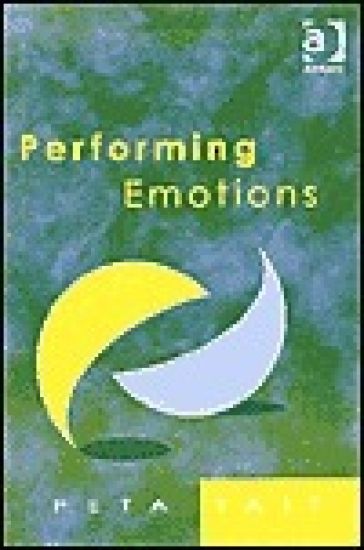
Performing Emotions

Performing Emotions

Peta Tait

Ashgate Publishing Limited
2002
sidottu
In Performing Emotions, Peta Tait's central argument is that performing emotions in realism is also performing gender identity. Emotions are phenomena that are performable by bodies, which have cultural identities. In turn, these create cultural spaces of emotions. This study integrates scholarship on realist drama, theatre and approaches to acting, with interdisciplinary theories of emotion, phenomenology and gender theory. With chapters devoted to masculinity and femininity specifically, as well as to emotions generally, it investigates social beliefs about emotions through Chekhov's four major plays in translation, and English language commentaries on Constantin Stanislavski's direction (of the play's first productions) and his approaches to acting, and Olga Knipper's acting of the central women characters. Emotions exists as social relationships; they are imagined and embodied as gendered. Tait demonstrates how theatrical emotions are predicated on social performances and vice versa. In Chekhov's plays, which came to dominate a twentieth century theatre of emotions, characters interpret their emotions intertextually in relation to other theatrical and fictional narratives of emotions. Tait here interrogates these plays as sustained explorations of the inherent theatricality of characters expressing emotions from their phenomenological awareness. A theatrical language of gendered interiority is produced in the acting of emotions in Stanislavski's early realistic theatre. Alternatively, remapping the performances of emotional bodies can destabilise the culturally constructed boundary separating an inner, private self and an outer, social self in culturally produced geographies of emotions. As Tait shows, emotions can be performed as indivisible spatialities. Performing Emotions integrates theories of theatre, gender identity and emotion to investigate how sexual difference impacts on the representations of emotions. The book develops an accumulative analysis of the meanings of emotions in twentieth century realist drama, theatre and acting.
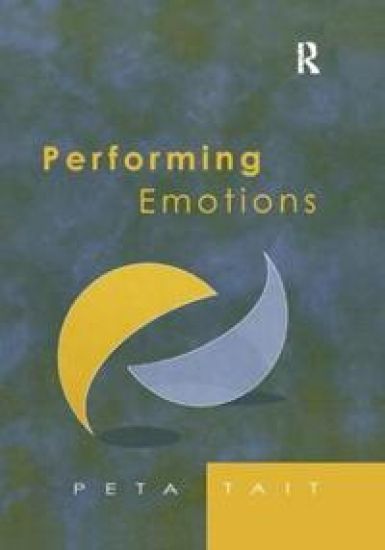
Performing Emotions

Performing Emotions

Peta Tait

Routledge
2017
nidottu
In Performing Emotions, Peta Tait's central argument is that performing emotions in realism is also performing gender identity. Emotions are phenomena that are performable by bodies, which have cultural identities. In turn, these create cultural spaces of emotions. This study integrates scholarship on realist drama, theatre and approaches to acting, with interdisciplinary theories of emotion, phenomenology and gender theory. With chapters devoted to masculinity and femininity specifically, as well as to emotions generally, it investigates social beliefs about emotions through Chekhov's four major plays in translation, and English language commentaries on Constantin Stanislavski's direction (of the play's first productions) and his approaches to acting, and Olga Knipper's acting of the central women characters. Emotions exists as social relationships; they are imagined and embodied as gendered. Tait demonstrates how theatrical emotions are predicated on social performances and vice versa. In Chekhov's plays, which came to dominate a twentieth century theatre of emotions, characters interpret their emotions intertextually in relation to other theatrical and fictional narratives of emotions. Tait here interrogates these plays as sustained explorations of the inherent theatricality of characters expressing emotions from their phenomenological awareness. A theatrical language of gendered interiority is produced in the acting of emotions in Stanislavski's early realistic theatre. Alternatively, remapping the performances of emotional bodies can destabilise the culturally constructed boundary separating an inner, private self and an outer, social self in culturally produced geographies of emotions. As Tait shows, emotions can be performed as indivisible spatialities. Performing Emotions integrates theories of theatre, gender identity and emotion to investigate how sexual difference impacts on the representations of emotions. The book develops an accumulative analysis of the meanings of emotions in twentieth century realist drama, theatre and acting.
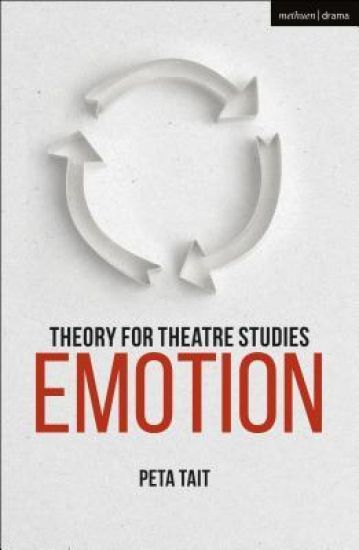
Theory for Theatre Studies: Emotion
Theory for Theatre Studies: Emotion explores how emotion is communicated in drama, theatre, and contemporary performance and therefore in society. From Aristotle and Shakespeare to Stanislavski, Brecht and Caryl Churchill, theatre reveals and, informs but also warns about the emotions. The term ‘emotion’ encompasses the emotions, emotional feelings, affect and mood, and the book explores how these concepts are embodied and experienced within theatrical practice and explained in theory. Since emotion is artistically staged, its composition and impact can be described and analysed in relation to interdisciplinary approaches. Readers are encouraged to consider how emotion is dramatically, aurally, and visually developed to create innovative performance. Case studies include: Medea, Twelfth Night, The Caucasian Chalk Circle, Ibsen’s A Doll’s House, and performances by Mabou Mines, Robert Lepage, Rimini Protokoll, Anna Deavere Smith, Socìetas Raffaello Sanzio, Marina Abramovic, and The Wooster Group. By way of these detailed case studies, readers will appreciate new methodologies and approaches for their own exploration of ‘emotion’ as a performance component.Online resources to accompany this book are available at https://www.bloomsbury.com/theory-for-theatre-studies-emotion-9781350030848/.
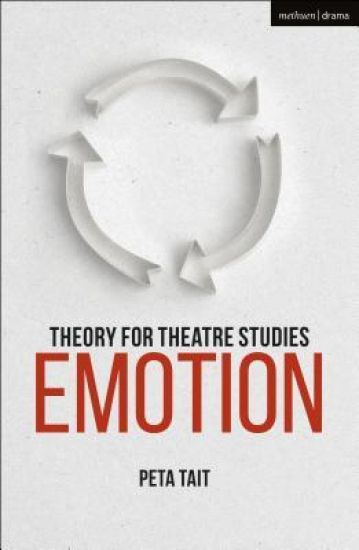
Theory for Theatre Studies: Emotion
Theory for Theatre Studies: Emotion explores how emotion is communicated in drama, theatre, and contemporary performance and therefore in society. From Aristotle and Shakespeare to Stanislavski, Brecht and Caryl Churchill, theatre reveals and, informs but also warns about the emotions. The term ‘emotion’ encompasses the emotions, emotional feelings, affect and mood, and the book explores how these concepts are embodied and experienced within theatrical practice and explained in theory. Since emotion is artistically staged, its composition and impact can be described and analysed in relation to interdisciplinary approaches. Readers are encouraged to consider how emotion is dramatically, aurally, and visually developed to create innovative performance. Case studies include: Medea, Twelfth Night, The Caucasian Chalk Circle, Ibsen’s A Doll’s House, and performances by Mabou Mines, Robert Lepage, Rimini Protokoll, Anna Deavere Smith, Socìetas Raffaello Sanzio, Marina Abramovic, and The Wooster Group. By way of these detailed case studies, readers will appreciate new methodologies and approaches for their own exploration of ‘emotion’ as a performance component.Online resources to accompany this book are available at https://www.bloomsbury.com/theory-for-theatre-studies-emotion-9781350030848/.
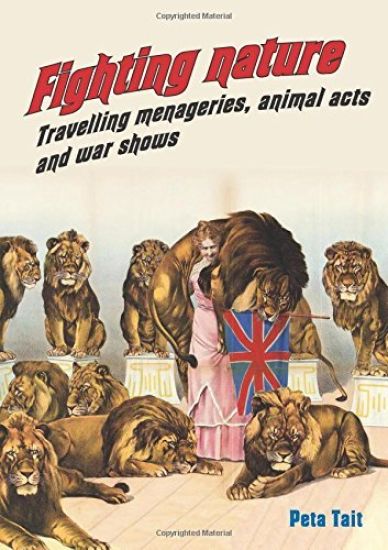
Fighting Nature

Fighting Nature

Peta Tait

Sydney University Press
2016
nidottu
Throughout the 19th century, animals were integrated into staged scenarios of confrontation, ranging from lion acts in small cages to large-scale re-enactments of war. Initially presenting a handful of exotic animals, travelling menageries grew to contain multiple species in their thousands. These 19th-century menageries entrenched beliefs about the human right to exploit nature through war-like practices against other animal species. Animal shows became a stimulus for antisocial behaviour as locals taunted animals, caused fights, and even turned into violent mobs. Human societal problems were difficult to separate from issues of cruelty to animals.Apart from reflecting human capacity for fighting and aggression, and the belief in human dominance over nature, these animal performances also echoed cultural fascination with conflict, war and colonial expansion, as the grand spectacles of imperial power reinforced state authority and enhanced public displays of nationhood and nationalistic evocations of colonial empires. Fighting Nature is an insightful analysis of the historical legacy of 19th-century colonialism, war, animal acquisition and transportation. This legacy of entrenched beliefs about the human right to exploit other animal species is yet to be defeated.'When does fighting end and theatre begin? In this fascinating study, Peta Tait – one of the most prominent authors in the Performance/Animal Studies intersection – explores animal acts with a particular focus on confrontation. The sites of the human–animal encounter range from theatres, circus, and war re-enactments investigating how the development of certain human fighting practices run in parallel with certain types of public exhibits of wild animals. Tait’s account is historical, looking at animal acts – from touring menageries to theatrical performances – from the 1820s to the 1910s.'Lourdes Orozco, Lecturer in Theatre Studies, University of Leeds
Ecology and Climate in Theatre and Australian Performance

Ecology and Climate in Theatre and Australian Performance

Peta Tait; Denise Varney; Lara Stevens

Cambridge University Press
2026
sidottu
Charting a history of theatrical resistance to environmental exploitation, this study places drama and theatrical performance staged in Australia within the context of international scholarship to address major concerns about changing ecological systems. Exploring the staging of calamities ranging from droughts and floods to forest fires and rising seas, it examines a strikingly diverse body of work that reflects the entanglement of socio-economic and natural forces leading to ecological damage and climate change. Weather phenomena become protagonists in plays by Jack Davis, Andrea James, Louis Nowra and Hannie Rayson, while mutant creatures manifest climate threats in Jill Orr's work, and performances by the Australian Indigenous Marrugeku and Bangarra Dance Theatre invite grief for immense losses. Featuring First Nations performance and the profound knowledge of biodiverse multispecies habitats it presents, this study challenges the ways in which socio-ecological disaster is called 'natural' and positioned outside human responsibility.
Peta, A Magic Cat

Peta, A Magic Cat

Grace Lee

Lulu.com
2018
pokkari
Peta a Golden Cat and a human called Maria, fall through a headboard into an amazing world called Middlestop. In this strange world there are homes that expand to fit whoever enters them, unusual foods and thrilling encounters with many different creatures, A nasty Black Cat is menacing the people of Middlestop. It has been stealing people, and imprisoning them inside its cave, but with the help of some green mice Maria and Peta, expel the Black Cat out of Middlestop forever.
Peta - A Feminist's Problem With Men

Peta - A Feminist's Problem With Men

WALKER

Open University Press
1995
nidottu
'I've got a problem with men .... I don't know whether it's a problem with other things as well ... I am afraid of what men represent ... I feel they have more power.'This is how Peta begins to tell her story to her potential therapist. Six therapists are given the opportunity of assessing Peta: what do they wish to know about her? how do they understand her? how might they work with her? and what outcome can they predict for her as a result of therapy?In this fascinating book - which starts with Peta's own story - the reader has the chance to see six different therapists at work, drawing on the same initial material from the one real client. The similarities and differences between therapies and therapists are highlighted. And at the end the reader is able to enter Peta's experience of the process, and decide with her, which one she might choose in her search for a therapist.This highly original volume will appeal to a wide range of students and practitioners involved in counselling and psychotherapy, particularly those interested in comparing different therapeutic approaches.
Peta's Vegan Twist (Aus): A Tasty Dairy and Meat Free Cookbook for Everyone
PLEASE NOTE THAT I AM NOT P.E.T.A (people for the ethical treatment of animals) This is a cookbook to satisfy those curious about trying vegan food or for those who already eat vegan, who want more flavour in their everyday life. I often hear the question, "what do vegans eat?". In this book you can pick and chose recipes or you can follow (summer or winter recipes) a weekly or monthly eating plan to revitalise health and shift excess weight. This book is a simple way to integrate more strengthening and preventative foods into your diet. You could make a permanent fixture of Peta's VEGAN TWIST eating 1 day a week for your family, or go on a 1 - 4 week (winter or summer recipes) eating plan. As with most things in life, being organised is key or things just don't get done. The convenient weekly shopping lists are designed to take the hassle out of trying something new, if you embark on a weekly eating plan. There are no quick fixes and packet mixes that can give you the health buzz you crave. Putting in some time and effort will give top results. The philosophy behind the book is taste. I was often disappointed with vegan recipes that failed to satisfy in the taste department. I wanted every meal to be satisfying (taste and filling) and be healthy, so that when I finished eating I wasn't feeling that overindulging guilt and wasn't planing the next days meagre pickings to compensate. I like eating tasty food. I like carbohydrates. I hate counting calories. I like knowing that what I am eating makes me healthy now and for the long run. I hate pounding out the exercise for little visible gain; if I have not been eating the right foods, no amount of exercise will shift that mass. A balanced vegan eating plan is a brilliant catalyst for obtaining a slim figure with moderate gentle exercise. Hopefully this book will share some of my ideas and help people with busy lives to integrate some vegan cooking into their weekly routine. For those of you who already eat vegan, I hope you will be inspired by some fresh and tasty Peta's VEGAN TWIST ideas for your menu
Peta's Vegan Twist (Us Edition): A Tasty Diary and Meat Free Cookbook for Everyone
PLEASE NOTE THAT I AM NOT P.E.T.A (people for the ethical treatment of animals) This is a cookbook to satisfy those curious about trying vegan food or for those who already eat vegan, who want more flavour in their everyday life. I often hear the question, "what do vegans eat?". In this book you can pick and chose recipes or you can follow (summer or winter recipes) a weekly or monthly eating plan to revitalise health and shift excess weight. This book is a simple way to integrate more strengthening and preventative foods into your diet. You could make a permanent fixture of Peta's VEGAN TWIST eating 1 day a week for your family, or go on a 1 - 4 week (winter or summer recipes) eating plan. As with most things in life, being organised is key or things just don't get done. The convenient weekly shopping lists are designed to take the hassle out of trying something new, if you embark on a weekly eating plan. There are no quick fixes and packet mixes that can give you the health buzz you crave. Putting in some time and effort will give top results. The philosophy behind the book is taste. I was often disappointed with vegan recipes that failed to satisfy in the taste department. I wanted every meal to be satisfying (taste and filling) and be healthy, so that when I finished eating I wasn't feeling that overindulging guilt and wasn't planing the next days meagre pickings to compensate. I like eating tasty food. I like carbohydrates. I hate counting calories. I like knowing that what I am eating makes me healthy now and for the long run. I hate pounding out the exercise for little visible gain; if I have not been eating the right foods, no amount of exercise will shift that mass. A balanced vegan eating plan is a brilliant catalyst for obtaining a slim figure with moderate gentle exercise. Hopefully this book will share some of my ideas and help people with busy lives to integrate some vegan cooking into their weekly routine. For those of you who already eat vegan, I hope you will be inspired by some fresh and tasty Peta's VEGAN TWIST ideas for your menu
Peta's Vegan Twist (UK): A Tasty Dairy and Meat Free Cookbook for Everyone
PLEASE NOTE THAT I AM NOT P.E.T.A (people for the ethical treatment of animals) This is a cookbook to satisfy those curious about trying vegan food or for those who already eat vegan, who want more flavour in their everyday life. I often hear the question, "what do vegans eat?". In this book you can pick and chose recipes or you can follow (summer or winter recipes) a weekly or monthly eating plan to revitalise health and shift excess weight. This book is a simple way to integrate more strengthening and preventative foods into your diet. You could make a permanent fixture of Peta's VEGAN TWIST eating 1 day a week for your family, or go on a 1 - 4 week (winter or summer recipes) eating plan. As with most things in life, being organised is key or things just don't get done. The convenient weekly shopping lists are designed to take the hassle out of trying something new, if you embark on a weekly eating plan. There are no quick fixes and packet mixes that can give you the health buzz you crave. Putting in some time and effort will give top results. The philosophy behind the book is taste. I was often disappointed with vegan recipes that failed to satisfy in the taste department. I wanted every meal to be satisfying (taste and filling) and be healthy, so that when I finished eating I wasn't feeling that overindulging guilt and wasn't planing the next days meagre pickings to compensate. I like eating tasty food. I like carbohydrates. I hate counting calories. I like knowing that what I am eating makes me healthy now and for the long run. I hate pounding out the exercise for little visible gain; if I have not been eating the right foods, no amount of exercise will shift that mass. A balanced vegan eating plan is a brilliant catalyst for obtaining a slim figure with moderate gentle exercise. Hopefully this book will share some of my ideas and help people with busy lives to integrate some vegan cooking into their weekly routine. For those of you who already eat vegan, I hope you will be inspired by some fresh and tasty Peta's VEGAN TWIST ideas for your menu