Kirjojen hintavertailu. Mukana 11 244 527 kirjaa ja 12 kauppaa.

Kirjahaku

Etsi kirjoja tekijän nimen, kirjan nimen tai ISBN:n perusteella.

1000 tulosta hakusanalla Peter Crabb

Charles Edward de Boos

Charles Edward de Boos

Peter Crabb

Busybird Publishing
2022
pokkari
Charles de Boos was born in London 1819. His Huguenot ancestors from Normandy were among thousands who fled France during the religious wars of the 16-17th centuries. His family prospered, eventually living in London's West End. He was educated at the East India Company Military Seminary in Surrey. From there, still only a teenager, he joined the British Auxiliary Legion that participated in the Carlist Wars in northern Spain.In 1839 de Boos sailed to Australia. He spent time in Sydney and the Hunter Valley and travelled to other parts of NSW., undertaking a variety of activities, including starting his own newspaper. With his wife and first child, he moved to Melbourne in 1850. Employed by The Argus, he reported on the early Victorian gold rushes in Mount Alexander, Ballarat, Bendigo, and the Ovens Valley. He also worked for the Victorian colonial government.He returned to Sydney in 1856 and joined the Sydney Morning Herald. He reported the debates of the NSW Legislative Assembly. Much more importantly, over some 16 years, he travelled extensively throughout the eastern and central parts of NSW reporting on the gold fields, writing numerous series of articles. In 1875, he became a Mining Warden and Police Magistrate for the NSW Government, with appointments at Braidwood, Copeland (twice), Forbes, Temora, Milparinka and Cobar. He was highly regarded as a government official. He retired in 1889 and spent his last years in Sydney. He died in 1900.As well as an accomplished reporter, de Boos' other writings were considerable: satyr, social commentary, fiction. He was one of Australia's most important early writers, yet his work has received very little attention in Australian literature studies. Among other things, this biography corrects the records and seeks to give him the place he merits in the history of early Australian literature.

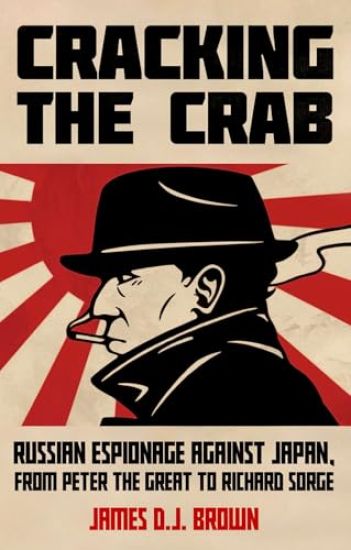
Cracking the Crab: Russian Espionage Against Japan, from Peter the Great to Richard Sorge
Richard Sorge is one of history's most famous spies. This hard-drinking, womanizing, motorcycle-crashing Soviet officer penetrated the German embassy in Tokyo during the 1930s and gathered intelligence credited with changing the course of the Second World War. It is an intriguing tale; but Sorge's spy ring was just one chapter in a much longer history of Russian and Soviet espionage in and against Japan. Cracking the Crab tells the extraordinary full story of Russian intrigue targeting Japan, from first encounters in the eighteenth century to the Soviet declaration of war in August 1945. Colorful episodes include Gojong, King of Korea, being smuggled into the Russian legation dressed as a woman in 1896; the 1927 'Tanaka Memorial', an infamous forgery purporting to be Japan's hidden plan for world domination; and the secret intelligence of 'Nero', a Soviet agent supplying invaluable insight into Japanese strategy during the Second World War. From Russians murdered in broad daylight in Meiji Tokyo to Soviet honey traps and 'white magic' at the Battle of Nomonhan, this is a landmark history of the covert struggle between two great powers of the modern age.
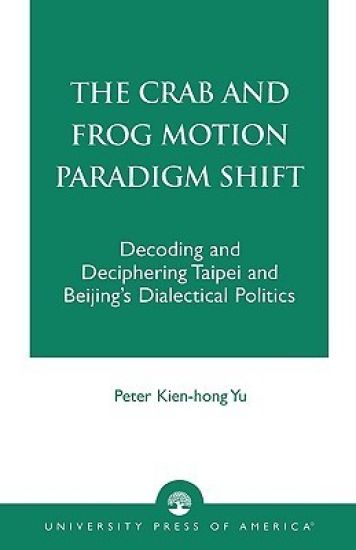
The Crab and Frog Motion Paradigm Shift

The Crab and Frog Motion Paradigm Shift

Peter Kien-hong Yu

University Press of America
2002
nidottu
In Crab and Frog Motion Paradigm Shift, Peter Kien-hong Yu presents a dialectical approach to the study of Chinese (Communist) politics. Yu demonstrates that the application of non-dialectical approaches to the study of Chinese politics over the last eighty years is misguided, due to ample evidence showing that Chinese political figures made use of a particular version of dialectics in their thought and actions. Through case studies, Yu demonstrates that the perception of reality, in terms of dialectics and non-dialectics, makes a striking difference to political analysis, and shows that this framework of thought and action can be applied to any case, word, number, letter, or symbol. This book was awarded a grant by the East Asian Research Institute (U.S.) October 2001.
Crabs

Crabs

Peter J. F. Davie

PRINCETON UNIVERSITY PRESS
2021
sidottu
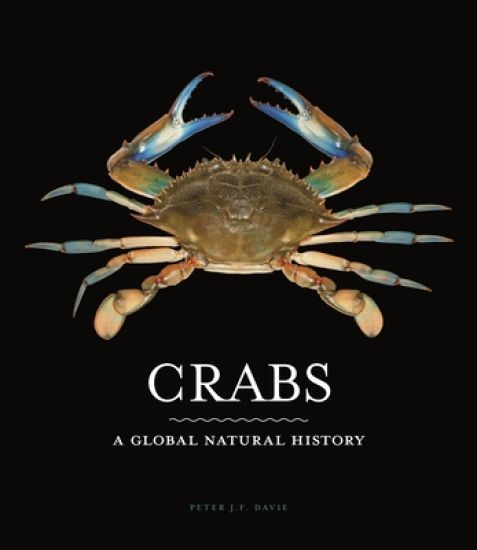
A richly illustrated natural history of the world's crabs that examines their diversity, ecology, anatomy, behavior, and moreThis lavishly illustrated book offers a remarkable look at the world’s crabs. More than 7,000 crab species, in 100 different families, are known today. Their unique physiology and complex behaviors have made them one of the most diverse and adaptable of all animal groups. They can thrive in the darkness of abyssal seas, on the edges of scalding hot volcanic hydrothermal vents, on sunlit coral reefs, on wave-washed rocky shores, and in tropical rain forests at the tops of mountains. They even persist in some of the harshest desert conditions. Playing a vital role in marine and coastal ecology, crabs have been identified as keystone species in habitats such as coral reefs and coastal tropical swamps.Crabs comprises five chapters: evolutionary pathways; anatomy and physiology; ecology; reproduction, cognition, and behavior; and exploitation and conservation. Individual chapters include a variety of subtopics, each illustrated by exceptional images, and followed by numerous double full-page species’ profiles. Each profile has been chosen to emphasize remarkable and intriguing aspects of the life of these fascinating creatures. Some species may be familiar, but many are beyond anything you have probably seen before and will stretch your understanding of what a crab is.Written by a world authority, Crabs offers an accessible overview of these fascinating crustaceans.More than 190 spectacular color photographsAccessible and well-organized chaptersFull profiles on 42 iconic species from across the world
The Coconut Crab

The Coconut Crab

Peter W Fong

Green Place Books
2022
pokkari
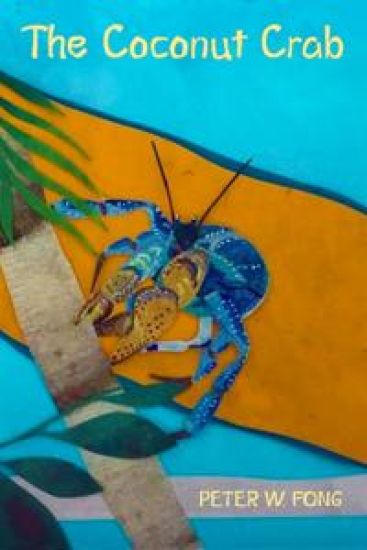
A chapter book for advanced readers set in a chain of tropical islands . . .This story charts the intertwining friendships of a crab, a goat, a bird, and a gecko. Along the way, there are the usual challenges of our eat-or-be-eaten world. The perils of timidity, confusion, and self-doubt. The enticements of vanity and routine. The rewards of fearless generosity and genuine trust.
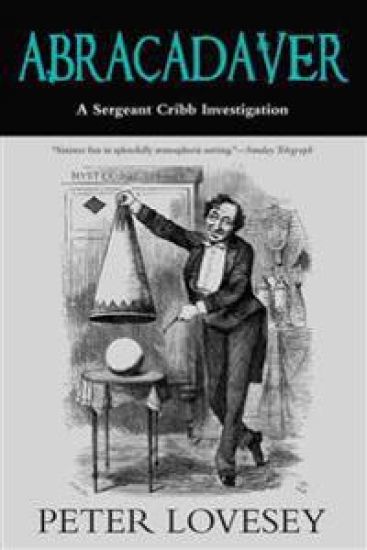
Abracadaver: A Sergeant Cribb Investigation
"Fine picture of period vice, good mystery plotting, and fun." --San Francisco Chronicle A sadistic practical joker is haunting the popular music halls of London, interfering with the actors and interrupting their acts by orchestrating humiliating disasters that take place in view of the audience. A trapeze artist misses her timing when the trapeze ropes are shortened. A comedian who invites the audience to sing along with him finds the words of his song "shamefully" altered. Mustard has been applied to a sword swallower's blade. A singer's costume has been rigged. The girl in a magician's box is trapped. Then the mischief escalates to murder. Or was murder intended all along? That indomitable detective team, Sergeant Cribb and Constable Thackeray of Scotland Yard, must track down the elusive criminal.
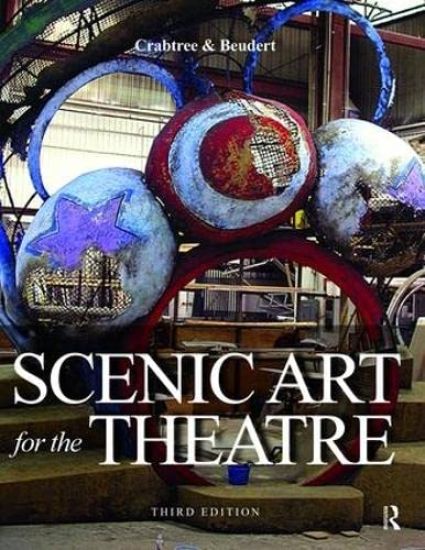
Scenic Art for the Theatre

Scenic Art for the Theatre

Susan Crabtree; Peter Beudert

Focal Press
2011
nidottu
Now in its Third Edition, Scenic Art for the Theatre: History, Tools and Techniques continues to be the most trusted source for both student and professional scenic artists. With new information on scenic design using Photoshop, Paint Shop Pro and other digital imaging softwares this test expands to offer the developing artist more step-by-step instuction and more practical techniques for work in the field. It goes beyond detailing job functions and discussing techniques to serve as a trouble-shooting guide for the scenic artist, providing practical advice for everyday solutions.
Scenic Art for the Theatre

Scenic Art for the Theatre

Susan Crabtree; Peter Beudert

Routledge
2017
sidottu
Now in its Third Edition, Scenic Art for the Theatre: History, Tools and Techniques continues to be the most trusted source for both student and professional scenic artists. With new information on scenic design using Photoshop, Paint Shop Pro and other digital imaging softwares this test expands to offer the developing artist more step-by-step instuction and more practical techniques for work in the field. It goes beyond detailing job functions and discussing techniques to serve as a trouble-shooting guide for the scenic artist, providing practical advice for everyday solutions.
The Handbook of Environmental Policy Evaluation

The Handbook of Environmental Policy Evaluation

Ann Crabb; Pieter Leroy

Routledge
2015
nidottu
Policy evaluation is an important and well-established part of the policy process, facilitating and feeding back to promote the ongoing effectiveness of policies that have been implemented or anticipating policies in the making. Environmental policy is a special case, presenting new complexities uncommon to other areas, which standard evaluation tools are ill-equipped to grapple with. It is also an area that is experiencing rapid growth throughout the world and knowledge is now needed at all levels of government and in NGOs, businesses and other organizations, all of whom are required to assess the effectiveness of their policies. This handbook is the first guide to environmental policy evaluation in practice. Beginning with an introduction to the general principles of evaluation, it explains the particular complexities native to the environmental sphere and provides a comprehensive toolkit of evaluation methods and techniques which the practitioner can employ and refer to again and again. The authors also consider design issues which may face the policy evaluator, including involvement of stakeholders, the sensitivities between them, the a priori assessment of the evaluability of a field, the maximization of the utilization of the evaluations outcomes, and much more. Throughout, the theory is illustrated with practical examples from around the world, making this the essential companion guide for anyone tasked with ensuring that environmental policy fulfils its aims and achieves its potential.
The Handbook of Environmental Policy Evaluation

The Handbook of Environmental Policy Evaluation

Ann Crabb; Pieter Leroy

Earthscan Ltd
2008
sidottu
Policy evaluation is an important and well-established part of the policy process, facilitating and feeding back to promote the ongoing effectiveness of policies that have been implemented or anticipating policies in the making. Environmental policy is a special case, presenting new complexities uncommon to other areas, which standard evaluation tools are ill-equipped to grapple with. It is also an area that is experiencing rapid growth throughout the world and knowledge is now needed at all levels of government and in NGOs, businesses and other organizations, all of whom are required to assess the effectiveness of their policies. This handbook is the first guide to environmental policy evaluation in practice. Beginning with an introduction to the general principles of evaluation, it explains the particular complexities native to the environmental sphere and provides a comprehensive toolkit of evaluation methods and techniques which the practitioner can employ and refer to again and again. The authors also consider design issues which may face the policy evaluator, including involvement of stakeholders, the sensitivities between them, the a priori assessment of the evaluability of a field, the maximization of the utilization of the evaluations outcomes, and much more. Throughout, the theory is illustrated with practical examples from around the world, making this the essential companion guide for anyone tasked with ensuring that environmental policy fulfils its aims and achieves its potential.
Condition Monitoring of Rotating Electrical Machines

Condition Monitoring of Rotating Electrical Machines

Peter Tavner; Li Ran; Christopher Crabtree

Institution of Engineering and Technology
2020
sidottu
Condition monitoring of engineering plants has increased in importance as engineering processes have become increasingly automated. However, electrical machinery usually receives attention only at infrequent intervals when the plant or the electricity generator is shut down. The economics of industry have been changing, placing ever more emphasis on the importance of reliable operation of the plants. Electronics and software in instrumentation, computers, and digital signal processors have improved our ability to analyse machinery online. Condition monitoring is now being applied to a range of systems from fault-tolerant drives of a few hundred watts to machinery of a few hundred MW in major plants. This book covers a large range of machines and their condition monitoring. This 3rd edition builds on the 2nd edition through a major revision, update of chapters and a comprehensive list of references & standards. Permanent magnet, switched reluctance and other types of machines are now covered, as well as variable speed drive machines and off-line techniques. Contents cover an introduction to condition monitoring; rotating electrical machines; electrical machine construction, operation and failure modes; reliability of machines and typical failure rates; signal processing and instrumentation requirements; on-line temperature monitoring; on-line chemical monitoring; on-line vibration monitoring; on-line current, flux and power monitoring; on-line partial discharge (PD) electrical monitoring; on-line variable speed drive machine monitoring; off-line monitoring; condition-based maintenance and asset management; application of artificial intelligence techniques to CM; and safety, training and qualification.