Kirjojen hintavertailu. Mukana 11 244 527 kirjaa ja 12 kauppaa.

Kirjahaku

Etsi kirjoja tekijän nimen, kirjan nimen tai ISBN:n perusteella.

1000 tulosta hakusanalla Peter H. Wilson

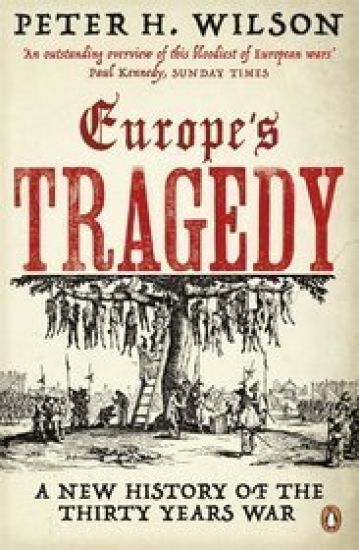
Europe's Tragedy

Europe's Tragedy

Peter H. Wilson

Penguin Books Ltd
2010
pokkari
Winner of the Society for Military History Distinguished Book Award 2011The horrific series of conflicts known as the Thirty Years War (1618-48) tore the heart out of Europe, killing perhaps a quarter of all Germans and laying waste to whole areas of Central Europe to such a degree that many towns and regions never recovered. All the major European powers apart from Russia were heavily involved and, while each country started out with rational war aims, the fighting rapidly spiralled out of control, with great battles giving way to marauding bands of starving soldiers spreading plague and murder. The war was both a religious and a political one and it was this tangle of motives that made it impossible to stop. Whether motivated by idealism or cynicism, everyone drawn into the conflict was destroyed by it. At its end a recognizably modern Europe had been created but at a terrible price.Peter Wilson's book is a major work, the first new history of the war in a generation, and a fascinating, brilliantly written attempt to explain a compelling series of events. Wilson's great strength is in allowing the reader to understand the tragedy of mixed motives that allowed rulers to gamble their countries' future with such horrifying results. The principal actors in the drama (Wallenstein, Ferdinand II, Gustavus Adolphus, Richelieu) are all here, but so is the experience of the ordinary soldiers and civilians, desperately trying to stay alive under impossible circumstances.
The Holy Roman Empire

The Holy Roman Empire

Peter H. Wilson

Penguin Books Ltd
2017
pokkari
THE SUNDAY TIMES AND ECONOMIST BOOKS OF THE YEAR 2016'A definitive study of the amorphous state that lasted a thousand years ... The Holy Roman Empire deserves to be hailed as a magnum opus' Tom Holland, Daily Telegraph'Engrossing ... staggering ... a book that is relevant to our own times' The Times'Masterly ... If, like most people, you know little more about the Holy Roman Empire other than Voltaire's bon mot - "neither holy, nor Roman, nor an empire" - then this is the book for you' Daniel Johnson, Sunday Times'A history that helps us understand Europe's problems today ... interesting and provocative, makes the complex understandable' Christopher Kissane, GuardianA great, sprawling, ancient and unique entity, the Holy Roman Empire, from its founding by Charlemagne to its destruction by Napoleon a millennium later, formed the heart of Europe. It was a great engine for inventions and ideas, it was the origin of many modern European states, from Germany to the Czech Republic, its relations with Italy, France and Poland dictated the course of countless wars - indeed European history as a whole makes no sense without it.In this strikingly ambitious book, Peter H. Wilson explains how the Empire worked. It is not a chronological history, but an attempt to convey to readers why it was so important and how it changed over its existence. The result is a tour de force - a book that raises countless questions about the nature of political and military power, about diplomacy and the nature of European civilization and about the legacy of the Empire, which has continued to haunt its offspring, from Imperial and Nazi Germany to the European Union.
Iron and Blood

Iron and Blood

Peter H. Wilson

PENGUIN BOOKS LTD
2024
pokkari
*WINNER OF THE DUKE OF WELLINGTON MEDAL FOR MILITARY HISTORY**A DAILY TELEGRAPH BOOK OF THE YEAR 2022*'No one interested in the history of Europe can afford not to read this stupendous book' Simon Heffer, Daily TelegraphIron and Blood is a startlingly ambitious and absorbing book, encompassing five centuries of political, military, technological and economic change to tell the story of the German-speaking lands, from the Rhine to the Balkan frontier, from Switzerland to the North Sea. Wilson's narrative considers everything from weapons development to recruitment to battlefield strategy.Germans' military impact on the rest of Europe has been immense. If there is one constant it has been the sense of being beset by seemingly more powerful enemies - France or Russia or Turkey - and the need to strike a rapid knockout blow to ensure a favourable result. Almost inevitably, this has in practice meant protracted, relentless and often unwinnable wars, and - in 1939-1945 - moral catastrophe.The author of definitive books on the Holy Roman Empire and the Thirty Years War, Peter Wilson has with Iron and Blood written his masterpiece.'Hugely impressive' Richard J. Evans, Times Literary Supplement
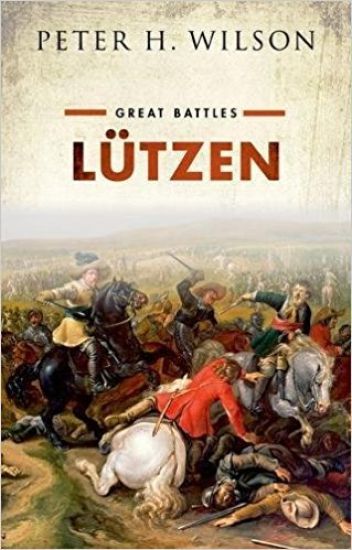
Lützen

Lützen

Peter H. Wilson

Oxford University Press
2018
sidottu
The Thirty Years' War (1618-48) was Europe's most destructive conflict prior to the two world wars. Two of European history's greatest generals faced each other at Lützen in November 1632, mid-way through this terrible war. Neither achieved his objective. Albrecht von Wallenstein withdrew his battered imperial army at nightfall, unaware that his opponent, King Gustavus Adolphus of Sweden, had died a few hours earlier. The indecisive military outcome found an immediate echo in image and print, and became the object of political and historical disputes. Swedish propaganda swiftly fostered the lasting image of the king's sacrifice for the Protestant cause against the spectre of Catholic Habsburg 'universal monarchy'. The standard assumption that the king had 'met his death in the hour of victory' became integral to how Gustavus Adolphus's contribution to modern warfare has been remembered, even celebrated, while the study of Lützen's wider legacy shows how such events are constantly rewritten as elements of propaganda, religious and national identity, and professional military culture. The battle's religious and political associations also led to its adoption as a symbol by those advocating German unification under Prussian leadership. The battlefield remains a place of pilgrimage to this day and a site for the celebration of Protestant German and Nordic culture. This book is the first to combine analysis of the battle itself with an assessment of its cultural, political and military legacy, and the first to incorporate recent archaeological research within a reappraisal of the events and their significance. It challenges the accepted view that Lützen is a milestone in military development, arguing instead that its impact was more significant on the cultural and political level.
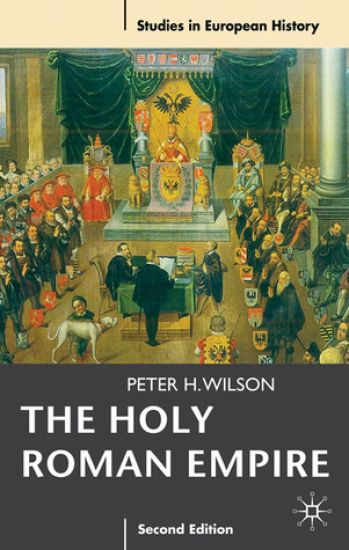
The Holy Roman Empire 1495-1806

The Holy Roman Empire 1495-1806

Peter H. Wilson

Red Globe Press
2011
nidottu
The Holy Roman Empire has always caused tremendous confusion for students of European history, and this book sets out to provide a clear account of this remarkable organisation - comparable in many ways only to the modern European Union - and its profound impact during its three centuries of existence.
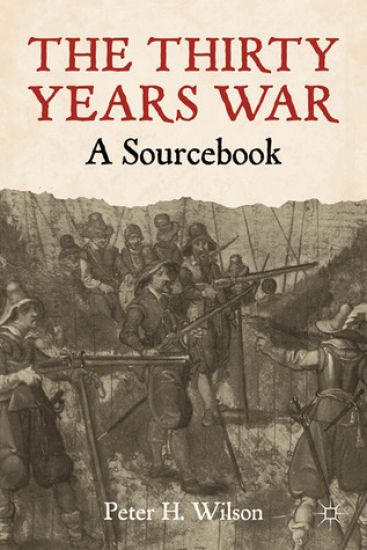
The Thirty Years War

The Thirty Years War

Peter H. Wilson

Red Globe Press
2010
sidottu
An edited and annotated collection of translated documents on the Thirty Years War, providing students with accessible source material on this destructive conflict. Covering all aspects of the war from a variety of contemporary perspectives, it brings together an exciting range of material from treaties to literature to eyewitness accounts.
The Thirty Years War

The Thirty Years War

Peter H. Wilson

Red Globe Press
2010
nidottu
An edited and annotated collection of translated documents on the Thirty Years War, providing students with accessible source material on this destructive conflict. Covering all aspects of the war from a variety of contemporary perspectives, it brings together an exciting range of material from treaties to literature to eyewitness accounts.
War, State and Society in Württemberg, 1677–1793

War, State and Society in Württemberg, 1677–1793

Peter H. Wilson

Cambridge University Press
1995
pokkari
This book provides a radical new interpretation of the aims of the lesser German princes during the seventeenth and eighteenth centuries through the example of the duchy of Württemberg. Arguing that the princes’ political ambitions were fundamental in shaping the internal development of their territories, the author sheds new light on the political importance of the notorious German ‘soldier trade’ and its role in international diplomacy. The wider social and political impact of these policies is also investigated in a comparative framework, while traditional interpretations of the dramatic struggle between duke and estates are challenged in a reassessment of the role of early modern representative institutions in German state development. The relationship of these internal political struggles to the different elements of the Holy Roman Empire is revealed, opening up new perspectives on the role of the German states within the imperial structure and revealing the empire as a flawed but functioning political system.
The Thirty Years War: Europe's Tragedy

The Thirty Years War: Europe's Tragedy

Peter H. Wilson

Belknap Press
2011
nidottu
A deadly continental struggle, the Thirty Years War devastated seventeenth-century Europe, killing nearly a quarter of all Germans and laying waste to towns and countryside alike. Peter Wilson offers the first new history in a generation of a horrifying conflict that transformed the map of the modern world. When defiant Bohemians tossed the Habsburg emperor's envoys from the castle windows in Prague in 1618, the Holy Roman Empire struck back with a vengeance. Bohemia was ravaged by mercenary troops in the first battle of a conflagration that would engulf Europe from Spain to Sweden. The sweeping narrative encompasses dramatic events and unforgettable individuals--the sack of Magdeburg; the Dutch revolt; the Swedish militant king Gustavus Adolphus; the imperial generals, opportunistic Wallenstein and pious Tilly; and crafty diplomat Cardinal Richelieu. In a major reassessment, Wilson argues that religion was not the catalyst, but one element in a lethal stew of political, social, and dynastic forces that fed the conflict. By war's end a recognizably modern Europe had been created, but at what price? The Thirty Years War condemned the Germans to two centuries of internal division and international impotence and became a benchmark of brutality for centuries. As late as the 1960s, Germans placed it ahead of both world wars and the Black Death as their country's greatest disaster. An understanding of the Thirty Years War is essential to comprehending modern European history. Wilson's masterful book will stand as the definitive account of this epic conflict. For a map of Central Europe in 1618, referenced on page XVI, please visit this book's page on the Harvard University Press website.
Heart of Europe: A History of the Holy Roman Empire
An Economist and Sunday Times Best Book of the Year "Deserves to be hailed as a magnum opus."--Tom Holland, The Telegraph "Ambitious...seeks to rehabilitate the Holy Roman Empire's reputation by re-examining its place within the larger sweep of European history...Succeeds splendidly in rescuing the empire from its critics."--Wall Street Journal Massive, ancient, and powerful, the Holy Roman Empire formed the heart of Europe from its founding by Charlemagne to its destruction by Napoleon a millennium later. An engine for inventions and ideas, with no fixed capital and no common language or culture, it derived its legitimacy from the ideal of a unified Christian civilization--though this did not prevent emperors from clashing with the pope for supremacy. In this strikingly ambitious book, Peter H. Wilson explains how the Holy Roman Empire worked, why it was so important, and how it changed over the course of its existence. The result is a tour de force that raises countless questions about the nature of political and military power and the legacy of its offspring, from Nazi Germany to the European Union. "Engrossing...Wilson is to be congratulated on writing the only English-language work that deals with the empire from start to finish...A book that is relevant to our own times."--Brendan Simms, The Times "The culmination of a lifetime of research and thought...an astonishing scholarly achievement."--The Spectator "Remarkable...Wilson has set himself a staggering task, but it is one at which he succeeds heroically."--Times Literary Supplement
Iron and Blood: A Military History of the German-Speaking Peoples Since 1500
"The scholarship of this book is breathtaking...No one interested in the history of Europe, and of the Germans in particular, can afford not to read this stupendous book." --Simon Heffer, The Telegraph " Iron and Blood's] long view of Germany's military history, magisterial detail and acute analysis provide a new understanding of what was once Europe's warring heart." --The Economist "Astonishingly ambitious and detailed...An absorbing overview of how slowly changing societal forces... have transformed the use of military force across modern times." --Foreign Affairs German military history is typically viewed as an inexorable march to the rise of Prussia and the two world wars, the road paved by militarism and the result a specifically German way of war. Looking beyond Prussia to German-speaking Europe across the last five centuries, Peter Wilson challenges this narrative. In fact, he finds little unique or preordained in German militarism or warfighting. Starting with the consolidation of the Holy Roman Empire, which was largely defensive in orientation, Iron and Blood shows that German participation in foreign wars was most often in partnership with allies. The primary aggressor in Central Europe was not Prussia but the Austrian Habsburg monarchy, which owed much of its strength to its ability to secure alliances. Prussia, meanwhile, invested in militarization but maintained a part-time army well into the nineteenth century. Both states, Wilson shows, exemplify the longstanding civilian element within German military power. Only after Prussia's unexpected victory over France in 1871 did Germans and outsiders come to believe in a German gift for warfare--a special capacity for high-speed, high-intensity combat that could overcome numerical disadvantage. It took two world wars to expose the fallacy of German military genius. Yet even today, Wilson argues, Germany's strategic position is misunderstood. The country now seen as a bastion of peace spends heavily on defense in comparison to its peers and is deeply invested in less kinetic contemporary forms of coercive power.
Iron and Blood: A Military History of the German-Speaking Peoples Since 1500
From the author of the acclaimed The Thirty Years War and Heart of Europe, a masterful, landmark reappraisal of German military history, and of the preconceptions about German militarism since before the rise of Prussia and the world wars. German military history is typically viewed as an inexorable march to the rise of Prussia and the two world wars, the road paved by militarism and the result a specifically German way of war. Peter Wilson challenges this narrative. Looking beyond Prussia to German-speaking Europe across the last five centuries, Wilson finds little unique or preordained in German militarism or warfighting. Iron and Blood takes as its starting point the consolidation of the Holy Roman Empire, which created new mechanisms for raising troops but also for resolving disputes diplomatically. Both the empire and the Swiss Confederation were largely defensive in orientation, while German participation in foreign wars was most often in partnership with allies. The primary aggressor in Central Europe was not Prussia but the Austrian Habsburg monarchy, yet Austria's strength owed much to its ability to secure allies. Prussia, meanwhile, invested in militarization but maintained a part-time army well into the nineteenth century. Alongside Switzerland, which relied on traditional militia, both states exemplify the longstanding civilian element within German military power. Only after Prussia's unexpected victory over France in 1871 did Germans and outsiders come to believe in a German gift for warfare--a special capacity for high-speed, high-intensity combat that could overcome numerical disadvantage. It took two world wars to expose the fallacy of German military genius. Yet even today, Wilson argues, Germany's strategic position is misunderstood. The country now seen as a bastion of peace spends heavily on defense in comparison to its peers and is deeply invested in less kinetic contemporary forms of coercive power.
Cognitive Behavioural Interviewing for Adult Disorders

Cognitive Behavioural Interviewing for Adult Disorders

Peter H. Wilson; Susan H Spence; David J. Kavanagh

Routledge
2018
sidottu
Originally published in 1989, the primary aim of this text was to provide a guide to the interview assessment of a wide range of common adult psychological problems. Emphasis is placed on the kinds of problems that were frequently encountered in outpatient centres at the time. The authors provide a general introduction to the nature and causes of each of the selected problems, with a focus on the kind of background knowledge that may be useful in the planning of initial interviews and the selection of appropriate interventions. Detailed examples are provided of the questions that may help elicit information on the history, severity, and causes of the problems for individual clients, and there is also a brief discussion of selected formal assessment instruments for each problem area. A major aim of the text is to teach basic principles of problem identification, behavioural analysis and a structured approach to assessment.
Cognitive Behavioural Interviewing for Adult Disorders

Cognitive Behavioural Interviewing for Adult Disorders

Peter H. Wilson; Susan H Spence; David J. Kavanagh

Routledge
2020
nidottu
Originally published in 1989, the primary aim of this text was to provide a guide to the interview assessment of a wide range of common adult psychological problems. Emphasis is placed on the kinds of problems that were frequently encountered in outpatient centres at the time. The authors provide a general introduction to the nature and causes of each of the selected problems, with a focus on the kind of background knowledge that may be useful in the planning of initial interviews and the selection of appropriate interventions. Detailed examples are provided of the questions that may help elicit information on the history, severity, and causes of the problems for individual clients, and there is also a brief discussion of selected formal assessment instruments for each problem area. A major aim of the text is to teach basic principles of problem identification, behavioural analysis and a structured approach to assessment.
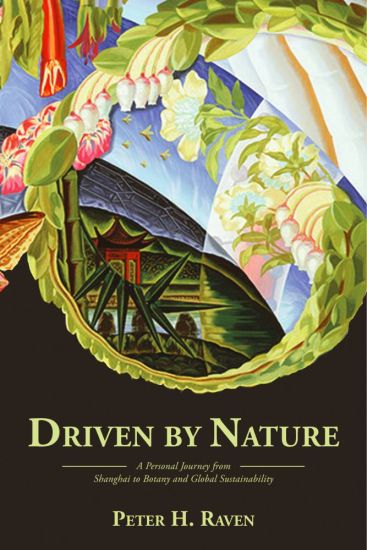
Driven by Nature

Driven by Nature

Peter H. Raven; E. O. Wilson

Missouri Botanical Garden Press
2021
sidottu
It's safe to say that few people have lived lives as thoroughly devoted to plants as Peter H. Raven has. The longtime director--now president emeritus--of the Missouri Botanical Garden, author of numerous leading textbooks and several hundred scholarly articles, Raven has been a tireless champion of sustainability and biodiversity, earning him the plaudit of "Hero for the Planet" from Time. Driven by Nature is the first chronicle of this prominent scientist and conservationist's life. Moving from his idyllic childhood in the San Francisco of the 1940s to his four decades leading the Missouri Botanical Garden, Raven's autobiography takes readers across multiple continents and decades. Driven by Nature follows the globetrotting botanist from China to the American Midwest as he works to foster concern for a changing planet, further the cause of biological education, and build the Missouri Botanical Garden into the world-renowned haven for plant life it is today. Raven brings his story into the twenty-first century with a timely epilogue that reinforces the crucial importance of scientific learning, active conservation, and committed activism in the face of a rapidly changing natural world. Featuring an introduction by the Pulitzer Prize-winning naturalist E. O. Wilson, this beautifully illustrated book should thrill nature lovers, plant enthusiasts, and environmentally-conscious readers looking to take action to preserve our planet's biodiversity.
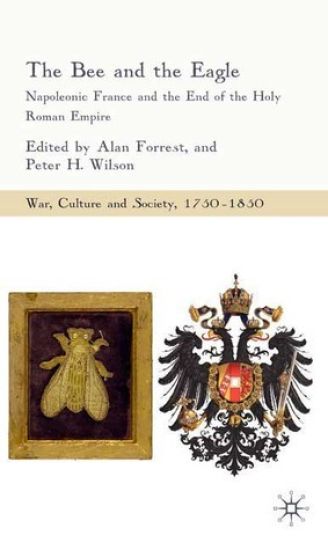
The Bee and the Eagle

The Bee and the Eagle

Alan Forrest; Peter H. Wilson

Palgrave Macmillan
2008
sidottu
This volume's juxtaposition of the empires of Germany and France in 1806, at the dissolution of The Holy Roman Empire, allows a comparison of their transition towards modernity, explored through the themes of Empire, monarchy, political cultures, feudalism, war and military institutions, nationalism and identity, and everyday experience.
The Bee and the Eagle

The Bee and the Eagle

Alan Forrest; Peter H. Wilson

Palgrave Macmillan
2009
nidottu
This volume's juxtaposition of the empires of Germany and France in 1806, at the dissolution of The Holy Roman Empire, allows a comparison of their transition towards modernity, explored through the themes of Empire, monarchy, political cultures, feudalism, war and military institutions, nationalism and identity, and everyday experience.