It's an unfortunate fact that many do not remember the calamitous years of previous Labour governments and the incompetence of the main players in the Party that eventually `Broke the Party', and probably lost the Party control of government for decades. The purpose of this book is to refresh the public's memory of what took place during those shocking years that not only broke the Labour Party but also almost `broke Britain'.
15 000 hospital beds closed since Labour...came to power in 1997...British policing among...worst in the world...Child and pensioner poverty increased...after Labour came to power in 1997...Tony Blair's contempt...for British people...Tony Blair...went to war...Under Labour...pensioners were going bankrupt...After Labour...the 'good times' are over...Britain was '3 hours' away...from going bust...
Plain speaking has never held Peter Hargreaves back. In this candid and outspoken book, the multi-millionaire founder of investment company Hargreaves Lansdown tells the story behind its extraordinary success and gives his forthright views on what it takes to be successful as an entrepreneur and as an investor.Starting from his spare bedroom with a single phone and borrowed office equipment, Peter and his business partner Stephen Lansdown set out to build a business that would consciously be different from that of all their competitors. They have held fast to their unconventional ways ever since, regularly turning the company's strategy and business model upside down in their relentless effort to give their clients the best information, the best prices and the best service.Widely recognised as the number one firm in their business, Hargreaves Lansdown was floated on the London stock market in 2007, valued at £800 million. In For A Penny is a must read for anyone who wants to understand how the investment business works, what's wrong with conventional management wisdom and what's right about the true meaning of entrepreneurship.
For decades, Australian federal governments have sought to deliver national security cheaply, spending no more on defence than deemed absolutely necessary. The result is that the nation has seriously underinvested in defence capability. This has occurred because of complacency in defence and policy circles, and the belief that Australia’s major threats had receded following the end of the Cold War. However, the reality is that Australia’s strategic outlook is rapidly worsening just as its ability to deter aggression and defend itself has been degraded. The Australian Institute of Public Affairs has published this book as a blueprint for immediate action on Australia’s defence, 2025–2028. Defence experts Peter Jennings AO, Michael Shoebridge and Marcus Hellyer make 36 recommendations for the adoption of measures for strengthening Australia’s military power.
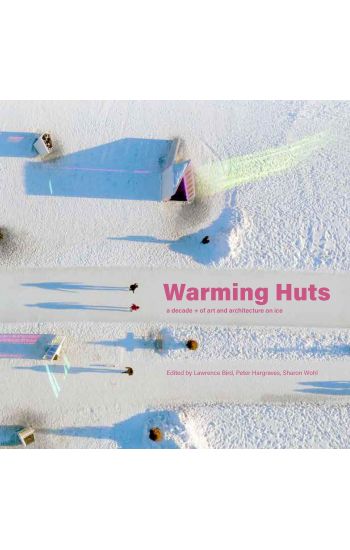
The Warming Huts are a public art and architecture installation held annually at mid-winter on the major rivers of Winnipeg, Canada. The huts are selected through an international design competition, and via the invitation of select designers or artists. This book, published to coincide with the tenth anniversary of the project, celebrates and discusses the annual project as a critical body of work foregrounding the poetics and politics of public space, while highlighting the variety of architectural narratives expressed in the Huts. A comparative analysis of the more than one thousand entries is included in the volume.
The 18th century was a wealth of knowledge, exploration and rapidly growing technology and expanding record-keeping made possible by advances in the printing press. In its determination to preserve the century of revolution, Gale initiated a revolution of its own: digitization of epic proportions to preserve these invaluable works in the largest archive of its kind. Now for the first time these high-quality digital copies of original 18th century manuscripts are available in print, making them highly accessible to libraries, undergraduate students, and independent scholars.This collection reveals the history of English common law and Empire law in a vastly changing world of British expansion. Dominating the legal field is the Commentaries of the Law of England by Sir William Blackstone, which first appeared in 1765. Reference works such as almanacs and catalogues continue to educate us by revealing the day-to-day workings of society.++++The below data was compiled from various identification fields in the bibliographic record of this title. This data is provided as an additional tool in helping to insure edition identification: ++++British LibraryT113121The appendix has separate pagination and register.London: printed for G. G. and J. Robinson, 1799. 8],182;xxivp.; 4
Whole System Design is increasingly being seen as one of the most cost-effective ways to both increase the productivity and reduce the negative environmental impacts of an engineered system. A focus on design is critical, as the output from this stage of the project locks in most of the economic and environmental performance of the designed system throughout its life, which can span from a few years to many decades. Indeed, it is now widely acknowledged that all designers - particularly engineers, architects and industrial designers - need to be able to understand and implement a whole system design approach. This book provides a clear design methodology, based on leading efforts in the field, and is supported by worked examples that demonstrate how advances in energy, materials and water productivity can be achieved through applying an integrated approach to sustainable engineering. Chapters 1-5 outline the approach and explain how it can be implemented to enhance the established Systems Engineering framework. Chapters 6-10 demonstrate, through detailed worked examples, the application of the approach to industrial pumping systems, passenger vehicles, electronics and computer systems, temperature control of buildings, and domestic water systems. Published with The Natural Edge Project, the World Federation of Engineering Organizations, UNESCO and the Australian Government.
Whole System Design is increasingly being seen as one of the most cost-effective ways to both increase the productivity and reduce the negative environmental impacts of an engineered system. A focus on design is critical, as the output from this stage of the project locks in most of the economic and environmental performance of the designed system throughout its life, which can span from a few years to many decades. Indeed, it is now widely acknowledged that all designers - particularly engineers, architects and industrial designers - need to be able to understand and implement a whole system design approach. This book provides a clear design methodology, based on leading efforts in the field, and is supported by worked examples that demonstrate how advances in energy, materials and water productivity can be achieved through applying an integrated approach to sustainable engineering. Chapters 1-5 outline the approach and explain how it can be implemented to enhance the established Systems Engineering framework. Chapters 6-10 demonstrate, through detailed worked examples, the application of the approach to industrial pumping systems, passenger vehicles, electronics and computer systems, temperature control of buildings, and domestic water systems. Published with The Natural Edge Project, the World Federation of Engineering Organizations, UNESCO and the Australian Government.
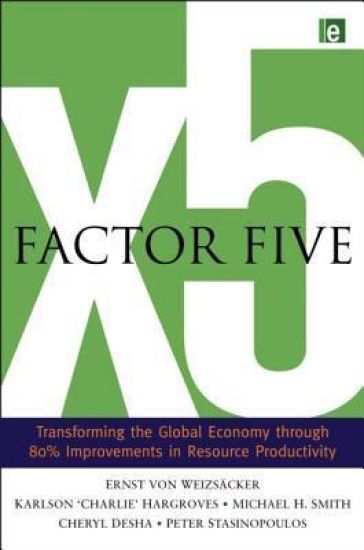
When first published in 1997, Factor Four: Doubling Wealth, Halving Resource Use by renowned economic and engineering experts Ernst von Weizsäcker, Amory Lovins and L. Hunter Lovins, transformed how economists, policy makers, engineers, entrepreneurs and business leaders thought about innovation and wealth creation. Through examples from a wide range of industrial sectors, the authors demonstrated how technical innovation could cut resource use in half while doubling wealth. Now twelve years on, with climate change at the top of the world agenda and the new economic giants of China and India needing ever more resources, there is a unique historic opportunity to scale up resources productivity and radically transform the global economy. And Factor Five is the book set to change all of this. Picking up where Factor Four left off, this new book examines the past 15 years of innovation in industry, technical innovation and policy. It shows how and where factor four gains have been made and how we can achieve greater factor five or 80%+ improvements in resource and energy productivity and how to roll them out on a global scale to retool our economic system, massively boost wealth for billions of people around the world and help solve the climate change crises. Spanning dozens of countries including China and India and examining innumerable cases of innovation in design, technology and policy, the authors leave no engineering and economic stone unturned in their quest for excellence. The book tackles sustainable development and climate change by providing in depth Factor 5 resource productivity studies of the following sectors: Buildings, Industry, Agriculture, Food and Hospitality, and Transportation. In its systematic approach to demonstrating how Factor 5 can be achieved, the book also provides an overview of energy/water nexus and energy/materials nexus efficiency opportunities across these sectors. Given that these sectors are responsible for virtually all energy usage and greenhouse gas emissions globally, this book is designed to guide everyone from individual households, businesses, industry sector groups to national governments in their efforts to achieve the IPCC recommended target of 80 per cent reductions to greenhouse gas emissions. It also looks at innovation in regulation to increase resource productivity, pricing, carbon trading, eco-taxation and permits and the role of international institutions and trade. The authors also explain exciting new concepts such as bio-mimicry and whole system design, as hallmarks for a new generation of technologies. The last part of the book explores transformative ideas such as a long term trajectory of gently rising energy and resource prices, and new concepts of well-being in a more equitable world. Like its predecessor this book is simply the most important work on the future of innovation, business, economics and policy and is top drawer reading for leaders across all sectors including business and industry, government, engineering and design and teaching. This book is full colour throughout. Published with The Natural Edge Project
When first published in 1997, Factor Four transformed how economists, policy makers, engineers, entrepreneurs and business leaders thought about innovation and wealth creation. Through examples from a wide range of industrial sectors, the authors demonstrated how technical innovation could cut resource use in half while doubling wealth.Now twelve years on, with climate change at the top of the world agenda and the new economic giants of China and India needing ever more resources, there is a unique historic opportunity to scale up resources productivity and radically transform the global economy. Picking up where Factor Four left off, this new book examines the past 15 years of innovation in industry, technical innovation and policy. It shows how and where factor four gains have been made and how we can achieve greater factor five or 80%+ improvements in resource and energy productivity and how to roll them out on a global scale to retool our economic system, massively boost wealth for billions of people around the world and help solve the climate change crises. Spanning dozens of countries including China and India and examining innumerable cases of innovation in design, technology and policy, this book tackles sustainable development and climate change by providing in depth Factor 5 resource productivity studies of the following sectors: Buildings, Industry, Agriculture, Food and Hospitality, and Transportation. It provides an overview of energy/water nexus and energy/materials nexus efficiency opportunities across these sectors. Given that these sectors are responsible for virtually all energy usage and greenhouse gas emissions globally, this book is designed to guide everyone from individual households, businesses, industry sector groups to national governments in their efforts to achieve the IPCC recommended target of 80 per cent reductions to greenhouse gas emissions. It also looks at innovation in regulation to increase resource productivity, pricing, carbon trading, eco-taxation and permits and the role of international institutions and trade. The last part of the book explores transformative ideas such as a long term trajectory of gently rising energy and resource prices, and new concepts of well-being in a more equitable world. Like its predecessor this book is simply the most important work on the future of innovation, business, economics and policy and is top drawer reading for leaders across all sectors including business and industry, government, engineering and design and teaching. This book is full colour throughout. Published with The Natural Edge Project
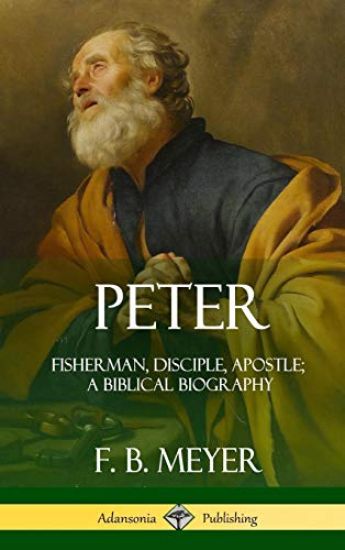
Saint Peter was a crucial figure in early Christianity; as one of the Twelve Apostles of Jesus Christ, he oversaw the formal establishment of the early church and became the first Bishop of Rome. Peter's formative years were spent as a fisherman. It was here that the purpose of his disciple status was unveiled: Peter was to become a 'fisher of men'; helping others believe in the Lord. These and other events are told in this biography, which investigates the ways in which Peter sought to enlighten and catch souls of men, that they be set on a righteous path to God and the Holy Spirit. Peter's humble beginnings soon transform through his pursuit of God; he accompanies Jesus as one of his twelve apostles, and is listed foremost among them in all sources. His spiritual guidance and devotion to the mission of Christ has great bearing on the foundation of the Christian church; Peter also witnessed the Resurrection of Jesus first-hand, and delivered some of the first sermons following this revelatory event.
Saint Peter was a crucial figure in early Christianity; as one of the Twelve Apostles of Jesus Christ, he oversaw the formal establishment of the early church and became the first Bishop of Rome. Peter's formative years were spent as a fisherman. It was here that the purpose of his disciple status was unveiled: Peter was to become a 'fisher of men'; helping others believe in the Lord. These and other events are told in this biography, which investigates the ways in which Peter sought to enlighten and catch souls of men, that they be set on a righteous path to God and the Holy Spirit. Peter's humble beginnings soon transform through his pursuit of God; he accompanies Jesus as one of his twelve apostles, and is listed foremost among them in all sources. His spiritual guidance and devotion to the mission of Christ has great bearing on the foundation of the Christian church; Peter also witnessed the Resurrection of Jesus first-hand, and delivered some of the first sermons following this revelatory event.
This book critically examines all the early and important Petrine pseudepigrapha to identify a distinctive Petrine theology which, it is believed, was later swamped by the tide of western orthodoxy. Despite the diversity of the books and tractates, ranging from Jewish-Christian writings to avowedly Gnostic works, a remarkably consistent Petrine tradition does emerge; and Peter is shown essentially to be neither the impetuous, undiscerning, and even vacillating figure portrayed in the Gospels and Acts, nor the magisterial and pontifical figure of later Church tradition, but a visionary who was concerned above all to hold together both the moral and cognitive aspects of the Faith.
Peter Llewelyn Davies was just an infant in his pram when he served as the inspiration for J.M. Barrie's most famous creation, Peter Pan. With the story proving to be a smash hit, a reluctant Peter was thrust into the spotlight. But then one day, Peter did the unthinkable: He grew up. Based on a true story, Peter presents another side to one of the world's most beloved tales. As Peter enters adulthood, he struggles to separate himself from what he calls "that terrible masterpiece" and begins to spiral into a deep depression. Will he succeed in overcoming the demons of his past, or do happy endings only exist in fairy stories?
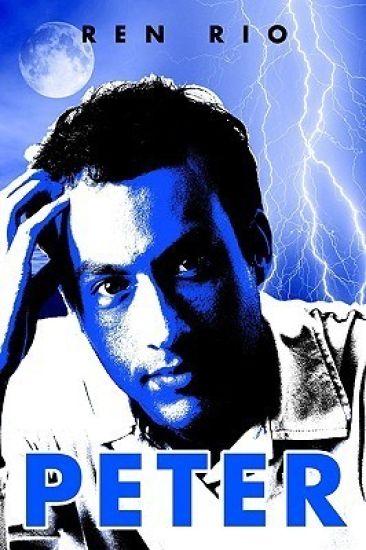
Peter is disturbed, and unfortunately for those around him, very strong. Everything in his life seems to work against him and it is causes him to lose what little control he has. When the moon is full, he believes he is all powerful. The people around him would be well advised to rethink how they interact with him, but do not to take heed. Peter is a volcano ready to erupt, and when he finally does, people die. He doesn't think any of the things he does are his fault, they are forcing his hand after all. When he begins to doubt his own mental stability things really get bad. His actions set of a series of events that bring misery and hatred to the surface in others. Alice knows Peter. He brings out the worst in her, and revenge is what she seeks. Those caught in the middle will try to survive the hidden battle that rages.
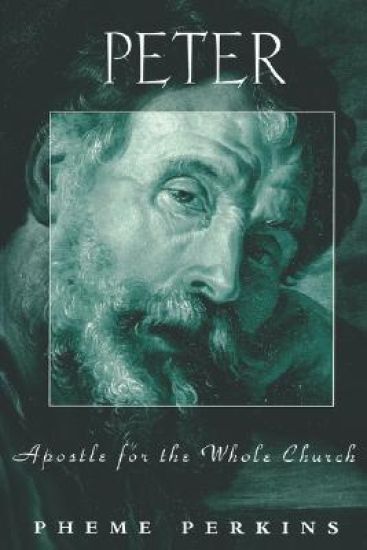
Perkins describes the search for the historical Peter, and the influence his image has had, in Roman Catholic and Protestant ecumenical discussions. Pointing to portrayals of Peter in the Pauline and Johannine traditions, the synoptic Gospels, and the Book of Acts, Perkins argues that precisely because there is no single Petrine tradition in the New Testament, the apostle might serve as a unifying figure for incongruous forms of Christianity. Perkins argues that Peter should be viewed as a harmonizing figure who captures the Christian imagination not only because he is the most prominent of Jesus' disciples, but also because his weaknesses and strengths present a character accessible to the average Christian.