Kirjojen hintavertailu. Mukana 11 244 527 kirjaa ja 12 kauppaa.

Kirjahaku

Etsi kirjoja tekijän nimen, kirjan nimen tai ISBN:n perusteella.

1000 tulosta hakusanalla Peter Hart; Nigel Steel

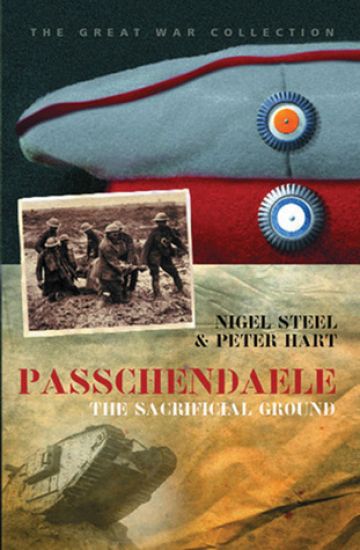
Passchendaele

Passchendaele

Nigel Steel; Peter Hart

Orion Publishing Co
2001
pokkari
A compelling account of the battle for Passchendaele from grand strategy at the highest levels right down to the experience of the ordinary infantrymen
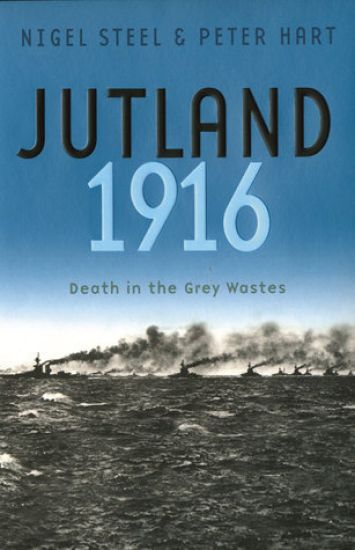
Jutland, 1916

Jutland, 1916

Nigel Steel; Peter Hart

Cassell Military
2008
pokkari
Dramatic, illustrated account of the biggest naval battle of the First World War.On 31 May, 1916, the great battle fleets of Britain and Germany met off Jutland in the North Sea. It was a climactic encounter, the culmination of a fantastically expensive naval race between the two countries, and expectations on both sides were high. For the Royal Navy's Grand Fleet, there was the chance to win another Trafalgar. For the German High Seas Fleet, there was the opportunity to break the British blockade and so change the course of the war. But Jutland was a confused and controversial encounter. Tactically, it was a draw; strategically, it was a British victory.Naval historians have pored over the minutiae of Jutland ever since. Yet they have largely ignored what the battle was actually like for its thousands of participants. Full of drama and pathos, of chaos and courage, JUTLAND, 1916 describes the sea battle in the dreadnought era from the point of view of those who were there.
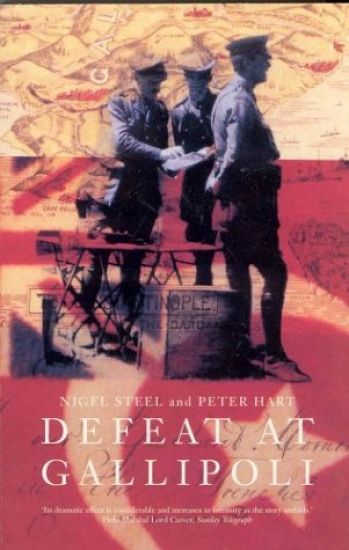
Defeat at Gallipoli

Defeat at Gallipoli

Nigel Steel; Peter Hart

Pan Books
2002
pokkari
The battle for Gallipoli was officially described as 'one of the world's classic tragedies' and in Defeat at Gallipoli the participants tell the full story of this failed offensive. The bitter campaign against the Turks from April 1915 to January 1916 was ill-conceived, inadequately equipped and never likely to succeed. The bravery and resilience of the troops in the face of disease and violent death is shown in their letters, diaries and recorded memories, recalling the sordid reality of the campaign. Linking together these experiences, Nigel Steel and Peter Hart provide a new insight into the lives of the soldiers involved and a powerful, moving account of a doomed campaign. 'One of the most controversial and disastrous British campaigns of the 20th century . . . these two historians make a strong case for history proper. Their tale never dulls in the telling' Guardian 'The dramatic effect is considerable and increases in intensity as the story unfolds.' Field Marshal Lord Carver, 'The bill for the incompetence . . . down through the chain of command was paid by suffering in the appalling conditions so vividly described in this splendid book.' Major General Julian Thompson, Globe and Laurel
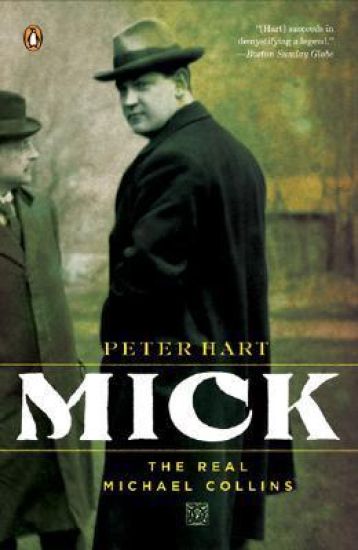
Mick: The Real Michael Collins

Mick: The Real Michael Collins

Peter Hart

PENGUIN BOOKS
2007
nidottu
A behind-the-persona exploration of the Irish political leader's life discusses such topics as his role in the Easter Rising, organization of the I.R.A., and running of the nation's first independent government, in an account that also traces his troubled legacy and his pre-revolutionary life. Reprint. 25,000 first printing.
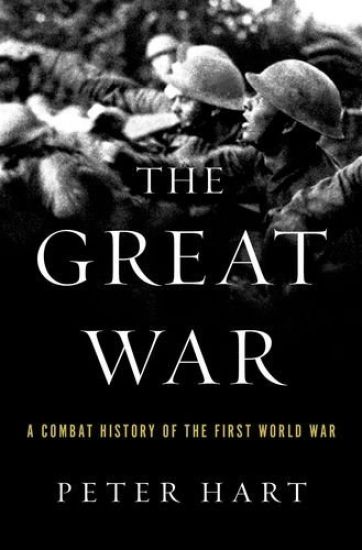
The Great War: A Combat History of the First World War
Named one of the Ten Best Books of 2013 by The Economist World War I altered the landscape of the modern world in every conceivable arena. Millions died; empires collapsed; new ideologies and political movements arose; poison gas, warplanes, tanks, submarines, and other technologies appeared. "Total war" emerged as a grim, mature reality. In The Great War, Peter Hart provides a masterful combat history of this global conflict. Focusing on the decisive engagements, Hart explores the immense challenges faced by the commanders on all sides. He surveys the belligerent nations, analyzing their strengths, weaknesses, and strategic imperatives. Russia, for example, was obsessed with securing an exit from the Black Sea, while France--having lost to Prussia in 1871, before Germany united--constructed a network of defensive alliances, even as it held a grudge over the loss of Alsace-Lorraine. Hart offers deft portraits of the commanders, the prewar plans, and the unexpected obstacles and setbacks that upended the initial operations.
Voices from the Front: An Oral History of the Great War
In the 1980s and early 1990s, Peter Hart, then a young oral historian at the Imperial War Museum in London, conducted 183 interviews with British World War I veterans. After the death of the last veteran in 2009, these interviews have become a rare and invaluable record of the Great War, as remembered by the men who experienced it. The men spoke to Hart of the familiar horrors of the war-poison gas, lice, muddy trenches, newly minted tanks, and sinking ships-enriching each memory with personal anecdote, shedding light on war's effect on soldiers both in wartime and during the years that followed. Hart now returns to these interviews in Voices from the Front. His new book not only provides a narrative timeline of the events of 1914 to 1918, but restores individuality and humanity to the men who were often treated like expendable resources. Hart uses the transcripts of these conversations as a framework on which to build a unique depiction of Britain's experience of the war-one separated from the boastful exaggerations or, alternatively, the underplaying euphemisms often found in letters mailed home or to fellow soldiers. By including the testimonies of men such as William Holbrook, who was just 15 when he enlisted, as well as Harold Bing, an anti-war demonstrator, Hart breathes new life into the experiences of both young soldiers and those who morally opposed the war. The result is history as both narrative and recollection; war experienced first-hand but looked at now from a great distance. Here is an intimate and humanized account of the first great cataclysm of the twentieth century, one endured by the men whose voices we hear in this book, and whose legacies are with us still.
The Last Battle: Victory, Defeat, and the End of World War I
Author of The Great War, as well as celebrated accounts of the battles of the Somme, Passchendaele, Jutland, and Gallipoli, historian Peter Hart now turns to World War One's final months. Much has been made of-and written about-August 1914. There has been comparatively little focus on August 1918 and the lead-up to November. Because of the fixation on the Great War's opening moves, and the great battles that followed over the course of the next four years, the endgame seems to come as a stunning anticlimax. At the eleventh hour of the eleventh day of the eleventh month of 1918 the guns simply fell silent. The Last Battle definitively corrects this misperception. As Hart shows, a number of factors precipitated the Armistice. After four years of bloodshed, Germany was nearly bankrupt and there was a growing rift between the military High Command and political leadership. But it also remained a determined combatant, and France and Great Britain had equally been stretched to their limits; Russia had abandoned the conflict in the late winter of 1918. However complex the causes of Germany's ultimate defeat, Allied success on the Western Front, as Hart reveals, tipped the scales-the triumphs at the Fifth Battle of Ypres, the Sambre, the Selle, and the Meuse-Argonne, where American forces made arguably their greatest contribution. The offensives cracked the Hindenburg Line and wore down the German resistance, precipitating collapse. Final victory came at great human cost and involved the combined efforts of millions of men. Using the testimony of a range of participants, from the Doughboys, Tommies, German infantrymen, and French poilus who did the fighting, to those in command during those last days and weeks, Hart brings intimacy and sweep to the events that led to November 11, 1918.
The I.R.A. and its Enemies

The I.R.A. and its Enemies

Peter Hart

Clarendon Press
1998
sidottu
What is it like to be in the I.R.A. - or at their mercy? This fascinating study explores the lives and deaths of the enemies and victims of the County Cork I.R.A. between 1916 and 1923 - the most powerful and deadly branch of the I.R.A. during one of the most turbulent periods in twentieth-century Ireland. These years saw the breakdown of the British legal system and police authority, the rise of republican violence, and the escalation of the conflict into a full-scale guerilla war, leading to a wave of riots, ambushes, lootings, and reprisal killings, with civilians forming the majority of victims in this unacknowledged civil war. Religion may have provided the starting point for the conflict, but class prejudice, patriotism, and personal grudges all fuelled the development and continuation of widespread violence. Using an unprecedented range of sources - many of them only recently made public - Peter Hart explores the motivation behind such activity. His conclusions not only reveal a hidden episode of Ireland's troubled past but provide valuable insights into the operation of similar terrorist groups today.
The I.R.A. and its Enemies

The I.R.A. and its Enemies

Peter Hart

Oxford University Press
1999
nidottu
What is it like to be in the I.R.A. - or at their mercy? This fascinating study explores the lives and deaths of the enemies and victims of the County Cork I.R.A. between 1916 and 1923 - the most powerful and deadly branch of the I.R.A. during one of the most turbulent periods in twentieth-century Ireland. These years saw the breakdown of the British legal system and police authority, the rise of republican violence, and the escalation of the conflict into a full-scale guerilla war, leading to a wave of riots, ambushes, lootings, and reprisal killings, with civilians forming the majority of victims in this unacknowledged civil war. Religion may have provided the starting point for the conflict, but class prejudice, patriotism, and personal grudges all fuelled the development and continuation of widespread violence. Using an unprecedented range of sources - many of them only recently made public - Peter Hart explores the motivation behind such activity. His conclusions not only reveal a hidden episode of Ireland's troubled past but provide valuable insights into the operation of similar terrorist groups today.
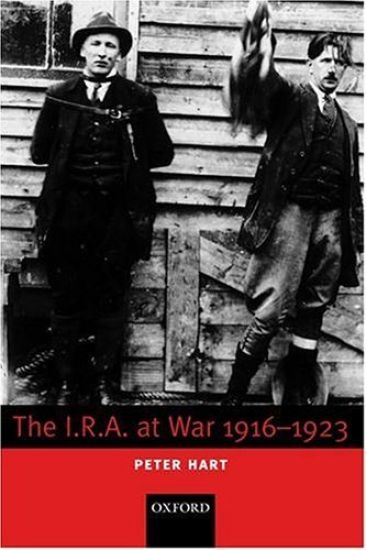
The I.R.A. at War 1916-1923

The I.R.A. at War 1916-1923

Peter Hart

Oxford University Press
2003
sidottu
What kind of people joined the I.R.A.? What was the Irish Revolution? Did Michael Collins order the assassination of Sir Henry Wilson? Were Protestants ethnically cleansed from southern Ireland? These essays by Peter Hart address these and other controversies, to suggest new ways of looking at the history of the Irish Revolution of 1916-23.
The I.R.A. at War 1916-1923

The I.R.A. at War 1916-1923

Peter Hart

Oxford University Press
2005
nidottu
Between 1916 and 1923, Ireland experienced rebellion and mass mobilization, guerrilla and civil war, partition and ethnic conflict, and the transfer of power from British to Irish governments. The essays in The I.R.A. at War propose a new history of this Irish revolution: one that encompasses the whole of the island as well as Britain, all of the violence and its consequences, and the entire period from the Easter Rising to the end of the Civil War. When did the revolution start and when did it end? Why was it so violent and why were some areas so much worse than others? Why did the I.R.A. mount a terror campaign in England and Scotland but refuse to assassinate British politicians? Where did it get its guns? Was it democratic? What kind of people became guerrillas? What kind of people did they kill? Were Protestants ethnically cleansed from southern Ireland? Did a pogrom take place against Belfast Catholics? These and other questions are addressed using extensive new data on those involved and their actions, including the first complete figures for victims of the revolution. These events have never been numbered among the world's great revolutions, but in fact Irish republicans were global pioneers. Long before Mao or Tito, Sinn Féin and the Irish Republican Army were the first to use a popular political front to build a parallel underground state coupled with sophisticated guerrilla and international propaganda and fund-raising campaigns. Ireland's is also perhaps the best documented revolution in modern history, so that almost any question can be answered, from who joined the I.R.A. to who ordered the assassination of Sir Henry Wilson. The intimacy and precision with which we are able to reconstruct and analyse what happened make this a key site for understanding not just Irish, but world history.
Gallipoli

Gallipoli

Peter Hart

Oxford University Press
2014
nidottu
One of the most famous battles in history, the WWI Gallipoli campaign began as a bold move by the British to capture Constantinople, but this definitive new history explains that from the initial landings--which ended with so much blood in the sea it could be seen from airplanes overhead--to the desperate attacks of early summer and the battle of attrition that followed, it was a tragic folly destined to fail from the start. Gallipoli forced the young Winston Churchill from office, established Turkey's iconic founder Mustafa Kemal (better known as "Ataturk"), and marked Australia's emergence as a nation in its own right. Drawing on unpublished eyewitness accounts by individuals from all ranks--not only from Britain, Australia and New Zealand, but from Turkey and France as well--Peter Hart weaves first-hand stories into a vivid narrative of the battle and its aftermath. Hart, a historian with the Imperial War Museum and a battlefield tour guide at Gallipoli, provides a vivid, boots-on-the-ground account that brilliantly evokes the confusion of war, the horrors of combat, and the grim courage of the soldiers. He provides an astute, unflinching assessment of the leaders as well. He shows that the British invasion was doomed from the start, but he places particular blame on General Sir Ian Hamilton, whose misplaced optimism, over-complicated plans, and unwillingness to recognize the gravity of the situation essentially turned likely failure into complete disaster. Capturing the sheer drama and bravery of the ferocious fighting, the chivalry demonstrated by individuals on both sides amid merciless wholesale slaughter, and the futility of the cause for which ordinary men fought with extraordinary courage and endurance--Gallipoli is a riveting account of a battle that continues to fascinate us close to a hundred years after the event.
Gallipoli

Gallipoli

Peter Hart

Oxford University Press
2011
sidottu
One of the most famous battles in history, the WWI Gallipoli campaign began as a bold move by the British to capture Constantinople, but this definitive new history explains that from the initial landings--which ended with so much blood in the sea it could be seen from airplanes overhead--to the desperate attacks of early summer and the battle of attrition that followed, it was a tragic folly destined to fail from the start. Gallipoli forced the young Winston Churchill from office, established Turkey's iconic founder Mustafa Kemal (better known as "Ataturk"), and marked Australia's emergence as a nation in its own right. Drawing on unpublished eyewitness accounts by individuals from all ranks--not only from Britain, Australia and New Zealand, but from Turkey and France as well--Peter Hart weaves first-hand stories into a vivid narrative of the battle and its aftermath. Hart, a historian with the Imperial War Museum and a battlefield tour guide at Gallipoli, provides a vivid, boots-on-the-ground account that brilliantly evokes the confusion of war, the horrors of combat, and the grim courage of the soldiers. He provides an astute, unflinching assessment of the leaders as well. He shows that the British invasion was doomed from the start, but he places particular blame on General Sir Ian Hamilton, whose misplaced optimism, over-complicated plans, and unwillingness to recognize the gravity of the situation essentially turned likely failure into complete disaster. Capturing the sheer drama and bravery of the ferocious fighting, the chivalry demonstrated by individuals on both sides amid merciless wholesale slaughter, and the futility of the cause for which ordinary men fought with extraordinary courage and endurance--Gallipoli is a riveting account of a battle that continues to fascinate us close to a hundred years after the event.
Fire and Movement

Fire and Movement

Peter Hart

Oxford University Press Inc
2014
sidottu
The dramatic opening weeks of the Great War passed into legend long before the conflict ended. The British Expeditionary Force fought a mesmerizing campaign, outnumbered and outflanked but courageous and skillful, holding the line against impossible odds, sacrificing themselves to stop the last great German offensive of 1914. A remarkable story of high hopes and crushing disappointment, the campaign contains moments of sheer horror and nerve-shattering excitement; pathos and comic relief; occasional cowardice and much selfless courage--all culminating in the climax of the First Battle of Ypres. And yet, as Peter Hart shows in this gripping and revisionary look at the war's first year, for too long the British part in the 1914 campaigns has been veiled in layers of self-congratulatory myth: a tale of poor unprepared Britain, reliant on the peerless class of her regular soldiers to bolster the rabble of the unreliable French Army and defeat the teeming hordes of German troops. But the reality of those early months is in fact far more complex--and ultimately, Hart argues, far more powerful than the standard triumphalist narrative. Fire and Movement places the British role in 1914 into a proper historical context, incorporating the personal experiences of the men who were present on the front lines. The British regulars were indeed skillful soldiers, but as Hart reveals, they also lacked practice in many of the required disciplines of modern warfare, and the inexperience of officers led to severe mistakes. Hart also provides a more accurate portrait of the German Army they faced--not the caricature of hordes of automatons, but the reality of a well-trained and superlatively equipped force that outfought the BEF in the early battles--and allows readers to come to a full appreciation of the role of the French Army, without whom the Marne never would have been won. Ultimately Fire and Movement shows the story of the 1914 campaigns to be an epic tale, and one which needs no embellishment. Through the voices and recollections of the soldiers who were there, Hart strips away the myth to offer a clear-eyed account of the remarkable early days of the Great War.
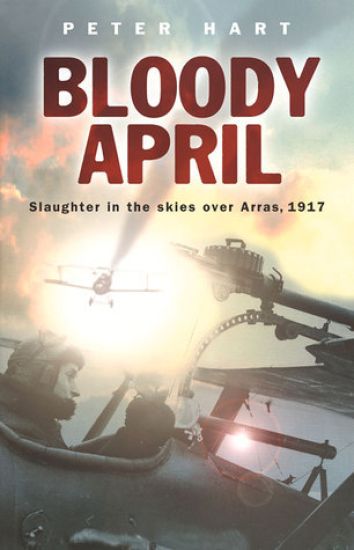
Bloody April

Bloody April

Peter Hart

Cassell Reference
2006
pokkari
The story of the decimation of the Royal Flying Corps over Arras in 1917As the Allies embarked upon the Battle of Arras, they desperately needed accurate aerial reconnaissance photographs. But by this point the Royal Flying Club were flying obsolete planes. The new German Albatros scouts massively outclassed them in every respect: speed, armament, ability to withstand punishment and manoeuverability. Many of the RFC's pilots were straight out of flying school - as they took to the air they were sitting targets for the experienced German aces. Over the course of 'Bloody April' the RFC suffered casualties of over a third. The average life expectancy of a new subaltern on the front line dropped to just eleven days. And yet they carried on flying, day after day, in the knowledge that, in the eyes of their commanders at least, their own lives meant nothing compared to the photographs they brought back, which could save tens of thousands of soldiers on the ground. In this book Peter Hart tells the story of the air war over Arras, using the voices of the men who were actually there.
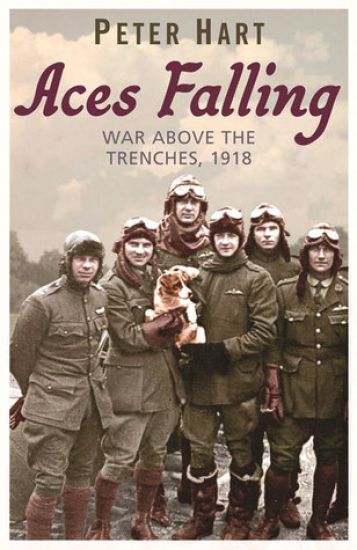
Aces Falling

Aces Falling

Peter Hart

Weidenfeld Nicolson
2008
pokkari
How the age of the great WWI aces came to an end in the skies over the Western FrontAt the beginning of 1918 the great aces seemed invincible. Flying above the battlefields of the Western Front, they cut a deadly swathe through the ranks of their enemies, as each side struggled to keep control of the air. Some were little more than boys when they started to fly, yet they were respected and feared as some of the deadliest killers in the sky. But as the press of fighting increased with the great offensives of 1918, nervous stress and physical exhaustion finally began to take their toll - and one by one the aces began to fall.This book charts the rise and fall of the WWI aces in the context of the vast battles that were taking place in 1918. It shows the vital importance of reconnaissance, and how large formations of aircraft became the norm - bringing an end to the era of the old, heroic 'lone wolves'. As the First World War came to a close very few of the aces survived. This epic history of the final year of the air war is both a chronicle of the ways in which 1918 changed aerial combat forever, and a requiem for the pioneers of aerial combat who eventually became the victims of their own brilliant innovations.
Screw it Just Do it

Screw it Just Do it

Peter Hart

Lulu.com
2014
nidottu
Peter Hart left school at 15 without taking a single exam and spent years drifting from job to job...then he had an idea! Now he's one of the UK's top online entrepreneurs, with businesses turning over millions of pounds a year. He's done it his way and now he wants to share his secrets with you because he's passionate about helping others get on the path to success. Screw It Just Do It is for anyone who ever had a dream. In simple, easy-to-read language, Pete takes you from Nowhere to Somewhere and shows you the way to Everywhere. It's everything you need to know to get going in e-commerce, written by someone just like you.