Kirjojen hintavertailu. Mukana 11 627 630 kirjaa ja 12 kauppaa.

Kirjahaku

Etsi kirjoja tekijän nimen, kirjan nimen tai ISBN:n perusteella.

1000 tulosta hakusanalla Peter Lorange; Lene Conradi

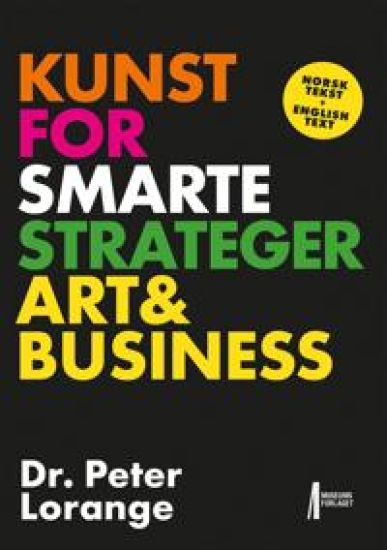
Kunst for smarte strateger ; Art and business

Kunst for smarte strateger ; Art and business

Peter Lorange; Lene Conradi

Museumsforlaget
2024
nidottu
I Kunst for smarte strateger kan du lese om kunstsamleren Peter Lorange og kunstnerne som er representert i hans samling. De siste par tiårene har Lorange ervervet kunstverk etter ti kriterier som har sitt utgangspunkt i hans virksomhet som forretningsmann og akademiker, og som han ofte fatter strategiske beslutninger etter. Disse kriteriene er kvalitet, mangfold, risiko og usikkerhet, nettverksbygging, hastighet, syklusstyring, disiplin, proaktivitet, positivitet, og ærlighet og integritet.Når Lorange står overfor vanskelige valg, «konsulterer» han kunst fra samlingen som kan bidra med nye dimensjoner og føre til bedre avgjørelser. Kunsten er rett og slett en slags samtalepartner.Forfatter Peter Lorange har en doktorgrad i Business Administration fra Harvard. Han har en mangfoldig bakgrunn som leder i akademia (MIT, Wharton, BI og IMD) og som reder, investor og gründer (S. Ugelstads Rederi, Lorange Institute, S. Ugelstad Invest). English:In Art & Business you can read about the art collector Peter Lorange and the artists represented in his collection. Over the last couple of decades, Lorange has acquired works of art according to ten criteria that have their basis in his activities as a businessman and academic, and which he often makes strategic decisions according to. These criteria are quality, diversity, risk and uncertainty, networking, speed, cycle management, discipline, proactivity, positivity, and honesty and integrity.When Lorange is confronted with difficult choices, he ‘consults’ art from the collection which can contribute with new dimensions and lead to better decisions. Art is simply a kind of conversational partner.Author Peter Lorange holds a PhD in Business Administration from Harvard. He has a diverse background as a leader in academia (MIT, Wharton, BI and IMD) and as a shipowner, investor and entrepreneur (S. Ugelstads Rederi, Lorange Institute, S. Ugelstad Invest).

New Vision for Management Education

New Vision for Management Education

Peter Lorange

Elsevier Science Ltd
2002
sidottu
Many academic institutions, especially business schools, tend to be managed on an ad hoc basis. Why? Because the leadership may not be fully and formally equipped to lead, and difficult stakeholder-mix issues often limit its ability to govern proactively. This book is meant as a guide for making strategic management a more realistic option for such institutions. It explores the role of the President/CEO/Dean, and offers examples of effective strategic direction setting, including the use of modern technology. This volume features topics such as: a conceptual scheme for setting strategic direction in academic institutions, specifically business schools; a look at key barriers that block strategic change initiatives and how institutions can overcome them; a discussion of the roles of key leaders in the academic institution, including how these roles can be shaped for more effective implementation; a detailed description of management approaches that keep the strategic momentum for academic value creation and change; and an examination of the role of new technology and how this can strengthen the value creation in business schools.
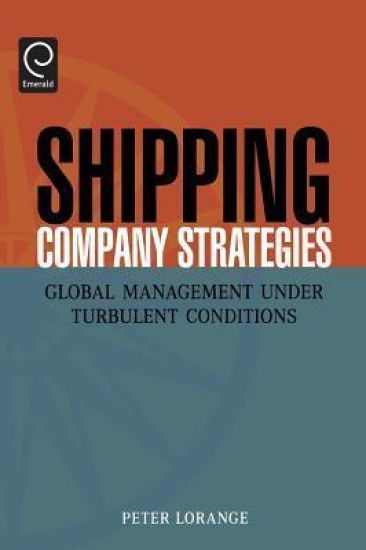
Shipping Company Strategies

Shipping Company Strategies

Peter Lorange

Elsevier Science Ltd
2005
sidottu
This book is about developing implementable strategies for shipping firms. It opens with an initial historical retrospective that highlights cases on A.P. Moller-Maersk and Leif Hoegh and Co. Here the reader is introduced to the global nature of competition in shipping, as well as the volatility of shipping markets. The book then turns to the question of how to play these markets. It looks at commodity based shipping company strategies for the bulk carrier, tanker container-ship and other segments. Here, the focus is on both going long-short, in-out, and maintaining a low cost base. Next is a discussion of operations versus asset play. The book analyzes Marsoft's forecasting methodology, with case studies on The Torvald Klaveness Group, Norden, Frontline and Teekay. The book then takes a close look at the challenge of driving one's strategy towards niches, i.e. on-commodity segments, with a spotlight on how to find a viable business opportunity and develop a defendable strength there. Examples come from I.M. Skaugen, Farstad Shipping, The Torvald Klaveness Group and Leif Hoegh and Co. Since overall corporate-wide portfolio strategies can be important in shipping, particularly if the various elements in the portfolio are relatively unrelated, the next part of the book turns to analytical approaches, citing several examples. Then follows a discussion of key organizational issues, particularly how to create and sustain more effective, predominantly network-based organizations. The penultimate subject is the important role the board of directors can play here. Finally, the role of family firms, and the future of shipping firms, is discussed, again with several rich examples.
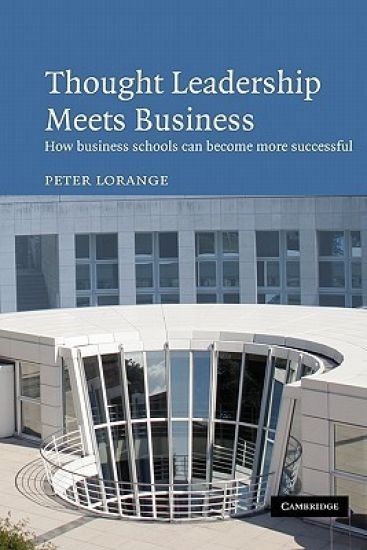
Thought Leadership Meets Business

Thought Leadership Meets Business

Peter Lorange

Cambridge University Press
2010
pokkari
For leading corporations, talent is perhaps the only truly sustainable competitive advantage. In light of this, leading international corporations need to be staffed by the best possible executive talent from around the world. This talent revolution places a burden on business schools to offer highly focused learning, based on practical research. In addition, business schools face fierce competition in this sector, not least from the rapid growth in management education in India and South East Asia. Thought Leadership Meets Business offers significant insights into the factors that have led to the delivery of high-quality executive education at the top-ranking International Institute for Management Development (IMD). Drawing on the experience and wisdom gained by IMD President Peter Lorange over a distinguished career of more than twenty years, this book offers a powerful model for business school success.
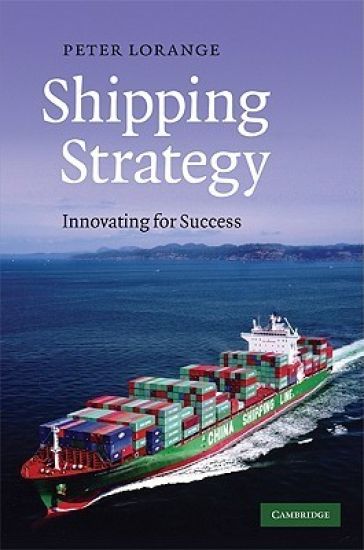
Shipping Strategy

Shipping Strategy

Peter Lorange

Cambridge University Press
2009
sidottu
The shipping industry has an impact on each and every one of us every day. Ships transport the food we eat, the clothes we wear, the cars we drive, the materials used to build our homes, and the fuel that heats them. Yet traditional shipping companies - ones that combine various aspects of shipping under one organizational roof - are on the decline. They are gradually being replaced by new, more specialized companies with more strategic clarity and managerial focus. In Shipping Strategy Peter Lorange draws on his extensive experience in the shipping industry to show how companies can adapt to the fast-moving and volatile world of maritime business by devising strategies for future success, including specialization and innovation.
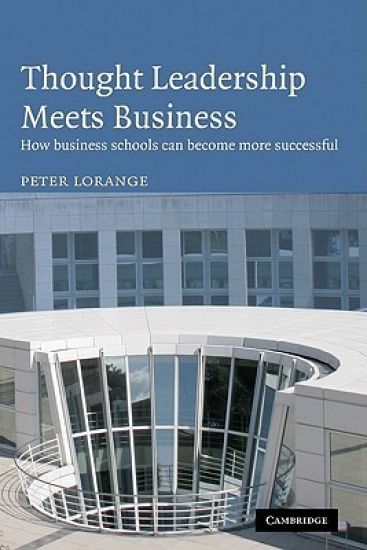
Thought Leadership Meets Business

Thought Leadership Meets Business

Peter Lorange

Cambridge University Press
2008
sidottu
For leading corporations, talent is perhaps the only truly sustainable competitive advantage. In light of this, leading international corporations need to be staffed by the best possible executive talent from around the world. This talent revolution places a burden on business schools to offer highly focused learning, based on practical research. In addition, business schools face fierce competition in this sector, not least from the rapid growth in management education in India and South East Asia. Thought Leadership Meets Business offers significant insights into the factors that have led to the delivery of high-quality executive education at the top-ranking International Institute for Management Development (IMD). Drawing on the experience and wisdom gained by IMD President Peter Lorange over a distinguished career of more than twenty years, this book offers a powerful model for business school success.
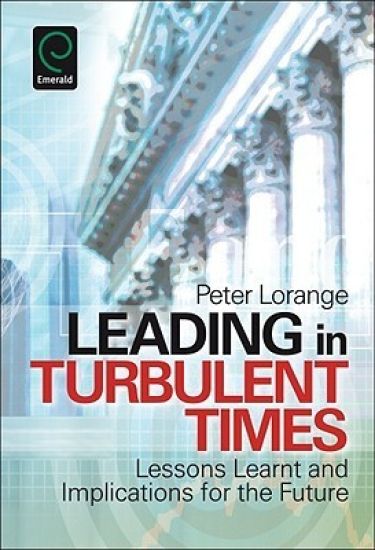
Leading in Turbulent Times

Leading in Turbulent Times

Peter Lorange

Emerald Publishing Limited
2010
nidottu
For much of his business life, Peter Lorange has had three careers running in parallel - as a business academic leading some of the world's most important business schools, as the head of a shipping company and as a board member for several multinational companies. As a result, he has seen leadership from all angles, inside and out. In this book, Peter shares what he has learnt about leadership during turbulent times and, in particular, the key insights that emerged from some of the most challenging moments in his career. Drawing on his own experiences and those of other CEOs interviewed especially for this book, Peter identifies the four leadership characteristics essential in turbulent times, and the three leadership tasks that are critical to an organization under stress. He identifies the type of organization that leaders must create in order to meet the challenges they face today, and explores what it means to be the person sitting where the buck stops. Peter describes how he is bucking the trend and reinventing the business school model at a time when many organizations are keeping their heads down and hoping for the global situation to improve.
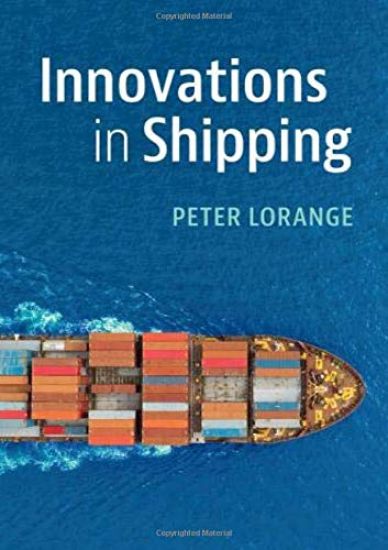
Innovations in Shipping

Innovations in Shipping

Peter Lorange

Cambridge University Press
2020
sidottu
Innovations are dramatically changing the traditionally conservative global ocean shipping industry as it works to become more efficient and more sustainable. Academic and former shipping company owner Peter Lorange is best placed to make sense of how to approach and keep ahead of these changes. This book explains what the key innovations are, how to ensure a return on investment, the barriers to innovation and how to overcome them. Drawing on a number of specialist case studies, Lorange outlines the specific analytical and decision-making steps to consider and the actions to take to arrive at a new strategic blueprint for modern shipping companies. This book is invaluable for practising shipping company executives, advanced students of shipping, logistics, port management and maritime economics, and investors deciding whether to invest in a particular shipping firm.
The Business School of the Future

The Business School of the Future

Peter Lorange

Cambridge University Press
2019
sidottu
Facing questions about the status and legitimacy of business schools, many of the world's leading institutions are now experimenting with new business models. In The Business School of the Future, former president of International Institute for Management Development (IMD), Peter Lorange reveals how the era of virtual technology, and the shift away from conservatism in classical academic institutions, heralds the arrival of a new kind of accessible and scalable business school. Drawing on his expansive and expert experience as a professor, leader and founder of academic institutions across the US and Europe, Lorange discusses the pedagogical and bureaucratic aspects of education and includes five case studies of institutes practicing the cutting-edge approaches discussed in the book (CEIBS, IMD, Singapore Management University, IE Madrid and Hult). This guide to designing the business school of the future, incorporating industry innovations, will appeal to business school deans, educators, policymakers and commentators.
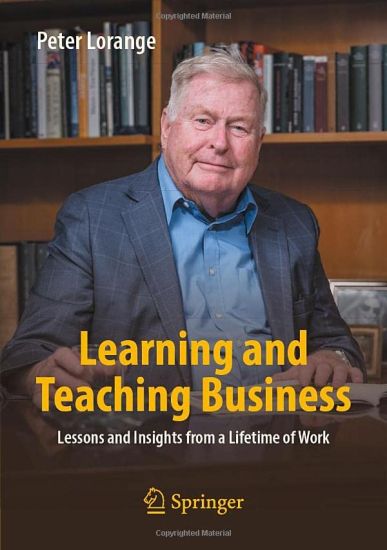
Learning and Teaching Business

Learning and Teaching Business

Peter Lorange

Springer International Publishing AG
2022
nidottu
Businesses constantly look for ways to achieve better performance, and business schools play an important role through their curricula by teaching such methods and helping budding and experienced managers find innovative paths. The author of this book, Prof. Peter Lorange, a well-accomplished expert at business and academic leadership, draws on a set of reflections from his vast experience in both fields to offer core messages which help in improving business education. The author believes that experience-based reflections tend to be both more interesting and more useful than mere chronological, biographical ones, or conceptual reviews of management dimensions without links to practice. The book helps academics, business school management, and even advanced students understand how to bring a practical focus to learning and teaching business via a holistic curriculum. The book also features a special focus on how to integrate family business perspectives to the curriculum.
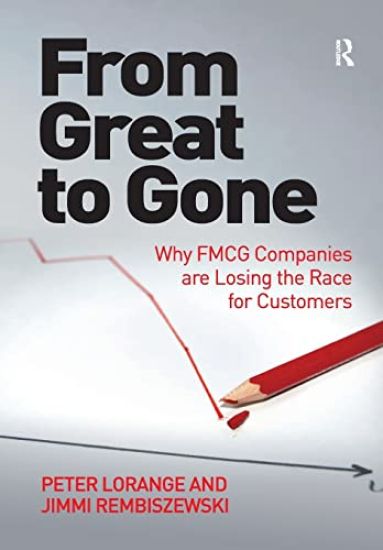
From Great to Gone

From Great to Gone

Peter Lorange; Jimmi Rembiszewski

Routledge
2016
nidottu
The modern consumer is no longer attracted by single-minded, predictable and one-benefit-focused brand promises. The old-fashioned FMCG communication strategies based on television, radio and print with constant repetition have become outdated. From Great to Gone shows that what’s needed are ’Lego’ strategies, whereby the marketing and communication strategies are built up by many key facets (like building blocks) and delivered to the consumer through a mix of various touch points. Most importantly, you need to leave consumers to put all of that together themselves. There are major internal and external hurdles to transforming FMCGs successfully into FICGs - Fast Innovating Consumer Goods. It requires new brand strategies and flatter, more top-down than bottom-up, decision-making organisations and a 21st-century model for advertising agencies. Externally these companies need a new route to market through transformation of their old retail dependencies. Changes are also required in all communication delivery, reflecting modern consumers’ connectivity and unlimited access to information. In the book the authors showcase what the winners of the 21st century have in common that has enabled them to become FICGs. New, unimagined models continue emerge, to which, with the authors’ guidance producers and retailers may develop their own sustainable responses.
From Great to Gone

From Great to Gone

Peter Lorange; Jimmi Rembiszewski

Routledge
2014
sidottu
The modern consumer is no longer attracted by single-minded, predictable and one-benefit-focused brand promises. The old-fashioned FMCG communication strategies based on television, radio and print with constant repetition have become outdated. From Great to Gone shows that what’s needed are ’Lego’ strategies, whereby the marketing and communication strategies are built up by many key facets (like building blocks) and delivered to the consumer through a mix of various touch points. Most importantly, you need to leave consumers to put all of that together themselves. There are major internal and external hurdles to transforming FMCGs successfully into FICGs - Fast Innovating Consumer Goods. It requires new brand strategies and flatter, more top-down than bottom-up, decision-making organisations and a 21st-century model for advertising agencies. Externally these companies need a new route to market through transformation of their old retail dependencies. Changes are also required in all communication delivery, reflecting modern consumers’ connectivity and unlimited access to information. In the book the authors showcase what the winners of the 21st century have in common that has enabled them to become FICGs. New, unimagined models continue emerge, to which, with the authors’ guidance producers and retailers may develop their own sustainable responses.
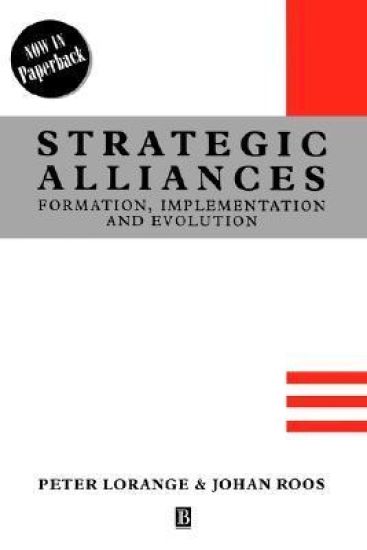
Strategic Alliances

Strategic Alliances

Peter Lorange; Johan Roos

Basil Blackwell Inc, US
1993
nidottu
Strategic alliances are becoming increasingly important as a long-term response to the move towards globalization of businesses, and to their need to learn and adapt quickly, gain access to new markets, and diffuse new technologies. In this comprehensive informative and practical text the authors delvop: An analysis of over 30 alliances in the US, Japan and Europe. A blueprint for successfully forming and implementing an alliance. Practical case histories of nine successful and unsuccessful alliances which highlight benefits and drawbacks. Highly successful in hardback, this book is now available in paperback for undergraduate and MBA students of corporate strategy and international business.
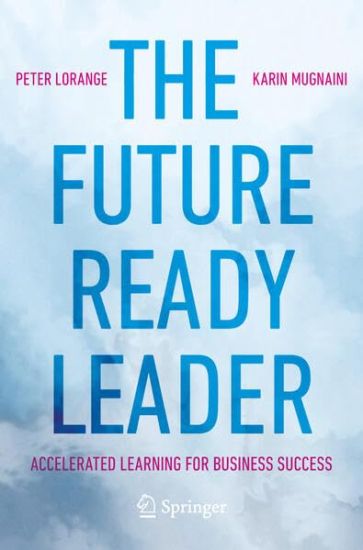
The Future-Ready Leader

The Future-Ready Leader

Peter Lorange; Karin Mugnaini

Springer International Publishing AG
2023
nidottu
If you're a business leader looking to stay ahead of the curve, this book is an essential guide. It offers a comprehensive overview of the major trends shaping the future of business, drawing on reviews of 70 recent management books and interviews with 21 senior leaders.What sets this book apart is that it's grounded in the real-world experiences of active business leaders. From political affairs to family businesses and everything in between, each of the eight parts offers expert insights on the challenges and opportunities that lie ahead. Whether you're seeking to adapt your strategy to the external environment, lead your organization towards fulfilling its mission, or simply stay ahead of the competition, this book has got you covered.
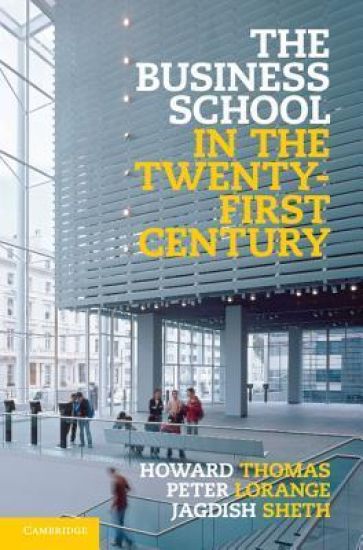
The Business School in the Twenty-First Century

The Business School in the Twenty-First Century

Howard Thomas; Peter Lorange; Jagdish Sheth

Cambridge University Press
2013
sidottu
Questions about the status, identity and legitimacy of business schools in the modern university system continue to stimulate debate amongst deans, educational policy makers and commentators. In this book, three world experts share their critical insights on management education and new business school models in the USA, Europe and Asia, on designing the business school of the future, and how to make it work. They look at how the business school is changing and focus in particular on emergent global challenges and innovations in curricula, professional roles, pedagogy, uses of technology and organisational delineations. Set within the context of a wider discussion about management as a profession, the authors provide a systematic, historical perspective, analysing major trends in business school models, and reviewing a wealth of current literature, to provide an informed and unique perspective that is firmly grounded in practical and experimental analysis.
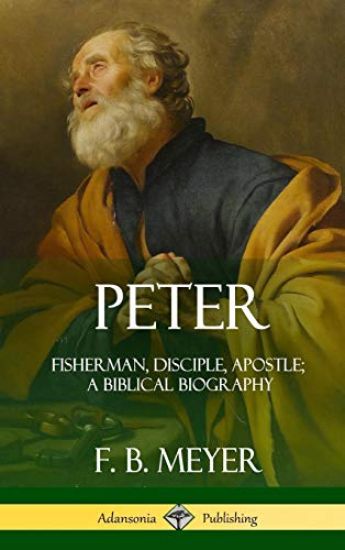
Peter

Peter

F B Meyer

Lulu.com
2018
sidottu
Saint Peter was a crucial figure in early Christianity; as one of the Twelve Apostles of Jesus Christ, he oversaw the formal establishment of the early church and became the first Bishop of Rome. Peter's formative years were spent as a fisherman. It was here that the purpose of his disciple status was unveiled: Peter was to become a 'fisher of men'; helping others believe in the Lord. These and other events are told in this biography, which investigates the ways in which Peter sought to enlighten and catch souls of men, that they be set on a righteous path to God and the Holy Spirit. Peter's humble beginnings soon transform through his pursuit of God; he accompanies Jesus as one of his twelve apostles, and is listed foremost among them in all sources. His spiritual guidance and devotion to the mission of Christ has great bearing on the foundation of the Christian church; Peter also witnessed the Resurrection of Jesus first-hand, and delivered some of the first sermons following this revelatory event.
Peter

Peter

F B Meyer

Lulu.com
2018
pokkari
Saint Peter was a crucial figure in early Christianity; as one of the Twelve Apostles of Jesus Christ, he oversaw the formal establishment of the early church and became the first Bishop of Rome. Peter's formative years were spent as a fisherman. It was here that the purpose of his disciple status was unveiled: Peter was to become a 'fisher of men'; helping others believe in the Lord. These and other events are told in this biography, which investigates the ways in which Peter sought to enlighten and catch souls of men, that they be set on a righteous path to God and the Holy Spirit. Peter's humble beginnings soon transform through his pursuit of God; he accompanies Jesus as one of his twelve apostles, and is listed foremost among them in all sources. His spiritual guidance and devotion to the mission of Christ has great bearing on the foundation of the Christian church; Peter also witnessed the Resurrection of Jesus first-hand, and delivered some of the first sermons following this revelatory event.