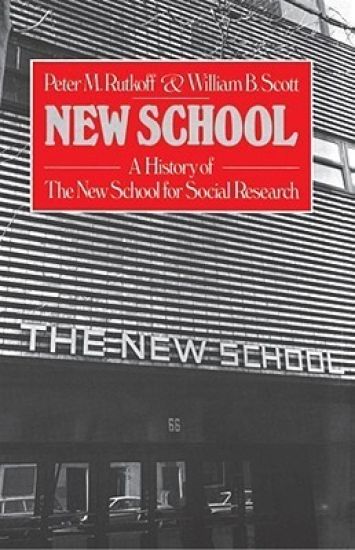
From Simon & Schuster, New School is Peter M. Rutkoff and William B. Scott's exploration into the history of The New School for Social Research.Peter M. Rutkoff and William B. Scott's New School traces the development of the New School from its founding in 1918 all the way to the present.
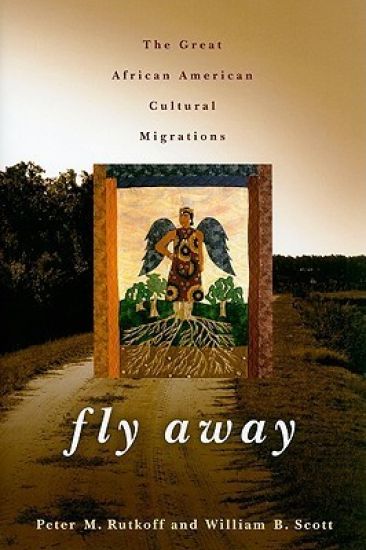
The Great Migration-the mass exodus of blacks from the rural South to the urban North and West in the twentieth century-shaped American culture and life in ways still evident today. Peter M. Rutkoff and William B. Scott trace the ideas that inspired African Americans to abandon the South for freedom and opportunity elsewhere. Black Southerners fled the Low Country of South Carolina, the mines and mills of Birmingham, Alabama, the farms of the Mississippi Delta, and the urban wards of Houston, Texas, for new opportunities in New York, Pittsburgh, Chicago, and Los Angeles. They took with them the South's rich tradition of religion, language, music, and art, recreating and preserving their Southern identity in the churches, newspapers, jazz clubs, and neighborhoods of America's largest cities. Rutkoff and Scott's sweeping study explores the development and adaptation of African American culture, from its West African roots to its profound and lasting impact on mainstream America. Broad in scope and original in its interpretation, Fly Away illuminates the origins, development, and transformation of national culture during an important chapter in twentieth-century American history.
The Great Migration-the mass exodus of blacks from the rural South to the urban North and West in the twentieth century-shaped American culture and life in ways still evident today. In Fly Away, Peter M. Rutkoff and William B. Scott trace the ideas that inspired African Americans to abandon the South for freedom and opportunity elsewhere. Black southerners fled the Low Country of South Carolina, the mines and mills of Birmingham, Alabama, the farms of the Mississippi Delta, and the urban wards of Houston, Texas, for new opportunities in New York, Pittsburgh, Chicago, and Los Angeles. They took with them the South's rich traditions of religion, language, music, and art, recreating and preserving their southern identity in the churches, newspapers, jazz clubs, and neighborhoods of America's largest cities. Rutkoff and Scott's sweeping study explores the development and adaptation of African American culture, from its West African roots to its profound and lasting impact on mainstream America. Broad in scope and original in its interpretation, Fly Away illuminates the origins, development, and transformation of national culture during an important chapter in twentieth-century American history.
Set in early 1950s Cuba, this novel explores the earliest days of what became the M-26-7 movement -- the Cuban Revolution. Ultimately, the socialist regime initiated by Fidel Castro governed Cuba from 1959 to 2008 and remains in power to this day. This novel evokes the earliest days of revolutionary struggle before Che's arrival in 1955. Author Peter Rutkoff has taught American Studies, African American History, African American Migration, and Baseball in American Culture at Kenyon College since 1971.
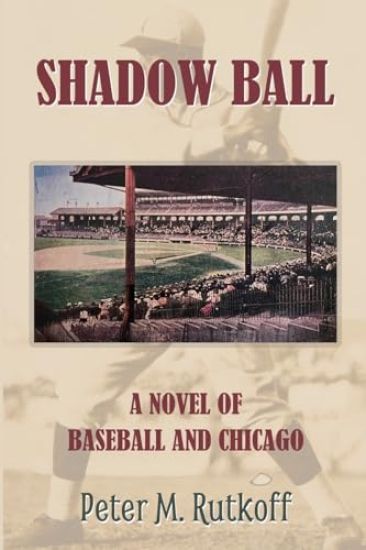
In the steamy summer of 1919 Chicago, notorious owner Charles Comiskey and Andrew "Rube" Foster, the Father of the Negro Leagues, scheme to rock the baseball world by adding African American star shortstop John Henry "Pop" Lloyd to the White Sox's roster. It is a devil's bargain, as only the men's thirst for fame and fortune allows them to overcome their contempt for each other. Meanwhile, Comiskey's low pay and tawdry treatment of his ballplayers drive them towards the Black Sox scandal, while the clashes between blacks and whites grow hotter than Chicago's oppressive heat, setting the stage for what will explode into Chicago's Great Race Riots of 1919. As Comiskey's greedy tentacles extend further and further, he brings on young Sam Weiss to do his dirty work and be his go-between. Weiss and an aspiring nightclub singer, Kid Douglas, later to known as Memphis Minnie, find themselves tangled up in Comiskey and Foster's scheme, utterly powerless, of course, to alter a thing. Shadow Ball, originally published in 2001, is a work of great imagination, firmly grounded in genuine history. Author Peter Rutkoff takes readers down Chicago's dusty cobblestone streets, into smoke-filled back rooms, and elbow to elbow with two of baseball's true titans of the era.
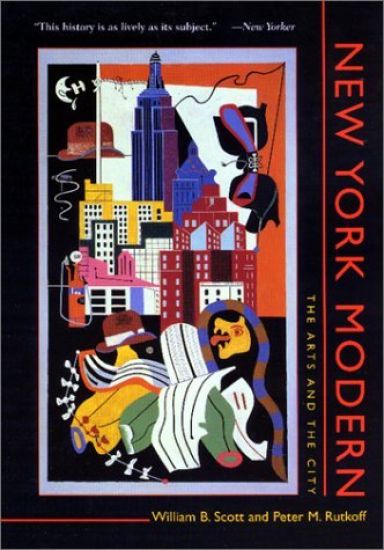
New York City's crowded streets and energetic people, its vast population and enormous extremes of wealth and poverty, its towering buildings and technological marvels have marked it as the quintessential modern city since the turn of the century. Artists in particular identified with New York's newness, believing that it embodied the future and celebrated the excitement of the modern urban lives they both witnessed and led. In New York Modern, William B. Scott and Peter M. Rutkoff explore how the varied features of the urban experience in New York inspired the works of artists such as Isadora Duncan, Alfred Stieglitz, Georgia O'Keeffe, Eugene O'Neill, Duke Ellington, Clifford Odets, Elia Kazan, Miles Davis, John Coltrane, Jackson Pollock, Merce Cunningham, John Cage, Allen Ginsberg, Arthur Miller, James Baldwin, and Diane Arbus, who together shaped twentieth-century American culture. In painting, sculpture, photography, film, music, dance, theater, and architecture, New York artists redefined what it meant to be "modern." Rooted in the urban realism of Walt Whitman, Thomas Eakins, and Edith Wharton, New York artists combined the revolutionary ideas and styles of European modernism with vernacular images drawn from American commercial, folk, and popular culture in their attempts to respond to the cacophony of voices and blur of images drawn from the city's bars and cafes, tenements and townhouses, skyscrapers and docks. Handsomely illustrated and engagingly written, New York Modern documents the impressive collective legacy of New York's artists in capturing the energy and emotions of the urban experience.
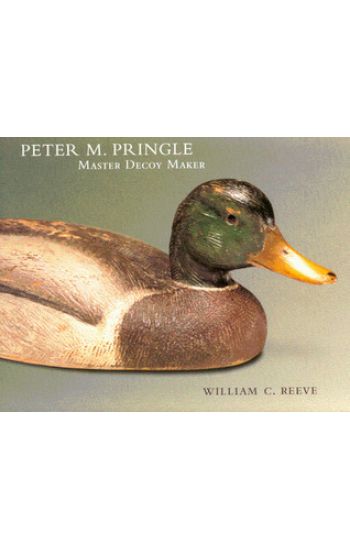
An avid outdoorsman, Pringle began carving decoys in 1898 and in 1928 set himself the goal of producing the best rig of decoys in the world. Between 1929 and 1946, employing his skills as a commercial artist and going to great lengths to ensure the utmost accuracy, he fashioned approximately 120 of what many now consider to be among the finest examples of decoy art. But because he carved exclusively for his own use and made only a few for close friends, Pringle's birds remained largely unknown until recently.