Since Peter Senge published his groundbreaking book The Fifth Discipline, he and his associates have frequently been asked by the business community: "How do we go beyond the first steps of corporate change? How do we sustain momentum?" They know that companies and organizations cannot thrive today without learning to adapt their attitudes and practices. But companies that establish change initiatives discover, after initial success, that even the most promising efforts to transform or revitalize organizations—despite interest, resources, and compelling business results—can fail to sustain themselves over time. That's because organizations have complex, well-developed immune systems, aimed at preserving the status quo.Now, drawing upon new theories about leadership and the long-term success of change initiatives, and based upon twenty-five years of experience building learning organizations, the authors of The Fifth Discipline Fieldbook show how to accelerate success and avoid the obstacles that can stall momentum. The Dance of Change, written for managers and executives at every level of an organization, reveals how business leaders can work together to anticipate the challenges that profound change will ultimately force the organization to face. Then, in a down-to-earth and compellingly clear format, readers will learn how to build the personal and organizational capabilities needed to meet those challenges.These challenges are not imposed from the outside; they are the product of assumptions and practices that people take for granted—an inherent, natural part of the processes of change. And they can stop innovation cold, unless managers at all levels learn to anticipate them and recognize the hidden rewards in each challenge, and the potential to spur further growth. Within the frequently encountered challenge of "Not Enough Time," for example—the lack of control over time available for innovation and learning initiatives—lies a valuable opportunity to reframe the way people organize their workplaces.This book identifies universal challenges that organizations ultimately find themselves confronting, including the challenge of "Fear and Anxiety"; the need to diffuse learning across organizational boundaries; the ways in which assumptions built in to corporate measurement systems can handcuff learning initiatives; and the almost unavoidable misunderstandings between "true believers" and nonbelievers in a company.Filled with individual and team exercises, in-depth accounts of sustaining learning initiatives by managers and leaders in the field, and well-tested practical advice, The Dance of Change provides an insider's perspective on implementing learning and change initiatives at such corporations as British Petroleum, Chrysler, Dupont, Ford, General Electric, Harley-Davidson, Hewlett-Packard, Mitsubishi Electric, Royal DutchShell, Shell Oil Company, Toyota, the United States Army, and Xerox. It offers crucial advice for line-level managers, executive leaders, internal networkers, educators, and others who are struggling to put change initiatives into practice. Advance Acclaim for The Dance of Change:"Do not read this book from cover to cover. Just dip in anywhere; you'll be surprised and challenged. This is an original and refreshing take on organizational change--on every page an idea stops you in your tracks and makes you rethink everything you thought you knew about the subject."--Warren Bennis, professor, Marshall School of Business, University of Southern California, and coauthor of Co-Leaders"The Dance of Change is an extraordinary book. Dancing with Peter Senge and company inspires us to learn new steps and gain new insights. The format and presentation of this provocative and accessible guide to change are as dazzling as its content."--Frances Hesselbein, Chairman, Peter F. Drucker Foundation for Nonprofit ManagementCritical Acclaim for The Fifth Discipline Fieldbook:"If you believe, as I do, that people are the only long-term competitive advantage and lifelong learning is the way to fully develop that advantage, you must read this book. It's about the real work, the work of implementation!"--Richard F. Teerlink, President and CEO, Harley Davidson, Inc."Senge's message of growth and prosperity holds strong appeal for today's business leaders."--Fortune"Peter Senge's advocacy of the learning organization helped begin a revolution in the workplace. And, the relevance of Senge's work is growing rather than diminishing over time. As more businesses go global, the need to overcome psychological barriers to necessary organizational change increases."--Management Today
A pioneer in learning organizations offers five disciplines that reveal the link between far-flung causes and immediate effects and that can save organizations from becoming "learning disabled," helping them learn better and faster, in a revised edition of the best-selling business classic. Simultaneous. 20,000 first printing. Deckle Cut.
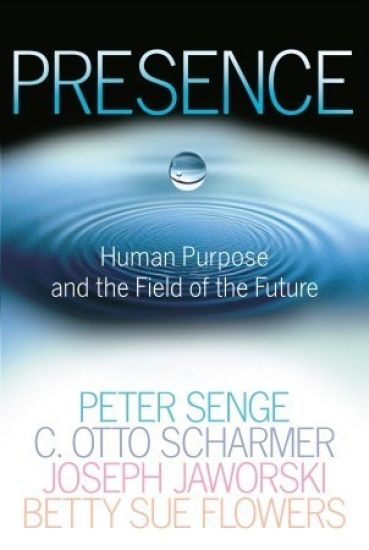
Presence is an intimate look at the development of a new theory about change and learning. In wide-ranging conversations held over a year and a half, organizational learning pioneers Peter Senge, C. Otto Scharmer, Joseph Jaworski, and Betty Sue Flowers explored the nature of transformational change--how it arises, and the fresh possibilities it offers a world dangerously out of balance. The book introduces the idea of "presence"--a concept borrowed from the natural world that the whole is entirely present in any of its parts--to the worlds of business, education, government, and leadership. Too often, the authors found, we remain stuck in old patterns of seeing and acting. By encouraging deeper levels of learning, we create an awareness of the larger whole, leading to actions that can help to shape its evolution and our future. Drawing on the wisdom and experience of 150 scientists, social leaders, and entrepreneurs, including Brian Arthur, Rupert Sheldrake, Buckminster Fuller, Lao Tzu, and Carl Jung, Presence is both revolutionary in its exploration and hopeful in its message. This astonishing and completely original work goes on to define the capabilities that underlie our ability to see, sense, and realize new possibilities--in ourselves, in our institutions and organizations, and in society itself.
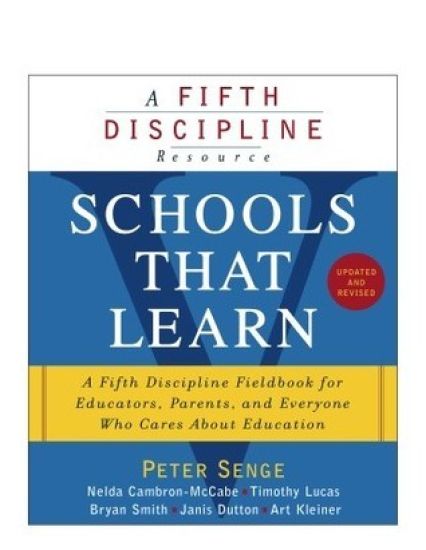
"A rich, much-needed remedy for the standardized institutions that comprise too much of our school system today... ideal for teachers and parents intent on resurrecting and fostering students' inherent drive to learn...An essential resource." -Daniel H. Pink, author of DRIVE and A WHOLE NEW MIND "Schools that Learn is a magnificent, grand book that pays equal attention to the small and the big picture - and what's more integrates them. There is no book on education change that comes close to Senge et al's sweeping and detailed treatment. Classroom, school, community, systems, citizenry---it's all there. The core message is stirring: what if we viewed schools as a means of shifting society for the better " -Michael Fullan, author of Change Leader and Learning Places A new edition of the groundbreaking book that brings organizational learning and systems thinking into classrooms and schools, showing how to keep our nation's educational system competitive in today's world. Revised and updated - with more than 100 pages of new material - for the first time since its initial publication in 2000 comes a new edition of the seminal work acclaimed as one of the best books ever written about education and schools. A unique collaboration between the celebrated management thinker and Fifth Discipline author Peter Senge and a team of renowned educators and organizational change leaders, Schools that Learn describes how schools can adapt, grow, and change in the face of the demands and challenges of our society, and provides tools, techniques and references for bringing those aspirations to life. The new revised and updated edition offers practical advice for overcoming the many challenges that face our communities and educational systems today. It shows teachers, administrators, students, parents and community members how to successfully use principles of organizational learning, including systems thinking and shared vision, to address the challenges that face our nation's schools. In a fast-changing world where school populations are increasingly diverse, children live in ever-more-complex social and media environments, standardized tests are applied as overly simplistic "quick fixes," and advances in science and technology continue to accelerate, the pressures on our educational system are inescapable. Schools That Learn offers a much-needed way to open dialogue about these problems - and provides pragmatic opportunities to transform school systems into learning organizations. Drawing on observations and advice from more than 70 writers and experts on schools and education, this book features: -Methods for implementing organizational learning and explanations of why they work -Compelling stories and anecdotes from the "field" - classrooms, schools, and communities -Charts, tables and diagrams to illustrate systems thinking and other practices -Guiding principles for how to apply innovative practices in all types of school systems -Individual exercises useful for both teachers and students -Team exercises to foster communication within the classroom, school, or community group -New essays on topics like educating for sustainability, systems thinking in the classroom, and "the great game of high school." -New recommendations for related books, articles, videotapes and web sites -And more Schools That Learn is the essential guide for anyone who cares about the future of education and keeping our nation's schools competitive in our fast-changing world.
In seinem Bestseller "Die fünfte Disziplin" hat Peter Senge die Theorie der lernenden Organisation vorgestellt und damit die Welt des Managements revolutioniert. Das Fieldbook beantwortet die wichtigste Frage: Wie setze ich die Theorie in die Praxis um?
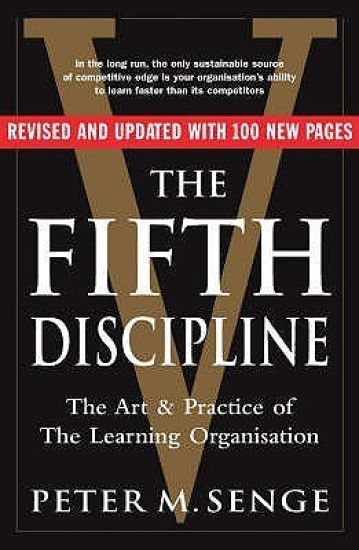
One of the seminal management books of the past 75 years, The Fifth Discipline is an international multi-million-copy bestseller. Written in an engaging and accessible way, with diagrams and illustrations, it will change the way you think and therefore way you and your team grows and develop. In the long run, the only sustainable source of competitive advantage is your organisation's ability to learn faster than its competitors....'Senge explains why the learning organization matters, provides an unvarnished summary of his management principals, offers some basic tools for practicing it, and shows what it's like to operate under this system. The book's concepts remain stimulating and relevant as ever' -- Amazon.com'500 pages that I will no doubt keep coming back to' -- ***** Reader review'This is a book about growth, improvement and continuous development. If you wish to achieve these results for yourself, your home, or your organization, then you MUST read this' -- ***** Reader review'Has the power of revolutionizing your thinking on how to build organizations' -- ***** Reader review'Enlightening from start to finish' -- ***** Reader review************************************************************************************************Peter Senge, founder and director of the Society for Organisational Learning and senior lecturer at MIT, has found the means of creating a 'learning organisation'. In The Fifth Discipline, he draws the blueprints for an organisation where people expand their capacity to create the results they truly desire, where new and expansive patterns of thinking are nurtured, where collective aspiration is set free, and where people are continually learning together.He fuses these features together into a coherent body of theory and practice, making the whole of an organisation more effective than the sum of its parts.Mastering the disciplines will:*Reignite the spark of learning, driven by people focused on what truly matters to them.*Bridge teamwork into macro-creativity.*Free you from confining assumptions and mind-sets.*Teach you to see the forest and the trees.*End the struggle between work and family time.The Fifth Discipline is a remarkable book that draws on science, spiritual values, psychology, the cutting edge of management thought and case studies of Senge's work with leading companies - reading it is a searching personal experience that guarantees a professional shift of mind.Written in an engaging and accessible way, with diagrams and illustrations, this publishing phenomenon is a must read for anyone interested in approaches to business growth, personal development and management coaching.
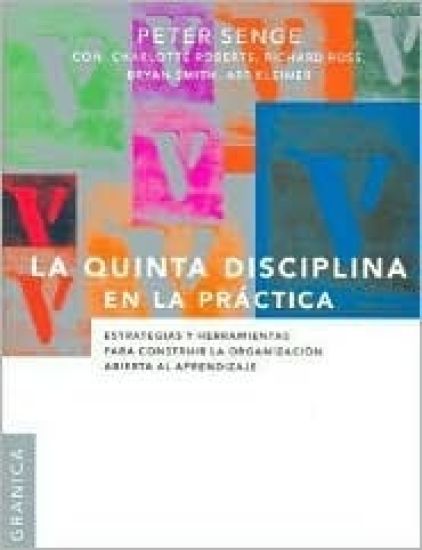
La Quinta Disciplina es el primer libro de Management del siglo XXI. Una obra precursora sobre la construcci n de organizaciones inteligentes, abiertas al aprendizaje. A partir de un aut ntico enfoque interdisciplinario, Peter Senge, Director de Pensamiento de Sistemas y Aprendizaje Organizacional del MIT, despliega su singular visi n y nos ubica en las fronteras del pensamiento organizativo, mostrando c mo ser n las Organizaciones capaces de sobreponerse a las dificultades y c mo reconocer amenazas y enfrentar nuevas oportunidades. Su lectura es una cautivante invitaci n a revisar nuestra forma de pensar la organizaci n. Peter M. Senge es director de Pensamiento de Sistemas y Aprendizaje Organizacional de la Sloan School of Management del MIT y socio fundador de la consultora Innovation Associates, de Massachusetts. Ha formado cientos de gerentes en empresas como Ford, Digital, Apple, Procter & Gamble, AT&T, Herman Miller, Hanover Insurance y Shell.
For the late Russell Ackoff, the important principles and qualities on which his work was based - clear-sightedness, looking at the bigger picture, working backwards to dissolve problems, radicalism - crossed over into most, if not all, other aspects of his life. "Ackoff's Memories" tell of his experiences of serving in the US Army during World War II; of bringing up a young family; of encountering different cultures whilst working abroad. From analyzing birth rates in India, to a fireside chat with the Queen of Iran, to introducing theme parks to the US, the stories collected in this book lay bare the workings of a number of well-known businesses and other organizations - and the people who run them. They describe common attitudes, behaviors and assumptions, which, if left unchallenged, can destabilize or even destroy an organization. This book shows how thinking systemically leads to real organizational improvements in a variety of academic and workplace settings and - just as important - how failure to do so can be both personally embarrassing and damaging to the organization. Each story is used to illustrate a belief, principle or conclusion central to Ackoff's theories of Systems Thinking and Design Thinking. And each of them is told with his customary generosity, wit and wisdom.
This book is for people who want to learn, especially while treading the fertile ground of organizational life. The idea of a learning organization has become increasingly prominent over the last few years. This book's predecessor, The Fifth Discipline, helped give voice to that wave on interest by presenting the conceptual underpinnings of the work of building learning organizations. Since its publication in 1990, Peter Senge et al. have talked to thousands of people who have committed themselves to the idea of building a learning organization. However, many of them are still not certain how to put the concepts into practice, asking questions like 'What do we do Monday morning? How do we navigate past the many barriers and roadblocks to collective learning? How do we discover exactly what kind of learning organization we wish to create? How do we get started?' No one person has THE answers to these questions, but there are answers. It is time for a 'fieldbook' - a collection of notes, reflections and exercised 'from the field'. This volume contains 172 pieces of writing by 67 authors, describing tools and methods, stories and reflections, guiding ideas and exercises and resources which people are using effectively.
Since Peter Senge published The Fifth Discipline, he and his associates have frequently been asked by the business community: "How do we go beyond the first steps of corporate change? How do we sustain momentum?" They know that companies and organizations cannot thrive today without learning to adapt their attitudes and practices. But companies that establish change initiatives discover, after initial success, that even the most promising efforts to transform or revitalize organizations - despite interest, resources, and compelling business results - can fail to sustain themselves over time. That's because organizations have complex, well-developed immune systems, aimed at preserving the status quo.Now, drawing upon new theories about leadership and the long-term success of change initiatives, and based upon twenty-five years of experience building learning organizations, the authors of The Fifth Discipline Fieldbook show how to accelerate success and avoid the obstacles that can stall momentum. The Dance of Change, written for managers and executives at every level of an organization, reveals how business leaders can work together to anticipate the challenges that profound change will ultimately force the organization to face. Then, in a down-to-earth and compellingly clear format, readers will learn how to build the personal and organizational capabilities needed to meet those challenges.Filled with individual and team exercises, in-depth accounts of sustaining learning initiatives by managers and leaders in the field, and well-tested practical advice, The Dance of Change provides an insider's perspective on implementing learning and change initiatives at such corporations as British Petroleum, Chrysler, Dupont, Ford, General Electric, Harley-Davidson, Hewlett-Packard, Mitsubishi Electric, Royal DutchShell, Shell Oil Company, Toyota, the United States Army, and Xerox. It offers crucial advice for line-level managers, executive leaders, internal networkers, educators, and others who are struggling to put change initiatives into practice.
Presence: Exploring Profound Change in People, Organisations and Society gives the reader an intimate look at the development of a new theory about change and learning. In wide-ranging conversations held over a year and a half, Senge, Scharmer, Jaworski and Flowers explore their own experiences and those of one hundred and fifty scientists and social and business entrepreneurs in an effort to explain how profound collective change occurs.Their journey of discovery articulates a new way of seeing the world, and of understanding our part in creating it - as it is and as it might be. Radical and hopeful - Presence synthesises leading-edge thinking, first-hand knowledge and ancient wisdom to explore the living fields that connect us to one another, to life more broadly, and, potentially, to what is 'seeking to emerge'. Seven capacities underlie out ability to see, sense, and realise new possibilities. Developing these capacities accesses a deeper level of learning that is the key to creating change that serves the whole - ourselves, our organisations, and the communities of which we are a part.
The Necessary Revolution is a book about the end of The Industrial Age Bubble the take, make, waste way of thinking that has dominated the developed world for the past 200 years. It is also a book about a new era emerging in which companies are beginning to recognise the larger systems in which they operate (environmental, social, and economic) and integrate these into their core strategies. Imagine a world in which the excess energy from one business would be used to heat another. A world in which environmentally sound products and processes would be more cost effective than wasteful ones. A world in which corporations like BP, Nike, Coca-Cola, and countless others are forming partnerships with environmental and social justice NGOs to ensure better stewardship of the earth and better livelihoods in the developing world. Now, stop imagining that world is already emerging. We must act together now.
A NEW EDITION OF THE GROUNDBREAKING BOOKA new edition - revised and updated with over 100 pages of new material - of the groundbreaking book that brings the principles of organizational learning to today s schools and classrooms.A unique collaboration between the celebrated management thinker and Fifth Discipline author Peter Senge , and a team of renowned educators and organizational change leaders, the revised edition of Schools The Learn addresses the new and unique pressures on our educational system that have emerged since the book's initial publication in 2000.In a fast-changing world where school populations are increasingly diverse, children live in ever-more-complex social and media environments, standardized tests are applied as overly simplistic "quick fixes," and advances in science and technology continue to accelerate, the pressures on our educational system are inescapable. Schools That Learn offers a much-needed way to open dialogue about these problems and provides pragmatic opportunities to transform school systems into learning organizations.Drawing on observations and advice from more than 70 writers and experts on schools and education, this book features:· methods for implementing organizational learning and explanations of why they work· compelling stories and anecdotes from the field - classrooms, schools, and communities· charts, tables and diagrams to illustrate systems thinking and other practices· guiding principles for how to apply innovative practices in all types of school systemsSchools That Learn is the essential guide for anyone who cares about the future of education and keeping our nation s schools competitive in our fast-changing world.
An avid outdoorsman, Pringle began carving decoys in 1898 and in 1928 set himself the goal of producing the best rig of decoys in the world. Between 1929 and 1946, employing his skills as a commercial artist and going to great lengths to ensure the utmost accuracy, he fashioned approximately 120 of what many now consider to be among the finest examples of decoy art. But because he carved exclusively for his own use and made only a few for close friends, Pringle's birds remained largely unknown until recently.