Kirjojen hintavertailu. Mukana 11 244 527 kirjaa ja 12 kauppaa.

Kirjahaku

Etsi kirjoja tekijän nimen, kirjan nimen tai ISBN:n perusteella.

1000 tulosta hakusanalla Peter M. Tiersma

Legal Language

Legal Language

Peter M. Tiersma

University of Chicago Press
2000
nidottu
Why is legal language so different from ordinary English? Statutes, judicial opinions, contracts, deeds and wills profoundly affect our daily lives, but their language tends to be convoluted, antiquated and often nearly impossible for the public to understand. So where did the "lessees" and "tortfeasors" come from and are they necessarily here to stay? This history of legal language slices through the polysyllabic thicket of legalese. It shows to what extent legalese is simply a product of its past, when Anglo-Saxon mercenaries, Latin-speaking missionaries, Scandinavian raiders and Norman invaders all left their marks on the language that lawyers use today. Peter Tiersma suggests, however, that history alone provides an inadequate explanation for the peculiarities of legal language. He considers how lawyers cling to their foreign-sounding language because it convinces laypeople that the legal system is far too complex to navigate without professional assistance. Obscurity, Tiersma suggests, can also be strategic (as when an insurance company prints oppressive legal terms in small type on the back of a policy), as can clarity (if lawyers need to persuade a jury of their client's innocence, they speak and write with newfound ease). All these issues are wrapped up in the legal language that continues to evolve and shape our culture. This text demonstrates that arcane vocabulary is not an inevitable feature of our legal system and Tiersma concludes with a call for simplification. It brings the verbiage of leases, employment agreements and other consumer documents out of the shadows.
Parchment, Paper, Pixels

Parchment, Paper, Pixels

Peter M. Tiersma

University of Chicago Press
2010
sidottu
Technological revolutions have had an unquestionable, if still debatable, impact on culture and society - perhaps none more so than the written word. In the legal realm, the rise of literacy and print culture made possible the governing of large empires, the memorializing of private legal transactions, and the broad distribution of judicial precedents and legislation. Yet each of these technologies has its shadow side: written or printed texts easily become static, and the textual practices of the legal profession can frustrate ordinary citizens, who may be bound by documents whose implications they scarcely understand. "Parchment, Paper, Pixels" offers an engaging exploration of the impact of three technological revolutions on the law. Beginning with the invention of writing, continuing with the mass production of identical copies of legal texts brought about by the printing press, and ending with a discussion of computers and the Internet, Peter M. Tiersma traces the journey of contracts, wills, statutes, judicial opinions, and other legal texts through the past and into the future. Though the ultimate effects of modern technologies on our legal system remain to be seen, "Parchment, Paper, Pixels" offers readers an insightful guide as to how our shifting forms of technological literacy have shaped and continue to shape the practice of law today.
Speaking of Crime

Speaking of Crime

Lawrence M. Solan; Peter M. Tiersma; Tammy Gales

THE UNIVERSITY OF CHICAGO PRESS
2025
nidottu
An essential introduction to the use and misuse of language within the criminal justice system, updated for a new generation. Does everyone understand the Miranda warning? Why do people confess to a crime they did not commit? Can linguistic experts identify who wrote an anonymous threatening letter? Since its first publication, Speaking of Crime has been answering these questions. Introducing major topics and controversies at the intersection of language and law, Lawrence M. Solan, Peter M. Tiersma, and Tammy Gales apply multidisciplinary insights to examine the complex role of language within the US justice system. The second edition features in-depth discussions of recent cases, new legislation, and innovative research advances, and includes a new chapter on who interprets the laws governing linguistic contexts. Thoroughly updated and approachable, Speaking of Crime is a state-of-the-art survey that will be useful to scholars, students, and practitioners throughout the criminal justice system.
Speaking of Crime

Speaking of Crime

Lawrence M. Solan; Peter M. Tiersma

University of Chicago Press
2005
sidottu
Why do so many people voluntarily consent to searches by have the police search their person or vehicle when they know that they are carrying contraband or evidence of illegal activity? Does everyone understand the Miranda warning? How well can people recognize a voice on tape? Can linguistic experts identify who wrote an anonymous threatening letter?Speaking of Crime answers these questions and examines the complex role of language within our criminal justice system. Lawrence M. Solan and Peter M. Tiersma compile numerous cases, ranging from the Lindbergh kidnapping to the impeachment trial of Bill Clinton to the JonBenét Ramsey case, that provide real-life examples of how language functions in arrests, investigations, interrogations, confessions, and trials. In a clear and accessible style, Solan and Tiersma show how recent advances in the study of language can aid in understanding how legal problems arise and how they might be solved.With compelling discussions current issues and controversies, this book is a provocative state-of-the-art survey that will be of enormous value to legal scholars and professionals throughout the criminal justice system.
Speaking of Crime

Speaking of Crime

Lawrence M. Solan; Peter M. Tiersma

University of Chicago Press
2005
nidottu
Why do so many people voluntarily consent to searches by have the police search their person or vehicle when they know that they are carrying contraband or evidence of illegal activity? Does everyone understand the Miranda warning? How well can people recognize a voice on tape? Can linguistic experts identify who wrote an anonymous threatening letter?Speaking of Crime answers these questions and examines the complex role of language within our criminal justice system. Lawrence M. Solan and Peter M. Tiersma compile numerous cases, ranging from the Lindbergh kidnapping to the impeachment trial of Bill Clinton to the JonBenét Ramsey case, that provide real-life examples of how language functions in arrests, investigations, interrogations, confessions, and trials. In a clear and accessible style, Solan and Tiersma show how recent advances in the study of language can aid in understanding how legal problems arise and how they might be solved.With compelling discussions current issues and controversies, this book is a provocative state-of-the-art survey that will be of enormous value to legal scholars and professionals throughout the criminal justice system.
Speaking of Crime

Speaking of Crime

Lawrence M. Solan; Peter M. Tiersma; Tammy Gales

THE UNIVERSITY OF CHICAGO PRESS
2025
sidottu
An essential introduction to the use and misuse of language within the criminal justice system, updated for a new generation. Does everyone understand the Miranda warning? Why do people confess to a crime they did not commit? Can linguistic experts identify who wrote an anonymous threatening letter? Since its first publication, Speaking of Crime has been answering these questions. Introducing major topics and controversies at the intersection of language and law, Lawrence M. Solan, Peter M. Tiersma, and Tammy Gales apply multidisciplinary insights to examine the complex role of language within the US justice system. The second edition features in-depth discussions of recent cases, new legislation, and innovative research advances, and includes a new chapter on who interprets the laws governing linguistic contexts. Thoroughly updated and approachable, Speaking of Crime is a state-of-the-art survey that will be useful to scholars, students, and practitioners throughout the criminal justice system.
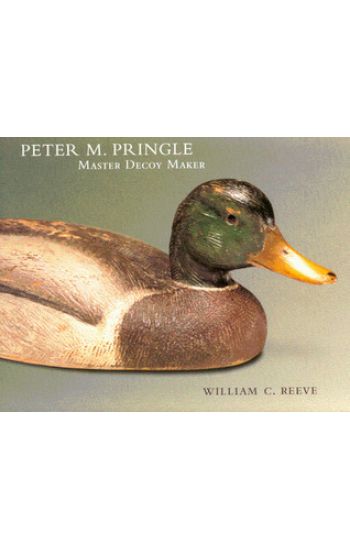
Peter M. Pringle, Master Decoy Maker

Peter M. Pringle, Master Decoy Maker

William C. Reeve

McGill-Queen's University Press
2002
sidottu
An avid outdoorsman, Pringle began carving decoys in 1898 and in 1928 set himself the goal of producing the best rig of decoys in the world. Between 1929 and 1946, employing his skills as a commercial artist and going to great lengths to ensure the utmost accuracy, he fashioned approximately 120 of what many now consider to be among the finest examples of decoy art. But because he carved exclusively for his own use and made only a few for close friends, Pringle's birds remained largely unknown until recently.