Kirjojen hintavertailu. Mukana 11 244 527 kirjaa ja 12 kauppaa.

Kirjahaku

Etsi kirjoja tekijän nimen, kirjan nimen tai ISBN:n perusteella.

1000 tulosta hakusanalla Peter Robert Edwin Viereck

Economic Research Relevant to the Formulation of National Urban Development Strategies

Economic Research Relevant to the Formulation of National Urban Development Strategies

James Douglas McCallum; Lowdon Wingo; Wilbur Thompson; H.W. Richardson; Joel Bergsman; Peter Greenston; Robert Healy; Edwin S. Mills; Alan W. Evans

Routledge
2017
sidottu
Originally published in 1971, this volume contains papers invited for a conference on economic research relevant to national urban development held in September of the same year. The conference pulled together researchers from both the United Kingdom and the United States who were interested in economic research on key issues of both countries’ management of their urban areas. Papers are varied from those in the early stages of research to those whose research has been completed and all provide an insight into the increase of urbanisation present in the first world. This title will be of interest to students of environmental studies and economics.
Economic Research Relevant to the Formulation of National Urban Development Strategies

Economic Research Relevant to the Formulation of National Urban Development Strategies

James Douglas McCallum; Lowdon Wingo; Wilbur Thompson; H.W. Richardson; Joel Bergsman; Peter Greenston; Robert Healy; Edwin S. Mills; Alan W. Evans

Routledge
2019
nidottu
Originally published in 1971, this volume contains papers invited for a conference on economic research relevant to national urban development held in September of the same year. The conference pulled together researchers from both the United Kingdom and the United States who were interested in economic research on key issues of both countries’ management of their urban areas. Papers are varied from those in the early stages of research to those whose research has been completed and all provide an insight into the increase of urbanisation present in the first world. This title will be of interest to students of environmental studies and economics.
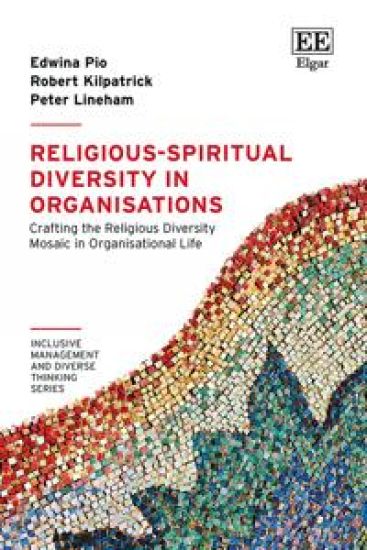
Religious-Spiritual Diversity in Organisations

Religious-Spiritual Diversity in Organisations

Edwina Pio; Robert Kilpatrick; Peter Lineham

EDWARD ELGAR PUBLISHING LTD
2024
sidottu
Challenges involved in the interplay between religion and business are incredibly complex, and as such this book thoughtfully considers the critical issue of inclusion and how employers should view its importance. Whilst exploring the intricacies of organised religion, it investigates how mindful religious wisdom can be harmoniously applied within corporate and not for profit environments.This invaluable book provides an essential overview of how employees belonging to organised belief systems might interact, and how they may encounter challenges both historically and today. Chapters examine the effect that religious diversity has had on organisations throughout history, focusing on various ways that religious backgrounds can be expressed, for example, through food, dress and rites. Ultimately, the book illustrates how religious diversity can be hugely advantageous to leadership teams and can contribute to organisational thriving.Encouraging practitioners to see the advantages of religious diversity in the workplace, this insightful book will be important for managers and business leaders of any industry. It will also be highly beneficial for academics and students focusing on business, organisation studies and diversity management.
Hunting Susan

Hunting Susan

Peter Robert Sewell

Peter Sewell
2019
pokkari
What if you lost everything you loved?After her husband is murdered, Susan Banks is warned that her life is also in danger. As a result, she changes her identity and flees New York to start a new life in Central America. One year later, while secretly investigating a link to her husband's death, Susan finds herself at the center of a worldwide manhunt.Robert Cruse, head of the CIA's technology branch, identifies Susan as a national security threat, but his real motives remain a mystery. In a pursuit across four continents, Cruse wastes no resource to hunt Susan, but when they finally meet, it will be in a way no one could predict.
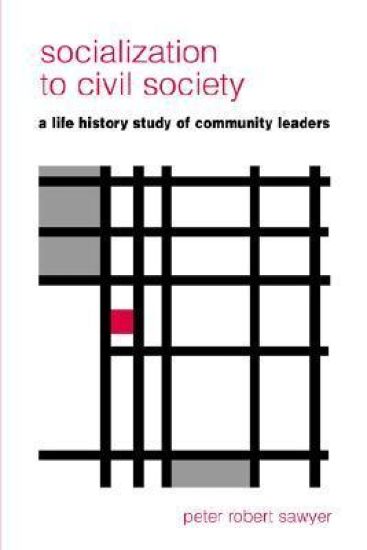
Socialization to Civil Society

Socialization to Civil Society

Peter Robert Sawyer

State University of New York Press
2004
pokkari
2005 CHOICE Outstanding Academic TitleWhile many political theorists argue that the problems and failures of American democracy are rooted in the decline of civil society, few examine how American institutions socialize citizens to participate in the voluntary associations that comprise civil society. Peter Robert Sawyer offers a life history approach to explore citizen involvement within one community in upstate New York. Sawyer's informants model enlightened self-interest and participate actively in their community's voluntary associations. Their life histories, revealed in rich narrative, tell us how they think about political life and how various agents of socialization—family, peers, school, church, community, media, workplace, and voluntary associations themselves—influence their commitment. The results of this study provide some interesting revelations about how to construct government, corporate, education, and family institutions to encourage civic participation and to maintain the overall health of civil society.
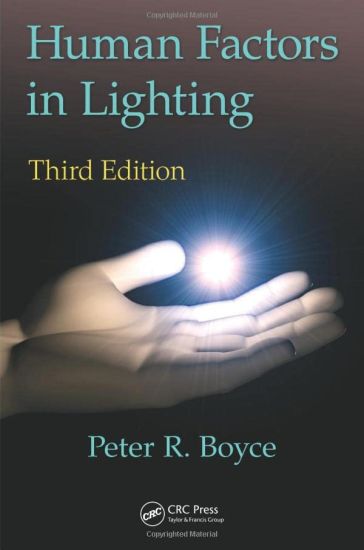
Human Factors in Lighting

Human Factors in Lighting

Peter Robert Boyce

CRC Press
2017
sidottu
The availability of electric lighting has changed the lives of people the world over, yet as a major user of electricity it has come under increasing scrutiny in recent years. This scrutiny has focused largely on the environmental consequences, with little consideration of the benefits of lighting. Human Factors in Lighting, Third Edition restores some balance to the discussion by examining the ways in which people interact with lighting. These interactions influence the ability to perform visual tasks; the perception of people, objects, and spaces; human comfort and behavior; as well as human health and safety. It is only by understanding how to use light to achieve these ends that lighting can be provided effectively and efficiently to the benefit of all. See What‘s New in the Third Edition: New chapters on the non-image-forming system, lighting for pedestrians, light pollution, and lighting and electricity use Revision of all other chapters to update them to take into account the advances that have been made in our understanding of the effects of light on people over the last decade Integration of the combined effects of light via the visual and non-image-forming systems on performance and perception The book covers both the visual and the non-visual effects of light on people as well as the benefits of lighting and the costs it imposes on the environment. It details the consequences of exposure to lighting or lighting technology and the role of exposure to light on such basic functions of the body as circadian rhythms. The author combines information from many different sources and integrates them into a coherent overview of lighting practice that can be used to develop better lighting solutions at a lower environmental cost.
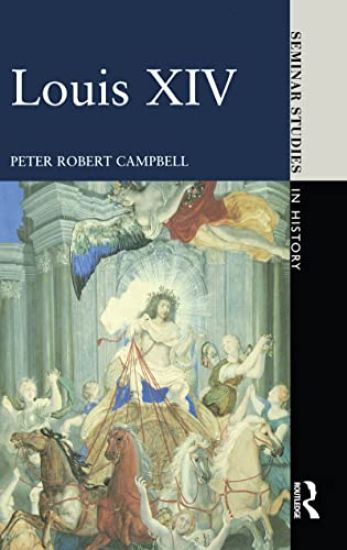
Louis XIV

Louis XIV

Peter Robert Campbell

Routledge
2015
sidottu
`The Sun King has always been over-exposed -- a habit he started himself. Here is the student's antidote to boredom. Campbell has produced the best short guide available and a vigorous synthesis of the latest research, complete with extensive bibliography, unfamiliar documents and vital glossary. Fresh material abounds and a misconception is demolished on every page. There is no sign here of reheating old recipes.' History Review
Human Factors in Lighting

Human Factors in Lighting

Peter Robert Boyce

CRC Press Inc
2014
nidottu
The availability of electric lighting has changed the lives of people the world over, yet as a major user of electricity it has come under increasing scrutiny in recent years. This scrutiny has focused largely on the environmental consequences, with little consideration of the benefits of lighting. Human Factors in Lighting, Third Edition restores some balance to the discussion by examining the ways in which people interact with lighting. These interactions influence the ability to perform visual tasks; the perception of people, objects, and spaces; human comfort and behavior; as well as human health and safety. It is only by understanding how to use light to achieve these ends that lighting can be provided effectively and efficiently to the benefit of all.See What’s New in the Third Edition: New chapters on the non-image-forming system, lighting for pedestrians, light pollution, and lighting and electricity use Revision of all other chapters to update them to take into account the advances that have been made in our understanding of the effects of light on people over the last decade Integration of the combined effects of light via the visual and non-image-forming systems on performance and perception The book covers both the visual and the non-visual effects of light on people as well as the benefits of lighting and the costs it imposes on the environment. It details the consequences of exposure to lighting or lighting technology and the role of exposure to light on such basic functions of the body as circadian rhythms. The author combines information from many different sources and integrates them into a coherent overview of lighting practice that can be used to develop better lighting solutions at a lower environmental cost.
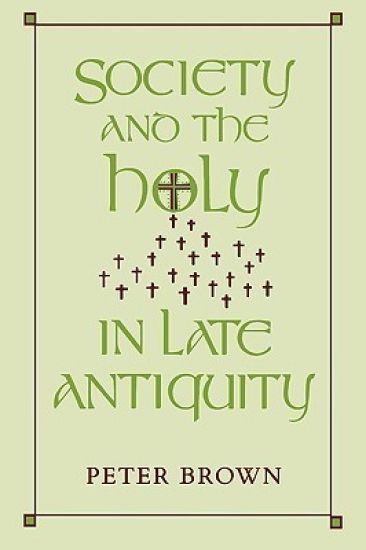
Religion and Society in the Age of St. Augustine

Religion and Society in the Age of St. Augustine

Peter Robert Lamont Brown

Wipf Stock Publishers
2007
pokkari
Peter Brown, author of the celebrated 'Augustine of Hippo', has here gathered together his seminal articles and papers on the rapidly changing world of Saint Augustine. The collection is wide-ranging, dealing with political theory, social history, church history, historiography, theology, history of religions, and social anthropology. Saint Augustine is, of course, the central figure; and in an important introduction Peter Brown explains how the preoccupations of these essays led him to write the prize-winning biography. Brown then goes on to explore the heart of Augustine's political theory, not only showing how it factors in Augustine's thought, but also pointing to what is different from and similar to twentieth-century political thought. Peter Brown is the undoubted master of the late antique world and its scholarly exploration, as his many classic books attest. But if he had written only this volume, originally published in 1972 and now reprinted, he would be known as a scholar of the very first rank. The essays here retain tremendous power to instruct and illuminate. --James J. O'Donnell, Georgetown University, author of 'Augustine: A New Biography' I salute Mr. Brown's achievement in bringing Augustine out of the tomb of theological doctrine and setting his mind and emotions working before our eyes. . . . I think Augustine would have been surprised by some of the clinical images in which his thought is presented. . . . But there is nothing clumsy about the modernity in which Mr. Brown clothes his Augustine. His sensitivity is controlled by fidelity to the texts and to events. . . . The connection between external events and the inner world of Augustine's thought is something that Mr. Brown never obtrudes, and never forgets. --'The New Statesman' Peter Brown, born in Dublin, Ireland, has taught in history departments at Oxford, the University of London, the University of California (Berkeley), and Princeton University. His principal concern is the rise of Christianity and the transition from the ancient to the early medieval world. His other books include 'Augustine of Hippo', 'The World of Late Antiquity', 'The Body and Society', and 'Poverty and Leadership in the Later Roman Empire'.
Comparative Animal Nutrition and Metabolism

Comparative Animal Nutrition and Metabolism

Peter Robert Cheeke; Ellen Dierenfeld

CABI Publishing
2010
nidottu
Nutrition is a very broad discipline, encompassing biochemistry, physiology, endocrinology, immunology, microbiology and pathology. Presenting the major principles of nutrition of both domestic and wild animals, this book takes a comparative approach, recognising that there are considerable differences in nutrient digestion, metabolism and requirements among various mammalian and avian species. Explaining species differences in food selection, food-seeking and digestive strategies and their significance to nutritional needs, chapters cover a broad range of topics including digestive physiology, metabolic disorders and specific nutrients such as carbohydrates proteins and lipids, with particular attention being paid to nutritional and metabolic idiosyncrasies. It is an essential text for students of animal and veterinary sciences.