
Kirjahaku
Etsi kirjoja tekijän nimen, kirjan nimen tai ISBN:n perusteella.
1000 tulosta hakusanalla Peter Selg
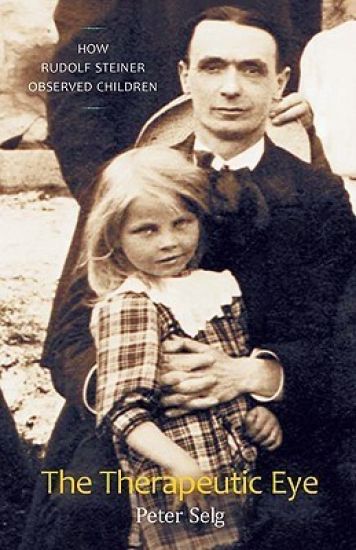
Rudolf Steiner's extraordinary ability to perceive the inner nature and development of children provided insights at many levels and areas of the creative learning process. He spoke of this ability as a precondition for all forms of healthy childhood education--including special education--and suggested that teachers should develop such a capacity within themselves. This process involves the recreation of the child within oneself, based on what we are able to observe in the child's physical appearance, temperament, ways of moving, and environment. In The Therapeutic Eye, Dr. Peter Selg discusses Steiner's views on childhood development, how teachers can look at children, and ways that these approaches can be used to develop lessons and classroom activities to deal with behavioral extremes and learning challenges. The Therapeutic Eye is a valuable resource for teachers and parents. The Therapeutic Eye is a translation from German of Der therapeutische Blick: Rudolf Steiner sieht Kinder.
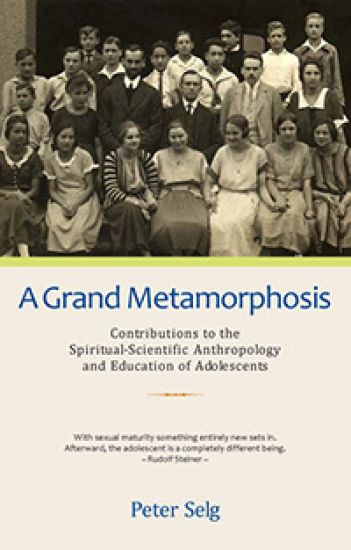
"A tumultuous situation arises in the relationship between the adolescent...and the world. This tumultuous situation is necessary, and as teachers, we need to have it in mind during the years leading up to it. Overly sensitive teachers might get the idea that it would be better to spare young people this upheaval. However, in so doing, they would make themselves the worst enemy of youth." --Rudolf Steiner Adolescence is the period during which we first sense, as human beings, our responsibility for earthly existence, and, inevitably, it is a time of turbulent transition and inner turmoil. During the first two seven-year periods of life, our soul, spiritual being gradually incarnates. With puberty, it takes hold of our whole being and turns outward to befriend the Earth and the forces of life and death. Steiner calls this profound inner transformation "a grand metamorphosis." As parents and teachers and as individuals who still bear its fruits and wounds, we all know the contours of the upheaval. However, educational and parenting practices too often ignore it, unaware that the great changes in our children call for equally great changes in us. To remedy this, Dr. Peter Selg proposes, "Use Rudolf Steiner's work to highlight the fundamental structure of the crisis of adolescence and the pedagogical challenges that emerge as a result." As a psychiatrist who has worked intensively with adolescents in crisis, and who carries a deep existential and thorough scholarly knowledge of Steiner's teachings, Dr. Selg highlights the radical nature of Steiner's approach, which demands that teachers and parents change as their children change. Drawing on Steiner's practical admonitions during lectures and teacher's meetings, Selg reminds us that the ideal of Waldorf teachers is "to educate by behaving in such a manner that, through their behavior, children can educate themselves." This is especially true once children reach sexual maturity, when teachers must not teach young people so much as welcome them as independent, equal individuals, able to transform the gift of sympathies and antipathies into a new moral orientation out of their own essential nature. Teachers must therefore be able to speak directly and authentically about the world. Abstractions and generalities have no place in the dialog; young people want to know the real causes of things and want to be addressed as equals. Selg also points out that teachers must be aware of the growing difference between the sexes and the way each carries a different secret life inwardly. Steiner's indications provide a timeless method of meeting students in the right way. The detailed spiritual-scientific indications in this book help parents and teachers to become well equipped with deeper understanding for the challenge of adolescence. The appendix includes speeches by a graduate of the first Waldorf school and one of the first teachers, as well as a letter by Dr. Ita Wegman, each of which reveals an intimate reflection on the life of the Waldorf school during its earliest years and an earnest hope for the future growth of this approach to education. "In a way, a teacher has to be a prophet...dealing with what will live in the future generation, not in the present." Dr. Selg also provides copious notes that offer practical wisdom and many avenues for readers to take up their own research. This volume is a translation from German of Eine grandiose Metamorphose: Zur geisteswissenschaftlichen Anthropologie und P dagogik des Jugendalters .
"It is a simple but essential principle: education aims at the future, at a time that we as educators do not yet know and cannot foresee. The challenges that will confront the children in the future are not those of the past-of our past, of our life story and our horizon. Times change, so do the realities of life, and in our times they change quickly and dramatically. Education aims at the future and that puts us as educators in a difficult situation: this future is not-or is only to an extent-identical with our past, with our life experiences. My youth, your youth: they are not identical with the adolescent constitution and life reality toward which we currently have to direct our educational efforts. Yet educate we must, and educating means preparing for a future." -Peter Selg (from the book) Schools reflect the state of society. If society is materialistic, competitive, egoistic, technological, and without concern for human values and long-term thinking, our schools will tend to reflect those values. However, what if education were about something else? What if education were about the future? What if education were a about nurturing a new generation of human beings, integrated in body, soul, and spirit and able to think for themselves and have the capacity to love? Perhaps the world would change. The Waldorf school, initiated and guided in 1919 by Rudolf Steiner, was conceived with precisely such an end in view. In this passionate, inspiring, and moving book, Peter Selg, speaks from a deep knowledge of Anthroposophy and from his extensive experience as a child psychiatrist. He returns to the original impulses behind the first Waldorf school to show their continuing validity and how they still respond to what we need. From this view, Waldorf education is future-oriented, based on a holistic worldview and cosmology that is humanistic, scientific, and spiritual, and develops through a curriculum and a teacher-student relationship based on love. Its focus is the miracle of the developing human being. Recognizing the equal importance of thinking, feeling, and willing, Waldorf education works through bodily movement and art, as well as through intellect and mind. Waldorf Education is not a theory but a living reality, and Selg brings this reality to life before us through the biography of the first Waldorf school. Thus, we learn to see it in a new way-in its essence, as a healing model of what education might become if the primary relationship, the inner core of a school, is the free relationship between teacher and student. As Steiner wrote: "It is our task as teachers and educators to stand in awe of the individuality of the student and offer our help so that it can follow the laws of its own development. We are merely called upon to remove any obstacles in body or soul that might hinder the individuality from realizing its potential freely." A verse given at the dedication of a building at the Waldorf School in Stuttgart expresses the essence of Waldorf Education in poetic form: May there reign here spirit-strength in love; May there work here spirit-light in goodness; Born from certainty of heart, And from steadfastness of soul, So that we may bring to young human beings Bodily strength for work, inwardness of soul, and clarity of spirit.

"Only in our time has it become possible once again to unlock the sources of Rosicrucian wisdom and allow them to flow into the whole of culture... Christian Rosenkreutz has always lived among us and he is with us today too as the guide of spiritual life.... "The spiritual stream related to Christian Rosenkreutz offers the most potent assistance to those who strive to understand the Christ impulse." --Rudolf SteinerRudolf Steiner spoke often of the relationship of Anthroposophy or Spiritual Science to Rosicrucianism, but he spoke less of the being of Christian Rosenkreutz himself. As he said, "To speak of Christian Rosenkreutz presumes a profound trust in the mysteries of the life of the spirit--a trust or faith not in the person of Christian Rosenkreutz, but in the mysteries of spiritual life." For Steiner, Christian Rosenkreutz was active in at least three ways. First, as one of the "great leaders of humanity," he worked to bring esoteric spirituality into the modern world and to lead it into the future. Second, as "the greatest teacher of Christianity" he worked to bring to humanity true "heart knowledge" of Christ through the continued unveiling of the Mystery of Golgotha in the etheric. Third, as a concrete, particular individual being, Steiner had a living, actual, personal relationship with him. As such, because of our failure to understand, Steiner called him "a noble martyr...who, through his way of working, endured, and will in future endure, more than any other person. I say 'person, ' for the suffering of Christ was the suffering of a god."In the first part of this inspiring book--a work of devotion both to Rudolf Steiner and to Christian Rosenkreutz--Peter Selg, as "The Great Servant of Christ Jesus," gives a detailed, chronological, and fascinating account of Steiner's portrayal and, as much as possible, experiences of Christian Rosenkreutz. He shows how Steiner had essentially two teachers: the Master Jesus (Zoroaster) and Christian Rosenkreutz. Moreover, Selg shows how these two, with Rudolf Steiner, unfolded spiritual science for our time. In the second part, he shows how all this culminates, astonishingly and miraculously, in the Michael School as it manifested in the First Class. Rudolf Steiner and Christian Rosenkreutz concludes with an appendix containing the text of the original (1614) Fama, or "Announcement of the Rosicrucian Brotherhood." All those interested in the esoteric foundations of Anthroposophy or in the true meaning of Rosicrucianism will be find this book of great value.

Rudolf Steiner received The Fifth Gospel--unrecorded events from the so-called lost years of the life of Jesus, obtained by grace and by spiritual research into the akashic record--as a "sacred obligation" to which he experienced a deep sense of responsibility. However, he never finished the project of unveiling it. Had he done so, not only Anthroposophy but also Christianity would have received an enormous spiritual gift: a concrete, soul-filled description of the Mystery of Golgotha. His deeply moving and often startling lectures in 1913 are thus fragmentary, giving the near-tragic impression that, because those who heard or read them did not take them up with sufficient seriousness and inner dedication, humanity has suffered an inestimable loss. "Steiner traveled through various German cities to give personal summaries of the Fifth Gospel. But in each center, he encountered the same "sleepiness." The thorns were already starting to prick; he seemed to begin hiding the content rather than disclosing it. He was forced to see in all clarity that the Fifth Gospel was not being appropriately received." (Andrei Bely) In this dramatic book, Selg tells the story of those lectures. He recounts their background and many of the most important episodes. He illumines and gives context to the excerpts with a profound yet accessible commentary. Most important, he offers insights into their importance to both Steiner and the hearts of those who heard and understood--even those who felt inadequate to the task. Those who has read Steiner's lectures on the Fifth Gospel and wondered about their significance will find here an inspiring guide to further meditation, while those who have not yet read them will find many reasons for doing so and discover a new way of understanding Steiner and his mission. Those unfamiliar with Steiner but wish to fine a meaningful, heartfelt way to Jesus Christ and the Christian mystery will discover a new way of understanding a new path to Christ. As Steiner said: "Knowing something of the significance of what Jesus lived through in preparation for the Mystery of Golgotha depends not so much on being able to recall...the events I have attempted to recount, but more on achieving a profoundly moving and shattering inner impression of what this person Jesus of Nazareth had to suffer in order to approach the Mystery of Golgotha and allow the Christ impulse to flow into earthly evolution. By reawakening these feelings and sensations of suffering in ourselves...we evoke a living impression of the Christ impulse. The more we succeed in reliving the surging, weaving experiences of a being such as Jesus of Nazareth, the more deeply we delve into these mysteries. (The Fifth Gospel)
"Not only do we pass through the gate of death as immortal beings, we also enter through the gate of birth as unborn beings. We need the term unbornness, as well as the term immortality, to encompass the whole human being." (Rudolf Steiner)As anyone who has had a child knows, newborns enter the earthly world as beings different from their parents. They arrive with their own individuality, being, and history. From the beginning, they manifest an essential dignity and a unique "I," which they clearly brought with them from the spiritual world. This unborn life of a person's higher individuality guides the whole process of incarnation. It frames our lives, but we fail to recognize this because of a single-minded focus on immortality, or life-after-death, which makes us forget the reality of our "unbornness." This unbornness extends not only from conception to birth, but also includes the whole existence and history of one's "I" in its long journey from the spiritual world to Earth. Unbornness--the other side of eternity--allows us to experience the fact that birth is just as great a mystery as is death. In a new and striking way, unbornness poses the mystery of our human task on Earth. It was one of Rudolf Steiner's great gifts that he returned the concept of unbornness to human consciousness and language. In this brief, stunning, and moving, almost poetic work, Peter Selg gathers the key elements and images needed to begin an understanding of--and wonder at--the vast scope of our unbornness. Drawing on and expanding on Steiner's work, as well as Raphael's Sistine Madonna and the poems of Nelly Sachs and Rainer Maria Rilke, Selg unveils this deepest mystery of human existence. After reading it, one will never look at a child or another human being in the same way again. Life after death life before birth; only by knowing both do we know eternity. (Rudolf Steiner) Unbornness is a translation of Ungeborenheit: Die Pr existenz des Menschen und der Weg zur Geburt (Verlag Ita Wegman Institut, 2009).
Rudolf Steiner's Intentions for the Anthroposophical Society
Peter Selg
SteinerBooks, Inc
2011
nidottu
"Every moral deed and every physical action in human life is connected in the human heart. Only when we truly learn to understand the configuration of he human heart will we find the true fusion of these two parallel and independent phenomena: moral events and physical events." --Rudolf SteinerToday we know very little about the true nature of the human heart. Our knowledge arises only from a materialistic or an emotional standpoint. However, the human heart, as Rudolf Steiner knew and taught, is both spiritual and physical--the place where body and soul come together. It is the place of their unity. We have lost this knowledge, yet it is integral to the Western understanding of what gives humanity its vocation--our spiritual/physical, our earthly/heavenly nature. In this astonishing and inspiring book, Peter Selg focuses on the evolution of the spiritual understanding of the heart as transmitted through Aristotle, the Gospels, and Hebrew Scriptures to the Middle Ages, when, in the light of the Mystery of Golgotha and its sacramental life, it was synthesized and transformed by Thomas Aquinas, after whom, with the rise of modern science it, was lost until Goethe began a process of recovery and development that led to its complete renewal and transformation in Rudolf Steiner.The Mystery of the Heart tells this story in three parts. Part one, "The Anthropology of the Heart in the Gospels," examines the spiritual anthropology of the heart in the Gospels in the light of Ezekiel's prophetic saying: "I will give you a new heart and put a new spirit in you; I will remove from you your heart of stone and give you a living heart of flesh." Part two, "De Essentia et Motu Cordis," describes Aristotle's understanding of the heart and its transformation and deepening in Aquinas. Part three, "The Heart and the Fate of Humanity," examines the spiritual-scientific view of the heart as developed in Rudolf Steiner's teachings.Also included is an appendix containing selected meditative verses and therapeutic meditations for the heart. This volume was originally published in German by Verlag am Goetheanum 2003 as Mysterium cordis: Von der Mysterienst tte des Menschenherzens Studien zur sakramentalen Physiologie des Herzorgans. Aristoteles, Thomas von Aquin, Rudolf Steiner. Second edition in German, Verlag am Goetheanum 2006, Dornach, Switzerland.
Ita Wegman is not only an inspiring genius of Anthroposophy, but she is also a healing genius of anthroposophic medicine. Perseverance, courage, greatness mark her being. --Emanuel Zeylmans van EmmichovenWith great empathy, delicacy, and directness, Peter Selg recounts, in three lectures, the moving story of Ita Wegman and her relationship with Rudolf Steiner in the context of the development of anthroposophic medicine and the formation of the Medical Section of the School for Spiritual Science. Steiner had suffered patiently until the right person--Ita Wegman--arrived to guide spiritual science's healing mission into the medical field. In the fall of 1920, Ita Wegman founded a medical clinic in Arlesheim. From then on, she and Steiner worked together, both medically and spiritually, gradually unveiling a karmic working relationship unique in Steiner's life. Thus the stage is set. "By taking in the war-traumatized children we will not lose sight of our task in curative education, on the contrary, it is the actual realization of this task, and if one cannot see that, one is not going forward with the big strides of time. I assure you that I will not fall into small steps; I want to stay with the big strides."--Ita Wegman, (August 20, 1942)The second lecture focuses on anthroposophic curative, or therapeutic, education: "the social center, the heart even, of Ita Wegman's 'Medical Section'; To make a commitment to children with severe obstacles in their incarnation, out of spiritual insight into the human being and the wider karmic context, and to make this commitment as a group of people working out of a Christian-religious impulse" this was for Ita Wegman the true anthroposophic medicine." Dr. Selg then describes Dr. Wegman's heroic efforts to create a true community of physicians working anthroposophically out of Steiner's indications and in the spirit of Christ; how she looked after her colleagues, always seeking to wake them up "to the destiny of their own being." She also tried to resist all that was happening in Nazi Germany, never forgetting Steiner's warning: "In the future, the Anthroposophical Society will be faced with the crucial decision of whether responsibilities will be met or not." This is the heart of this wonderful book--the inner struggle to make love responsible.
People will have to exchange the spirit of mere thinking for the spirit of direct vision, of direct compassion and shared experience of the Christ who is spiritually alive and walks at the side of all human souls. "We must first become selfless. That is the task of culture today for the future. Humanity must become more and more selfless; therein lies the future of right moral life deeds, the future of all acts of love that can occur through earthly humanity" (Rudolf Steiner, Approaching the Mystery of Golgotha). In a lecture eight weeks before the outbreak of World War I, Rudolf Steiner, conscious of developments to come, coined the phrase "culture of selflessness" to describe the culture that would develop in the future. The far-reaching social implications of his primarily Christological lectures on the Fifth Gospel, given in 1913/14 under the same political circumstances, were foreign to many of Steiner's contemporary audiences, who largely failed to understand his dramatic accounts drawn from the Fifth Gospel (or that gospel itself) as a "source of comfort" for the future, or (as Rudolf Steiner said of them) as "needed" for future work. The subsequent catastrophes of the twentieth and early twenty-first centuries, however, have sensitized us to Steiner's central themes and contents of 1913/14. He spoke of spiritual development and self-preservation in the face of great suffering; of truly participating in the misfortunes of others; and of acquiring "true selflessness" that takes the human "I" fully into account. During the 1930s, during the National Socialist reign of violence, a few of Rudolf Steiner's pupils took this path of moral resistance and all-embracing therapeutic action. One example is described in the second chapter of this volume. Many other destinies are less well-known; by now, they can no longer be saved completely from oblivion. They include the great life work of Maria Krehbiel-Darmst dter, an anthroposophist of Jewish origin who was murdered in Auschwitz in 1943 (see Peter Selg's excellent biography, From Gurs to Auschwitz: The Inner Journey of Maria Krehbiel-Darmst dter). However, both now and in the future, in a world that must find humane ways to endure continued calamities of tremendous magnitude, the task Rudolf Steiner described remains relevant in all cultures and all parts of the globe. "A single great community covers the earth. Its name is suffering and strength." This book is a translation of Die Kultur der Selbstlosigkeit. Rudolf Steiner, das Funfte Evangelium und das Zeitalter der Extreme (Verlag am Goetheanum, Dornach, 2006).
Following Rudolf Steiner's death, the mysteries cannot be revealed further at the present time, but we must continue to cultivate a living, not only rational but also ritual, continuity of the mystery contents he has given, passing them to people who did not know Rudolf Steiner and yet seek to connect with him esoterically and not just intellectually. --Ludwig Count Polzer-Hoditz Since Rudolf Steiner's death in 1925, little has been written about the "First Class" of the School for Spiritual Science in Dornach. The Class continues as an esoteric institution in the hearts of its disciples and in the mantras and meditations. This meditative work is hidden from view, yet, behind the scenes, it lives on in the inner striving for development of soul and spirit that is part of any mystery school. Rudolf Steiner himself guarded the content of the Class Lessons strictly, only intimating to members of the General Society that his esoteric school existed and how it worked. In this book, Peter Selg provides a context for the "reading" of the Class Lessons, the School for Spiritual Science itself, as well as for Rudolf Steiner's intentions for such an esoteric undertaking. The School for Spiritual Science was the work of an initiate, and through the esoteric collaboration of Rudolf Steiner and those who worked with him a Christian mystery center began to unfold. But Steiner's aim has not yet been achieved. Intense work is still needed for its realization--unwavering efforts with awareness of the foundations Rudolf Steiner laid down and consciousness of the mystery dimension of the endeavor. As an aspect of that wider mystery dimension, Peter Selg also looks back to Ita Wegman as Rudolf Steiner's "helper" in the First Class. He seeks to leave behind the conflicts of the 1920s and 1930s as Ita Wegman herself left them behind her. As Ita Wegman said, "For me the matter is settled. There are so many misunderstandings that I consider it better to leave things well alone. We all thought we were doing the right thing. Looking forward is more important now than looking back." In its exploration of the First Class, Rudolf Steiner and the School for Spiritual Science provides a much-needed perspective on what ought to be at the very heart of Anthroposophy and the movement for Spiritual Science that Rudolf Steiner brought into the world.
Maria Krehbiel-Darmst dter (1892-1943), who was killed at Auschwitz, was a highly gifted pupil of Rudolf Steiner and a member of The Christian Community. Born into a Jewish family in Mannheim, she was deported to Gurs camp in the Pyr n es on October 22, 1940, where she survived harsh conditions and helped many of her fellow inmates. Following temporary sick-leave (under police supervision) in Limonest near Lyon, and a failed attempt to flee to Switzerland, she was brought to Drancy transit camp near Paris before being taken to Auschwitz. This book offers unique testimony of an individual rooted in esoteric Christianity and Spiritual Science who found sources of inner resistance during one of history's darkest periods. As the portrait of a highly ethical and sorely tried woman amid catastrophic conditions, it describes her existential efforts to summon powers of concentration, meditation, and dedication to others, showing how these continued to inform her outlook and actions to the very end. Polish Jews in Drancy referred to Maria Krehbiel-Darmst dter as M re Maria. They experienced her distinctive spirituality and personal qualities and a profound religiosity that retained an inner connection with the Christian sacramental world, even in the most desolate circumstances. From Gurs to Auschwitwitz adds an important voice to literature on the Holocost and shines a light on the nature of spiritual, inner resistance during the dark years of World War II in Europe.

"As for me, I will claim for myself the freedom always to be in the place that I feel I need to be in my inmost feelings" (Ita Wegman, Aug. 26, 1940). Ita Wegman spent the last three years of her life in Tessin, in the Casa Andrea Cristoforo. In this secluded province, largely protected from the destructive events of those years and imbued with certain forces, she developed a great work for the future, gathering, leading, and nurturing people both therapeutically and spiritually, preparing for the war's end with the full intensity of her being. Her last three years were a period of devotion to Rudolf Steiner and his work, as well as to esoteric Christianity--to the forces of the Archangel Michael and to Christ for the present and future. She continued to take a great interest in the difficulties of her time and never ceased to participate in events--taking in refugee children and the homeless, keeping up extensive correspondences with others, struggling with aid organizations and various agencies, caring daily for the afflicted and for patients and colleagues. On March 4, 1943, Ita Wegman passed into the spiritual worlds, well prepared and with all of the spiritual intentions of a Christian initiate. This book contributes to documenting the final phase of Ita Wegman's life, focusing on the forces of the future that emerged in her. It draws on her notebooks from her time in Ascona, as well as from her extensive correspondence and memories of those who lived and worked at Casa Andrea Cristoforo. She remained upstanding, free, and positive with an esoteric Christian orientation and felt that she was obligated only to her conscience and to the spiritual world for which Rudolf Steiner stood and that she served. This book was originally published in German as Die letzten drei Jahre. Ita Wegman in Ascona 1940-1943 (Verlag am Goetheanum, Dornach, Switzerland, 2004).
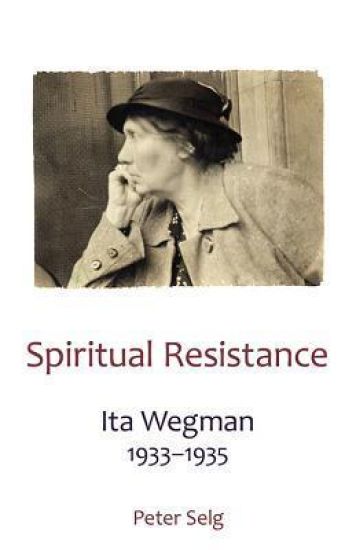
From 1933 to 1935, Ita Wegman was confronted by both Nazi fascism and internal crises in the General Anthroposophical Society. During those years, she traveled to Palestine in the fall of 1934 following a grave illness that nearly ended with her death. Her correspondence during this period, as well as her notes on the trip, reveal the great biographical importance to her of these travels and indeed the whole scope of her spiritual experiences in 1934. Ita Wegman had unambiguous perspectives and a uniquely clear view of both the political threat and her social-spiritual task during this period. There was, however, a radical change in her inner stance toward the opposition, aggression, and defamation she encountered within anthroposophic contexts in reaction to her intense, purely motivated efforts. She tried to live and work in true accord with her inner impulses and, ultimately, with Rudolf Steiner's legacy, especially within the anthroposophic movement. Doing so, she increasingly found her way to her own distinctive and uncompromising path.The author reveals the general nature of those three years--a period whose distinctive spiritual and Christological task and dramatic dangers Rudolf Steiner had foreseen in 1923: "If these men the Nazis] gain government power, I will no longer be able to set foot on German soil." Ita Wegman's efforts in 1933 to confront the dark powers of National Socialism and the convulsions in Dornach, which she experienced firsthand, as well as her subsequent illness and the clarity of her "Christological conversion" in 1934 to '35, reveal a very specific, intrinsically comprehensible and forward-looking quality whose spiritual signature is clearly prefigured in Rudolf Steiner's spiritual-scientific predictions. In this book, Peter Selg focuses exclusively on Ita Wegman, her development, and her words, simply presenting the processes she went through and, implicitly, their extraordinary spiritual nature, without any attempt at interpretation. This focus arises from the governing premise that the mysteries of a great life such as that of Ita Wegman reveal themselves in the details. Tracing the subtle steps in her life allow us deeper insight into Ita Wegman's being. She herself wrote, "In general meetings or gatherings, people always understood me poorly because I lacked a smooth way of expressing myself. But people of goodwill always understood what I meant."This book was originally published in German as Geistiger Widerstand und berwindung. Ita Wegman1933-1935 by Verlag am Goetheanum, Dornach, Switzerland, 2005.