
Kirjahaku
Etsi kirjoja tekijän nimen, kirjan nimen tai ISBN:n perusteella.
1000 tulosta hakusanalla Peter Ward Herald
A revealing exploration of the latest NASA research into the possibility of extraterrestrial life also poses a hypothesis about the origins of life on Earth, examining the controversial idea of creating non-DNA life in a laboratory as well as the scientific possibilities of the range of life throughout the universe. By the author of Gorgon. Reprint. 20,000 first prinitng.
Several times in the distant past, catastrophic extinctions have swept the Earth, causing more than half of all species-from single-celled organisms to awe-inspiring behemoths-to suddenly vanish and be replaced by new life forms. Today the rich diversity of life on the Earth is again in grave danger-and the cause is not a sudden cataclysmic event but rather humankind's devastation of the environment. Is life on our planet teetering on the brink of another mass extinction? In this absorbing new book, acclaimed paleontologist Peter D. Ward answers this daunting question with a resounding yes. Elaborating on and updating Ward's previous work, The End of Evolution, Rivers in Time delves into his newest discoveries. The book presents the gripping tale of the author's investigations into the history of life and death on Earth through a series of expeditions that have brought him ever closer to the truth about mass extinctions, past and future. First describing the three previous mass extinctions-those marking the transition from the Permian to the Triassic periods 245 million years ago, the Triassic to the Jurassic 200 million years ago, and the Cretaceous to the Tertiary 65 million years ago-Ward assesses the present devastation in which countless species are coming to the end of their evolution at the hand of that wandering, potentially destructive force called Homo sapiens. The book takes readers to the Philippine Sea, now eerily empty of life, where only a few decades of catching fish by using dynamite have resulted in eviscerated coral reefs-and a dramatic reduction in the marine life the region can support. Ward travels to Canada's Queen Charlotte Islands to investigate the extinctions that mark the boundary between the Triassic and Jurassic periods. He ventures also into the Karoo desert of southern Africa, where some of Earth's earliest land life emerged from the water and stood poised to develop into mammal form, only to be obliterated during the Permian/Triassic extinction. Rivers of Time provides reason to marvel and mourn, to fear and hope, as it bears stark witness to the urgency of the Earth's present predicament: Ward offers powerful proof that if radical measures are not taken to protect the biodiversity of this planet, much of life as we know it may not survive.

Several times in the distant past, catastrophic extinctions have swept the Earth, causing more than half of all species-from single-celled organisms to awe-inspiring behemoths-to suddenly vanish and be replaced by new life forms. Today the rich diversity of life on the Earth is again in grave danger-and the cause is not a sudden cataclysmic event but rather humankind's devastation of the environment. Is life on our planet teetering on the brink of another mass extinction? In this absorbing new book, acclaimed paleontologist Peter D. Ward answers this daunting question with a resounding yes. Elaborating on and updating Ward's previous work, The End of Evolution, Rivers in Time delves into his newest discoveries. The book presents the gripping tale of the author's investigations into the history of life and death on Earth through a series of expeditions that have brought him ever closer to the truth about mass extinctions, past and future. First describing the three previous mass extinctions-those marking the transition from the Permian to the Triassic periods 245 million years ago, the Triassic to the Jurassic 200 million years ago, and the Cretaceous to the Tertiary 65 million years ago-Ward assesses the present devastation in which countless species are coming to the end of their evolution at the hand of that wandering, potentially destructive force called Homo sapiens. The book takes readers to the Philippine Sea, now eerily empty of life, where only a few decades of catching fish by using dynamite have resulted in eviscerated coral reefs-and a dramatic reduction in the marine life the region can support. Ward travels to Canada's Queen Charlotte Islands to investigate the extinctions that mark the boundary between the Triassic and Jurassic periods. He ventures also into the Karoo desert of southern Africa, where some of Earth's earliest land life emerged from the water and stood poised to develop into mammal form, only to be obliterated during the Permian/Triassic extinction. Rivers of Time provides reason to marvel and mourn, to fear and hope, as it bears stark witness to the urgency of the Earth's present predicament: Ward offers powerful proof that if radical measures are not taken to protect the biodiversity of this planet, much of life as we know it may not survive.
TV Technical Operations is an introduction for new entrants to the broadcast industry and is designed to prepare them for working in mainstream television by discussing essential techniques, technologies and work attitudes. The author explores:* the need to develop a professional approach* the occupational skills needed to meet deadlines, work under pressure and within budget* the importance of understanding the potential of broadcast equipment in program making* the need to keep up to date with the technique and technology* the responsibility to ensure continuity of experience and training in all craft skills that technical operators are required to work with* the need to maintain a critical appraisal of what and who influences working practices and how these influences affect production and viewers* an introduction to the basic skills needed to work as a multi-skilling technical operator in television* an introduction to broadcast equipment in general production usePeter Ward is a freelance cameraman and camerawork trainer working with international training and television consultancy. He was formerly head of cameras at Television South West.
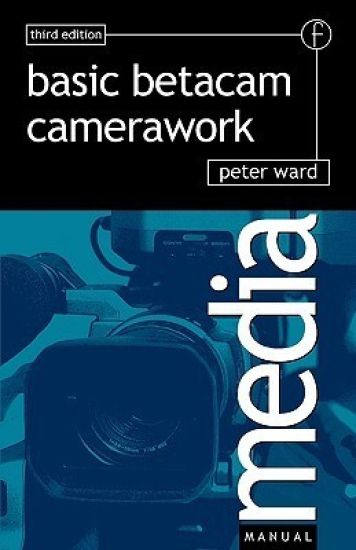
Basic Betacam Camerawork offers a complete introduction to both the analogue and digital beta camera formats: Betacam, Digital Beta, Betacam SX and DV & DVCAM. Step-by-step instructions are given covering everything from pre-recording checklists, to technical camera specifications, instruction on exposure and lighting, composition, editing and sound and techniques for different programme styles. Aimed at TV camera operators just starting out and film cameramen and women converting to video this book will also appeal to students on film and television production courses.Peter Ward is a freelance cameraman and trainer working with the International Television Training Consultancy and ex-Chairman of the Guild of Television Cameramen. He spent many years working on a variety of programmes at the BBC before becoming Head of Cameras at Television South West. Peter is author of the following books for Focal Press: Digital Video Camerawork, Picture Composition for Film and Video , Studio & Outside Broadcast Camerawork, TV Technical Operations and co-author of Multiskilling for TV Production.Basic Betacam Camerawork offers a complete introduction to both the analogue and digital beta camera formats.
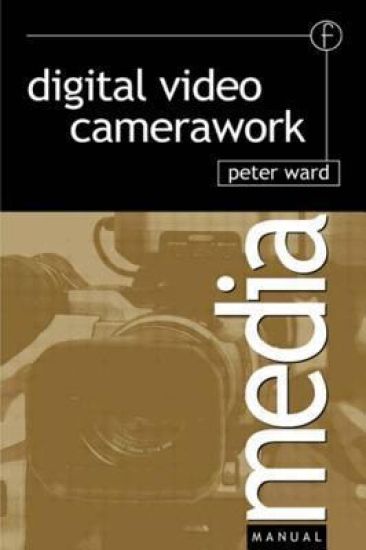
This manual introduces digital camerawork techniques used in television and video production. Written as a practical guide, the author's step-by-step instructions take you through everything you need to know, from camera controls, to editing, lighting and sound. This text provides a solid foundation to build upon in the area of digital video production. In a period of transition between analogue and digital acquisition/recording formats Digital Video Camerawork provides up-to-date information familiarizing you with the different production styles and requirements. Diagrams are used to illustrate the technology and techniques explained.Digital Video Camerawork combines clear, technical explanations with practical advice. It is ideal for the less experienced broadcast camera operator and for students on media and television production courses.

Studio and outside broadcast is often done with more than one camera and has its own distinct discipline and operational procedures. Many camera operators now start with single camera operations and have little or no experience of the skills required for multi-camera operation, whereas it used to be the other way round. This book prepared newcomers to multi-camerawork and the techniques required to produce professional results. Studio and Outside Broadcast Camerawork is a revised edition of Multi-Camera Camerawork, including new material on widescreen shooting and an update on BBC (and worldwide) policy of 'shoot and protect' for dual aspect ratio format production.
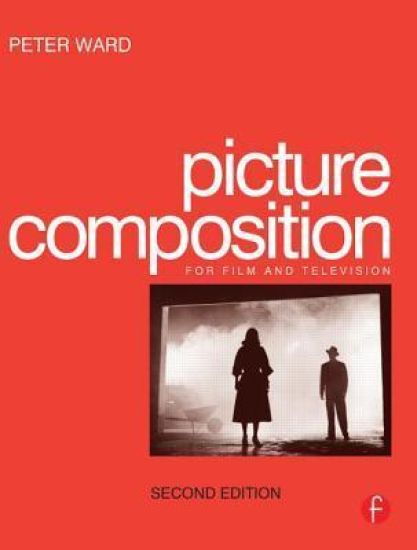
Behind each shot there lies an idea or purpose. When setting up a shot, the camera operator can employ a range of visual techniques that will clearly communicate the idea to an audience. Composition is the bedrock of the operator's craft, yet is seldom taught in training courses in the belief that it is an intuitive, personal skill. Peter Ward shows how composition can be learned, to enhance the quality of your work. Based on the author's own practical experience, the book deals with the methods available for resolving practical production questions such as: Does the shot composition accurately reflect the idea that initiated the shot? Will the content and method of presenting the subject accurately convey the idea? Major innovations in television and film production since the previous edition have affected the styles of composition, such as wide-screen and the use of mini DV cameras. These new technologies and their implications for picture composition are addressed in this new edition. A new colour plate section is also being included to update the section on colour. If you are a practising camera operator, trainee camera operator, student or lecturer on a television or film production course, or simply a video enthusiast wishing to progress to a more professional standard you will find this book essential in enhancing the quality of your work.
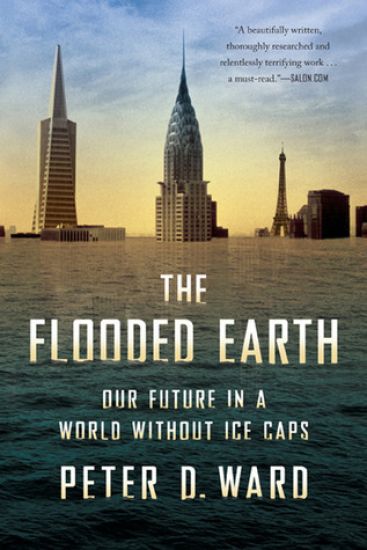
No matter what efforts we make to halt global warming, sea level rise will be an unavoidable part of our future. In The Flooded Earth , species extinction expert Peter D. Ward describes in intricate detail what our world will look like in 2050, 2100, 2300, and beyond. Even if we stopped all carbon dioxide emissions today, according to Ward, the seas will rise three feet by 2050 and nine feet by 2100. The effects of one meter of sea-level rise will be massive three meters will be catastrophic. Incursions of salt into the water table will destroy most of our best agricultural land, and corrosion will devour the electrical and fiber-optic systems of coastal cities, as well as our roads and bridges. Amsterdam, Miami, Venice and other cities might have to be abandoned. As icebound regions melt, meanwhile, new sources of oil, gas, minerals, and arable land will be revealed,and geopolitical battles will erupt over who owns the rights to them. Laying out a blueprint for a foreseeable future, Ward explains what politicians and policy makers around the world should be doing now to head off the worst consequences of this cataclysmic,and frighteningly inevitable,transformation.
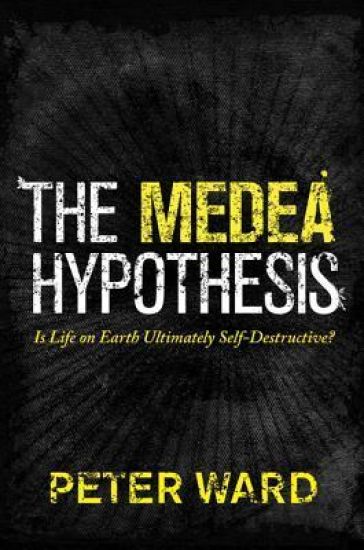
In The Medea Hypothesis, renowned paleontologist Peter Ward proposes a revolutionary and provocative vision of life's relationship with the Earth's biosphere--one that has frightening implications for our future, yet also offers hope. Using the latest discoveries from the geological record, he argues that life might be its own worst enemy. This stands in stark contrast to James Lovelock's Gaia hypothesis--the idea that life sustains habitable conditions on Earth. In answer to Gaia, which draws on the idea of the "good mother" who nurtures life, Ward invokes Medea, the mythical mother who killed her own children. Could life by its very nature threaten its own existence? According to the Medea hypothesis, it does. Ward demonstrates that all but one of the mass extinctions that have struck Earth were caused by life itself. He looks at our planet's history in a new way, revealing an Earth that is witnessing an alarming decline of diversity and biomass--a decline brought on by life's own "biocidal" tendencies. And the Medea hypothesis applies not just to our planet--its dire prognosis extends to all potential life in the universe. Yet life on Earth doesn't have to be lethal. Ward shows why, but warns that our time is running out. Breathtaking in scope, The Medea Hypothesis is certain to arouse fierce debate and radically transform our worldview. It serves as an urgent challenge to all of us to think in new ways if we hope to save ourselves from ourselves.

Ward draws upon a rich record of events and opinion in the provincial press, manuscript collections, and successive federal enquiries and royal commissions on Asian immigration. He locates the origins of west coast racism in the frustrated vision of a white British Columbia and an unshakeable belief in the unassimilability of the Asian immigrant. Canadian attitudes were dominated by a series of interlocking, hostile stereotypes derived from western perceptions of Asia and modified by the encounter between whites and Asians on the north Pacific coast. Public pressure on local, provincial, and federal governments led to discriminatory policies in the field of immigration and employment, and culminated in the forced relocation of west coast Japanese residents during World War II.
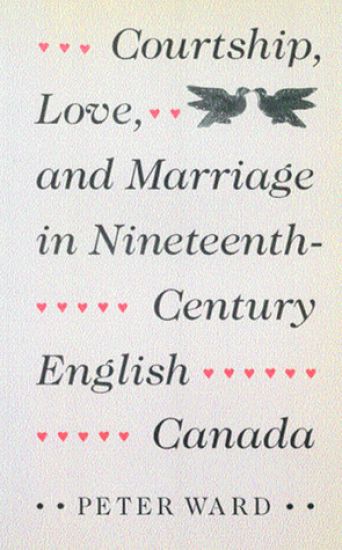
Courtship, Love, and Marriage in Nineteenth-Century English Canada
Peter Ward
McGill-Queen's University Press
1993
nidottu
Courtship, love, and marriage are seen today as very private affairs, and historians have generally concluded that after the late-18th century young people began to enjoy great autonomy in courtship and decisions about marriage. This work argues that freedom in 19th-century English Canada was constrained by an intricate social, institutional, and familial framework which greatly influenced the behaviour of young couples both before and after marriage.
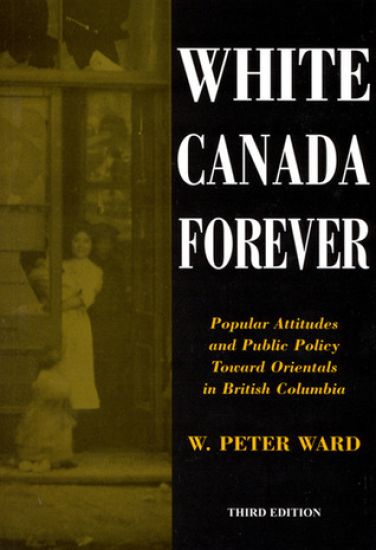
Ward draws upon a rich record of events and opinion in the provincial press, manuscript collections, and successive federal enquiries and royal commissions on Asian immigration. He locates the origins of west coast racism in the frustrated vision of a white British Columbia and an unshakeable belief in the unassimilability of the Asian immigrant. Canadian attitudes were dominated by a series of interlocking, hostile stereotypes derived from western perceptions of Asia and modified by the encounter between whites and Asians on the north Pacific coast. Public pressure on local, provincial, and federal governments led to discriminatory policies in the field of immigration and employment, and culminated in the forced relocation of west coast Japanese residents during World War II.
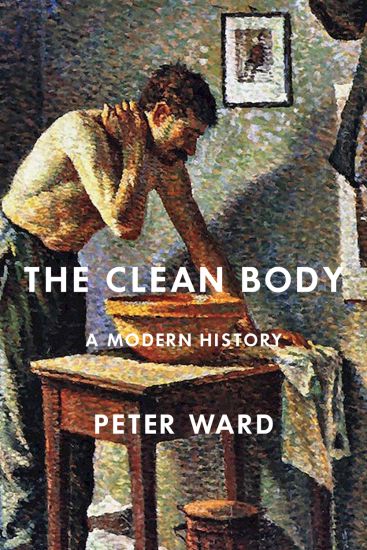
How often did our ancestors bathe? How often did they wash their clothes and change them? What did they understand cleanliness to be? Why have our hygienic habits changed so dramatically over time? In short, how have we come to be so clean? The Clean Body explores one of the most fundamental and pervasive cultural changes in Western history since the seventeenth century: the personal hygiene revolution. In the age of Louis XIV bathing was rare and hygiene was mainly a matter of wearing clean underclothes. By the late twentieth century frequent - often daily - bathing had become the norm and wearing freshly laundered clothing the general practice. Cleanliness, once simply a requirement for good health, became an essential element of beauty. Beneath this transformation lay a sea change in understandings, motives, ideologies, technologies, and practices, all of which shaped popular habits over time. Peter Ward explains that what began as an urban bourgeois phenomenon in the later eighteenth century became a universal condition by the end of the twentieth, touching young and old, rich and poor, city dwellers and country residents alike. Based on a wealth of sources in English, French, German, and Italian, The Clean Body surveys the great hygienic transformation that took place across Europe and North America over the course of four centuries.
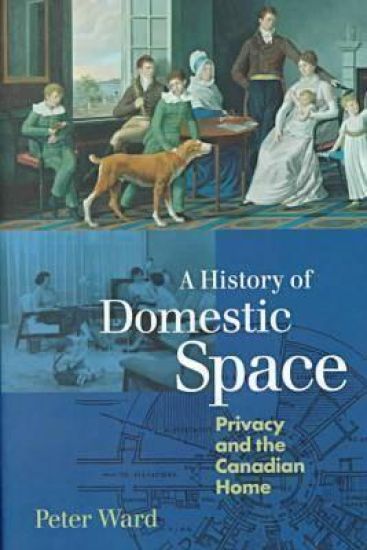
This is a history of domestic space in Canada. Peter Ward looks at how spaces in the Canadian home have changed over the last three centuries, and how family and social relationships have shaped – and been shaped by – these changing spaces. A fundamental element of daily life for individuals and families is domestic privacy, that of individuals and that of the family or household.There are also two facets of privacy – privacy from and privacy to. Personal privacy sets the individual apart from the group, creating opportunities for seclusion. Family privacy draws boundaries between the household and the community, defending the solidarity of the home and providing a basis for family relationships. In both ways, privacy is intimately involved with the history of the house.Over time, the changing size, shape, and location of the home have created widely different opportunities for family and personal privacy. Together with major shifts in household composition, family size, and domestic technology, they have gradually altered the conditions of everyday domestic life.But the pattern of change has been far from uniform, for the nature, meaning, and experience of privacy in Canadian have varied widely over the past 300 years. This book explores some of those experiences and meanings, reflecting on their impllications for family and social life historically as well as in the recent past.

This is a history of domestic space in Canada. Peter Ward looks at how spaces in the Canadian home have changed over the last three centuries, and how family and social relationships have shaped – and been shaped by – these changing spaces. A fundamental element of daily life for individuals and families is domestic privacy, that of individuals and that of the family or household.There are also two facets of privacy – privacy from and privacy to. Personal privacy sets the individual apart from the group, creating opportunities for seclusion. Family privacy draws boundaries between the household and the community, defending the solidarity of the home and providing a basis for family relationships. In both ways, privacy is intimately involved with the history of the house.Over time, the changing size, shape, and location of the home have created widely different opportunities for family and personal privacy. Together with major shifts in household composition, family size, and domestic technology, they have gradually altered the conditions of everyday domestic life.But the pattern of change has been far from uniform, for the nature, meaning, and experience of privacy in Canadian have varied widely over the past 300 years. This book explores some of those experiences and meanings, reflecting on their impllications for family and social life historically as well as in the recent past.

When it was originally published in 1986, this was the first book to deal simultaneously with several aspects of social welfare provision in a developing country. The unique contribution of the book is based on the analysis of 3 substantive welfare areas – land (for self-help housing), urban infrastructure and health – which are examined in terms of the nature, motivation and effectiveness of government intervention. The book covers 3 administrations between 1970 and the mid-1980s and sets the analysis in the wider context of Latin American affairs. The author shows that although social welfare expenditure has increased, its importance as a government priority has been sharply eroded.

When it was originally published in 1986, this was the first book to deal simultaneously with several aspects of social welfare provision in a developing country. The unique contribution of the book is based on the analysis of 3 substantive welfare areas – land (for self-help housing), urban infrastructure and health – which are examined in terms of the nature, motivation and effectiveness of government intervention. The book covers 3 administrations between 1970 and the mid-1980s and sets the analysis in the wider context of Latin American affairs. The author shows that although social welfare expenditure has increased, its importance as a government priority has been sharply eroded.