Kirjojen hintavertailu. Mukana 12 368 997 kirjaa ja 12 kauppaa.

Kirjahaku

Etsi kirjoja tekijän nimen, kirjan nimen tai ISBN:n perusteella.

1000 tulosta hakusanalla Phd Richard L. Hansler

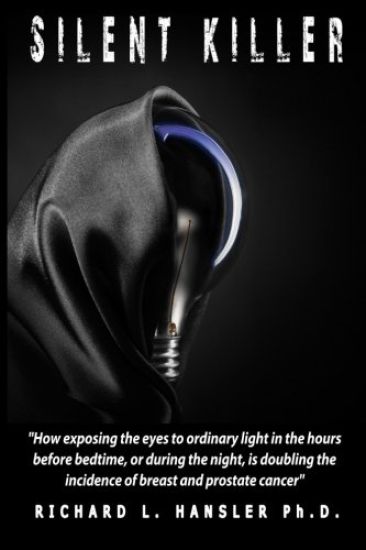
LIGHT The Silent Killer: How exposing the eyes to ordinary light in the hours before bedtime, or during the night, is doubling the incidence of
In "Silent Killer" Dr. Hansler is warning everyone of the deadly dangers that exist in using ordinary, everyday, light bulbs. Doubling the risk for breast cancer and prostate cancer is just the beginning. Using ordinary light bulbs before bedtime is making it hard to fall asleep and stay asleep. Increased risk for obesity, diabetes, heart disease and Alzheimer's disease are other dangers. Fortunately, we don't have to give up using light. We only need to get rid of the blue rays. Light bulbs that don't make blue light and orange eyeglasses that block it are available at www.lowbluelights.com
Avoiding Autism: How avoiding exposure to blue light at night may redduce the risk for having a autistic child.
In recent years, more and more children are being diagnosed with Autism Spectrum Disorder. Development of ASD occurs during fetal brain development and may be related to both genetic and environmental factors. This book looks at one of the environmental factors contributing to the development of Autism. More specifically, it examines the potentially damaging effects of exposure to artificial light at night in the hours before bedtime. The blue rays found in artificial light directly reduce melatonin production in the pregnant mother. As a consequence of this lowered melatonin production, the fetal brain is more susceptible to damage. In fact, damage may occur very early in gestation, even before a woman knows she is pregnant. One of the ways to protect the fetal brain is to ensure adequate melatonin production. This is best achieved by reducing exposure to blue light at night from artificial light bulbs, TV and computer screens, and other mobile electronic devices. Living a healthy lifestyle with a strong circadian rhythm and maximum melatonin production is healthy for both mother and baby. These lifestyle changes should be adopted well before pregnancy and carried through your baby's early years (and beyond ). Products to help you avoid exposure to blue light in the evening and achieve a healthier lifestyle are available at: www.LowBlueLights.com
Bipolar Disorder(s): How Controlling Light May Improve Sleep and Reduce the Risk for Episodes of Mania and Depression
This is an exciting time for people with bipolar disorder. In simple language Dr. Hansler describes recent findings that the gene mutations associated with bipolar disorder involve the genes that make up the internal clock. The internal clock controls functioning of all parts of the mind and body not only through the 24 hours day but as the seasons change throughout the year. Light exposure has a powerful effect on the internal clock. By controlling the color of the light and when the eyes are exposed, it may be possible to help stabilize mood and make up for any deficiencies in the internal clock. Episodes of depression or mania may be avoided Genetic testing offers the hope of getting the right drug on the first try.
Don't Rain on My Parade: Living a Full Life with Alzheimer's and Dementia
YOU MUST HAVE THIS BOOK IF YOU KNOW SOMEONE LIVING WITH ALZHEIMER'S OR ANOTHER TYPE OF DEMENTIAThis is best book I have seen on how to life fully and joyfully with dementia. (Karen Love, Executive Director of the Dementia Action Alliance)Don't Rain on My Parade addresses a crucial question in an aging world with over 20 million people globally diagnosed with Alzheimer's and other types of dementia each year. If you have dementia, how can you plan to 'live a full life' as an independent, adult being-a life that is complete and filled will thousands of positive moments?The book is a "how to" based on research, psychology and the stories of many heroes living fully with dementia today and shouting out their experiences and needs in books and blogs. It offers a positive, person-centered approach to Alzheimer's written directly to people in the early and mid-stages (and their associated family/friends/caregivers).It offers information on communication, living with hope, dealing with anger, humor, preserving a personal history and many more ideas to support living intentionally, independently and happily. It looks at the growing emphasis on the use of technology to support living with dementia, describes the concept of a 'companion mind' to help retain one's personal history and reviews current developments in this area.What is unique about this book is that it was written for people with dementia. Brian LeBlanc, living with early-onset Alzheimer's, writes: The magic of Fenker's book is that it is all about me and people like me. Richard does a phenomenal job as a guide through the world of Alzheimer's. I don't like when people say I suffer from Alzheimer's or I am an Alzheimer's patient. I am simply "living with Alzheimer's" and, although every day is a challenge, I live it fully.The core message of the book is that, with some help, you can live a full life as an independent adult with dementia, a life filled with thousands of joyful moments. As Chapter 1 describes, living fully depends on "Making a Choice" to not let the negativity that surrounds society's view of dementia become your reality.The book is formatted with large type and brief chapter summaries to support individuals with dementia and other challenges due to aging or short-term memory loss. The entire contents of the book can found, in abbreviated form, in the chapter summaries.Praised by many national leaders in the Alzheimer's area, Jackie Pinkowitz, Cofounder of the Dementia Action Alliance states: This book nurtures the spark those living with dementia need to preserve their independence and will to live meaningful lives. Dr. Fenker speaks with warmth and authenticity about dignity, individuality and self-determination.
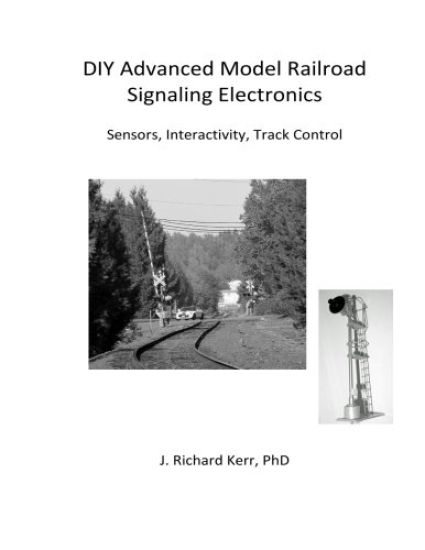
DIY Advanced Model Railroad Signaling Electronics: Sensors, Interactivity, Track Control

DIY Advanced Model Railroad Signaling Electronics: Sensors, Interactivity, Track Control

J. Richard Kerr Phd

Createspace Independent Publishing Platform
2015
nidottu
Four years in preparation, this book shows the model railroader how to design an automatic signaling and block control system that avoids the usual compromises. It properly responds to single or multiple trains of any length, including stops and reversals, while "remembering" proper status during system power-down. All types of signals are covered, from simple red/green to 3-color units with "approach mode"; and with or without self-latching or built-in aspect (red/amber/green) hierarchies. Road-crossing signal operation is properly asymmetrical in response to train direction, and adapts to stopping/reversing. The text encompasses AC and DC powered signals and trains of all gauges, including toy ("high-rail") layouts, and includes both "common cathode" and "common anode" configurations for DC powered setups. To ensure realism, any substantive dependence on timers is avoided. A wide variety of homebrew and commercial train-sensors is covered, with instructions on DIY alternatives ranging from very simple to ultimate performance. Based on the use of the excellent scale signals that are on the market, the text applies to any combination of DIY and commercial sensor and control hardware. Multiple-block signaling with turnouts, "tumble-down", and cross-tracks are discussed in detail. The use of the same sensors for automatic track (train or "cab") control is described for turnaround loops and wyes, for the prevention of following- and opposing-train collisions, and for non-derailing at improperly positioned turnouts. Also covered is the application of these concepts in a Digital Command Control context. DIY Advanced Model Railroad Signaling Electronics assumes a very modest knowledge of electronics, or alternatively, the ability to interpret a schematic diagram and solder simple, highly economical components on a hobbyist's circuit board. Specific electronic board layouts have been designed for the most important circuits, and commercial sources for the boards - as well as all other components - are provided. The book includes 97 figures and diagrams, and a comprehensive outline of contents.
Assessing Women's Economic Contributions to Development (PHD 6)

Assessing Women's Economic Contributions to Development (PHD 6)

Ruth Dixon-Mueller; Richard Anker

International Labour Office
1993
nidottu
World Employment Programme Background papers for training in population, human resources and development planning. Paper No. 6. The main objective of the Programme is to help Member States incorporate demographic elements into employment-related policies and, more broadly, to facilitate the integration of population and human resources development issues into national development planning. The present paper addresses the issues of assessing women's contribution to economic development.