This book examines how different technologies can be used to enhance research methods in the social sciences and humanities. The boundary between the body and the digital has become increasingly blurred in recent years due to the rise of technologies that capture and reshape our embodied selves. New technologies all too often reflect the attitudes of the privileged white men who dominate the tech sector. This book thus, in part, considers how critical researchers can employ new technologies while challenging some of the problematic assumptions that underpin their design. It also includes a series of case studies that examine the dynamic use of different techniques to explore key questions around the intersection of embodiment and the digital.With a playful, experimental approach to conducting research today, this book offers new, cutting-edge methods that respond to the potential of different technologies. It will be invaluable reading for undergraduate and post-graduate students of social sciences and humanities to explore ways in which this approach can bring new insights to a range of interdisciplinary research questions.
This new edition of Drama as Therapy presents a coherent review of the practice and theory of Dramatherapy. With a unique combination of practical guidance, clinical examples and research vignettes this fully revised second edition considers developments in the field over the last decade and researches the impact of the 'core processes' on clinical practice.The book shows how Dramatherapy can be used with a wide range of clients and applied to their individual needs. Therapists working in different parts of the world contribute examples of their practice, alongside their research interviews demonstrating the effectiveness of Dramatherapy. The book draws on studies ranging from child survivors of the tsunami in Sri Lanka to teenagers living with HIV in South Africa, from elderly clients dealing with psychosis in the UK to women in a refuge in Malaysia. Divided into four distinct sections it provides:definitions of core processes at work in Dramatherapy research into how Dramatherapists understand what they offer clients clear descriptions of the structure and content of Dramatherapy a wide range of clinical research vignettes from all over the world.Drama as Therapy offers insights into how experienced Dramatherapists understand their work with clients. It will be of great interest to Dramatherapy students internationally, as well as professionals working with Dramatherapy.
This new edition of Drama as Therapy presents a coherent review of the practice and theory of Dramatherapy. With a unique combination of practical guidance, clinical examples and research vignettes this fully revised second edition considers developments in the field over the last decade and researches the impact of the 'core processes' on clinical practice.The book shows how Dramatherapy can be used with a wide range of clients and applied to their individual needs. Therapists working in different parts of the world contribute examples of their practice, alongside their research interviews demonstrating the effectiveness of Dramatherapy. The book draws on studies ranging from child survivors of the tsunami in Sri Lanka to teenagers living with HIV in South Africa, from elderly clients dealing with psychosis in the UK to women in a refuge in Malaysia. Divided into four distinct sections it provides:definitions of core processes at work in Dramatherapy research into how Dramatherapists understand what they offer clients clear descriptions of the structure and content of Dramatherapy a wide range of clinical research vignettes from all over the world.Drama as Therapy offers insights into how experienced Dramatherapists understand their work with clients. It will be of great interest to Dramatherapy students internationally, as well as professionals working with Dramatherapy.
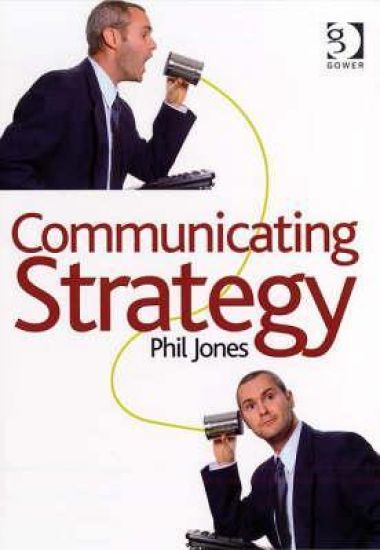
'If you don't communicate your strategy in a way that your people understand and find compelling, how can you expect them to help you succeed with it? Research suggests only 5% of the people in an organization understand its strategy. If that is true for your organization, whose strategy are the other 95% implementing? Not yours, that is for sure.' Phil Jones' Communicating Strategy is designed to help you communicate your strategy in a compelling and effective way, and dramatically improve implementation and the resulting outcomes. It provides a clear framework for building a communication plan as well as practical information, techniques, tools, tips and exercises that can be applied to explain and deliver a complete and coherent message. With guidance on how to create change champions, the book is vital reading for senior managers globally.
How can we ensure our strategy will succeed, especially in changing and uncertain times? The answer, as explained in Strategy Mapping for Learning Organizations, is to become a more responsive organization - one that captures its strategy in strategy maps, learns from that strategy and can adapt to deliver results. For anyone involved in managing strategy and performance, applying the powerful strategy mapping techniques will move your balanced scorecard from an operational tool to one of strategy and change. It will help you capture, communicate and manage your strategy more effectively. However, strategy can no longer be simply a top down, annual process. It needs to be more iterative, emergent and involving. Many agile organizations have adopted rolling plans and budgets. To bring greater agility into the wider strategy and performance management processes requires the tools and techniques described in Strategy Mapping for Learning Organizations. Phil Jones provides a detailed guide to developing, rolling out and managing with modern strategy maps and scorecards, building in agility and learning. His book incorporates the latest strategic thinking and models. It places the balanced scorecard in a wider governance context that includes the management of risk and environmental and social responsibility. Fully illustrated with examples from many different organizations, this book will help you deliver your strategy better.
In this book, Phil Jones gives a detailed account of the siege of Colchester, where Royalist soldiers made their stand against the New Model Army in 1648, turning the peaceful textile town into a front-line fortress.
This is the first textbook in the "New Childhoods" series, examining attitudes towards, and experiences of childhood today."Rethinking Childhood" examines attitudes towards, and experiences of, childhood. Focus is placed on opposing the processes by which children are made to be 'other': the ways in which children are separated and segregated by adults.Phil Jones explores different aspects of childhood: from education to health, from national policies to home life. A wide range of thought, research and practice from different fields and countries is used to debate, challenge and re-appraise long held beliefs, attitudes and ways of working and living with children. Children's own perspectives on their lives and on adults' attitudes towards them are drawn on throughout the book. The result is a wide-ranging invitation to the reader to become aware of current perspectives on children and childhood, to develop a critical relationship with the content, and to develop their own 'reading' of childhood. Each chapter contains examples of research, reflections on research, activities, key points and guidance on further reading.Areas include: How is childhood changing? What is research revealing about attitudes towards children? Do adults encourage the idea of children as incapable and incompetent? How do adults fear for, and their fears of, children affect children's lives? How does the media affect children's lives? How does a child rights perspective challenge service provision? In what ways are children's voices and opinions changing our world?"Rethinking Childhood" is essential for those studying childhood at undergraduate and graduate level and for those working with children in any field, from education to health, from play to law. Is childhood changing? What effects are new ideas about childhood having on children's lives? How are children's voices and opinions affecting the services they use? Contemporary debates on the nature of childhood, attitudes towards children, the experiences of children and the emergence of a child rights agenda are resulting in a re-examination of theory, practice and research in many fields." New Childhoods" offers a re-appraisal of the meaning of childhood - a series of texts that are succinct, accessible and engaging in introducing undergraduates to key areas of Childhood Studies, Education Studies and Sociology, and in disseminating new thinking, research, scholarship and practices.Books in this series will also be of interest to those who are preparing to work with children, such as teachers, early years practitioners, youth workers, health workers and psychologists. Key features include: boxed summaries of research which engage the reader in analysis; case studies to explore each issue in context; tasks to develop critical thinking; and, pointers on further reading.Each volume promotes a child rights perspective, and provokes a re-examination of child-adult relationships in the contexts of family, community and state. Insights and experiences across fields such as sociology, philosophy and psychology are combined to encourage an inter-disciplinary approach.
This book demonstrates the relevance and importance of cognitive linguistics when applied to the analysis and practice of graphic design/communication design. Phil Jones brings together a diverse range of theory and organizes it in accordance with different stages in the design process. Using examples from contemporary communication design, as well as more familiar selections from the graphic design canon as case studies, this book provides an account of how meanings are made by users, and suggests new strategies for design practice. It seeks convergences between the ways that graphic/communication designers think and talk about their practice and the theories emerging from cognitive science. This book will be of interest to scholars working in design, graphic design, the philosophy of art and aesthetics, communication studies, and media and film studies.
This book demonstrates the relevance and importance of cognitive linguistics when applied to the analysis and practice of graphic design/communication design. Phil Jones brings together a diverse range of theory and organizes it in accordance with different stages in the design process. Using examples from contemporary communication design, as well as more familiar selections from the graphic design canon as case studies, this book provides an account of how meanings are made by users, and suggests new strategies for design practice. It seeks convergences between the ways that graphic/communication designers think and talk about their practice and the theories emerging from cognitive science. This book will be of interest to scholars working in design, graphic design, the philosophy of art and aesthetics, communication studies, and media and film studies.
This book examines how different technologies can be used to enhance research methods in the social sciences and humanities. The boundary between the body and the digital has become increasingly blurred in recent years due to the rise of technologies that capture and reshape our embodied selves. New technologies all too often reflect the attitudes of the privileged white men who dominate the tech sector. This book thus, in part, considers how critical researchers can employ new technologies while challenging some of the problematic assumptions that underpin their design. It also includes a series of case studies that examine the dynamic use of different techniques to explore key questions around the intersection of embodiment and the digital.With a playful, experimental approach to conducting research today, this book offers new, cutting-edge methods that respond to the potential of different technologies. It will be invaluable reading for undergraduate and post-graduate students of social sciences and humanities to explore ways in which this approach can bring new insights to a range of interdisciplinary research questions.
How can we ensure our strategy will succeed, especially in changing and uncertain times? The answer, as explained in Strategy Mapping for Learning Organizations, is to become a more responsive organization - one that captures its strategy in strategy maps, learns from that strategy and can adapt to deliver results. For anyone involved in managing strategy and performance, applying the powerful strategy mapping techniques will move your balanced scorecard from an operational tool to one of strategy and change. It will help you capture, communicate and manage your strategy more effectively. However, strategy can no longer be simply a top down, annual process. It needs to be more iterative, emergent and involving. Many agile organizations have adopted rolling plans and budgets. To bring greater agility into the wider strategy and performance management processes requires the tools and techniques described in Strategy Mapping for Learning Organizations. Phil Jones provides a detailed guide to developing, rolling out and managing with modern strategy maps and scorecards, building in agility and learning. His book incorporates the latest strategic thinking and models. It places the balanced scorecard in a wider governance context that includes the management of risk and environmental and social responsibility. Fully illustrated with examples from many different organizations, this book will help you deliver your strategy better.
If you don't communicate your strategy in a way that your people understand and find compelling, how can you expect them to help you succeed with it? Research suggests only 5% of the people in an organization understand its strategy. If that is true for your organization, whose strategy are the other 95% implementing? Not yours, that is for sure.' Phil Jones' Communicating Strategy is designed to help you communicate your strategy in a compelling and effective way, and dramatically improve implementation and the resulting outcomes. It provides a clear framework for building a communication plan as well as practical information, techniques, tools, tips and exercises that can be applied to explain and deliver a complete and coherent message. With guidance on how to create change champions, the book is vital reading for senior managers globally.
The separate arts therapies – drama, art, music and dance – are becoming available to increasing numbers of clients as mental health professionals discover their potential to reach and help people. But what are the arts therapies, and what do they offer clients? This fully updated new edition of The Arts Therapies provides, in one volume, a guide to the different disciplines and their current practice and thinking in different parts of the world.Each chapter draws on a variety of perspectives and accounts to develop understandings of the relations between theory, research and practice, offering perspectives on areas such as the client-therapist-art form relationship or on outcomes and efficacy to help articulate and understand what the arts therapies can offer specific client groups. This new edition features ‘Focus on Research’ highlights from music therapy, art therapy, dramatherapy and dance movement therapy, which offer interviews with researchers in China, Africa, South America, Australia, Europe and North America, exploring significant pieces of enquiry undertaken within recent years.This comprehensive overview will be an essential text for students and practitioners of the arts therapies. It is international in scope, fully up-to-date with innovations in the field and will be relevant to new practitioners and those looking to deepen their understanding.
The separate arts therapies – drama, art, music and dance – are becoming available to increasing numbers of clients as mental health professionals discover their potential to reach and help people. But what are the arts therapies, and what do they offer clients? This fully updated new edition of The Arts Therapies provides, in one volume, a guide to the different disciplines and their current practice and thinking in different parts of the world.Each chapter draws on a variety of perspectives and accounts to develop understandings of the relations between theory, research and practice, offering perspectives on areas such as the client-therapist-art form relationship or on outcomes and efficacy to help articulate and understand what the arts therapies can offer specific client groups. This new edition features ‘Focus on Research’ highlights from music therapy, art therapy, dramatherapy and dance movement therapy, which offer interviews with researchers in China, Africa, South America, Australia, Europe and North America, exploring significant pieces of enquiry undertaken within recent years.This comprehensive overview will be an essential text for students and practitioners of the arts therapies. It is international in scope, fully up-to-date with innovations in the field and will be relevant to new practitioners and those looking to deepen their understanding.