Kirjojen hintavertailu. Mukana 11 212 761 kirjaa ja 11 kauppaa.

Kirjahaku

Etsi kirjoja tekijän nimen, kirjan nimen tai ISBN:n perusteella.

1000 tulosta hakusanalla Philip Davis

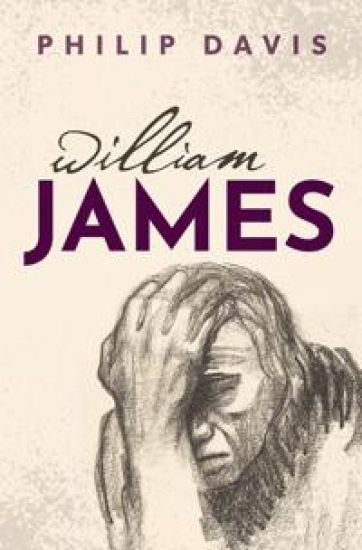
William James

William James

Philip Davis

Oxford University Press
2022
sidottu
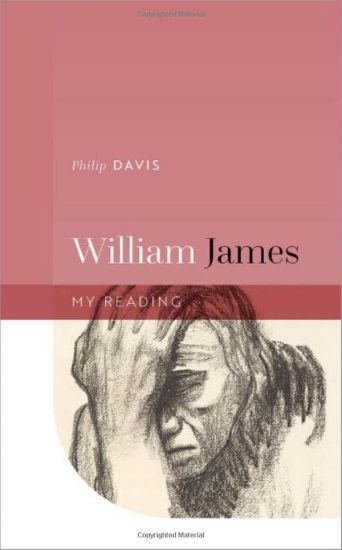
Discusses the life and work of William James, a founder of the study of psychology. William James (1842-1910) was elder brother to the novelist Henry James and a founder of the study of psychology. But he was also a thinker who sought to work across conventional boundaries, and did not believe in separate disciplines or over-professionalized ways of thinking. James was above all interested in those moments when thoughts suddenly come into being, 'hot' and 'alive'. William James is for anyone who has experienced the personal need for such thinking and feels the excitement of ideas. It concerns the personal experience of reading James, involving extensive quotation from his work in relation to Philip Davis' own inner life and the lives of other readers of James--a thinker who is defiantly convinced of the fundamental validity of the inner life in the making of the Real. This book is about William James's life-writing, writing for the sake of existence, that puts together a mix of literature, psychology, philosophy, and biography in the search for purpose and human flourishing, in place of formal religion. It includes James' interest in his brother's novels and in Shakespearean drama, as well as Thomas Hardy's pessimistic challenge to James. Davis is a reader of literature who feels that readers of novels and poems also need the help of psychology and philosophy, to get the thinking out, to make it into a working part of a life. His book is for readers, especially readers of literature, seeking to create, like William James, a literary way of thinking outside the realm of literature.
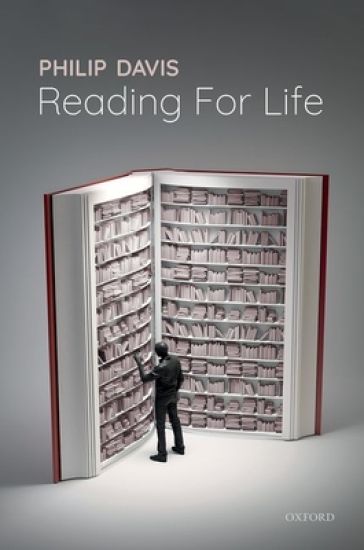
Reading for Life

Reading for Life

Philip Davis

Oxford University Press
2022
nidottu
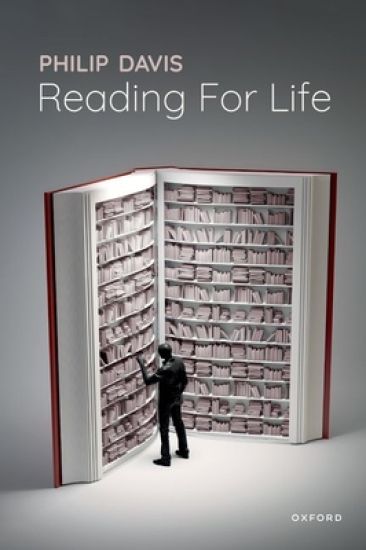
Reading for Life is an anthology of poems and of extracts from prose fiction, related to a series of case-histories of individuals carefully reading, discussing their reading lives, and thinking about the relation of literature to their existence. It enables readers to gain increased imaginative access to the works in question through seeing how they have intensely affected equivalent readers—a novelist, a poet, a doctor, a teacher, an anthologist, but also non-specialists, ordinary people within shared reading groups in many different settings, finding help from literary texts in times of often painful personal need. It is the story of the work done by Philip Davis' research unit, the Centre for Research into Reading, Literature and Society (CRILS), at the University of Liverpool, in a ten-year partnership with the outreach charity The Reader, taking serious literature to often neglected communities and struggling individuals through the shared reading—alive and aloud—of literature from all ages. Reading for Life is a detailed account of what reading literature can do for a wide variety of individuals in relation to a wide variety of texts: it will be of interest to serious readers in the wider world as much as to scholars working within literary studies, and to all those involved in thinking about the therapeutic interactions of literature and life in psychology, medicine, and mental health support settings.
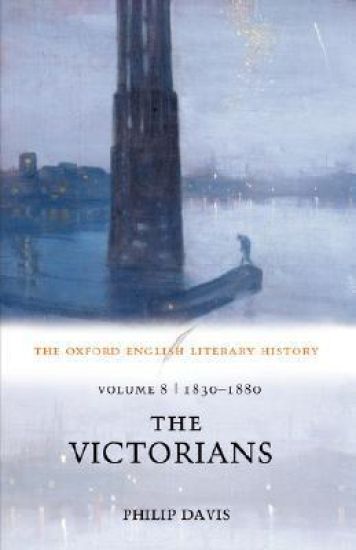
The Oxford English Literary History: Volume 8: 1830-1880: The Victorians
Heralding a new era in literary studies, the Oxford English Literary History breaks the mould of traditional approaches to the canon by focusing on the contexts in which the authors wrote and how their work was shaped by the times in which they lived. Each volume offers a fresh, ground-breaking re-assessment of the authors, their works, and the events and ideas which shaped the literary voice of their age. Written by some of the leading scholars in the field, under the general-editorship of Jonathan Bate, the Oxford English Literary History is essential reading for everyone studying, teaching, and researching in English literature. This volume covers the flowering of Victorian literature, from the decade when Tennyson started writing In Memoriam and Darwin embarked on the Beagle to the publication of Hardy's first great novels and the death of George Eliot. The Victorian era produced a literature of diversity and experimentation, engaged with powerful controversies and heartfelt arguments that lie at the centre of the formation of the modern world. It has often been misrepresented, either as an age of dull and rigid certainty or one of anxious and depressive morbidity, but what distinguishes the writing of the period - from its origins in the 1830s to its crisis point around 1880 - is its power of serious inquiry. It poses questions about the relation between society and the individual, the rival claims of market and morality, the form and function of democracy, and, above all, the existence or non-existence of God and the purposes of human life. Such concerns make this a time in which literature has a new urgency and vitality, and lies close to the heart of a culminating crisis of the Western conscience. less tied to the canonical authors and much more interested in placing both canonical and non-canonical writings in their historical context. These are books that every serious student and scholar of the period will need on their shelves.
Reading for Life

Reading for Life

Philip Davis

Oxford University Press
2020
sidottu
Reading for Life is an anthology of poems and of extracts from prose fiction, related to a series of case-histories of individuals carefully reading, discussing their reading lives, and thinking about the relation of literature to their existence. It enables readers to gain increased imaginative access to the works in question through seeing how they have intensely affected equivalent readers--a novelist, a poet, a doctor, a teacher, an anthologist, but also non-specialists, ordinary people within shared reading groups in many different settings, finding help from literary texts in times of often painful personal need. It is the story of the work done by Philip Davis' research unit, the Centre for Research into Reading, Literature and Society (CRILS), at the University of Liverpool, in a ten-year partnership with the outreach charity The Reader, taking serious literature to often neglected communities and struggling individuals through the shared reading--alive and aloud--of literature from all ages. Reading for Life is a detailed account of what reading literature can do for a wide variety of individuals in relation to a wide variety of texts: it will be of interest to serious readers in the wider world as much as to scholars working within literary studies, and to all those involved in thinking about the therapeutic interactions of literature and life in psychology, medicine, and mental health support settings.
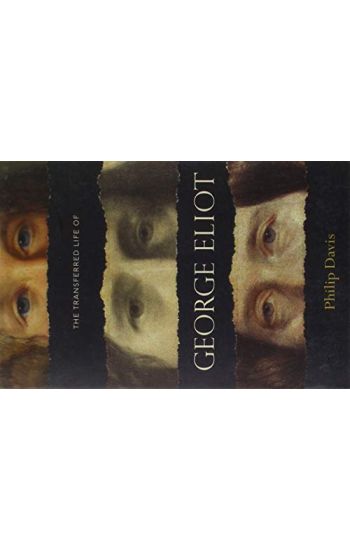
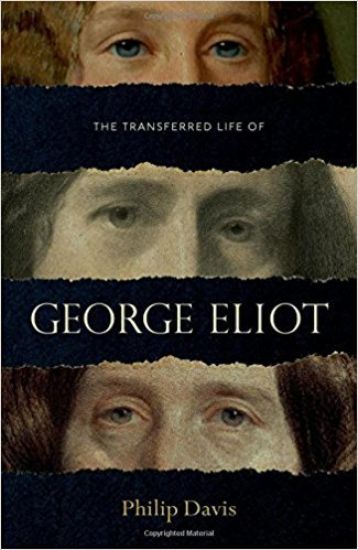
The Transferred Life of George Eliot

The Transferred Life of George Eliot

Philip Davis

Oxford University Press
2018
nidottu
Reading George Eliot's work was described by one Victorian critic as like the feeling of entering the confessional in which the novelist sees and hears all the secrets of human psychology—'that roar which lies on the other side of silence'. This new biography of George Eliot goes beyond the much-told story of her life. It gives an account of what it means to become a novelist, and to think like a novelist: in particular a realist novelist for whom art exists not for art's sake but in the exploration and service of human life. It shows the formation and the workings of George Eliot's mind as it plays into her creation of some of the greatest novels of the Victorian era. When at the age of 37 Marian Evans became George Eliot, this change followed long mental preparation and personal suffering. During this time she related her power of intelligence to her capacity for feeling: discovering that her thinking and her art had to combine both. That was the great ambition of her novels—not to be mere pastimes or fictions but experiments in life and helps in living, through the deepest account of human complexity available. Philip Davis's illuminating new biography will enable you both to see through George Eliot's eyes and to feel what it is like to be seen by her, in the imaginative involvement of her readers with her characters.
William James

William James

Philip Davis

Oxford University Press
2026
nidottu
Discusses the life and work of William James, a founder of the study of psychology. William James (1842-1910) was elder brother to the novelist Henry James and a founder of the study of psychology. But he was also a thinker who sought to work across conventional boundaries, and did not believe in separate disciplines or over-professionalized ways of thinking. James was above all interested in those moments when thoughts suddenly come into being, 'hot' and 'alive'. William James is for anyone who has experienced the personal need for such thinking and feels the excitement of ideas. It concerns the personal experience of reading James, involving extensive quotation from his work in relation to Philip Davis's own inner life and the lives of other readers of James- a thinker who is defiantly convinced of the fundamental validity of the inner life in the making of the Real. This book is about William James's life-writing, writing for the sake of existence, that puts together a mix of literature, psychology, philosophy, and biography in the search for purpose and human flourishing, in place of formal religion. It includes James's interest in his brother's novels and in Shakespearean drama, as well as Thomas Hardy's pessimistic challenge to James. Professor Davis is a reader of literature who feels that readers of novels and poems also need the help of psychology and philosophy, to get the thinking out, to make it into a working part of a life. His book is for readers, especially readers of literature, seeking to create, like William James, a literary way of thinking outside the realm of literature.
The Oxford English Literary History: Volume 8: 1830-1880: The Victorians
Inaugurating a major new series, successor to the Oxford History of English Literature but excitingly new in its emphasis on 'literary history', this volume covers the flowering of Victorian literature, from the decade when Tennyson started writing In Memoriam and Darwin embarked on the Beagle to the publication of Hardy's first great novels and the death of George Eliot. The Victorian era produced a literature of diversity and experimentation, engaged with powerful controversies and heartfelt arguments that lie at the centre of the formation of the modern world. It has often been misrepresented, either as an age of dull and rigid certainty or one of anxious and depressive morbidity, but what distinguishes the writing of the period - from its origins in the 1830s to its crisis point around 1880 - is its power of serious inquiry. It poses questions about the relation between society and the individual, the rival claims of market and morality, the form and function of democracy, and, above all, the existence or non-existence of God and the purposes of human life. Such concerns make this a time in which literature has a new urgency and vitality, and lies close to the heart of a culminating crisis of the Western conscience. The series will enlighten and inspire not only everyone studying, teaching, and researching in English Literature, but all keen readers of English fiction.
Bernard Malamud

Bernard Malamud

Philip Davis

Oxford University Press
2007
sidottu
Philip Davis tells the story of Bernard Malamud (1914-1986), the self-made son of poor Jewish immigrants who went on to become one of the foremost novelists and short-story writers of the post-war period. The time is ripe for a revival of interest in a man who at the peak of his success stood alongside Saul Bellow and Philip Roth in the ranks of Jewish American writers. Nothing came easily to Malamud: his family was poor, his mother probably committed suicide when Malamud was 14, and his younger brother inherited her schizophrenia. Malamud did everything the second time round - re-using his life in his writing, even as he revised draft after draft. Davis's meticulous biography shows all that it meant for this man to be a writer in terms of both the uses of and the costs to his own life. It also restores Bernard Malamud's literary reputation as one of the great original voices of his generation, a writer of superb subtlety and clarity. Bernard Malamud: A Writer's Life benefits from Philip Davis's exclusive interviews with family, friends, and colleagues, unfettered access to private journals and letters, and detailed analysis of Malamud's working methods through the examination of hitherto unresearched manuscripts. It is very much a writer's life. It is also the story of a struggling emotional man, using an extraordinary but long-worked-for gift, in order to give meaning to ordinary human life.
Bernard Malamud

Bernard Malamud

Philip Davis

Oxford University Press
2010
nidottu
Philip Davis tells the story of Bernard Malamud (1914-1986), the self-made son of poor Jewish immigrants who went on to become one of the foremost novelists and short-story writers of the post-war period. The time is ripe for a revival of interest in a man who at the peak of his success stood alongside Saul Bellow and Philip Roth in the ranks of Jewish American writers. Nothing came easily to Malamud: his family was poor, his mother probably committed suicide when Malamud was 14, and his younger brother inherited her schizophrenia. Malamud did everything the second time round - re-using his life in his writing, even as he revised draft after draft. Davis's meticulous biography shows all that it meant for this man to be a writer in terms of both the uses of and the costs to his own life. It also restores Bernard Malamud's literary reputation as one of the great original voices of his generation, a writer of superb subtlety and clarity. Bernard Malamud: A Writer's Life benefits from Philip Davis's exclusive interviews with family, friends, and colleagues, unfettered access to private journals and letters, and detailed analysis of Malamud's working methods through the examination of hitherto unresearched manuscripts. It is very much a writer's life. It is also the story of a struggling emotional man, using an extraordinary but long-worked-for gift, in order to give meaning to ordinary human life.
The Transferred Life of George Eliot

The Transferred Life of George Eliot

Philip Davis

Oxford University Press
2017
sidottu
Reading George Eliot's work was described by one Victorian critic as 'the feeling of entering the confessional in which she sees and hears all the secrets of human psychology--that roar which lies on the other side of silence'. This new biography of George Eliot goes beyond the much-told story of her life. It gives an account of what it means to become a novelist, and to think like a novelist: in particular a realist novelist for whom art exists not for art's sake but in the exploration and service of human life. It shows the formation and the workings of George Eliot's mind as it plays into her creation of some of the greatest novels of the Victorian era. When at the age of 37 Marian Evans became George Eliot, it followed long mental preparation and personal suffering. During this time she related her power of intelligence to her capacity for feeling: discovering that her thinking and her art had to combine both. That was the great ambition of her novels--not to be mere pastimes or fictions but experiments in life and helps in living, through the deepest account of human complexity available. Philip Davis's illuminating new biography will enable you both to see through George Eliot's eyes and to feel what it is like to be seen by her, in the imaginative involvement of her readers with her characters.
Reading and the Reader

Reading and the Reader

Philip Davis

Oxford University Press
2013
nidottu
The Literary Agenda is a series of short polemical monographs about the importance of literature and of reading in the wider world and about the state of literary education inside schools and universities. The category of 'the literary' has always been contentious. What is clear, however, is how increasingly it is dismissed or is unrecognised as a way of thinking or an arena for thought. It is sceptically challenged from within, for example, by the sometimes rival claims of cultural history, contextualized explanation, or media studies. It is shaken from without by even greater pressures: by economic exigency and the severe social attitudes that can follow from it; by technological change that may leave the traditional forms of serious human communication looking merely antiquated. For just these reasons this is the right time for renewal, to start reinvigorated work into the meaning and value of literary reading. Reading and the Reader offers a defence of reading serious literature, where reading offers a place for inner contemplation, emotion, imagination, and thought-experiment through the energising booster-rocket of literature. It is argued that literature creates a holding-ground in which a dense sense of experience is registered. Such a place is vital to human well-being in the following respects: in sustaining the ability to use and not just suffer one's experience; to be able to think one's thoughts, even those that are customarily unadmitted or felt as anomalous or unworthy; to find room for a realm of speculation in between religions and secularization, in between literature and life. Reading and the Reader, one of the first volumes in the Literary Agenda series, exists to defend the value of reading, to narrow the gaps between the way writers and readers think, to bring literary thinking into the ordinary thinking of the world - especially at a time when the arts and humanities are under some threat. Literature is useful in terms of deep human needs. It offers a form of time-travel - across ages, countries, different minds - that provides alternatives to any conventional worldview.
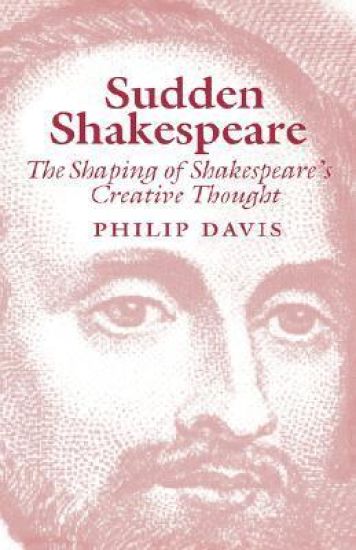
Sudden Shakespeare

Sudden Shakespeare

Philip Davis

Continuum International Publishing Group Ltd.
2000
sidottu
'His mind and hand went together' said Hemings and Condell of the speed of Shakespeare. But the conceptual language of literary criticism, be it moralistic or political, has long been too slow to the properly responsive to Shakespeare's meaning. With the help of both Renaissance philosophers and present-day actors, Sudden Shakepeare seeks to locate the underlying secrets of Shakespeare's dynamic power. It offers a technical language wihch, close to Shakespeare's own, is capable of responding suddenly to the speed, transforming shape, and power of Shakespeare's way of thinking as it comes into meaning.
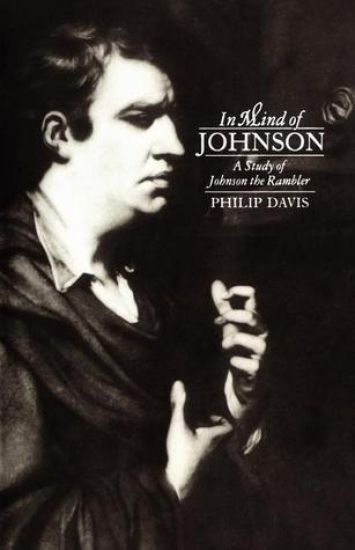
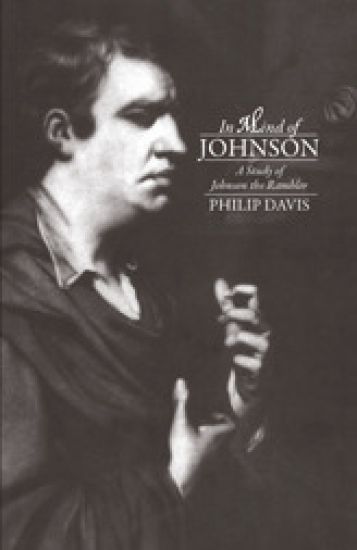
In Mind of Johnson

In Mind of Johnson

Philip Davis

University of Georgia Press
2009
pokkari
The original and imaginative portrait of Dr Johnson—the man and the writer—gets behind his public face and uncovers the human struggle out of which Johnson's moral view of life emerged. The author presents a challenging reading of the Rambler essays and Rasselas, unveiling the presence in these works of Johnson's inner life. Convincing and persuasive, it is an approach which flies in the face of established critical fashions and preconceptions and which reveals Johnson in a completely new light.
Shakespeare Thinking

Shakespeare Thinking

Philip Davis

Continuum International Publishing Group Ltd.
2009
sidottu
"Shakespeare Now!" is a series of short books of truly vital literary scholarship, each with its own distinctive form. "Shakespeare Now!" recaptures the excitement of Shakespeare; it doesn't assume we know him already, or that we know the best methods for approaching his plays. "Shakespeare Now!" is a new generation of critics, unafraid of risk, on a series of intellectual adventures. Above all - it is a new Shakespeare, freshly present in each volume. Shakespearean thinking is always dynamic: thinking that happens in the living moment of its performance, in quickly passing process. This book offers a model of human mentality that can be shown through the dense immediacy of dramatic thinking, as embodied above all in Shakespeare's working method. "Shakespeare Thinking" discusses the positioning of Shakespeare as the paradigm of fully human mental creativity from the Romantics to the latest neurological experiments which show that Shakespeare can reveal new understandings of the hard-wiring of the human brain, and the sheer sudden electricity of its synaptic development.
Shakespeare Thinking

Shakespeare Thinking

Philip Davis

Continuum International Publishing Group Ltd.
2009
nidottu
"Shakespeare Now!" is a series of short books of truly vital literary scholarship, each with its own distinctive form. "Shakespeare Now!" recaptures the excitement of Shakespeare; it doesn't assume we know him already, or that we know the best methods for approaching his plays. "Shakespeare Now!" is a new generation of critics, unafraid of risk, on a series of intellectual adventures. Above all - it is a new Shakespeare, freshly present in each volume. Shakespearean thinking is always dynamic: thinking that happens in the living moment of its performance, in quickly passing process. This book offers a model of human mentality that can be shown through the dense immediacy of dramatic thinking, as embodied above all in Shakespeare's working method. "Shakespeare Thinking" discusses the positioning of Shakespeare as the paradigm of fully human mental creativity from the Romantics to the latest neurological experiments which show that Shakespeare can reveal new understandings of the hard-wiring of the human brain, and the sheer sudden electricity of its synaptic development.
Why Victorian Literature Still Matters

Why Victorian Literature Still Matters

Philip Davis

Wiley-Blackwell (an imprint of John Wiley Sons Ltd)
2008
sidottu
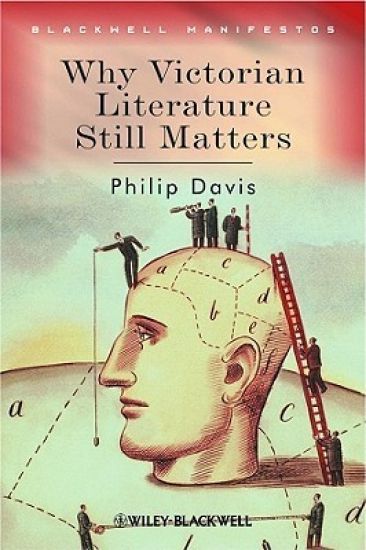
Why Victorian Literature Still Matters is a passionate defense of Victorian literature’s enduring impact and importance for readers interested in the relationship between literature and life, reading and thinking. Explores the prominence of Victorian literature for contemporary readers and academics, through the author’s unique insight into why it is still important todayProvides new frames of interpretation for key Victorian works of literature and close readings of important textsArgues for a new engagement with Victorian literature, from general readers and scholars alikeSeeks to remove Victorian literature from an entrenched set of values, traditions and perspectives - demonstrating how vital and resonant it is for modern literary and cultural analysis
Why Victorian Literature Still Matters

Why Victorian Literature Still Matters

Philip Davis

Wiley-Blackwell (an imprint of John Wiley Sons Ltd)
2008
nidottu
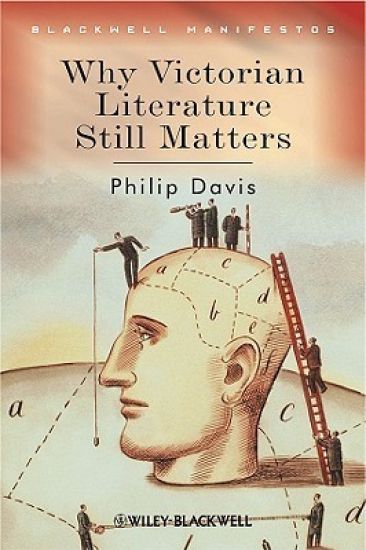
Why Victorian Literature Still Matters is a passionate defense of Victorian literature’s enduring impact and importance for readers interested in the relationship between literature and life, reading and thinking. Explores the prominence of Victorian literature for contemporary readers and academics, through the author’s unique insight into why it is still important todayProvides new frames of interpretation for key Victorian works of literature and close readings of important textsArgues for a new engagement with Victorian literature, from general readers and scholars alikeSeeks to remove Victorian literature from an entrenched set of values, traditions and perspectives - demonstrating how vital and resonant it is for modern literary and cultural analysis