

Kirjahaku
Etsi kirjoja tekijän nimen, kirjan nimen tai ISBN:n perusteella.
1000 tulosta hakusanalla Philip E Sears

Biomolecular Data Science-in Honor of Professor Philip E. Bourne
MDPI AG
2023
sidottu
This reprint includes 14 articles in Biomedical Data Science in honor of Professor Philip Bourne. Contributed by world-renowned experts, these articles cover a broad range of topics in machine learning, biophysics, bioinformatics, and systems biology.

Abhandlung Uber Die Darstellung Der Funktionen Durch Trigonometrische Reihen (1876) Hrsg. Von Philip E.B. Jourdain Volume 03
Paul Du Bois-Reymond
Nabu Press
2010
pokkari



Monopoly X: How Top-Secret World War II Operations Used the Game of Monopoly to Help Allied POWs Escape, Conceal Spies, and Send Secret Codes
Philip E. Orbanes
Harper
2025
sidottu
An amazing true story of World War II that reveals how British and American military intelligence successfully smuggled escape aids into German P.O.W. camps hidden inside Monopoly game boards, and also the game's surprising role in espionage.Monopoly X is the fascinating true story of what is arguably the most unusual and best-kept secret operation of World War II. The masterminds at England's top-secret MI-9, and later America's MIS-X, created a special version of the popular game, hiding tools, maps, and money within game boards--delivered by fictitious charities--to captured Allied servicemen held at gunpoint behind barbed wire in German prison camps. This ingenious and complex plot, dubbed "Monopoly X," was never discovered by the Nazis and led to many successful Allied breakouts.The creation and consequences of Monopoly X remained a deep secret through the war and for decades after, until now. For the first time, Phillip E. Orbanes tells the full story of the people behind this clandestine program--how it was devised, implemented, and used to great success. A tale of derring-do as compelling as the World War II classic, The Great Escape, Monopoly X is an amazing war story of Allied intelligence services, resistance forces in Europe, heroes and heroines, a notorious traitor, and the pivotal role a seemingly innocent board game played in secret codes and espionage.Monopoly X includes a 16-page black-and-white photo insert.


Proceedings of MEST 2012: Electronic Structure Methods with Applications to Experimental Chemistry
Philip E. Hoggan
Academic Press Inc
2014
sidottu
Advances in Quantum Chemistry presents surveys of current topics in this rapidly developing field that has emerged at the cross section of the historically established areas of mathematics, physics, chemistry, and biology. It features detailed reviews written by leading international researchers. This volume focuses on the theory of heavy ion physics in medicine.

Enterprise Risk Management: A Common Framework for the Entire Organization discusses the many types of risks all businesses face. It reviews various categories of risk, including financial, cyber, health, safety and environmental, brand, supply chain, political, and strategic risks and many others. It provides a common framework and terminology for managing these risks to build an effective enterprise risk management system. This enables companies to prevent major risk events, detect them when they happen, and to respond quickly, appropriately, and resiliently. The book solves the problem of differing strategies, techniques, and terminology within an organization and between different risk specialties by presenting the core principles common to managing all types of risks, while also showing how these principles apply to physical, financial, brand, and global strategy risks. Enterprise Risk Management is ideal for executives and managers across the entire organization, providing the comprehensive understanding they need, in everyday language, to successfully navigate, manage, and mitigate the complex risks they face in today’s global market.
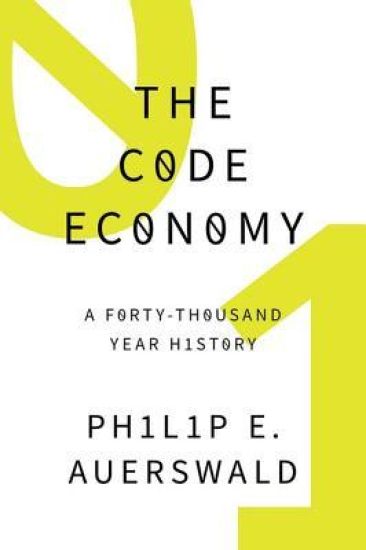
The "code economy " refers to the evolving technologically-driven environment we live in. In services or manufacturing, outputs emerge more and more from coded computerized systems and less as assembled mechanical devices and procedures. Industries seek algorithms to make software not only more pliable for firms' development of products and services, but also to market them and ease their purchase and use by consumers. This process automates jobs. It gives increasing economic advantage to entrepreneurs who can harness "code " to serve on the large scale the growing niches into which consumers are organized. Yet, mastering the "code " also gives individuals and informal social networks the resources to bundle products and services and put them up for sale and convenient use at more local levels. The economics of the rest of the 21st century will see the movement away from traditional firms and more toward people's relying on themselves as the sources of their livelihoods. The code economy has clearly not developed in a vacuum. Invention, innovation, and the pursuit of happiness have characterized human activities for centuries. What is changing is how societies and individuals radically value endeavors in life differently from even a decade ago, most notably away from industries organized as "command and control " systems. In The Code Economy, Philip Auerswald investigates how economists themselves have been hard pressed to gauge new economic indices of satisfaction that go beyond traditional measures. He explores how the code or "shared " economy reaches into domains such as health, where greater longevity, the popularization of medical knowledge, and the emphases on preventive care and wellness will complement the delivery of medical services. Further, living in the code economy will prompt people to orient their children's futures to more self-reliant pursuits and seek investments that truly serve them and not the institutions that have traditionally dominated the financial and economic worlds.

This is a comprehensive treatment of hypoglycemia written by a leading investigator in the field who is also an active clinician. It applies up-to-date concepts of the physiology of glucose counterregulation-the mechanisms that normally prevent or rapidly correct hypoglycemia and thus defend the brain from its devestating effects-and of the pathophysiology of those mechanisms which were largely unknown when previous books on the topic were published, to the diagnosis and treatment of the clinical problem. While its early chapters provide a detailed scientific background, its clinical chapters (on hypoglycemia in diabetes mellitus, the hypoglycemic disorders and the approach to the patient with hypoglycemia) provide much practical guidance for physicians.
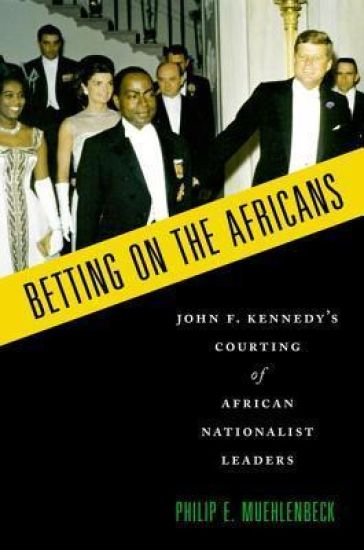
At the start of his administration John F. Kennedy launched a personal policy initiative to court African nationalist leaders. This policy was designed to improve U.S.-African relations and constituted a dramatic change in the direction of U.S. foreign relations. The Kennedy administration believed that the Cold War could be won or lost depending upon whether Washington or Moscow won the hearts and minds of the Third World. Africa was particularly important because a wave of independence saw nineteen newly independent African states admitted into the United Nations during 1960-61. By 1962, 31 of the UN's 110 member states were from the African continent, and both Washington and Moscow sought to add these countries to their respective voting bloc. For Kennedy, the Cold War only amplified the need for a strong U.S. policy towards Africa-but did not create it. The Kennedy administration feared that American neglect of the newly decolonized countries of the world would result in the rise of anti-Americanism and for this reason needed to be addressed irrespective of the Cold War. For this reason, Kennedy devoted more time and effort toward relations with Africa than any other American president. By making an in-depth examination of Kennedy's attempt to court African nationalist leaders, Betting on the Africans adds an important chapter to the historiography of John F. Kennedy's Cold War strategy by showing how through the use of personal diplomacy JFK realigned United States policy towards Africa and to a large extent won the sympathies of its people while at the same time alienating more traditional allies.

As a presidential candidate, John F. Kennedy established a reputation across Africa as a sympathetic supporter of African nationalism, who if elected would realign Washington's priorities toward the continent. Once in office, Kennedy indeed made changing the image of America in Africa a top priority of his administration, believing that the Cold War could be won or lost depending upon whether Washington or Moscow won the hearts and minds of the Third World. Africa was particularly important because a wave of independence saw nineteen newly independent African states admitted into the United Nations during 1960-61. By 1962, 31 of the UN's 110 member states were from the African continent, and both Washington and Moscow sought to add these countries to their respective voting bloc. Kennedy feared that neglect of the newly decolonized countries of the world would result in the rise of anti-Americanism and needed to be addressed irrespective of the Cold War. Philip Muehlenbeck demonstrates how Kennedy used all means at his disposal-economic, cultural, personal-to appeal to the leaders of the developing world, including Nkrumah, Senghor, Touré, Nyerere, and Ben Bella. Drawing on archival sources from Africa, the United States, and the United Kingdom, Muehlenbeck closely examines Kennedy's policies towards Guinea, Ghana, Ivory Coast, Liberia, Egypt, Algeria, Tanganyika, and South Africa, which were to a large extent successful in winning the sympathies of its peoples, while at the same time alienating more traditional American allies. Betting on the Africans adds an important chapter to the historiography of John F. Kennedy's Cold War strategy as well as the history of decolonization.

The Law and Economic Development in the Third World
Philip E. Bondzi Simpson
Praeger Publishers Inc
1992
sidottu
This volume examines critical issues that all developing countries must face. Subjects covered include an historical insight into and description of the legal system of a Third World country; considerations of intellectual property regimes and suggestions for developing countries; insights into the patterns of investment on a continent the bulk of whose members are Third World countries, and suggestions for establishing and strengthening legal arrangements in order to attract beneficial investment; a critical examination of proposals made during the most recent GATT multilateral trade negotiations; and pointers to global trends in the provision of financial services. These chapters range from the historical to the contemporary, from the descriptive to the analytical and prescriptive, and from the theoretical to the empirical.In toto, the volume seeks to challenge scholars, bureaucrats, and technocrats in developing countries to critically and candidly examine the causes, conditions, and magnitude of underdevelopment, and to propose and thoroughly critique options available to them. As such, the volume will be invaluable to researchers and officials involved with international development issues and Third World studies.

Raising the war on political correctness to a new and higher intellectual level, Philip Devine sheds fresh light on the whole question of cultural standards and the fashionable notion of multiculturalism. While acknowledging the diversity of ways of life and the differing belief systems that arise from and justify those ways of life, the author attacks the current exploitation of diversity to justify a militantly intolerant relativism. His wide-ranging and erudite work connects cultural issues to our real-world existence as biological and historical beings, pulling together ideas of bioethics, education, and the structure and purpose of families. This work will be of interest to those fighting the culture wars across the humanities and social and behavioral sciences.

The natural law tradition, which takes as central to moral discussion an appeal to our common humanity, provides a sustainable and attractive approach to problems of ethics and morals. This volume presents a contemporary version of natural law ethics, one that does not rely for support on the authority of Aristotle or St. Thomas Aquinas, however much it is indebted to them and their followers for inspiration and arguments. The author discusses the mutual relations of four key moral concepts—the good, virtue, duty, and rights—as well as their application to various issues, including environmental concerns, homosexuality, and suicide. While examining the role of morality in a way of life and the relation between morality and religion, he defends the natural law tradition against a range of philosophical and theological opponents.

Rigorous, yet written in a way that facilitates understanding of complex material, Environmental Economics: An Integrated Approach provides practical and working knowledge of how environmental policy analysis is developed. This is a true textbook, detailing the tools required to conduct that analysis and also discusses weaknesses in the existing methods, underlining areas for future improvement. This approach allows readers to get a sense of what is known and what is not known about environmental economics. The book discusses why we have environmental problems and how we would optimally react if we had perfect information about environmental benefits and costs. It then describes methods in use—and their flaws—to acquire the information necessary to enact environmental policy. The book starts with a categorization of goods types, concluding that environmental problems stem from non-excludable goods that are either rivalrous or non-rivalrous. The author introduces the Coase Theorem in the first chapter, then details how households and firms would behave when facing a zero price on pollution versus a price on pollution set equal to presumed known marginal damages. He connects the economic system with the environmental system by aggregating up from individual decisions to the aggregate market system and the aggregate environmental quality. But, of course, the information available is rarely perfect. Clarifying the information difficulties faced by households, firms, and policy makers, the author recognizes that there is both a knowledge gap and a communication gap. He then covers the methods policy makers employ in an attempt to gain sufficient insight into marginal benefits and marginal costs to properly set a marginal damage tax, properly limit emission rights, or properly provide public goods.

Discusses the components of textile finishes, and the chemical and physical properties of, as well as their effects on, various fibres. The book covers fundamentals of fibre finish science, such as theories of friction; laboratory testing of formulations, from preliminary component evaluation to analyses for material characterization; and the influence of wetting, emulsification and finish distribution on coatings.

Originally published in 1969, Intelligence and Cultural Environment looks at the concept of intelligence and the factors influencing the mental development of children, including health and nutrition, as well as child-rearing practices. It goes on to discuss the application of intelligence tests in non-Western countries and includes both British and cross-cultural studies to illustrate this. Inevitably a product of the time in which it was written, this book nonetheless makes a valuable contribution to intelligence theory as we know it today.

Originally published in 1969, Intelligence and Cultural Environment looks at the concept of intelligence and the factors influencing the mental development of children, including health and nutrition, as well as child-rearing practices. It goes on to discuss the application of intelligence tests in non-Western countries and includes both British and cross-cultural studies to illustrate this. Inevitably a product of the time in which it was written, this book nonetheless makes a valuable contribution to intelligence theory as we know it today.