Kirjojen hintavertailu. Mukana 11 244 527 kirjaa ja 12 kauppaa.

Kirjahaku

Etsi kirjoja tekijän nimen, kirjan nimen tai ISBN:n perusteella.

1000 tulosta hakusanalla Philip G Hamerton

The Life of J. M. W. Turner

The Life of J. M. W. Turner

Philip G Hamerton

Hansebooks
2019
pokkari
The Life of J. M. W. Turner is an unchanged, high-quality reprint of the original edition of 1879. Hansebooks is editor of the literature on different topic areas such as research and science, travel and expeditions, cooking and nutrition, medicine, and other genres. As a publisher we focus on the preservation of historical literature. Many works of historical writers and scientists are available today as antiques only. Hansebooks newly publishes these books and contributes to the preservation of literature which has become rare and historical knowledge for the future.
The life of J.M.W. Turner, R.A

The life of J.M.W. Turner, R.A

Philip G Hamerton

Hansebooks
2020
pokkari
The life of J.M.W. Turner, R.A is an unchanged, high-quality reprint of the original edition of 1879. Hansebooks is editor of the literature on different topic areas such as research and science, travel and expeditions, cooking and nutrition, medicine, and other genres. As a publisher we focus on the preservation of historical literature. Many works of historical writers and scientists are available today as antiques only. Hansebooks newly publishes these books and contributes to the preservation of literature which has become rare and historical knowledge for the future.
God First and Last'. Religious Traditions and Music of the Yaresan of Guran: Volume 1: Religious Traditions by Philip G. Kreyenbroek
The Yaresan or Ahl-e Haqq are a relatively large minority group whose religion originates in the border regions between Iran and Iraq. As members of traditional Yaresan communities are becoming more visible in the West, both as diaspora groups and in academia, there is an increasing demand for reliable information about their background. Academic interest is also growing. Recent scholarly publications, however, tend to assume a fundamental knowledge of the Yaresan tradition, which is not easy to glean from existing sources. This is made more complicated by the very real differences between the European world view and that of traditional Yarsanism. For that reason and because music plays an unusually prominent role in Yaresan observance, it was decided to combine the authors' work on religious traditions and music respectively in two volumes. In doing so the religious realities of the traditional Yaresan of the Guran region is communicated by quoting extensively from interviews with community members. The first volume also offers a survey of other religious traditions that are thought to have been influential in shaping modern Yarsanism.
Solar Energy Markets

Solar Energy Markets

Philip G. Jordan

Elsevier Science Publishing Co Inc
2013
sidottu
This groundbreaking new book features holistic coverage of technological breakthroughs, financing trends, workforce development issues, and comparative regional case studies in solar energy. It provides a global bird's-eye view of the industry for scientists, engineers, business leaders, and policymakers — anyone seriously engaged in the rapidly evolving field of solar energy. The expert author's analysis includes primary data from the first comprehensive solar industry survey conducted in the United States, insights from key thought leaders in the energy sector, and case studies from international leaders in solar development. Solar Energy Markets examines six key drivers of the solar industry: 1) a new culture of environmentalism; 2) policy and markets; 3) financing and venture capital; 4) economics and cost-competitiveness; 5) innovation; and 6) labor. In a field too often marked by divisive over-specialization, this resource provides invaluable context, demonstrating how the solar field’s innovative triumphs and inherent challenges play out in the real global marketplace.
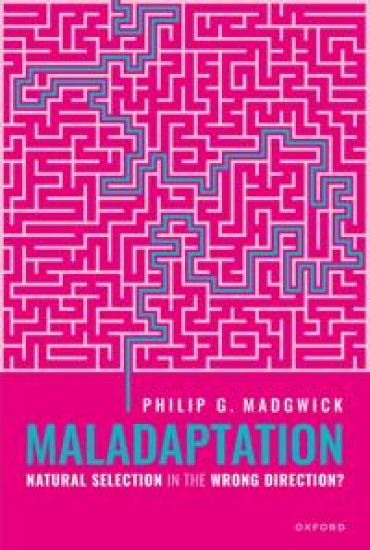
Maladaptation

Maladaptation

Philip G. Madgwick

Oxford University Press
2024
sidottu
Charles Darwin presented the first scientific explanation of design through evolution by natural selection, where the environment furnishes individual organisms with adaptations that help them to survive and reproduce. This accessible book makes the case that natural selection can also do the exact opposite, favouring traits that directly harm an organism's ability to survive and reproduce. Such maladaptations contradict the received understanding of what natural selection 'does', but become explicable with an understanding of the genetics and ecology of evolution by natural selection. Drawing upon wide-ranging examples from across the diversity of life, the evidence for maladaptations is critically appraised to establish its possibility, reality and importance to the design of living things. A theory of maladaptation is developed, as a corrective for a long-standing error in evolutionary biology. Examples of maladaptation are evaluated to identify the challenges and successes in applying the concept to organismal traits. The deeper causes and consequences of maladaptation are discussed to understand its far-reaching impact on the evolution of life on Earth - and beyond. Overall, the book persuasively argues that maladaptation is a paragon of the changes to evolutionary theory that are needed to understand the population biology of natural selection. Maladaptation is written to be suitable for students taking courses in evolution, ecology and genetics, as well as professional researchers in these fields. Its accessible style will also appeal to a broader interdisciplinary audience, including any inquisitive reader with a general interest in science and the natural world.
How Safe is Safe Enough?

How Safe is Safe Enough?

Philip G Peters

Oxford University Press Inc
2004
sidottu
This book offers a comprehensive roadmap for determining when and how to regulate risky reproductive technologies on behalf of future children. First, it provides three benchmarks for determining whether a reproductive practice is harmful to the children it produces. This framework synthesizes and extends past efforts to make sense of our intuitive, but paradoxical, belief that reproductive choices can be both life-giving and harmful. Next, it recommends a process for reconciling the interests of future children with the reproductive liberty of prospective parents. The author rejects a blanket preference for either parental autonomy or child welfare and proposes instead a case-by-case inquiry that takes into account the nature and magnitude of the proposed restrictions on procreative liberty, the risk of harm to future children, and the context in which the issue arises. Finally, he applies this framework to four past and future medical treatments with above average risk, including cloning and genetic engineering. Drawing lessons from these case studies, Peters criticizes the current lack of regulatory oversight and recommends both more extensive pre-market testing and closer post-market monitoring of new reproductive technologies. His moderate pragmatic approach will be widely appreciated.
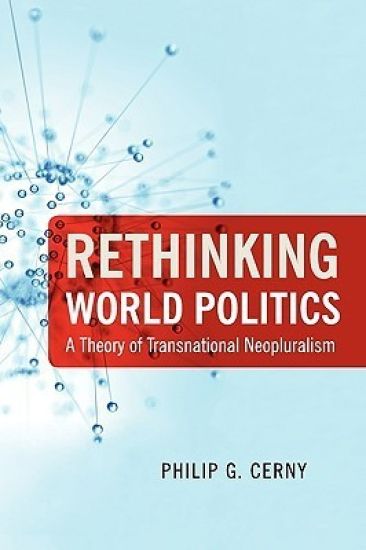
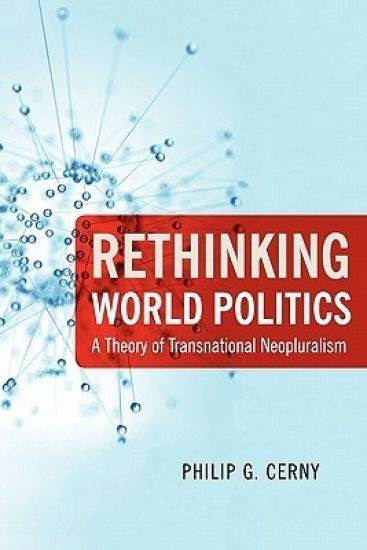
Rethinking World Politics

Rethinking World Politics

Philip G. Cerny

Oxford University Press Inc
2010
sidottu
Rethinking World Politics is a major intervention into a central debate in international relations: how has globalization transformed world politics? Most work on world politics still presumes the following: in domestic affairs, individual states function as essentially unified entities, and in international affairs, stable nation-states interact with each other. In this scholarship, the state lies at the center; it is what politics is all about. However, Philip Cerny contends that recent experience suggests another process at work: "transnational neopluralism." In the old version of pluralist theory, the state is less a cohesive and unified entity than a varyingly stable amalgam of competing and cross-cutting interest groups that surround and populate it. Cerny explains that contemporary world politics is subject to similar pressures from a wide variety of sub- and supra-national actors, many of which are organized transnationally rather than nationally. In recent years, the ability of transnational governance bodies, NGOs, and transnational firms to shape world politics has steadily grown. Importantly, the rapidly growing transnational linkages among groups and the emergence of increasingly influential, even powerful, cross-border interest and value groups is new. These processes are not replacing nation-states, but they are forging new transnational webs of power. States, he argues, are themselves increasingly trapped in these webs. After mapping out the dynamics behind contemporary world politics, Cerny closes by prognosticating where this might all lead. Sweeping in its scope, Rethinking World Politics is a landmark work of international relations theory that upends much of our received wisdom about how world politics works and offers us new ways to think about the forces shaping the contemporary world.
Rethinking World Politics

Rethinking World Politics

Philip G. Cerny

Oxford University Press Inc
2010
nidottu
Rethinking World Politics is a major intervention into a central debate in international relations: how has globalization transformed world politics? Most work on world politics still presumes the following: in domestic affairs, individual states function as essentially unified entities, and in international affairs, stable nation-states interact with each other. In this scholarship, the state lies at the center; it is what politics is all about. However, Philip Cerny contends that recent experience suggests another process at work: "transnational neopluralism." In the old version of pluralist theory, the state is less a cohesive and unified entity than a varyingly stable amalgam of competing and cross-cutting interest groups that surround and populate it. Cerny explains that contemporary world politics is subject to similar pressures from a wide variety of sub- and supra-national actors, many of which are organized transnationally rather than nationally. In recent years, the ability of transnational governance bodies, NGOs, and transnational firms to shape world politics has steadily grown. Importantly, the rapidly growing transnational linkages among groups and the emergence of increasingly influential, even powerful, cross-border interest and value groups is new. These processes are not replacing nation-states, but they are forging new transnational webs of power. States, he argues, are themselves increasingly trapped in these webs. After mapping out the dynamics behind contemporary world politics, Cerny closes by prognosticating where this might all lead. Sweeping in its scope, Rethinking World Politics is a landmark work of international relations theory that upends much of our received wisdom about how world politics works and offers us new ways to think about the forces shaping the contemporary world.