

Kirjahaku
Etsi kirjoja tekijän nimen, kirjan nimen tai ISBN:n perusteella.
1000 tulosta hakusanalla Philip G. Ziegler


Offering a series of studies on key aspects of the Bonhoeffer’s theology, this book emphasizes the biblical texture and dogmatic depth of his work and its continuing legacy. The first part of the volume explores Bonhoeffer’s work in Christology, Theology proper, and related doctrines. Ziegler argues that Bonhoeffer’s fundamental orientation in theology and ethics is best captured and expressed when he is understood as theology of the Word of God. He offers an exposition of the commonly neglected Part II of Nachfolge, in its treatment of Pauline New Testament texts, as well as Bonhoeffer’s promeity compared with the work of Kierkegaard. Ziegler examines Bonhoeffer’s extended essay and biblical study on the theme of temptation, and concentrates on the role of eschatological concepts and themes in the Letters and Papers from Prison. In its second part, the book explores elements of Bonhoeffer’s ethical and political thinking, emphasizing throughout the deeply dogmatic substance and orientation of his work in these fields. This part offers explicit discussion of Bonhoeffer’s ethics and his interpretation of soteriology, his reading and understanding of the Decalogue for Christian life and ethics, his views of the political service of the church and of Christians; and sustained reading and reflection on one of Bonhoeffer’s final prison poems, Voices in the Night.

Dietrich Bonhoeffer's theology emerged from the intersection of several contesting streams of the Protestant tradition: high theological liberalism, and the 'Luther renaissance' and 'dialectical theology' movements of the early decades of the 20th century. It is marked by consistent and intense engagement with the Bible read as Christian Scripture and so centred upon Jesus Christ. To appreciate Bonhoeffer's theology requires that we grasp his commitment to Christ as the self-communicative presence of the living God whose identity and agency determines not only Christian life and thought, but all of reality itself. Bonhoeffer's theology continues to influence the direction of contemporary Christian life as well as provoke serious theological reflection wherever it is engaged. Examining Bonhoeffer's theology as a whole, this book points readers to the essential concerns of Bonhoeffer's theology with an eye to the varied careers this theology has had since his death. Following an introductory discussion of his life and literary legacy, Part One considers Bonhoeffer's christology, arguing for its decisive significance to his vision of the nature and tasks of Christian theology. Part Two traverses Bonhoeffer's thought, treating in turn his ecclesiology, anthropology and ethics, and Christian politics. Exploration of each of these themes is deepened by examining the reception and impact Bonhoeffer's theology upon the intense church struggles of the last half of the 20th century, particularly those within the former East Germany, North America, and South Africa under apartheid
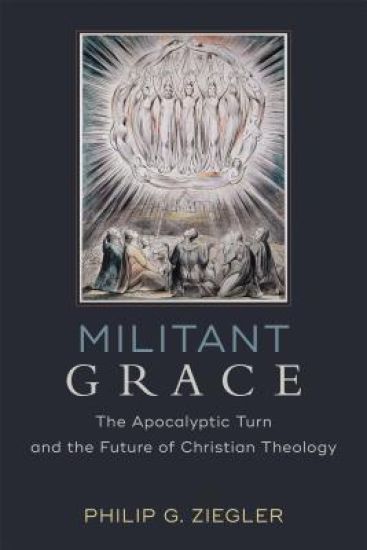
This clear and comprehensive introduction to apocalyptic theology demonstrates the significance of apocalyptic readings of the New Testament for systematic theology and highlights the ethical implications of the apocalyptic turn in biblical and theological studies. Written by a leading theologian and proponent of apocalyptic theology, this primer explores the impact of important recent Pauline scholarship on contemporary theology and argues for a renewed understanding of key Christian doctrines, including sin, grace, revelation, redemption, and the Christian life.

Wolf Kr tke is widely acknowledged to be the most important theologian to emerge from the struggle of the churches in the former East Germany. Working creatively in the tradition of Karl Barth and Dietrich Bonhoeffer, he reconsiders the contours of Christian faith in face of the challenges posed by the regnant atheism and cultural disestablishment that continue to shape the cultural landscape of Eastern Germany. This book explores in detail Kr tke's contributions to contemporary reflection upon the identity of God, humanity, and the Christian church and, in so doing, sheds light upon questions of theological method important in any context.

The devil—styled by Calvin as "God's adversary and ours"—is ubiquitous in the witness of the New Testament. Yet contemporary Christian doctrine generally remains dumbfounded about what to do with him. At the same time, our present is marked by a resurgence in the language of the "demonic"—that is, invocation of pervasive, radical, and perhaps personified evil. In light of this perplexity, Philip G. Ziegler asks pointedly: Can the gospel actually be heard and understood without meaningful reference to this inimical entity? Ziegler presents certain motivations we might have for revisiting the concept of the diabolical as a first step toward a Reformed doctrine of the infernal. Starting with an exhumation of the origins of our religious and cultural reticence about the devil, this study ventures a new diabology grounded in the witness of the Gospels. The identity and activities of the devil are discerned concretely in their manifold contradiction of Christ as the "Way, the Truth and the Life." The ensuing portrait of the devil yields revisionary consequences for both theology and our conception of faithful living. Through a historical sketch of received approaches to the devil in Western Christian tradition, God's Adversary and Ours uncoils the default dogmatic architecture of diabology and reflects upon the surrounding doctrines that position, shape, and constrain its treatment. Ziegler leads us on a cautious but determined biblical-theological exploration of the identity, ontology, and agency of "that old serpent," the Enemy, whose image becomes most discernible and salient in direct contact with the person and work of the Savior. Fixing attention upon the figure of the devil in a soteriological context confronts us with what the devil does; what the devil might be trails behind. Treating diabolical temptation, demonic possession, and devilish falsehood in turn, Ziegler demonstrates what resistance to—and faithful disbelief of—these three aspects of the devil's business might mean for the shape of a Christian life.
Karl Barth and the Resurrection of the Flesh
Nathan Hitchcock; Philip G Ziegler
Pickwick Publications
2013
sidottu

This book wishes to talk about two main topics: the Canadian political philosopher Charles Taylor and faith. Taylor, in his philosophical arguments on religion and secularity, has adopted what I call the great prejudice on religion and secularity: the two belong to utterly different spheres of human mind and sociality. In this prejudice, faith is used as a synonym of religion, or belief, and is understood as something that does not belong to the sphere of secularity. My argument contradicts precisely this common belief. Is faith more of an anthropological attitude towards reality than a religious one? Can we criticize Taylor's philosophy on these grounds? To develop my argument, I will attempt to develop a dialogue between continental and Anglo-American philosophers and theologians, in the hope of convincing the readers that we should change radically the way we discuss faith, religion, and secularism. ""A reasoned faith, a faith in reason, the faith of the reasoner: these three thoughts can never be disentangled. Emilio di Somma's critically insightful engagement with Charles Taylor's magisterial work on secularity is a must read for anyone thinking about faith and secularity today."" --Brian Brock, Professor of Moral and Practical Theology, King's College ""Di Somma's book has the merit of questioning itself in an original way on the modern eclipse of the sacred. Faith, in fact, is not dogma, and is the opposite of nihilism. It still represents the conscience of the future in human history."" --Renata Viti Cavaliere, Professor of Philosophy, University of Naples Federico II Emilio Di Somma is currently a high school teacher in Italy; his passion to understand and solve issues of violence flows through his teaching and research activities. He has recently completed his PhD in Divinity at the University of Aberdeen, Scotland, and has presented his research at numerous international conferences centered on philosophy of religion and politics. His main research interests focus on political theology, ethics, and philosophy of religions. This is his first book.

This book wishes to talk about two main topics: the Canadian political philosopher Charles Taylor and faith. Taylor, in his philosophical arguments on religion and secularity, has adopted what I call the great prejudice on religion and secularity: the two belong to utterly different spheres of human mind and sociality. In this prejudice, faith is used as a synonym of religion, or belief, and is understood as something that does not belong to the sphere of secularity. My argument contradicts precisely this common belief. Is faith more of an anthropological attitude towards reality than a religious one? Can we criticize Taylor's philosophy on these grounds? To develop my argument, I will attempt to develop a dialogue between continental and Anglo-American philosophers and theologians, in the hope of convincing the readers that we should change radically the way we discuss faith, religion, and secularism. ""A reasoned faith, a faith in reason, the faith of the reasoner: these three thoughts can never be disentangled. Emilio di Somma's critically insightful engagement with Charles Taylor's magisterial work on secularity is a must read for anyone thinking about faith and secularity today."" --Brian Brock, Professor of Moral and Practical Theology, King's College ""Di Somma's book has the merit of questioning itself in an original way on the modern eclipse of the sacred. Faith, in fact, is not dogma, and is the opposite of nihilism. It still represents the conscience of the future in human history."" --Renata Viti Cavaliere, Professor of Philosophy, University of Naples Federico II Emilio Di Somma is currently a high school teacher in Italy; his passion to understand and solve issues of violence flows through his teaching and research activities. He has recently completed his PhD in Divinity at the University of Aberdeen, Scotland, and has presented his research at numerous international conferences centered on philosophy of religion and politics. His main research interests focus on political theology, ethics, and philosophy of religions. This is his first book.
Karl Barth and the Resurrection of the Flesh
Nathan Hitchcock; Philip G. Ziegler
Wipf Stock Publishers
2013
pokkari
God First and Last'. Religious Traditions and Music of the Yaresan of Guran: Volume 1: Religious Traditions by Philip G. Kreyenbroek
Philip G. Kreyenbroek; Yiannis Kanakis
Harrassowitz
2020
nidottu
The Yaresan or Ahl-e Haqq are a relatively large minority group whose religion originates in the border regions between Iran and Iraq. As members of traditional Yaresan communities are becoming more visible in the West, both as diaspora groups and in academia, there is an increasing demand for reliable information about their background. Academic interest is also growing. Recent scholarly publications, however, tend to assume a fundamental knowledge of the Yaresan tradition, which is not easy to glean from existing sources. This is made more complicated by the very real differences between the European world view and that of traditional Yarsanism. For that reason and because music plays an unusually prominent role in Yaresan observance, it was decided to combine the authors' work on religious traditions and music respectively in two volumes. In doing so the religious realities of the traditional Yaresan of the Guran region is communicated by quoting extensively from interviews with community members. The first volume also offers a survey of other religious traditions that are thought to have been influential in shaping modern Yarsanism.


Nadean O. McArthur, Petitioner, V. Philip G. Nourse, Circuit Judge, Etc. U.S. Supreme Court Transcript of Record with Supporting Pleadings
Peter D Webster; Robert L Shevin
Gale, U.S. Supreme Court Records
2011
pokkari

This groundbreaking new book features holistic coverage of technological breakthroughs, financing trends, workforce development issues, and comparative regional case studies in solar energy. It provides a global bird's-eye view of the industry for scientists, engineers, business leaders, and policymakers — anyone seriously engaged in the rapidly evolving field of solar energy. The expert author's analysis includes primary data from the first comprehensive solar industry survey conducted in the United States, insights from key thought leaders in the energy sector, and case studies from international leaders in solar development. Solar Energy Markets examines six key drivers of the solar industry: 1) a new culture of environmentalism; 2) policy and markets; 3) financing and venture capital; 4) economics and cost-competitiveness; 5) innovation; and 6) labor. In a field too often marked by divisive over-specialization, this resource provides invaluable context, demonstrating how the solar field’s innovative triumphs and inherent challenges play out in the real global marketplace.

Charles Darwin presented the first scientific explanation of design through evolution by natural selection, where the environment furnishes individual organisms with adaptations that help them to survive and reproduce. This accessible book makes the case that natural selection can also do the exact opposite, favouring traits that directly harm an organism's ability to survive and reproduce. Such maladaptations contradict the received understanding of what natural selection 'does', but become explicable with an understanding of the genetics and ecology of evolution by natural selection. Drawing upon wide-ranging examples from across the diversity of life, the evidence for maladaptations is critically appraised to establish its possibility, reality and importance to the design of living things. A theory of maladaptation is developed, as a corrective for a long-standing error in evolutionary biology. Examples of maladaptation are evaluated to identify the challenges and successes in applying the concept to organismal traits. The deeper causes and consequences of maladaptation are discussed to understand its far-reaching impact on the evolution of life on Earth - and beyond. Overall, the book persuasively argues that maladaptation is a paragon of the changes to evolutionary theory that are needed to understand the population biology of natural selection. Maladaptation is written to be suitable for students taking courses in evolution, ecology and genetics, as well as professional researchers in these fields. Its accessible style will also appeal to a broader interdisciplinary audience, including any inquisitive reader with a general interest in science and the natural world.

This book offers a comprehensive roadmap for determining when and how to regulate risky reproductive technologies on behalf of future children. First, it provides three benchmarks for determining whether a reproductive practice is harmful to the children it produces. This framework synthesizes and extends past efforts to make sense of our intuitive, but paradoxical, belief that reproductive choices can be both life-giving and harmful. Next, it recommends a process for reconciling the interests of future children with the reproductive liberty of prospective parents. The author rejects a blanket preference for either parental autonomy or child welfare and proposes instead a case-by-case inquiry that takes into account the nature and magnitude of the proposed restrictions on procreative liberty, the risk of harm to future children, and the context in which the issue arises. Finally, he applies this framework to four past and future medical treatments with above average risk, including cloning and genetic engineering. Drawing lessons from these case studies, Peters criticizes the current lack of regulatory oversight and recommends both more extensive pre-market testing and closer post-market monitoring of new reproductive technologies. His moderate pragmatic approach will be widely appreciated.
Rethinking World Politics is a major intervention into a central debate in international relations: how has globalization transformed world politics? Most work on world politics still presumes the following: in domestic affairs, individual states function as essentially unified entities, and in international affairs, stable nation-states interact with each other. In this scholarship, the state lies at the center; it is what politics is all about. However, Philip Cerny contends that recent experience suggests another process at work: "transnational neopluralism." In the old version of pluralist theory, the state is less a cohesive and unified entity than a varyingly stable amalgam of competing and cross-cutting interest groups that surround and populate it. Cerny explains that contemporary world politics is subject to similar pressures from a wide variety of sub- and supra-national actors, many of which are organized transnationally rather than nationally. In recent years, the ability of transnational governance bodies, NGOs, and transnational firms to shape world politics has steadily grown. Importantly, the rapidly growing transnational linkages among groups and the emergence of increasingly influential, even powerful, cross-border interest and value groups is new. These processes are not replacing nation-states, but they are forging new transnational webs of power. States, he argues, are themselves increasingly trapped in these webs. After mapping out the dynamics behind contemporary world politics, Cerny closes by prognosticating where this might all lead. Sweeping in its scope, Rethinking World Politics is a landmark work of international relations theory that upends much of our received wisdom about how world politics works and offers us new ways to think about the forces shaping the contemporary world.
Rethinking World Politics is a major intervention into a central debate in international relations: how has globalization transformed world politics? Most work on world politics still presumes the following: in domestic affairs, individual states function as essentially unified entities, and in international affairs, stable nation-states interact with each other. In this scholarship, the state lies at the center; it is what politics is all about. However, Philip Cerny contends that recent experience suggests another process at work: "transnational neopluralism." In the old version of pluralist theory, the state is less a cohesive and unified entity than a varyingly stable amalgam of competing and cross-cutting interest groups that surround and populate it. Cerny explains that contemporary world politics is subject to similar pressures from a wide variety of sub- and supra-national actors, many of which are organized transnationally rather than nationally. In recent years, the ability of transnational governance bodies, NGOs, and transnational firms to shape world politics has steadily grown. Importantly, the rapidly growing transnational linkages among groups and the emergence of increasingly influential, even powerful, cross-border interest and value groups is new. These processes are not replacing nation-states, but they are forging new transnational webs of power. States, he argues, are themselves increasingly trapped in these webs. After mapping out the dynamics behind contemporary world politics, Cerny closes by prognosticating where this might all lead. Sweeping in its scope, Rethinking World Politics is a landmark work of international relations theory that upends much of our received wisdom about how world politics works and offers us new ways to think about the forces shaping the contemporary world.

Dr. Philip G. Zimbardo's ground-breaking studies have found that there are more than 84 million shy people in America today, including such "secretly shy" celebrities as Carol Burnett, Barbara Walters, and Johnny Carson. In this best-selling book, Dr. Zimbardo analyzes shyness with a personal understanding of the emotions involved. He then presents advice, exercises, and encouragement to help shy people strengthen their social skills and their self-confidence. If you're troubled by shyness, or love someone who is, reading Shyness can open new worlds.