Kirjojen hintavertailu. Mukana 11 244 527 kirjaa ja 12 kauppaa.

Kirjahaku

Etsi kirjoja tekijän nimen, kirjan nimen tai ISBN:n perusteella.

1000 tulosta hakusanalla Philip J. Dix

Honeydew

Honeydew

Philip J. Dix

TROUBADOR PUBLISHING
2025
nidottu
A Faustian pact comes home to roost. Dr Stephen Walford, a successful research scientist, and his team, have developed a novel method for genetic engineering bacteria that live in greenfly. Desperate for additional research funding, he makes an agreement, with LunaBio, a Biotech company, providing generous funding, on the condition he carries out a secret side project for the company. Stephen’s Research Fellow, Dr Andy Florescu, convinces him that it would be unethical to deliver the unknown genetically modified (GM) organism to the company, and they agree to analyse it to find out what it contains. Before that can happen though, Stephen’s sudden death, and the theft of the GM material from the laboratory, prompt Andy to go into hiding, in fear for his own life. Is the GM organism a global threat? Who was responsible for stealing it from the laboratory? And where is Andy Florescu? With an assassin still at large, the search for Andy by two young women, Vanessa Byrne and Awusi Boakye, becomes a hazardous mission.
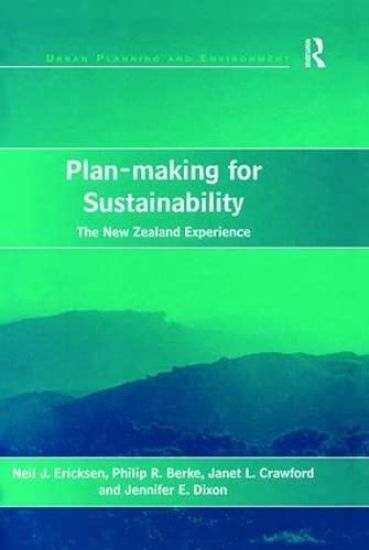
Plan-making for Sustainability

Plan-making for Sustainability

Neil J. Ericksen; Philip R. Berke; Jennifer E. Dixon

Ashgate Publishing Limited
2004
sidottu
Around the introduction of Agenda 21 at Rio in 1991, some countries like the Netherlands and New Zealand were already leading the way with quite innovative approaches to environmental planning. Focusing on the New Zealand government's innovations in sustainable and environmental planning, particularly the Resource Management Act of 1991, this book highlights planning and governance under devolved and co-operative mandates. It uses multiple methods to evaluate the quality of policy statements and district plans prepared by regional and local councils respectively, as well as the various inter- and intra-organizational and institutional factors affecting them. It also analyses the quality of the plans' implementation through the consensus or permits process, and the quality of the environmental outcomes.
Plan-making for Sustainability

Plan-making for Sustainability

Neil J. Ericksen; Philip R. Berke; Jennifer E. Dixon

Routledge
2017
nidottu
Around the introduction of Agenda 21 at Rio in 1991, some countries like the Netherlands and New Zealand were already leading the way with quite innovative approaches to environmental planning. Focusing on the New Zealand government's innovations in sustainable and environmental planning, particularly the Resource Management Act of 1991, this book highlights planning and governance under devolved and co-operative mandates. It uses multiple methods to evaluate the quality of policy statements and district plans prepared by regional and local councils respectively, as well as the various inter- and intra-organizational and institutional factors affecting them. It also analyses the quality of the plans' implementation through the consensus or permits process, and the quality of the environmental outcomes.
The Gun Debate

The Gun Debate

Philip J. Cook; Kristin A. Goss

Oxford University Press Inc
2020
nidottu
No topic is more polarizing than guns and gun control. From a gun culture that took root early in American history to the mass shootings that repeatedly bring the public discussion of gun control to a fever pitch, the topic has preoccupied citizens, public officials, and special interest groups for decades. In this thoroughly revised second edition of The Gun Debate: What Everyone Needs to Know® noted economist Philip J. Cook and political scientist Kristin A. Goss delve into the issues that Americans debate when they talk about guns. With a balanced and broad-ranging approach, the authors thoroughly cover the latest research, data, and developments on gun ownership, gun violence, the firearms industry, and the regulation of firearms. The authors also tackle sensitive issues such as the impact of gun violence on quality of life, the influence of exposure to gun violence on mental health, home production of guns, arming teachers, the effect of concealed weapons on crime rates, and the ability of authorities to disarm people who aren't allowed to have a gun. No discussion of guns in the U.S. would be complete without consideration of the history, culture, and politics that drive the passion behind the debate. Cook and Goss deftly explore the origins of the American gun culture and the makeup of both the gun rights and gun control movements. Written in question-and-answer format, this updated edition brings the debate up-to-date for the current political climate under Trump and will help readers make sense of the ideologically driven statistics and slogans that characterize our national conversation on firearms. This book is a must-read for anyone interested in getting a clear view of the issues surrounding guns and gun policy in America.
The Gun Debate

The Gun Debate

Philip J. Cook; Kristin A. Goss

Oxford University Press Inc
2020
sidottu
No topic is more polarizing than guns and gun control. From a gun culture that took root early in American history to the mass shootings that repeatedly bring the public discussion of gun control to a fever pitch, the topic has preoccupied citizens, public officials, and special interest groups for decades. In this thoroughly revised second edition of The Gun Debate: What Everyone Needs to Know® noted economist Philip J. Cook and political scientist Kristin A. Goss delve into the issues that Americans debate when they talk about guns. With a balanced and broad-ranging approach, the authors thoroughly cover the latest research, data, and developments on gun ownership, gun violence, the firearms industry, and the regulation of firearms. The authors also tackle sensitive issues such as the impact of gun violence on quality of life, the influence of exposure to gun violence on mental health, home production of guns, arming teachers, the effect of concealed weapons on crime rates, and the ability of authorities to disarm people who aren't allowed to have a gun. No discussion of guns in the U.S. would be complete without consideration of the history, culture, and politics that drive the passion behind the debate. Cook and Goss deftly explore the origins of the American gun culture and the makeup of both the gun rights and gun control movements. Written in question-and-answer format, this updated edition brings the debate up-to-date for the current political climate under Trump and will help readers make sense of the ideologically driven statistics and slogans that characterize our national conversation on firearms. This book is a must-read for anyone interested in getting a clear view of the issues surrounding guns and gun policy in America.
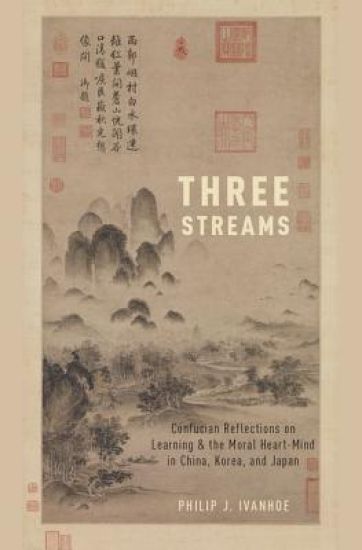
Three Streams

Three Streams

Philip J. Ivanhoe

Oxford University Press Inc
2016
sidottu
Recent interest in Confucianism has a tendency to suffer from essentialism and idealism, manifested in a variety of ways. One example is to think of Confucianism in terms of the views attributed to one representative of the tradition, such as Kongzi (Confucius) (551-479 BCE) or Mengzi (Mencius) (372 - 289 BCE) or one school or strand of the tradition, most often the strand or tradition associated with Mengzi or, in the later tradition, that formed around the commentaries and interpretation of Zhu Xi (1130-1200). Another such tendency is to think of Confucianism in terms of its manifestations in only one country; this is almost always China for the obvious reasons that China is one of the most powerful and influential states in the world today. A third tendency is to present Confucianism in terms of only one period or moment in the tradition; for example, among ethical and political philosophers, pre-Qin Confucianism-usually taken to be the writings attributed to Kongzi, Mengzi, and, if we are lucky, Xunzi (479-221 BCE)-often is taken as "Confucianism." These and other forms of essentialism and idealism have led to a widespread and deeply entrenched impression that Confucianism is thoroughly homogenous and monolithic (these often are "facts" mustered to support the purportedly oppressive, authoritarian, and constricted nature of the tradition); such impressions can be found throughout East Asia and dominate in the West. This is quite deplorable for it gives us no genuine sense of the creatively rich, philosophically powerful, highly variegated, and still very much open-ended nature of the Confucian tradition. This volume addresses this misconstrual and misrepresentation of Confucianism by presenting a philosophically critical account of different Confucian thinkers and schools, across place (China, Korea, and Japan) and time (the 10th to 19th centuries).
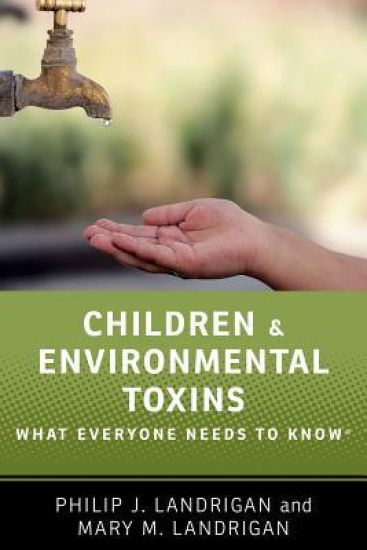
Children and Environmental Toxins

Children and Environmental Toxins

Philip J. Landrigan; Mary M. Landrigan

Oxford University Press Inc
2018
nidottu
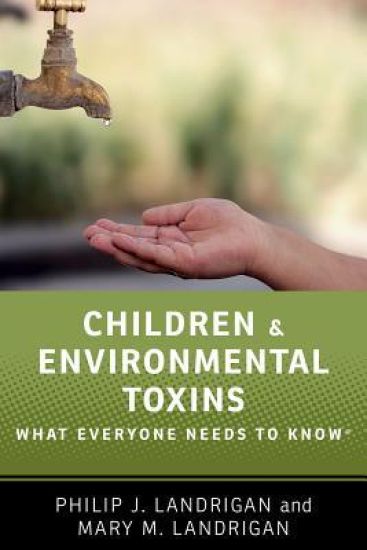
Over the past four decades, the prevalence of autism, asthma, ADHD, obesity, diabetes, and birth defects has increased substantially among children throughout the world. Not coincidentally, more than 80,000 new chemicals have been developed and released into the global environment during this same period. Today the World Health Organization attributes more than one third of all childhood deaths to environmental causes. Children's environmental health is a new and growing discipline that responds to the expanding threat of chemical and environmental hazards to child health. Amid mounting evidence that children are especially sensitive to their environment-and that exposure during their developmental "windows of susceptibility" can trigger cellular changes that lead to lifelong disease and disability-there is a compelling need for continued scientific study of the relationship between children's health and their environment. Children and Environmental Toxins: What Everyone Needs to Know® offers an authoritative yet accessible question-and-answer guide to the "silent spring" of threats in our collective backyard. As the burdens of environmental toxins and chronic disease continue to defy borders, this book will be an invaluable addition to the conspicuously sparse literature in this area.
Children and Environmental Toxins

Children and Environmental Toxins

Philip J. Landrigan; Mary M. Landrigan

Oxford University Press Inc
2018
sidottu
Over the past four decades, the prevalence of autism, asthma, ADHD, obesity, diabetes, and birth defects has increased substantially among children throughout the world. Not coincidentally, more than 80,000 new chemicals have been developed and released into the global environment during this same period. Today the World Health Organization attributes more than one third of all childhood deaths to environmental causes. Children's environmental health is a new and growing discipline that responds to the expanding threat of chemical and environmental hazards to child health. Amid mounting evidence that children are especially sensitive to their environment-and that exposure during their developmental "windows of susceptibility" can trigger cellular changes that lead to lifelong disease and disability-there is a compelling need for continued scientific study of the relationship between children's health and their environment. Children and Environmental Toxins: What Everyone Needs to Know offers an authoritative yet accessible question-and-answer guide to the "silent spring" of threats in our collective backyard. As the burdens of environmental toxins and chronic disease continue to defy borders, this book will be an invaluable addition to the conspicuously sparse literature in this area.
Oneness

Oneness

Philip J. Ivanhoe

Oxford University Press Inc
2018
sidottu
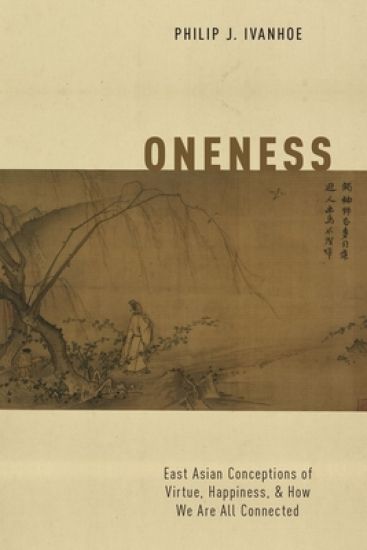
At the center of a constellation of key ideas in East Asian philosophical traditions, there lies a conception of oneness among human beings. Human beings are intricately and inextricably intertwined and share a common destiny with other people, creatures, and things. The ramifications of this idea are wide-reaching, and resonate with important debates and concerns in contemporary Western philosophy, but many at the forefront of their fields in the West are unaware of the fundamental shift in perspective that might be available to them. One of Ivanhoe's aims in this work is to challenge the dominant paradigm of hyper-individualism, which still enjoys a commanding position in a great deal of contemporary theory and practice in the humanities and social sciences, and to describe and advocate for an alternative conception and sense of self, world, and the relationship between them. In particular, Ivanhoe, who has an extensive background in and has published influential work on virtue ethics and Asian philosophy, investigates the implications of oneness for conceptions of the self, virtue, and human happiness. Through the lens of oneness, he explores topics such as conceptions of the self, selfishness and self-centeredness, virtues, spontaneity, and happiness, drawing support from wide-ranging, interdisciplinary sources. Rather than starting from the standpoint of Western philosophy and then reaching out to Asian philosophy from a distance, Ivanhoe advances a thesis drawn from East Asian sources and explicitly challenges the theoretical asymmetry that is characteristic of most comparative study, which often simply applies Western theories to non-Western material.
Controlling Life

Controlling Life

Philip J. Pauly

Oxford University Press Inc
1987
sidottu
The biologist Jaques Loeb (1859-1924) helped to shape the practice of modern biological research through his radical emphasis on reductionist experimentation. This scientific biography traces Loeb's career, and places his experiments and the controversies they generated in their intellectual and institutional contexts.
Against the Protestant Gnostics

Against the Protestant Gnostics

Philip J. Lee

Oxford University Press Inc
1993
nidottu
Gnosticism is a term covering a group of heresies that for a time had great influence within the early church, including: belief in the existence of a hidden or secret revelation available only to the initiated; rejection of the physical world as evil or impure; and stress on the radical individuality of the spiritual self. In this book Philip Lee finds parallels between gnosticism and belief and practice in contemporary North American Proestantism. Sharply attacking conservatives and liberals alike, Lee spares no one in this penetrating and provocative assessment of the current stage of religion and its effects on values and society at large. The book concludes with a call for a return to orthodoxy and a series of prescriptions for reform. Lee will add a short preface for this paperback edition.
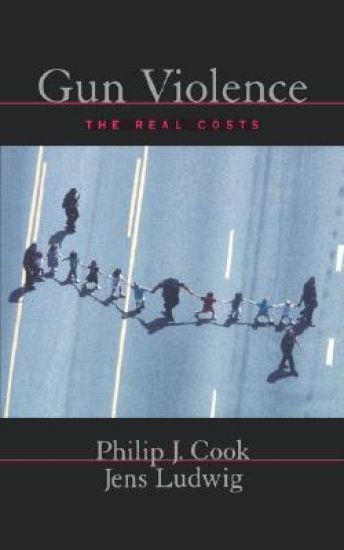
Gun Violence: The Real Costs

Gun Violence: The Real Costs

Philip J. Cook; Jens Ludwig

Oxford University Press Inc
2000
sidottu
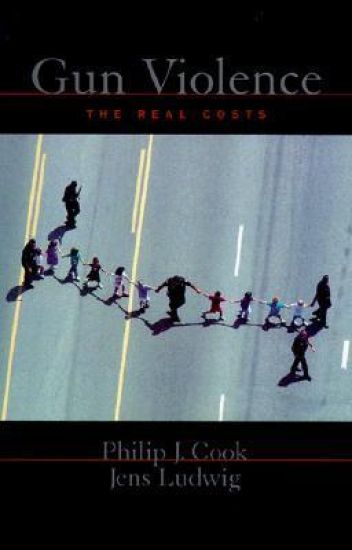
The objective of this book is to quantify the social costs of gun violence in order to help policy makers determine how many and which violence programmes to support. Drawing upon the most detailed and extensive economic study of the cost of gun violence, Cook and Ludwig provide detailed information about how the burden of gun violence is distributed in the US. Drawing upon this data, the book draws out the important implications for public policy. The burden of gun violence in America is valued at about $100 billion annually, and this heavy cost is distributed much more evenly over the population than the victimization statistics would suggest. Cook and Ludwig's examination of these costs lead them to propose a multifaceted policy agenda that includes both law enforcement and gun control measures.
Gun Violence

Gun Violence

Philip J. Cook; Jens Ludwig

Oxford University Press Inc
2002
nidottu
100 billion dollars. That is the annual cost of gun violence in America according to the authors of this landmark study, a book destined to change the way Americans view the problem of gun-related violence. Until now researchers have assessed the burden imposed by gunshot injuries and deaths in terms of medical costs and lost productivity. Here, economists Philip Cook and Jens Ludwig widen the lens, developing a framework to calculate the full costs borne by Americans in a society where both gun violence and its ever-present threat mandate responses that touch every aspect of our lives. All of us, no matter where we reside or how we live, share the costs of gun violence. Whether waiting in line to pass through airport security or paying taxes for the protection of public officials; whether buying a transparent book bag for our children to meet their school's post-Columbine regulations or subsidizing an urban trauma center, the steps we take are many and the expenditures enormous. Cook and Ludwig reveal that investments in prevention, avoidance, and harm reduction, both public and private, constitute a far greater share of the gun-violence burden than previously recognized. They also employ extensive survey data to measure the subjective costs of living in a society where there is risk of being shot or losing a loved one or neighbor to gunfire. At the same time, they demonstrate that the problem of gun violence is not intractable. Their review of the available evidence suggests that there are both additional gun regulations and targeted law enforcement measures that will help. This urgently needed book documents for the first time how gun violence diminishes the quality of life for everyone in America. In doing so, it will move the debate over gun violence past symbolic politics to a direct engagement with the costs and benefits of policies that hold promise for reducing gun violence and may even pay for themselves.
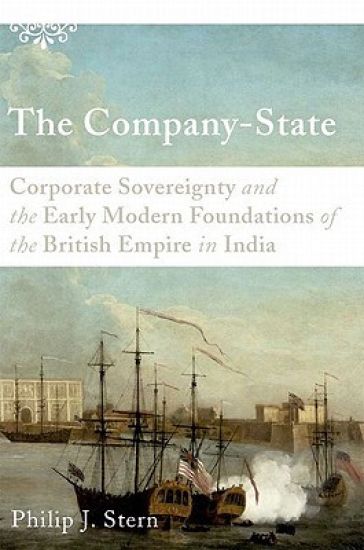
The Company-State

The Company-State

Philip J. Stern

Oxford University Press Inc
2011
sidottu
The Company-State rethinks the nature of the early English East India Company as a form of polity and corporate sovereign well before its supposed transformation into a state and empire in the mid-eighteenth century. Taking seriously the politics and political thought of the early Company on their own terms, it explores the Company's political and legal constitution as an overseas corporation and the political institutions and behaviors that followed from it, from tax collection and public health to warmaking and colonial plantation. Tracing the ideological foundations of those institutions and behaviors, this book reveals how Company leadership wrestled not simply with the bottom line but with typically early modern problems of governance, such as: the mutual obligations of subjects and rulers; the relationship between law, economy, and sound civil and colonial society; and the nature of jurisdiction and sovereignty over people, commerce, religion, territory, and the sea. The Company-State thus reframes some of the most fundamental narratives in the history of the British Empire, questioning traditional distinctions between public and private bodies, "commercial" and "imperial" eras in British India, a colonial Atlantic and a "trading world" of Asia, European and Asian political cultures, and the English and their European rivals in the East Indies. At its core, The Company-State offers a view of early modern Europe and Asia, and especially the colonial world that connected them, as resting in composite, diffuse, hybrid, and overlapping notions of sovereignty that only later gave way to more modern singular, centralized, and territorially- and nationally-bounded definitions of political community. Given growing questions about the fate of the nation-state and of national borders in an age of "globalization," this study offers a perspective on the vitality of non-state and corporate political power perhaps as relevant today as it was in the seventeenth century.
Marx, Revolution, and Social Democracy

Marx, Revolution, and Social Democracy

Philip J. Kain

OXFORD UNIVERSITY PRESS INC
2023
sidottu
Many people think Marx a totalitarian and Soviet Marxism the predictable outcome of his thought. If one shows them the texts-proves to them that Marx was a radical democrat--they often flip and think him utopian. Totalitarian or utopian--for many those seem to be the alternatives. How might one combat this completely mistaken image? To establish the connection between Marx and social democracy, philosopher Philip J. Kain argues four main points. First, economy if markets are controlled to eliminate alienation, socialist society for Marx is compatible with a market. Second, markets can be controlled democratically. Third, Marx had a theory of revolution compatible with a democratic electoral movement engaged in by a social democratic party. And fourth, from the late 1860s on, Marx and Engels worked with the German Social Democratic Party of Liebknecht, Bebel, Bernstein, and Kautsky--which eventually became the largest party in Germany and the largest socialist party in the world. If social democracy is a true expression of Marxism, then Marx cannot be called a totalitarian. There is nothing remotely totalitarian about social democracy. Nor is it utopian. It exists all over Western Europe. Moreover, social democratic parties have always opposed the undemocratic tactics of Soviet Marxism. Drawing on these four points, Kain argues against the depiction of Marx as either utopian or totalitarian, and instead makes a case for Marx as a social democrat, whose strongest legacy is found in Western Europe.
Narrativity: Theory and Practice

Narrativity: Theory and Practice

Philip J. M. Sturgess

Clarendon Press
1992
sidottu
Defining narrativity as the enabling force of narrative, this is the first full-length exploration of the concept in fiction in English. It develops the notion of a `logic of narrativity', and by this means contributes a new critical strategy to the field of narrative theory. The book also takes issue with a number of critical approaches which have in recent years acquired near-orthodox status in the matter of textual interpretation. Most prominent among these approaches are deconstruction and a particular form of Marxist criticism. The author's own theoretical claims are substantiated by readings of major twentieth-century novels by Conrad, Joyce, Flann O'Brien, and Arthur Koestler, and the book concludes with an analysis of an earlier narrative, Maria Edgeworth's Castle Rackrent, which illustrates the wider premises of the theory and its applications.
Marx and Ethics

Marx and Ethics

Philip J. Kain

Clarendon Press
1991
nidottu
This book traces the development of Marx's ethics as they underwent various shifts and changes during different periods of his thought. In his early writings, his ethics are based on a concept of essence much like Aristotle's which Marx tries to link to a principle of universalization similar to Kant's `categorical imperative'. In the period 1845-6 Marx abandoned this view, holding morality to be incompatible with his historical materialism. In the later writings Marx is less of a determinist, and he no longer wants to reject morality. However he does want to transcend a morality of burdensome obligation and constraint so as to realize a community built upon spontaneous bonds of solidarity.