Kirjojen hintavertailu. Mukana 11 244 527 kirjaa ja 12 kauppaa.

Kirjahaku

Etsi kirjoja tekijän nimen, kirjan nimen tai ISBN:n perusteella.

1000 tulosta hakusanalla Philip K. Dick

Philip K. Dick

Philip K. Dick

Samuel J. Umland

Praeger Publishers Inc
1995
sidottu
This book contains 11 essays and a comprehensive bibliography. The essays reveal the extent to which Philip K. Dick's personal obsessions pre-figured postmodernist concerns with humanity's self-alienation, cultural and personal paranoia, and the politics of simulation, deceit, and self-deception. The contributors reveal how Dick's ontological concerns, stated in his repeated questioning of What is real?, are also political concerns. Thus, they examine the philosophical and religious foundations on which his work rests, offering much-needed arguments which reveal both his philosophical depth and the extent to which he drew from esoteric and occult religions. His cultural critique also receives significant exposition, as the contributors reveal how Dick's fiction enacts the larger cultural struggles of cold war America, with its conflicting private visions and public realities, and its personal and political loyalties. The contributors argue for the significance of heretofore neglected or marginalized texts of Dick as well, including in their discussions many early short stories from the early 1950s and neglected novels of the mid-1960s, arguing that there is a need to understand how Dick shaped (or misshaped) his fictions so as to reimagine the life of his society.
Philip K. Dick

Philip K. Dick

Lejla Kucukalic

Routledge
2010
nidottu
Kucukalic looks beyond the received criticism and stereotypes attached to Philip K. Dick and his work and shows, using a wealth of primary documents including previously unpublished letters and interviews, that Philip K. Dick is a serious and relevant philosophical and cultural thinker whose writing offer us important insights into contemporary digital culture. Evaluating five novels that span Dick's career--from Martian Time Slip (1964) to Valis (1981)--Kucukalic explores the the intersections of identity, narrative, and technology in order to ask two central, but uncharted "Dickian" questions: What is reality? and What is human?
Philip K. Dick

Philip K. Dick

Lejla Kucukalic

Routledge
2008
sidottu
Kucukalic looks beyond the received criticism and stereotypes attached to Philip K. Dick and his work and shows, using a wealth of primary documents including previously unpublished letters and interviews, that Philip K. Dick is a serious and relevant philosophical and cultural thinker whose writing offer us important insights into contemporary digital culture. Evaluating five novels that span Dick's career--from Martian Time Slip (1964) to Valis (1981)--Kucukalic explores the the intersections of identity, narrative, and technology in order to ask two central, but uncharted "Dickian" questions: What is reality? and What is human?
Shifting Realities of Philip K. Dick

Shifting Realities of Philip K. Dick

Philip K. Dick

Random House USA Inc
1997
nidottu
Philip K. Dick has established himself as a major figure in American literature. The landscape of his imagination features a wealth of concepts and fictional worlds: Nazi-rule in a postwar nightmare; androids and the unification of man and machine; and an existence that no longer follows the logic of reality. His vision has shaped the way we perceive the past and present and how we look to the future. This first-time collection assembles his nonfiction writings (the bulk of which either have never before been published or have appeared only in obscure and out-of-print publications) - essays, journals, speeches, and interviews. In these writings he explores issues ranging from the merging of physics and metaphysics to the potential influences of "virtual" reality and its consequences to a plot-scenario for a potential episode of "Mission: Impossible," to the challenge that fundamental "human" values face in the age of technology and spiritual decline. This collection is at once penetrating and entertaining. It is sure to reconfirm Philip K. Dick not only as an important science-fiction writer but also as an explorative thinker.
The Philip K. Dick Reader

The Philip K. Dick Reader

Philip K. Dick

Citadel Press
2016
nidottu
Includes the stories that inspired the movies Total Recall, Screamers, Minority Report, Paycheck, and Next-More than anyone else in the field, Mr. Dick really puts you inside people's minds.- --The Wall Street JournalThe Philip K. Dick Reader Many thousands of readers consider Philip K. Dick the greatest science fiction mind on any planet. Since his untimely death in 1982, interest in Dick's works has continued to mount, and his reputation has been further enhanced by a growing body of critical attention. The Philip K. Dick Award is now given annually to a distinguished work of science fiction, and the Philip K. Dick Society is devoted to the study and promulgation of his works.Dick won the prestigious Hugo Award for the best novel of 1963 for The Man in the High Castle. In the last year of his life, the film Blade Runner was made from his novel Do Androids Dream of Electric Sheep?This collection includes some of Dick's earliest short and medium-length fiction, including We Can Remember It for You Wholesale (the story that inspired the motion picture Total Recall), Second Variety (which inspired the motion picture Screamers), Paycheck, The Minority Report, and twenty more.
Philip K. Dick

Philip K. Dick

McFarland Co Inc
2020
pokkari
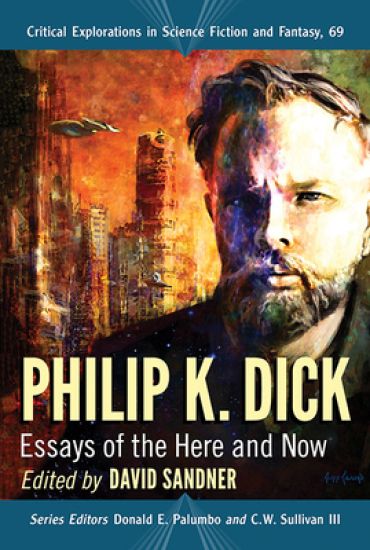
Philip K. Dick was a visionary writer of science fiction. His works speak to contemporary fears of being continually watched by technology, and the paranoia of modern life in which we watch ourselves and lose our sense of identity. Since his death in 1982, Dick's writing remain frighteningly relevant to 21st century audiences. Dick spent his life in near poverty and it was only after his death that he gained popular and critical recognition. In this new collection of essays, interviews, and talks, Philip K Dick is rediscovered. Concentrating both on recent critical studies and on reassessing his legacy in light of his new status as a "major American author," these essays explore, just what happened culturally and critically to precipitate his extraordinary rise in reputation. The essays look for his traces in the places he lived, in the SF community he came from, and in his influence on contemporary American literature and culture, and beyond.
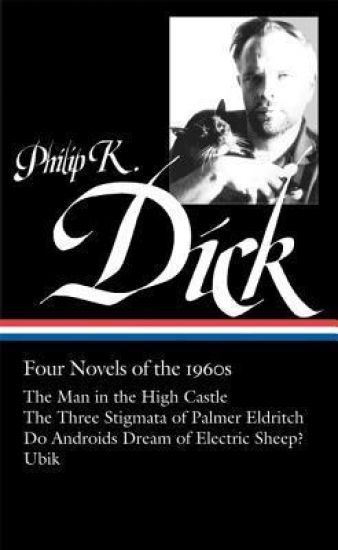
Philip K. Dick: Four Novels of the 1960s (Loa #173): The Man in the High Castle / The Three Stigmata of Palmer Eldritch / Do Androidsdream of Electric
Published to coincide with the twenty-fifth anniversary re-release of the film Blade Runner, a collection of four signature works by the visionary science fiction writer includes the titles, The Man in the High Castle, The Three Stigmata of Palmer Eldritch, Do Androids Dream of Electric Sheep?, and Ubik.
Philip K. Dick: Valis and Later Novels (Loa #193): A Maze of Death / Valis / The Divine Invasion / The Transmigration of Timothy Archer
In 2007, Philip K. Dick: Four Novels of the 1960s became the fastest selling title in The Library of America's history. The 2008 companion volume, Five Novels of the1960s & 70s, broke series records for advance sales. Now comes a third and final volume gathering the best novels of Dick's final years, when religious revelation, always important in his work, became a dominant and irresistible theme. In A Maze of Death (1970), a darkly speculative mystery that foreshadows Dick's final novels, colonists on the planet Delmak-O try to determine the nature of the God-or "Mentufacturer"-who plots their destiny. The late masterpiece VALIS (1981) is a novelistic reworking of "the events of 2-3-74," when Dick's life was transformed by what he believed was a mystical revelation. It is a harrowing self-portrait of a man torn between conflicting interpretations of what might be gnostic illumination or psychotic breakdown. The Divine Invasion (1981), a sequel to VALIS, is a powerful exploration of gnostic insight and its human consequences. The Transmigration of Timothy Archer (1982), Dick's last novel, is by turns theological thriller, roman clef, and disenchanted portrait of late 1970s California life, based loosely on the controversial career of Bishop James Pike-a close friend and kindred spirit. LIBRARY OF AMERICA is an independent nonprofit cultural organization founded in 1979 to preserve our nation's literary heritage by publishing, and keeping permanently in print, America's best and most significant writing. The Library of America series includes more than 300 volumes to date, authoritative editions that average 1,000 pages in length, feature cloth covers, sewn bindings, and ribbon markers, and are printed on premium acid-free paper that will last for centuries.
Philip K. Dick: The Last Interview

Philip K. Dick: The Last Interview

Philip K. Dick

Melville House Publishing
2015
nidottu
An electric collection of interviews--including the first and the last--with one of the 20th century's most prolific, influential, and dazzlingly original writers of science fiction Long before Ridley Scott transformed Do Androids Dream of Electric Sheep? into Blade Runner, Philip K. Dick was banging away at his typewriter in relative obscurity, ostracized by the literary establishment. Today he is widely considered one of the most influential writers of the 20th century. These interviews reveal a man plagued by bouts of manic paranoia and failed suicide attempts; a career fuelled by alcohol, amphetamines, and mystical inspiration; and, above all, a magnificent and generous imagination at work.
Philip K. Dick

Philip K. Dick

Laurent Queyssi; Mauro Marchesi

NBM Publishing Company
2019
sidottu
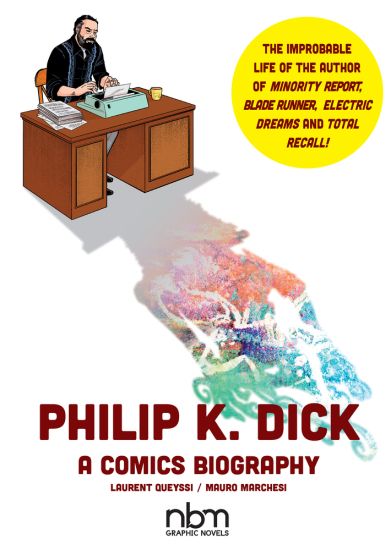
One of the greatest writers in science fiction history, Philip K. Dick is mostly remembered for such works as Blade Runner, Minority Report, and Total Recall. His dark, fascinating work centred on alternate universes and shifting realities in worlds often governed by monopolistic corporations and authoritarian governments. His own life story seems a tussle with reality, cycling through five marriages and becoming increasingly disjointed with fits of paranoia and hallucinations fuelled by abuse of drugs meant to stabilise him. His dramatic story is presented unvarnished in this biography.
Philip K. Dick

Philip K. Dick

Phil Stephensen-Payne; Gordon Benson

Galactic Central Publication
2022
pokkari
Primary and Secondary Bibliography of Philip K. Dick up to February 1995, including foreign editions, phantom titles and a chronological listing.
The Amazing Sci-Fi Tales of Philip K. Dick - 34 Titles in One Edition
In "The Amazing Sci-Fi Tales of Philip K. Dick - 34 Titles in One Edition," readers are invited into the mind of one of science fiction's most provocative authors, whose works interrogate themes of reality, identity, and humanity. This comprehensive anthology encapsulates Dick's signature blend of psychological depth and speculative imagination, showcasing the evolution of his narrative style from early pulp fiction to more complex and philosophical explorations. Each tale serves as a unique entry point into a world where nothing is as it seems, often reflecting the sociopolitical anxieties of the 20th century, including technology's impact on society and the nature of consciousness itself. Philip K. Dick, renowned for his prescient insights and inventive storytelling, navigated a life filled with personal struggles, including substance abuse and mental health issues, which undoubtedly influenced the themes of paranoia and fragmented realities in his work. Born in 1928, his experiences during a tumultuous era of American history, marked by war and technological advancement, propelled him to question the constructs of reality and human experience, leading to his status as a science fiction visionary. This anthology is a quintessential read for both aficionados and newcomers to Dick's oeuvre, providing a comprehensive overview of his thematic range and stylistic versatility. By exploring these 34 titles, readers will gain a deeper appreciation for Dick's profound contributions to the genre, prompting conversations that resonate well beyond the pages of his stories.
The Greatest Science Fiction Works of Philip K. Dick: Second Variety, the Variable Man, Adjustment Team, the Eyes Have It, the Unreconstructed M...
In "The Greatest Science Fiction Works of Philip K. Dick," readers are invited to explore a curated selection of the author's seminal narratives that have shaped the science fiction genre. Renowned for his intricate, dystopian worlds and philosophical inquiries, Dick weaves complex tales that challenge the nature of reality, identity, and the human condition. The compilation includes thought-provoking stories that interrogate the boundaries between man and machine, perception and delusion, all crafted in Dick's distinctive literary style--a blend of stark realism and surreal imagination that has become a hallmark of his legacy. Philip K. Dick, a prolific writer and thinker, was profoundly influenced by his personal experiences with existential crises, drug use, and social paranoia during the 20th century. His tumultuous life and struggles with mental health, alongside a keen interest in metaphysics and theology, led him to explore the often blurred lines between reality and illusion. These themes resonate throughout his works, establishing him as a central figure in speculative fiction, whose insights continue to inspire contemporary authors and filmmakers alike. This anthology is an essential read for both die-hard fans and newcomers to Dick's oeuvre. It provides a gateway into the mind of one of science fiction's most provocative authors, offering timeless reflections on the complexities of human existence. Put aside your perceptions of reality and immerse yourself in the profound inquiries that define Philip K. Dick's unparalleled contributions to literature.
The Philip K. Dick Collection: A Library of America Boxed Set
This boxed set includes all three Library of America volumes collecting Philip K. Dick's best science fiction novels: The Man in the High Castle - The Three Stigmata of Palmer Eldritch - Do Androids Dream of Electric Sheep? - Ubik - Martian Time-Slip - Dr. Bloodmoney - Now Wait for Last Year - Flow My Tears, the Policeman Said - A Scanner Darkly - A Maze of Death - VALIS - The Divine Invasion - The Transmigration of Timothy Archer LIBRARY OF AMERICA is an independent nonprofit cultural organization founded in 1979 to preserve our nation's literary heritage by publishing, and keeping permanently in print, America's best and most significant writing. The Library of America series includes more than 300 volumes to date, authoritative editions that average 1,000 pages in length, feature cloth covers, sewn bindings, and ribbon markers, and are printed on premium acid-free paper that will last for centuries.
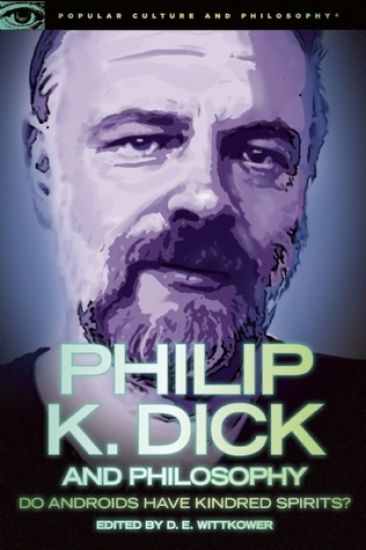
Philip K. Dick and Philosophy

Philip K. Dick and Philosophy

Open Court Publishing Co ,U.S.
2011
pokkari
Science fiction writer Philip K. Dick (1928--1982) is the giant imagination behind so much recent popular culture--both movies directly based on his writings, such as Blade Runner (based on the novel Do Androids Dream of Electric Sheep?), Total Recall, Minority Report, and The Adjustment Bureau plus cult favorites such as A Scanner Darkly, Imposter, Next, Screamers, and Paycheck and works revealing his powerful influence, such as The Matrix and Inception. With the much anticipated forthcoming publication in 2011 of volume 1 of Exegesis, his journal of spiritual visions and paranoic investigations, Dick is fast becoming a major influence in the world of popular spirituality and occult thinking. In Philip K. Dick and Philosophy: Who Adjusts the Adjustment Bureau?, twenty Dick fans and professional thinkers confront the fascinating and frightening ideas raised by Dick's mind-blowing fantasies. Is there an alien world behind the everyday reality we experience? If androids can pass as human, should they be given the same consideration as humans? Do psychotics have insights into a mystical reality? Would knowledge of the future free us or enslave us? This volume will also include Dick's short story "Adjustment Team," on which The Adjustment Bureau is based. Philip K. Dick and Philosophy explores the ideas of Philip K. Dick in the same way that he did: with an earnest desire to understand the truth of the world, but without falsely equating earnestness with a dry seriousness. Dick's work was replete with whimsical and absurdist presentations of the greatest challenges to reason and to humanity--paradox, futility, paranoia, and failure--and even at his darkest times he was able to keep some perspective and humor, as for example in choosing to name himself 'Horselover Fat' in VALIS at the same time as he relates his personal religious epiphanies, crises, and delusions. With the same earnest whimsy, we approach Philip K. Dick as a philosopher like ourselves--one who wrote almost entirely in thought-experiments and semi-fictional world-building, but who engaged with many of the greatest questions of philosophy throughout the Euro-American tradition. Philip K. Dick and Philosophy has much to offer for both serious fans who have read many of his novels and stories, and for those who may have just recently learned his name, and realized that his work has been the inspiration for several well-known and thought-provoking films. Most chapters start with one or more of the movies based on Dick's writing. From here, the authors delve deeper into the issues by bringing in philosophers' perspectives and by bringing in Dick's written work. The book invites the reader with a casual familiarity with Dick to get to know his work, and invites the reader with little familiarity with philosophy to learn more. At the same time, we have new perspectives and challenging connections and interpretations for even the most hard-core Dick fans, even though we never speak to "insiders" only. To maximize public interest, the book prominently addresses the most widely-known films, as well as those with the most significant fan followings: Blade Runner, Total Recall, Minority Report, A Scanner Darkly, and The Adjustment Bureau. Along with these "big five" films, a few chapters address his last novels, especially VALIS, which have a significant cult following of their own. There are also chapters which address short stories and novels which are currently planned for adaptation: Radio Free Albemuth (film completed, awaiting distribution), The Man in the High Castle (in development by Ridley Scott for BBC mini-series), and "King of the Elves" (Disney, planned for release in 2012).